
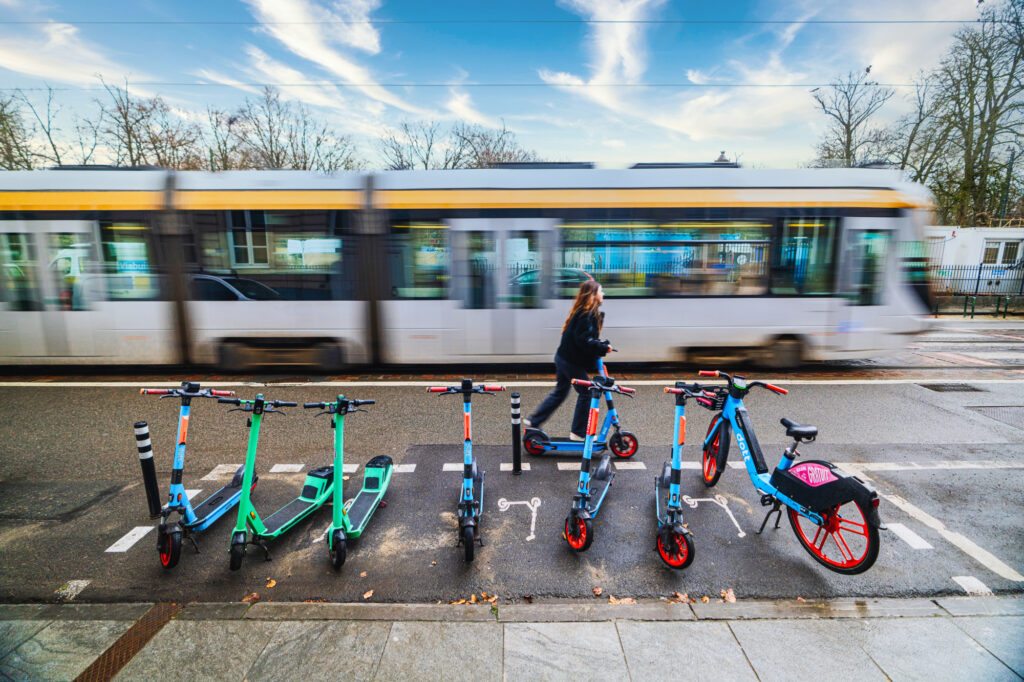
Since the surge in fuel prices following the outbreak of the conflict in the Middle East at the end of February, the use of shared micromobility, such as e-scooters, in Belgium has jumped by 67%.
The return of warmer weather usually leads to a seasonal increase in shared e-scooter and e-bike activity (during the same period last year, there was a 30% increase), but this "historic high" is due to more than the temperatures going up.
"The difference – 37 percentage points – coincides precisely with the rise in fuel prices, suggesting that a growing share of users are turning to shared e-scooters and e-bikes to reduce their reliance on cars for certain urban journeys," said micromobility company Bolt.
According to the company, rising fuel prices act as "a psychological trigger", encouraging people to reconsider their mobility habits.
The past two weeks were the "busiest ever recorded" since the launch of Bolt's micromobility services in the country, the company said.
Strikes and reinforced commitment
What's more, micromobility companies observe an average 70% increase in e-scooter and e-bike trips on strike days, with rides lasting on average 25% longer than on a normal day, particularly in Brussels.
"This suggests that users are relying on them for more substantial replacement journeys, not only for the last mile," the company said.
With Tuesday's national demonstration resulting in an entire day of disrupted public transport in the Belgian capital for the tenth time since 2025, numerous residents have learned to rely on e-scooters and e-bikes to get around the city without buses, trams or metros.
And Bolt is not alone in noticing an increase. The other supplier of shared e-scooters and e-bikes in Brussels, Dott, is also seeing a rise in use in Brussels and is "reinforcing its commitment" to the city.
As Dott's CEO and co-founder Maxim Romain spoke of the success of the company's model for Brussels, it started deploying a brand new fleet (2,500 new e-bikes and 4,000 new e-scooters) in the capital to "build on the encouraging positive usage and safety trends" in the region.
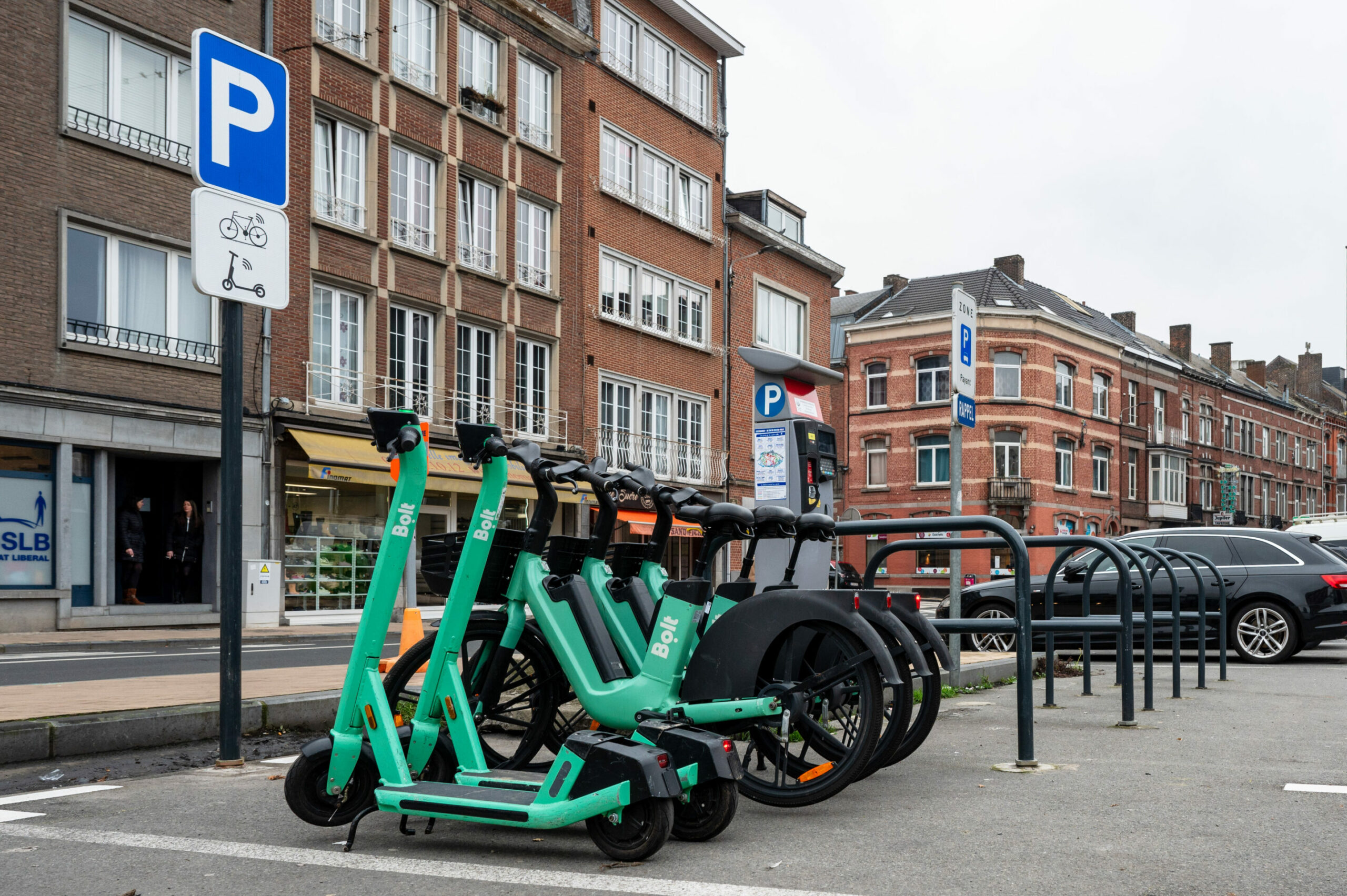
Illustrative image of Bolt e-scooters. Credit: Belga
In 2025, shared scooters saw a total ride increase of 5.94% compared to the year before across all operators, while shared e-bikes grew by 2.31% in the same period, according to Brussels Mobility public data.
Importantly, this data shows a rise in use last year, meaning it does not take into account the increase following steep price hikes for fuel as a result of the situation in the Middle East.
This shows that beyond the current short-term context, these figures point to a deeper shift. A private car typically means one driver alone, one engine running, and a fuel bill that keeps rising.
Meanwhile, shared mobility (whether e-scooters, e-bikes or taxis) helps pool journeys, accelerates the transition to newer and cleaner fleets, and mechanically reduces dependence on fossil fuels – without requiring new infrastructure.
More use, more accidents?
However, as the use of e-scooters is going up in Brussels and Belgium, so is the number of accidents. In 2025, a total of 712 accidents with injuries with electric scooters were recorded in the capital – a 31.4% increase compared to the year before, according to figures by the Vias road safety institute.
Four fatal accidents involving scooters took place in Brussels last year.
The actual number of accidents with injuries is likely to be much higher: the police are usually only called to make a report when an accident involves an opposing party. Riders who collide with objects or fall without someone else involved are unlikely to report their accident.
Importantly, Vias' statistics do not distinguish between accidents with shared or private e-scooters.
Management consulting company Oliver Wyman calculated that shared mobility could reduce the number of kilometres travelled by private cars in major European cities by 20% by 2030 – leading to a 40% reduction in urban emissions.
