

Brussels experienced a "small outbreak" of the viral disease mpox in recent months, but the risk of infection to the general population remains very low.
A total of 60 mpox cases were registered in April and May in the Brussels-Capital Region, spokesperson for the regional health agency Vivalis, Frédéric Pellissier, has confirmed. The majority of cases were spread through sexual contact and affected men who have sex with men (MSM).
Mpox, formerly known as monkeypox, is a disease caused by the mpox virus, which is transmitted through close contact with infected people or animals. It can cause flu-like symptoms and skin rashes that typically develop into sores or small blisters.
Mpox cases outside of African countries were relatively rare until the major global outbreak in 2022, affecting several European countries, including Belgium. Since then, nations worldwide have stepped up efforts to prevent and monitor the viral disease.
What's behind the mpox cases?
Between 2023 and 2025, only a "limited number" of mpox cases were reported in Belgium, according to the Institute of Tropical Medicine (ITM).
However, national health authorities have detected an increasing number of infections since the start of 2026.
The recent trend of mpox cases in Brussels is in line with the situation in other European capitals, according to Pellissier.
While it is unclear what caused the higher number of cases this year, the ITM believes that reduced awareness of the disease, a possible decline in protection from the mpox vaccine, and the high transmissibility of a type of mpox that has been circulating in recent years could be behind the trend.
Additionally, the festivities and increased holiday travel during spring and summer months can also contribute to the spread of mpox, the European Centre for Disease Prevention and Control (ECDC) has previously suggested.
What is mpox and how does it spread?
The mpox virus is similar to the virus that causes smallpox. Mpox was first identified in monkeys kept in a lab for research in Denmark in 1958. The first human case of mpox was reported in 1970.
Cases of the viral disease were originally mainly found in countries in West and Central Africa, where the virus was present in wildlife.
There are two distinct types (or clades) of mpox, namely clade 1 and clade 2, both of which are now circulating worldwide, particularly in areas of Sub-Saharan Africa and among high-risk groups in other parts of the world, according to the World Health Organization (WHO).
The disease often affects the MSM community, but anyone can get mpox.

Illustrative image inside a lab. Credit: Belga
The mpox virus requires very close physical contact to be transmitted between people. It can be spread through direct prolonged skin-to-skin or sexual contact with the skin lesions of an infected person, or with their body fluids or mucus membranes.
Transmission through saliva droplets is also possible, and, in theory, the virus could spread through contaminated surfaces.
Overall, sexual contact is the most efficient way for the virus to spread, although kissing can potentially cause a risk, according to the ITM.
People with multiple sexual partners are more at risk of contracting the disease.
According to the ITM, infected patients typically have a high concentration of the mpox virus in their saliva, anus, and sometimes semen.
What are the symptoms to look out for?
Mpox symptoms typically appear five to 21 days after a person is infected. The initial symptoms are similar to those of the flu, including muscle aches, headache, and a high temperature. Some people also have painful, swollen glands.
Soon after the infection, a person usually develops skin lesions or a rash, which typically starts as raised spots that develop into small blisters or sores. These often develop around the area of the infection.
If a person suspects they may have mpox, they are recommended to isolate themselves from others and to call their general practitioner.
To diagnose mpox, a medical professional will swab the (possibly) affected areas for a PCR test. It typically takes at least 24 hours to know the results.
How is mpox treated and prevented?
There is no specific treatment for mpox. However, symptoms can be managed through painkillers and anti-itch medication, among other things.
The condition is very rarely fatal, and most people with mpox tend to recover within a few weeks without needing medical assistance.
Mpox can, however, have more severe consequences for more vulnerable members of the population, namely children, elderly people and those who are immunocompromised.
To avoid contracting mpox in the first place, health authorities recommend avoiding contact with (potentially) infected people, discussing mpox with sexual partners, limiting the number of sexual partners, practising good hygiene, and avoiding contact with animals in areas with active mpox circulation.
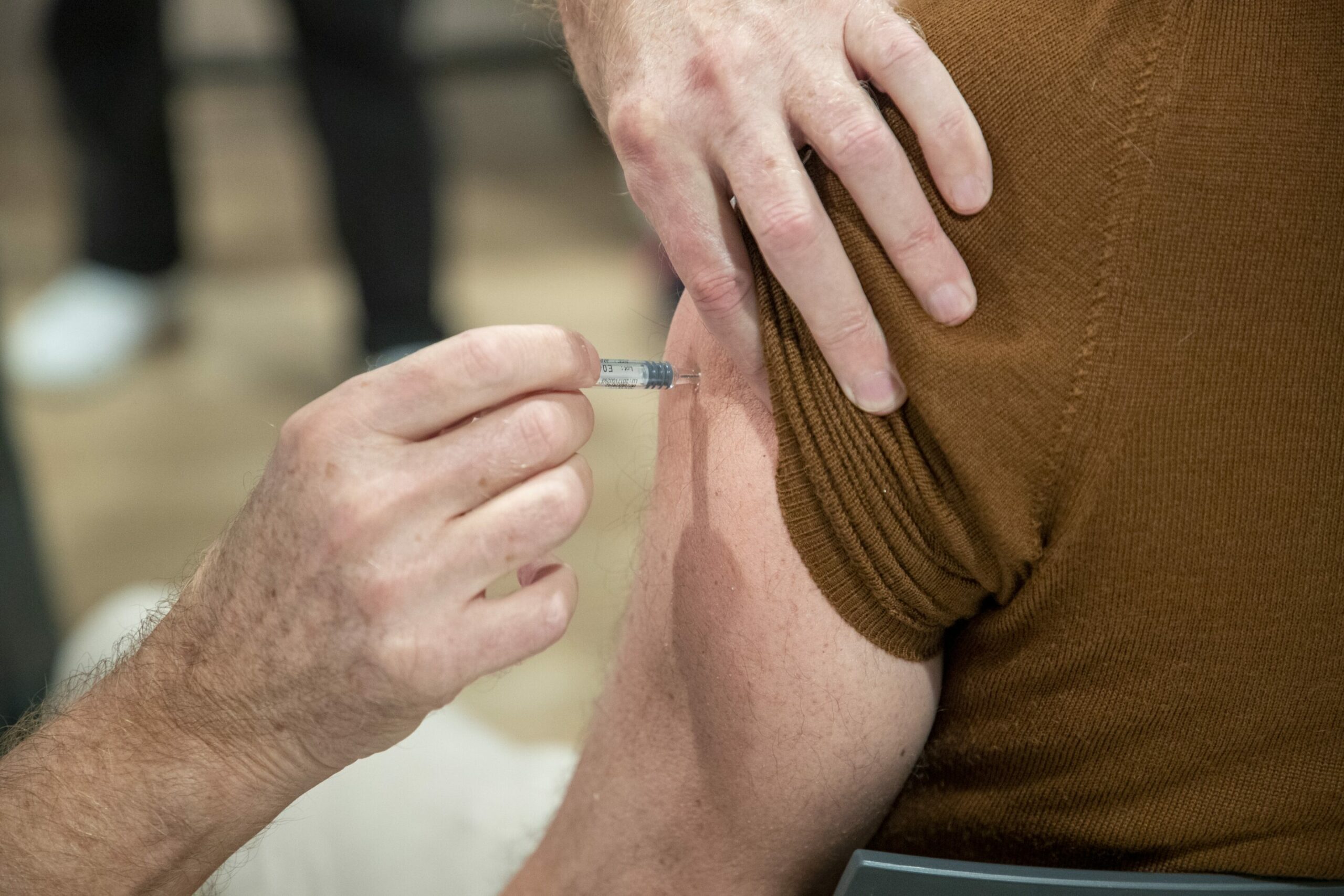
Illustrative image of a person being vaccinated. Credit: Belga/Nicolas Maeterlinck
Additionally, vaccines can reduce the risk of mpox infection, although this does not guarantee full protection against the disease, according to the ITM.
In late March, Belgium's Superior Health Council updated its mpox vaccination recommendations, which target those who have the highest risk of having mpox.
Pre-exposure vaccination is recommended for some people travelling to areas where they are likely to be exposed to mpox and for people with many different sexual partners, including MSM and sex workers.
Post-exposure vaccination is recommended for close contacts of confirmed, probable or suspected cases and certain vulnerable groups, such as immunocompromised people.
