
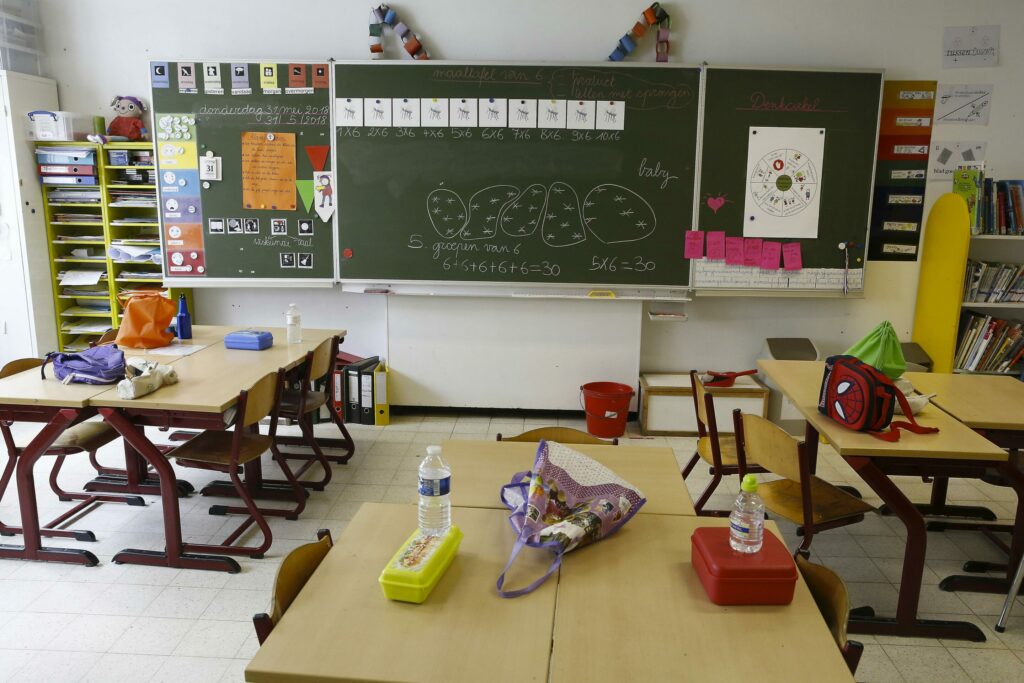
After seven weeks of summer holidays, the nearly 900,000 pupils in the French-speaking education system in Wallonia and Brussels, along with their 120,000 teachers, will return to school next week. However, the atmosphere remains tense.
The final weeks of last school year were marked by a historic protest movement by the teaching profession against the austerity measures imposed by the Government of the French Community (MR-Les Engagés). The start of the new school year is shaping up to be just as contentious.
"The atmosphere in the schools has not cooled down – far from it," Roland Lahaye, general secretary of the Christian education union CSC-Enseignement, told Belga News Agency.
The trade unions have submitted a strike notice valid until 27 September to cover all grassroots-led industrial action. This is a symbolic date, as it coincides with the French Community Day.
Risk of new protests
"If the most far-reaching measures are not withdrawn and there is no genuine consultation on the part of the government, there is a risk that a movement will emerge which will continue," said Adrien Rosman of the socialist union Setca-SEL.
The Mars Attacks! movement, one of the driving forces behind the teachers’ protest a few months ago, also promises to resume its activities.
At present, stress and unrest are particularly evident in schools. Quite a few teachers are still waiting for more clarity regarding their workload for this school year following the reforms. Despite the promised support measures, many fear they will lose teaching hours.
The coming period will also be challenging for headteachers: they must redistribute their teachers' duties following the increase in teaching hours, while also informing those colleagues who will be left out.
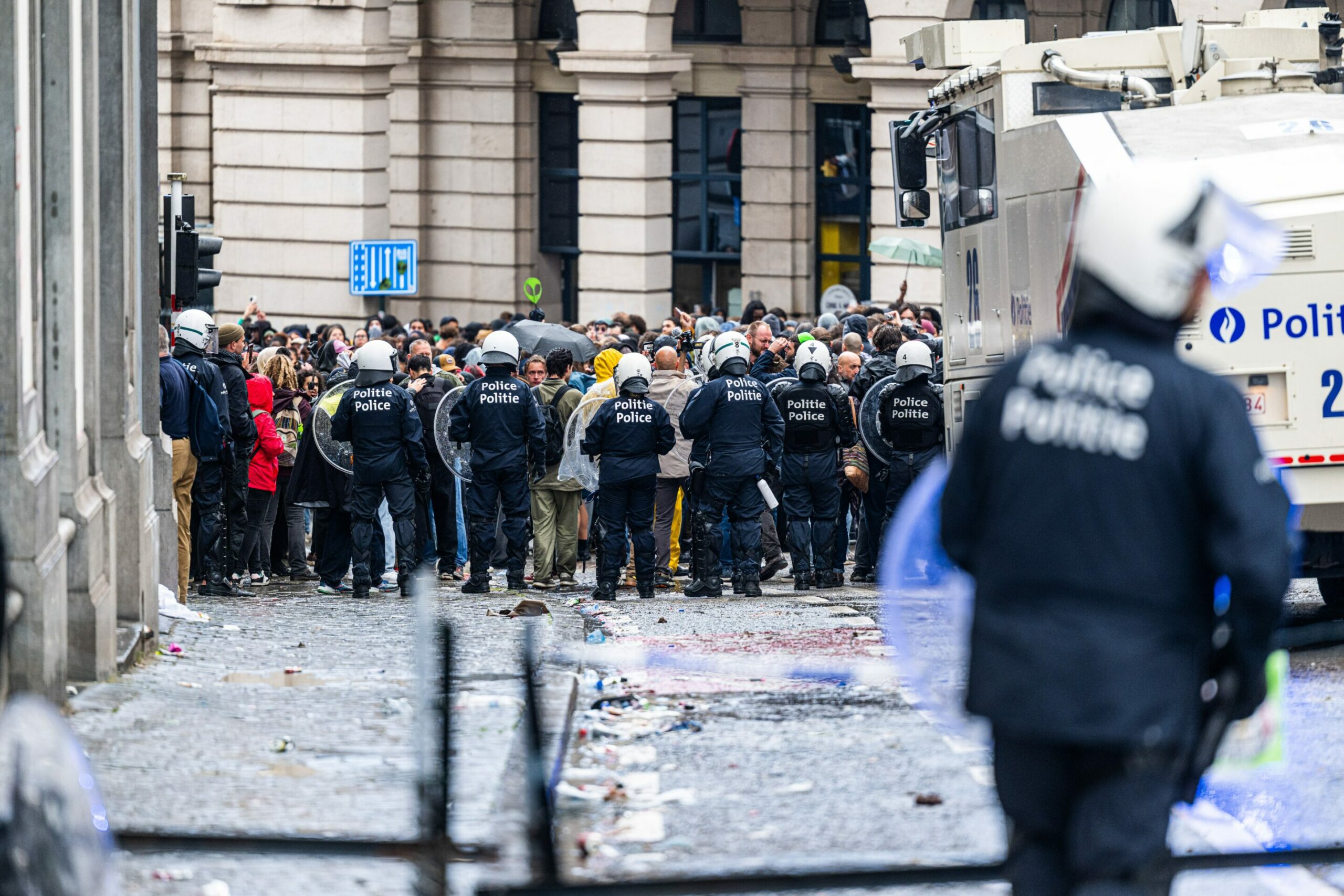
Riot police pictured at a protest gathering of teachers in front of the Federation Wallonia-Brussels Parliament in Brussels. Credit: Emile Windal/Belga
In response to the discontent, Francophone Education Minister Valérie Glatigny (MR) indicated during the summer months that she wishes to restore dialogue with the sector. A proposal on this matter is currently being considered.
“The aim is to involve those on the ground at an earlier stage in reforms, in order to assess their feasibility and sustainability, whilst maintaining the existing consultation process," Glatigny's office said.
Over the next ten months, two key education issues are on the government's agenda. The first concerns the introduction of permanent contracts for teachers, which the government intends to offer to all new teachers from September 2027.
However, progress on this issue has been somewhat slower due to the budgetary impact, specifically the cost of the employers' contribution.
Not rushing into a new project
The second reform is the introduction of the new common core curriculum for the second and third years of secondary education. The entire education sector is eagerly awaiting the text of the decree, as this common core curriculum is due to be launched within a year in the second year of secondary education.
Normally, the reorganisation of the final three years of secondary education should also be set in motion, to bring them more closely into line with the common core curriculum.
The government appears to be taking a somewhat wait-and-see approach. "In a context where teachers have, in recent months, highlighted their concerns and fatigue regarding the succession of reforms, it would be inconsistent to rush into a new major project."
Related News
- Georges-Louis Bouchez says MR will win 2029 elections despite bad polling
- 'Bootcamp for rioters'? Defence Minister wants army training after Brussels protests
- 'Shame' versus 'necessary': Education cuts in French-speaking Belgium divide politicians
- Higher education staff decide to join teachers' protest
