
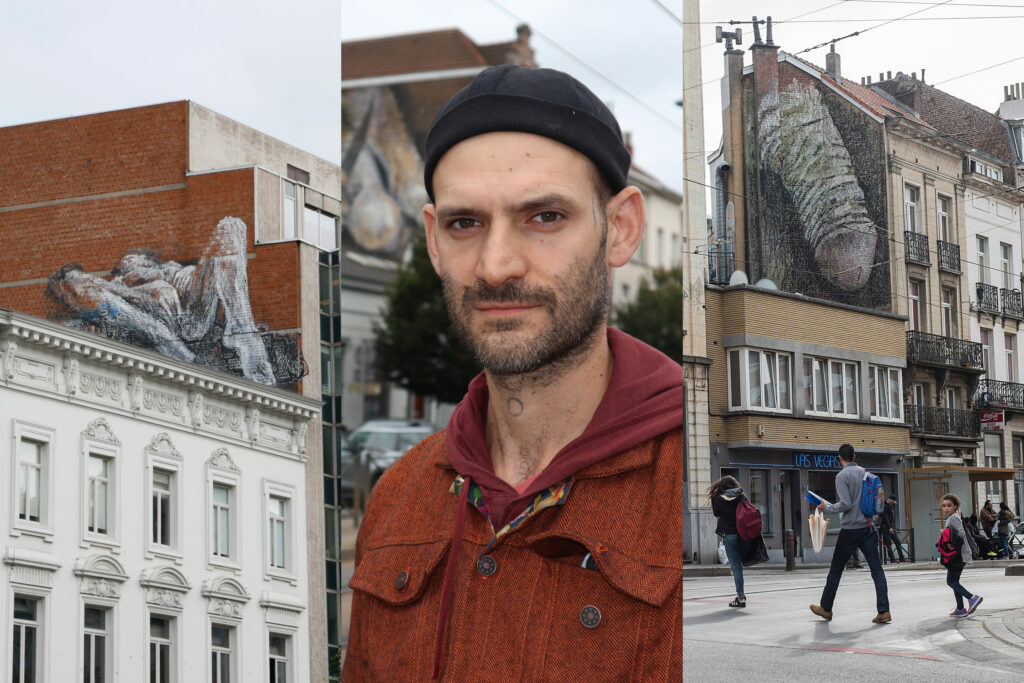
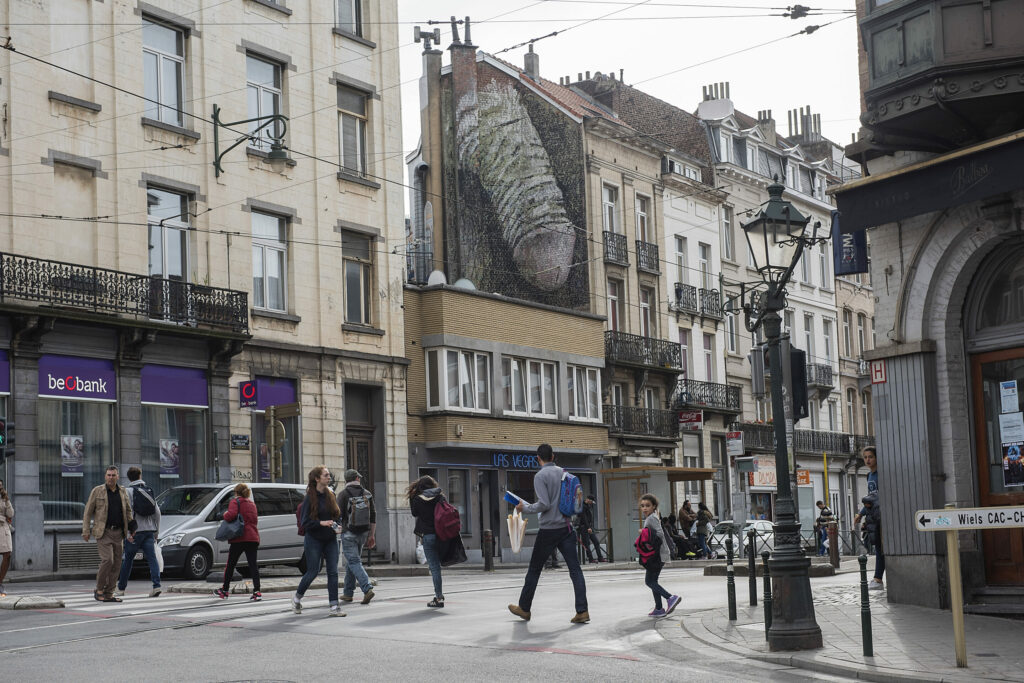
Under the pseudonym Bonom, Vincent Glowinski has been painting some of the most polarising murals Brussels has ever seen: a masturbating woman on Place Stéphanie, a penis on a wall in Saint-Gilles, and what looks to be a murder scene on the Molenbeek Canal.
Glowinski recently turned 40 – a major milestone in his life.
Now, in a sit-down interview with The Brussels Times, he seems ready to reveal the workings of his inner mind that led to these creations, for the first time in his life.
Who is Bonom?
All of the murals he created as Bonom are located in Brussels. There are "about 100" of them throughout the city, according to the artist. Many, however, were painted over due to being created illegally. "I wouldn't know how to count them all."
"I always paint in the districts I cycled through. In the beginning, it was very much Flagey in Ixelles, going to the city centre. Later, I lived in Saint-Gilles and worked in Molenbeek, so you could trace my steps through another line," he said.
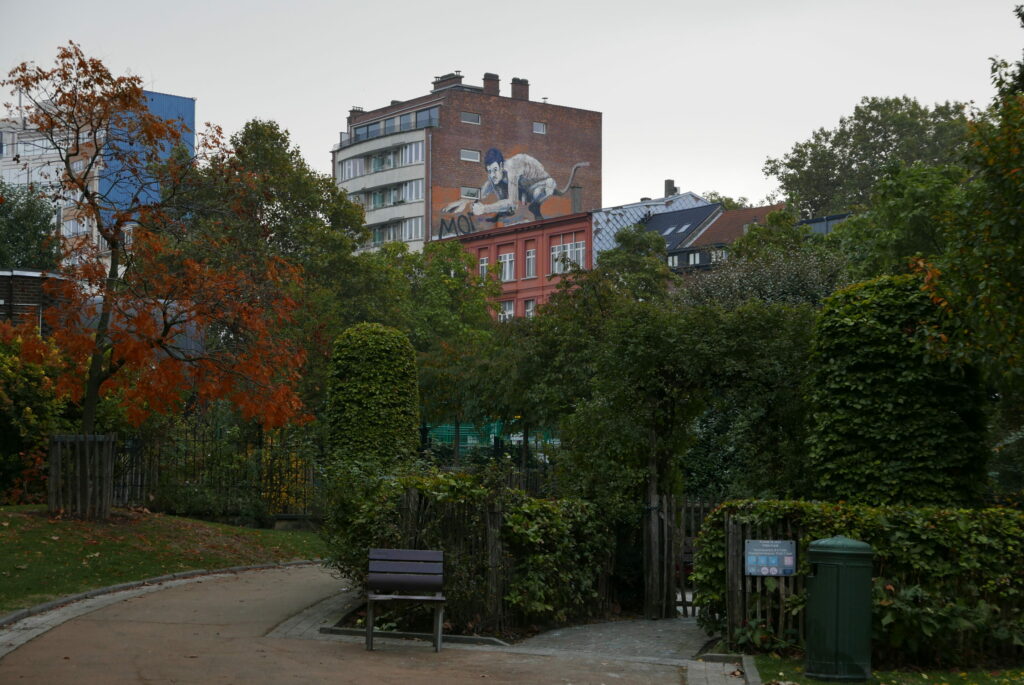
"Moi" by Vincent Glowinski. Credit: Vincent Glowinski
Born into an artistic Parisian family, Glowinski originally came to Brussels in his early adulthood to study at the La Cambre art academy. Despite spending his formative years in the city, it is hard to find the artist there these days; Glowinski moved out to his country of origin, France.
"Initially, it was graffiti, tagging and lettering," he said. "It was a way to emancipate. I found something strongly appealing about moving through the city and painting illegally."
Later, he got bored of the simplicity of tagging, and his artistic roots kicked in. “As I started drawing classes in art school, I switched to other subjects. I became interested in the museum of the Institute of Natural Sciences, observing animals, skeletons and the nature of humans.”
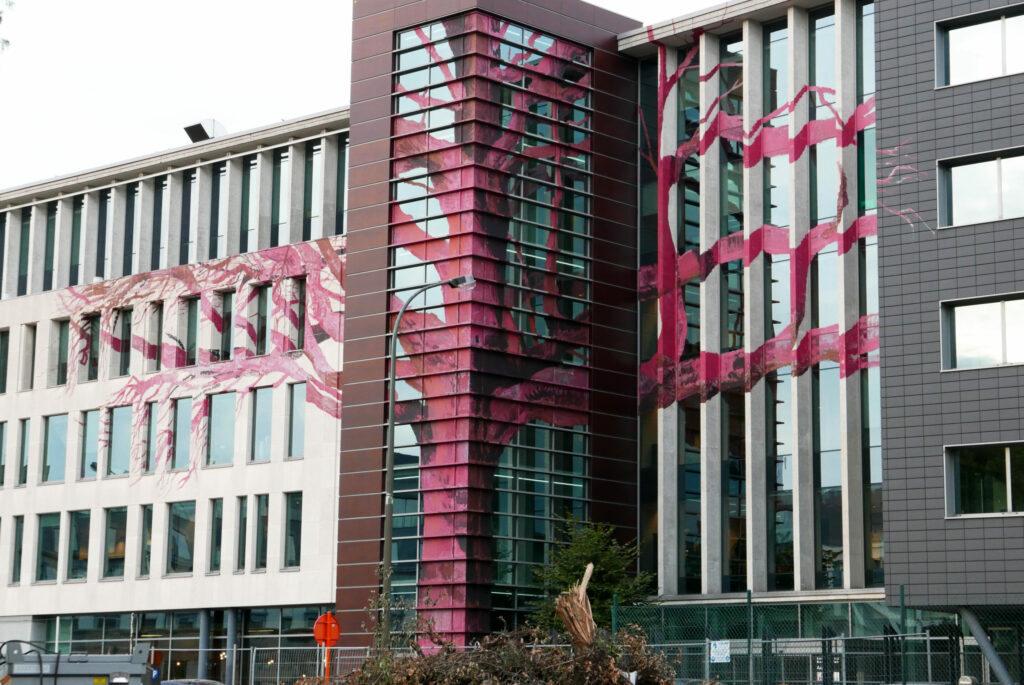
Credit: Vincent Glowinski
When he was 19, Glowinski abandoned graffiti fully. “I switched to drawing in my sketchbook and put it on the wall. I was inspired by hip-hop, with its movements. At the same time, I liked the décalage [contradiction, ed] of putting academic drawing into street art.”
The name Bonom was chosen organically, coming from the French word “Bonhomme”, roughly meaning a stick figure or a simple drawing of a man. The term stuck in Glowinski’s head from his art classes. “I tried a few. I needed a short name that sounded good, and Bonom stuck.”
However, more meanings were attached to the pseudonym over time. Particularly, an image of a monkey – Glowinski’s “totem animal”. “It’s like bonobo. Or one time I visited an archaeological site in Guatemala, at a campsite called 'El Mono Blanco', the white monkey. It’s inverse Bonom."
"It’s a fusion of a human and an animal, which fits me very well," the artist said.
A dialogue with Brussels
Many macabre scenes appear in Glowinski's early-stage murals. This, he said, is because he is fascinated with the skeleton and morphology. "I love the duality of life and death. In a sense, my works are about bringing life back to the dead – dancing skeletons, running animals. There is a cycle of death and new lives as reproduction, be it in the statue or drawing."
However, the works that really brought Glowinski fame are the ones with erotic or sexual themes.
Most of them are painted without prior authorisation on private property, leaving the decision of keeping or removing the works up to the owner. Sometimes, Glowinski would get access to a spot with help from cooperative neighbours, but most of the murals are still illegal.
Credit: Vincent Glowinski
When talking about the sexual nature of some of his best-known work, Glowinski finds it hard to put his thoughts into words. "I’m still reflecting on it myself. Maybe it’s something I will introduce in my upcoming retrospective exposition."
The closest he comes is aiming to shock the viewer, provoke an emotion and force confrontation with a social taboo. "Provocation is a target, but not the only one. I am looking for a strong reaction, a voice." He describes his murals as a "dialogue with Brussels."
With his work, Glowinski also wants to ask why something is provocative, and create a reflection in the world. "Take an image of the penis, for example. The penis is not aggressive. It’s just a penis… It's nudity. I’m trying to take the taboo off this topic."
Another disturbing image is the mural that depicts a man horrified at the sight of a knife coming up to his head. In fact, the work is a clever reproduction of a biblical scene – The Sacrifice of Isaac by Caravaggio.
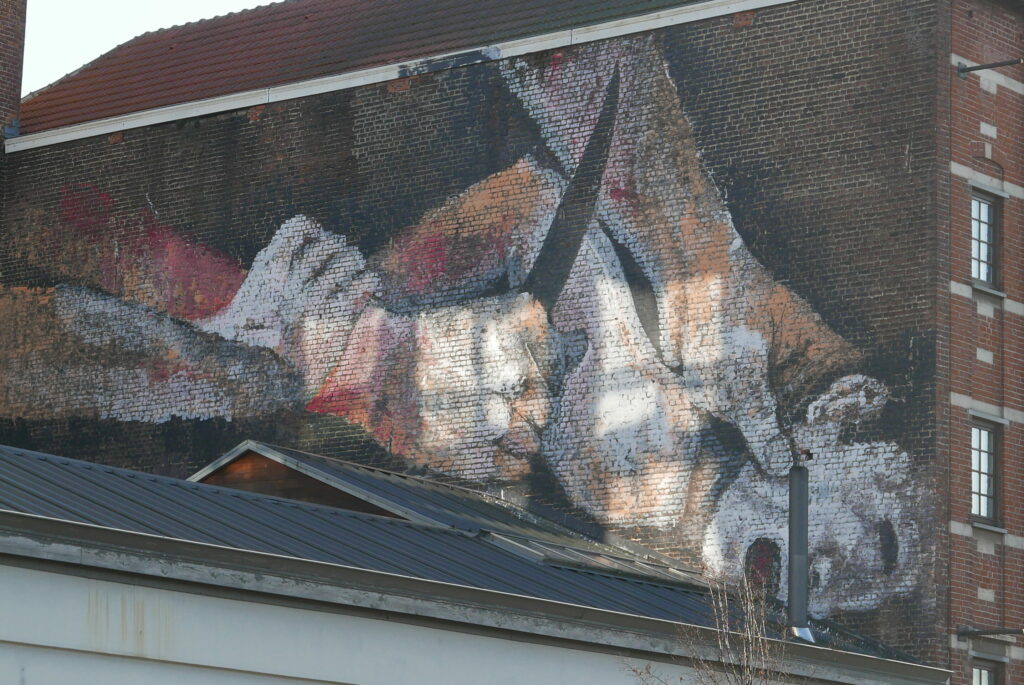
Credit: Vincent Glowinski
Whether or not Isaac was sacrificed in the end is ambiguous, and is a centre point of theological discussions in Judaism, Christianity and Islam.
“I didn’t come up with something new. I prolonged an image heavily rooted in artistic tradition,” Glowinski said about it.
It came at a time internationally, and specifically in Brussels and Paris, when people were shocked after the 2015 terrorist attacks, and Glowinski said that he felt an intense anti-Islamic collective anger growing in society. "That painting was a reflection on that."
Additionally, the mural is located on a frontier between Molenbeek and central Brussels, which he said is important. "I didn't paint it in Uccle."
But Glowinski's exact message here remains as ambiguous as the subject. “I don’t think I have a specific message, but the act is political.”
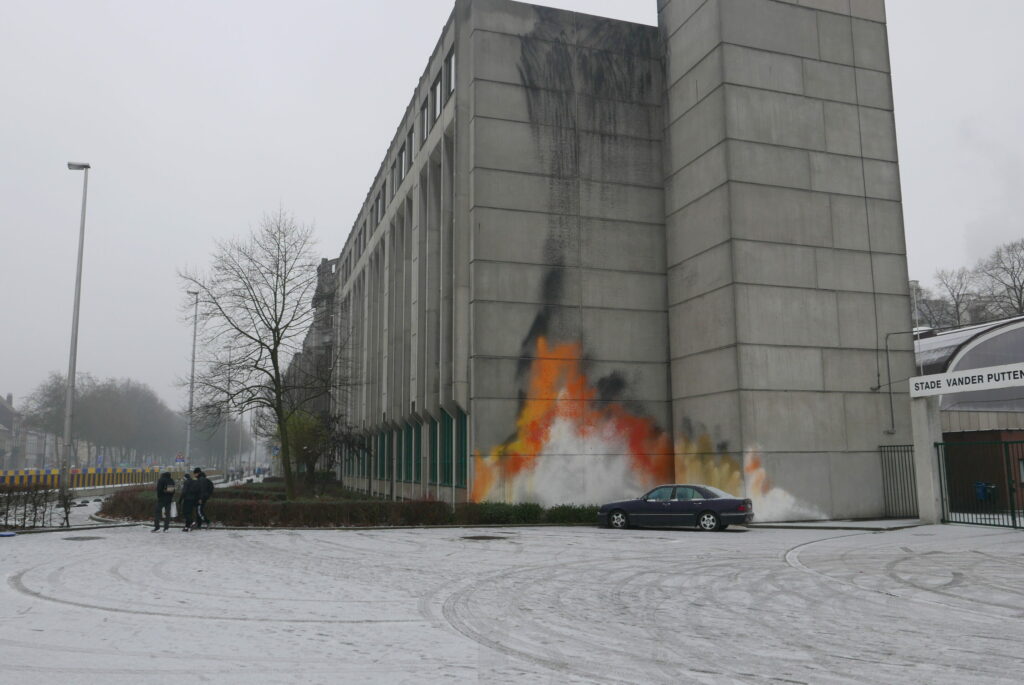
Credit: Vincent Glowinski
For a long time, Glowinski had to refrain from openly confirming some of the works as his, despite prominent Belgian street art experts crediting them to him. Now, however, for the first time, he openly took ownership of the works.
"It was important for me to stay in the shadows; I did not tag my works from 2008. It creates an opportunity to discuss my art outside of the image of the artist.”
At the same time, he had to consider the legality of it. "When the penis mural appeared in Brussels, it was very polemic and scandalous, so it was important for me to escape unwanted attention. When journalists asked me to confirm the authorship of a work, I played a game with them. It was too risky.”
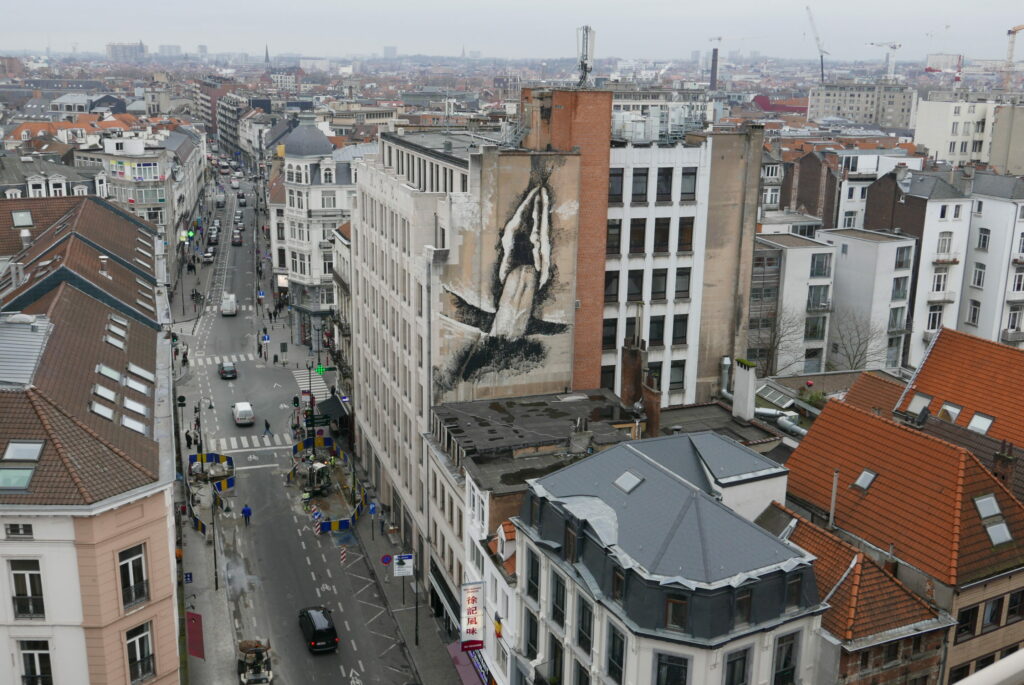
"The penetration." Credit: Vincent Glowinski
Back in 2010, when Glowinski was 23, he was caught by the police. While problematic at the time, ultimately it led to his work getting recognised by the public, opening a path to making his name public.
From that point on, the artist was able to make enough money to live purely off his art, focusing on dance shows and commercial mural decoration.
When asked about his three favourite murals, the artist highlights three works: "The penetration," a portrait of Glowinski’s father (now gone) and "The hand" (image below).
Moving on from Brussels
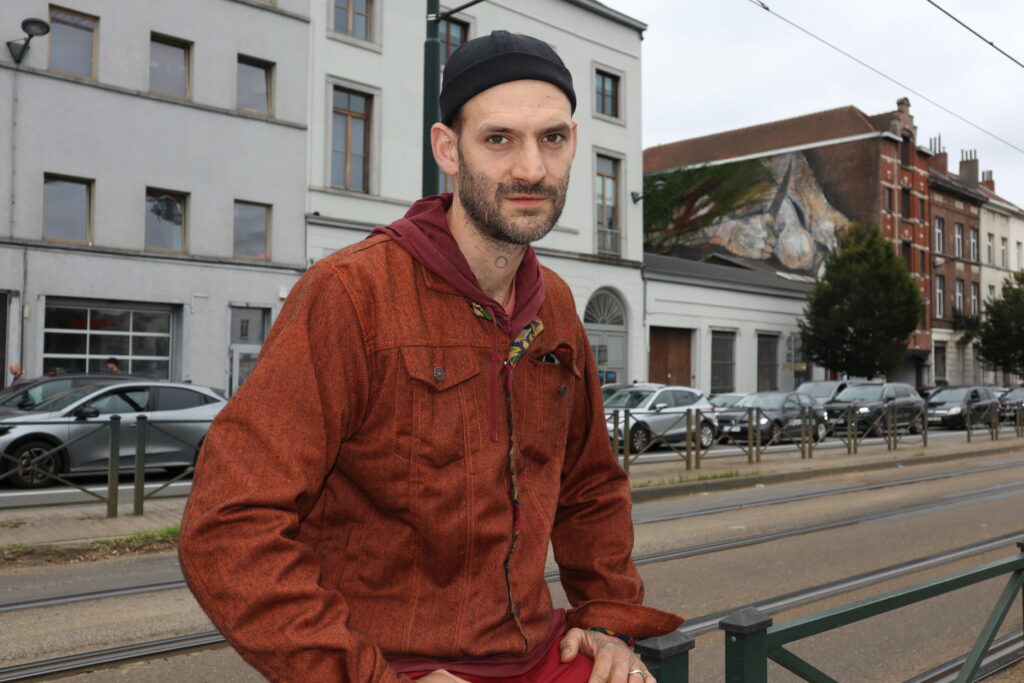
Vincent Glowinski (Bonom). Credit: Kosmos Khoroshavin / The Brussels Times
For a long time, Brussels was Glowinski's muse. When asked about finding a single word he associates with the city, he comes up with “friendship”.
"I had some periods when I really rejected the city, but it's also a fear of life I had in general. Brussels was a rich earth for me to grow on," he explained.
“It’s a very particular city, mixing a lot of identities, unlike Paris where I’m from. It’s both its strength and weakness: it’s a coin with two sides. Brussels is very anarchic; it’s the worst and best things coming together.”
Now, Glowinski explores different mediums. Admittedly, the French countryside where he goes to escape the hustle of the city is not well suited for murals. "I always enjoyed movement, so I’m exploring dance. Also sculpting, working with wood and cow skin."
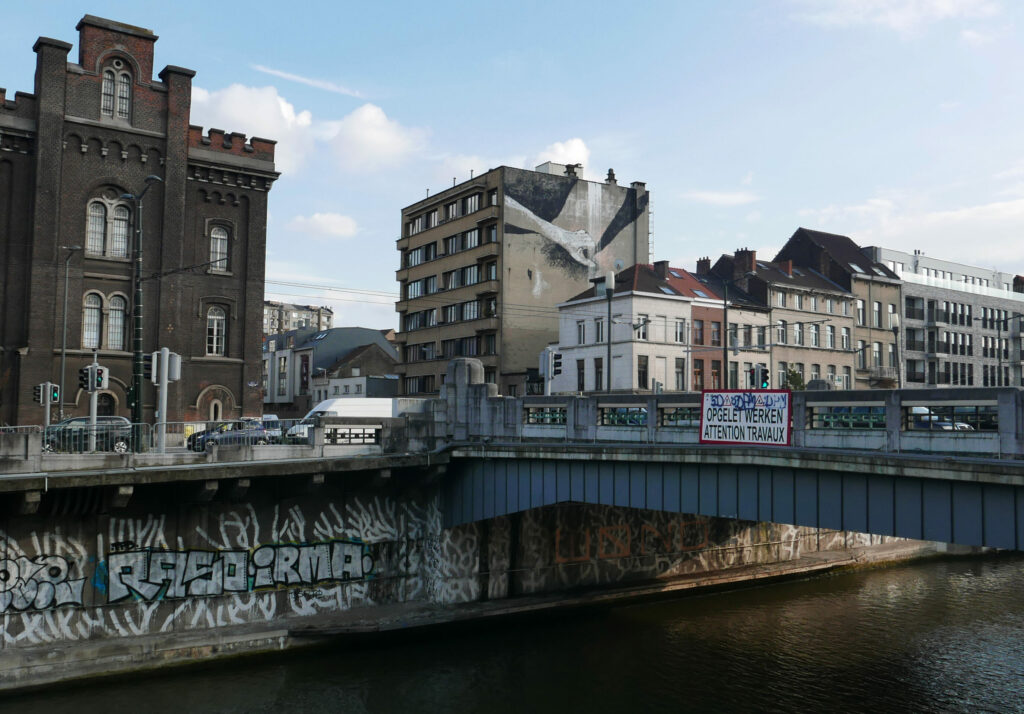
"The hand." Credit: Vincent Glowinski
He also settled down, becoming a family man with his partner and three children. Prompted with the question of whether his family life negatively impacted his art, he responds that he "doesn’t want to believe this cliché."
"Inspiration for art can come from different places, it’s not always pain and solitude. Art can come from comfort and romanticism; there are different ways," he said. "I see art and life as inseparable. Art is a communion of society."
