
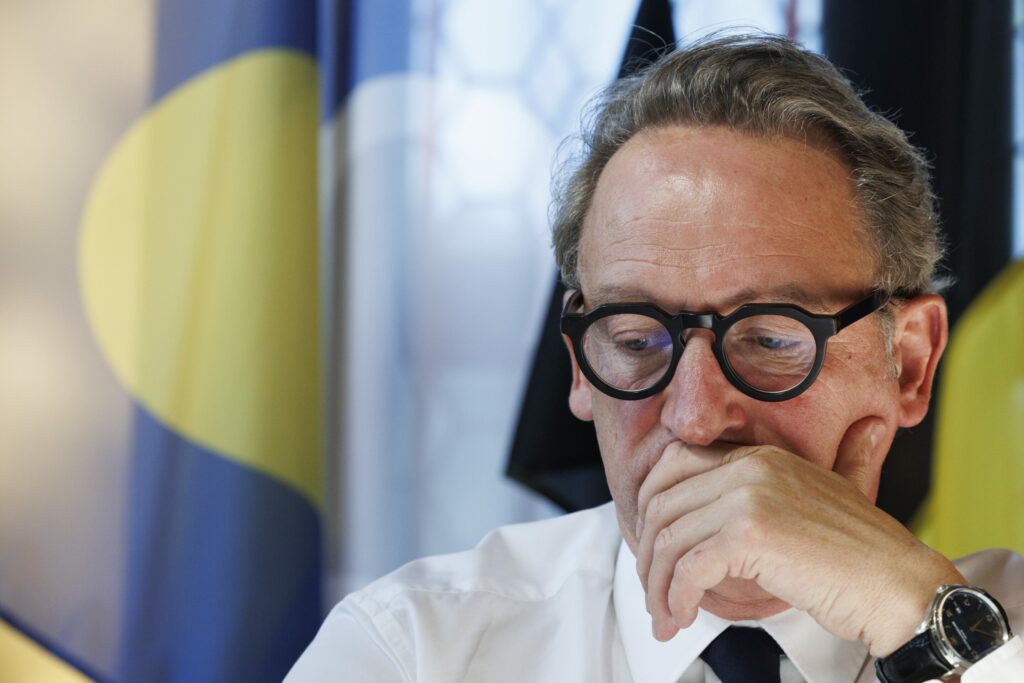
Brussels' soon-to-be-appointed drugs commissioner will play "an essential coordinating role" in the fight against drug trafficking, stressed Brussels Minister-President Boris Dilliès (MR) in response to harsh criticism of the role.
The general prosecutor of Brussels, Frédéric Van Leeuw, on Thursday morning called it "a laughable idea" to appoint a Brussels drug commisioner while a federal one is already in place – calling the position is "superfluous."
"The Brussels Public Prosecutor’s Office does not have enough staff to handle the cases," he said. "And yet we are going to set up a new structure, even though there is already one at federal level that does exactly the same thing."
According to Dilliès, however, the Brussels Drug Commissioner’s position is "anything but superfluous," he said in a press release on Thursday afternoon. "It is a missing link. In Brussels, we must bring together all stakeholders in the fields of prevention, security and health."
The introduction of a regional drugs commissioner was part of the Brussels Government’s general policy statement. The role is intended to facilitate the coordination of the actions of local authorities, mayors, police chiefs and the federal authorities, with a focus on prevention and public health.
"No one can currently take care of regional coordination for us. Drug trafficking is no laughing matter: the situation in the capital is serious, and we must equip ourselves with the resources to take action," Dilliès stressed.
'Cannot tolerate this any longer'
The Brussels Drug Commissioner, who will be part of the regional security service safe.brussels, will be responsible for defining the regional anti-drugs strategy. The commissioner will be appointed in the coming days.
The role has been designed in consultation with National Drug Commissioner Ine Van Wymersch to ensure the system’s complementarity. She therefore took part in the selection process, as did the Brussels Public Prosecutor Julien Moinil
The Commissioner will receive a salary equivalent to that of a head of department and will be able to rely on a dedicated team.
Since 1 January 2026, clashes between drug gangs have led to 74 shootings, resulting in 2 deaths and 28 injuries. Additionally, they have contributed to a climate of insecurity in various Brussels neighbourhoods.
"We cannot and will not tolerate this any longer," Dilliès said.
