
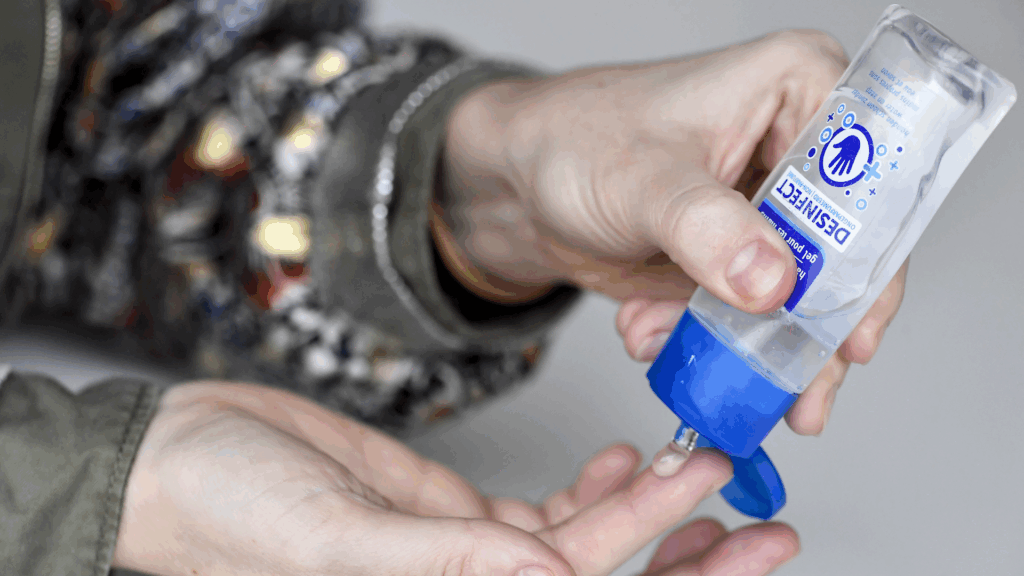
With experts assessing the use of ethanol in disinfecting products, there are rising concerns among actors in the health and cleaning sectors that it could bring about a de facto ban on hand sanitisers.
Biocidal products are used to control organisms like pests or bacteria. These can harm humans, animals or the environment, with examples including disinfectants and repellents.
Active substances in these products must be approved at an EU level before they hit the market. Customarily, the European Commission makes its decisions based on the opinions of the ECHA Biocidal Products Committee (BPC).
Ethanol's hazard potential
The BPC is currently assessing the safety and effectiveness of ethanol, a key ingredient of disinfectants, as a biocidal active substance.
This assessment includes determining if ethanol has a potential to cause cancer or harm human reproduction.
If the BPC finds these hazard potentials, it would be expected to recommend the substitution of ethanol.
This scenario could be "disastrous for public health," according to Florian Vernay, President of the European association for the detergents and maintenance products industry, A.I.S.E.
Public health at risk?
Earlier this month, A.I.S.E. released a joint statement with the support of representatives of 20 sectors, including the health, food, and pharmaceutical industries.
The statement denounces a lack of alternative substances that match the efficacy, safety and availability of ethanol in biocidal products.
It further notes that the repercussions would not only put food safety at risk but also public health.
“Alcohol based hand sanitisers are a fundamental, safe, and irreplaceable aspect of hand hygiene in hospital settings, which in turn is the single most important factor for infection prevention,” said Professor Didier Pittet, Former World Health Organization official, and Infection Control Programme Director at Geneva University Hospitals.
Possible misclassification?
Industry experts are concerned that ECHA's BPC is basing its assessment on data on "oral abuse and overconsumption of alcoholic beverages rather than the use of ethanol-based biocidal products."
Speaking to The Brussels Times, an ECHA spokesperson said that all available data has been considered by the BPC, although it noted that much of the data on toxicity effects included oral ingestion.
"It is good to note that when we evaluate the risk posed by specific uses, for example, the use of hand sanitisers, we take into consideration the specific type of exposure, for example, skin contact," said the ECHA spokesperson.
Misleading worries?
For now, it is misleading to say the "EU will ban hand sanitisers," a Commission spokesperson told The Brussels Times.
The BPC is expected to make a decision on the assessment of ethanol on 26 November.
"We cannot pre-empt what the opinion, nor its follow-up, will be," said the Commission spokesperson. "Once the opinion of the BPC has been adopted, the Commission will examine and discuss its conclusions, also with Member States in the Standing Committee on Biocidal Products."
Nonetheless, the spokesperson underscored that the "Commission will thoroughly assess any potential implications arising from the BPC opinion and ensure that any outcomes do not adversely affect public health."
