
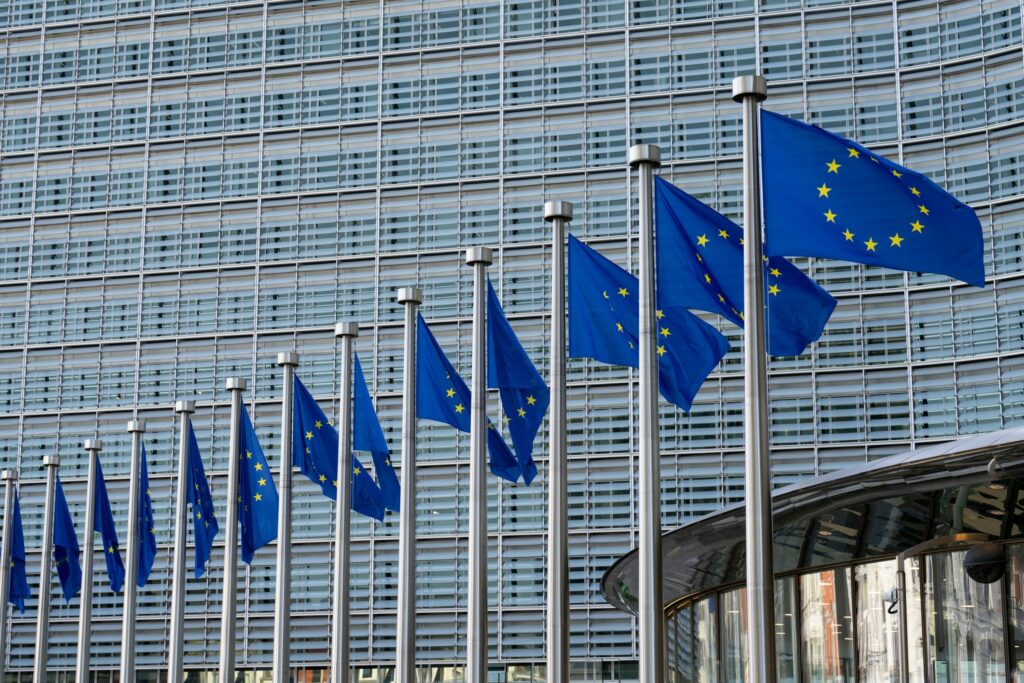
The European Commission recommended on Tuesday that Germany, France, the Netherlands, and six other countries gradually lift their internal border controls within the Schengen Area.
Border controls have been abolished within the Schengen Area, but Member States may temporarily reintroduce them if they deem it necessary to address a serious threat to public order or internal security. In principle, these border controls may last for up to two years, but this period may be extended in exceptional cases.
Citing the fight against irregular immigration or a terrorist threat, Belgium’s neighbouring countries, namely Germany, France, and the Netherlands, as well as Austria, Denmark, Italy, Slovenia, Sweden, and Norway, have been conducting border controls again for over a year now.
The Commission recommends that they work toward "gradually lifting" these controls. It cites several arguments. For instance, the new asylum and migration pact enters into force next week, which is intended to strengthen the protection of external borders and provide Member States with new tools to address illegal migration within the Schengen area.
“We are rolling out the most modern border management systems in the world. With these conditions in place, Member States are in the position to work towards phasing out controls at internal borders,” said European Commissioner for Internal Affairs and Migration Magnus Brunner, adding that irregular crossings of the external borders have already fallen by 40% this year.
In addition, according to the Commission, there are also more efficient and effective alternatives available that cause less disruption to the free movement of people within the Schengen Area. It points, among other things, to non-systematic police checks or mobile technologies for biometric identification and vehicle tracking.
September marks two years since Germany reintroduced border controls. Despite the decline in the number of asylum seekers, Interior Minister Alexander Dobrindt has already indicated that he intends to maintain the measure even after that.
In the Netherlands, the border checks have been criticised by the mayor of Nijmegen, Hubert Bruls.“We’ve had them for almost two years now, and they’re putting a strain on relations between our two countries,” he said, adding that the traffic jams caused by the measure are a daily nuisance that costs a lot of money and time.
