
After the Trump administration’s military intervention in Venezuela a week ago, its repeated threats since day one of the intervention to seize Greenland, by force or for money, has upset the EU which is currently considering its options to prevent a take-over.
As regards Venezuela, the EU is still treading carefully and was evasive about the legality of US military intervention there.
It its statements it agreed with the Trump administration about the lack of legitimacy of Maduros and the threat of drugs smuggling his regime had posed. Indirectly, it hinted that the US had not respected international law and the UN charter. EU Member States were also divided at the UN emergency meeting on US intervention in Venezuela last Monday.
Since then, it has become clear that the intervention was all about taking control over Venezuela’s oil resources, not about regime change and restoring democracy, in line with the new American national security strategy which considers the “Western Hemisphere” as its sphere of influence. Maduro’s illegitimate regime is left intact as long as it cooperates with the US on its conditions.
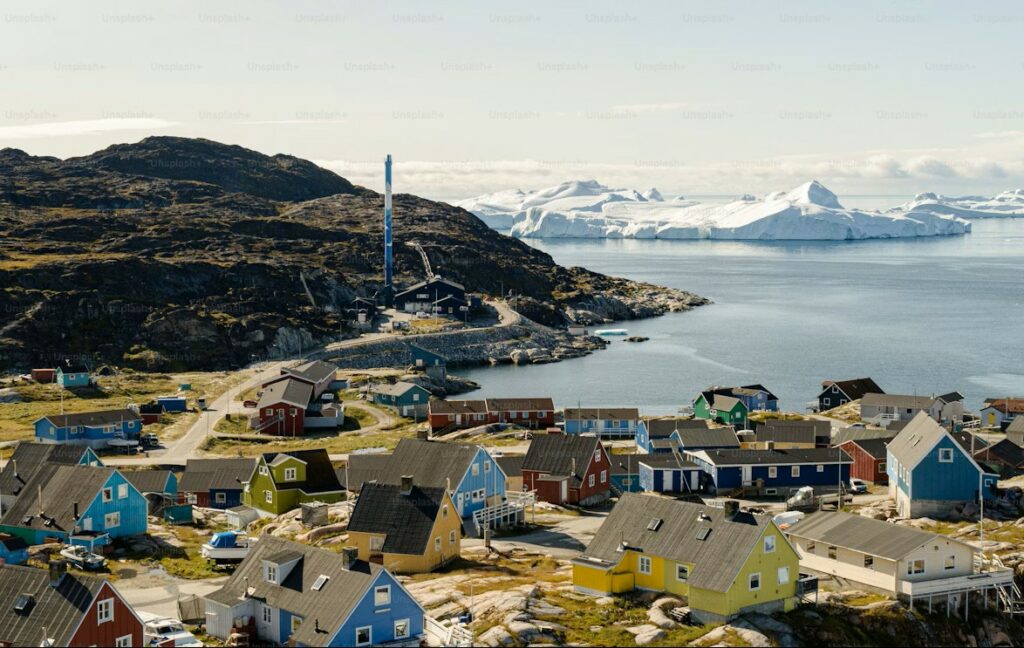
The situation as regards Greenland is totally different. Geographically it may part of the North American continent but historically, culturally and politically it is linked with Europe and its current status is an autonomous territory within Denmark, an EU Member State since 1973. With some 2.166 million km², Greenland is the world's largest island located in the Arctic.
Contrary to other former European island colonies, Greenland is defined as an overseas country and territory (OCT). It is not an integral part of the EU but closely associated with it through an association agreement signed in 2021. The agreement established a partnership to support Greenland’s sustainable development as well as to promote the values and standards of the EU. Greenland’s population of ca 60,000 people are Danish and thus also European citizens.
The Trump administration could not care less about this but it has not claimed that Greenland is ruled by a criminal regime or threatens the US. It is interested in Greenland because of its geopolitical location, close to Arctic shipping lanes and the prospect of exploiting its mineral resources. Trump claimed last Sunday that the US “needed Greenland from the standpoint of national security”.
That of course does not give the US any legal right to seize Greenland. If it was only a matter of security in the framework of NATO cooperation, the US has already a military base in Greenland and could reinforce it or open up closed American or NATO bases according to its agreement with Denmark.
However, Trumps’ adviser and deputy chief of staff, Stephen Miller was blunt in exposing the Trump administration’s imperialist world view. According to him, “We live in a world, in the real world … that is governed by strength, that is governed by force, that is governed by power.” Miller denied that Denmark has any right to the Arctic territory.
Trump himself does not accept any domestic or international legal constraints on his executive presidential power. “Yeah, there is one thing. My own morality. My own mind. It’s the only thing that can stop me,” he was quoted saying according to The New York Times.
The only moderating figure in the Trump’s administration seems to be the secretary of state Marco Rubio who uses diplomatic language. He has stated that the administration would prefer to buy the island from Denmark rather than invade it. That said, he reportedly pushed Trump to launch the military intervention in Venezuela.
Currently the US is said to look into a range of options, including the use of military force to acquire Greenland. “If the US chooses to attack another Nato country, everything will stop,” reacted Denmark’s Prime Minister Mette Fredriksen last Monday, hinting that it would be the end of NATO.
In a joint statement on Tuesday, leaders of France, Germany, UK and other countries, supported Denmark and urged the US to respect its sovereignty and the NATO alliance. “Greenland belongs to its people. It is for Denmark and Greenland, and them only, to decide on matters concerning Denmark and Greenland.”
According to opinion polls, the overwhelming majority of Greenlanders does not want to be part of the US. Economically, it is dependent on Denmark and would therefore probably vote for staying in Denmark if there would be a referendum on its future.
What can the EU do in the current geopolitical situation when it is dependent on continued American military support and solid security guarantees to Ukraine in achieving a lasting and just peace solution?
“If Trump invaded Greenland, abandoned Ukraine and jettisoned NATO, Europeans’ plight would be grim. In a world governed by force, Europe needs to be able to defend itself – not by 2035, but now,” political economist and writer Philippe Legrain wrote in The Brussels Times, listing different options. Invasion is probably not Trump’s preferred option for seizing Greenland.
The EU is well aware of Trump’s “transactional approach” to foreign policy. It was obliged to make concessions in its trade negotiations with the US when it faced a dilemma between two equally undesirable and uncertain choices. It had to swallow 'the least bad' deal in what was described as a act of ‘strategic realism’ in a new reality.
Is there again room for a ‘transactional approach’ where Denmark, supported by the EU, gives up Greenland (with the approval of the inhabitants there) or accepts US investments/access to minerals/ increased military presence there in return for strong US support and security guarantees to Ukraine?
“Anything is possible, though a transactional policy is hard to square with democracy, since it's not easy to persuade voters to, in effect, be chattel,” Legrain replied. “In practical terms, how credible would Trump's guarantees really be in such circumstances?”
Edward Arnold, Senior Research Fellow at London-based Royal United Services Institute (RUSI), who was interviewed in The Brussels Times, is also skeptical to such a deal. “It has been identified as a possibility but I think it will stay like that. Lots for Denmark to give up, and while they are supportive of Ukraine its too much for a single country to take.”
However, a political scenario where the Trump administration promises stronger security guarantees to Ukraine in exchange for an increased US presence in Greenland is not out of question, an EU diplomatic source told Politico.
In the meantime, the European Commission has excluded it. At its press conference on Friday, its spokespersons told The Brussels Times that Greenland and Ukraine are two completely different issues.
Both are priorities for the EU. “On Greenland, we have made our position clear. It’s part of Denmark. Territorial integrity and sovereignty are fundamental principles of international law. The same applies for Ukraine. The EU and the US are continuously engaged in the efforts for a lasting peace and we have welcomed US leading role in the talks with Russia."
Referring to the recent Paris declaration, the spokesperson assured that the EU will work with its NATO partners to contribute to security guarantees to Ukraine.
