
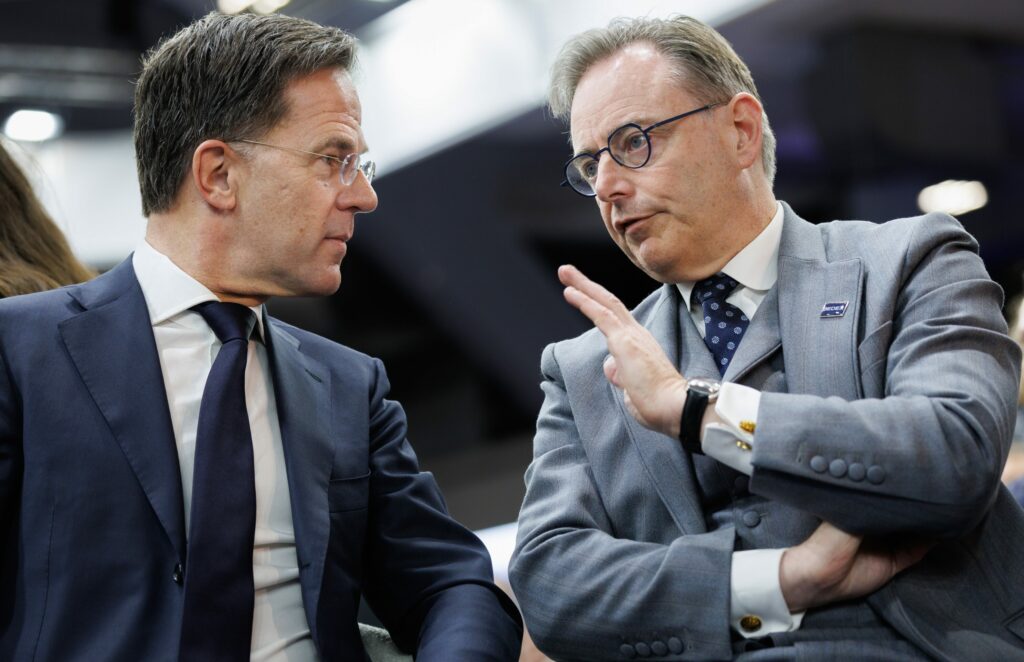
Defence investments, industrial production, and how the alliance will continue to support Ukraine during the ongoing war will be on the menu at Tuesday's NATO summit in the Turkish capital, Ankara,
On Tuesday, 7 and Wednesday, 8 July, NATO leaders will be convening for the annual NATO summit.
A year after the members of the military alliance committed to spending 5% of their GDP on defence, NATO wants to take stock of the progress.
While all countries have reached the previous target of 2% of GDP in spending, only Poland and the Baltic states have made real progress towards the new commitment.
In an unprecedented move, the defence industry will take centre stage in Ankara. The entire first day of the summit is fully dedicated to a defence forum, which has been allocated more hours than the leaders' meeting itself.
Another key topic will be the war in Ukraine. As the conflict drags on in its fifth year, President Volodymyr Zelensky will attend the summit with the hopes of securing new military support while his country is increasingly relying on domestically produced weapons for its long-range strikes.
NATO's support for Ukraine has dropped significantly in the past years as the United States has pulled its funding. In recent weeks, it has come under increased pressure following a conflict between Ukraine and Poland over an agreement to share Ukrainian drone technology in exchange for Polish fighter jets.
Belgium has not announced a military aid package this year. It did support a loan from the European Union after initial pushback from Prime Minister Bart De Wever.
Where is Belgium investing to reach the NATO targets?
Historically, Belgium has been one of the lowest spenders in the alliance. As of 2025, Belgium is spending 2% of its GDP on defence, up from 0.9% in 2019. Minister of Defence Theo Francken has stated that reaching the new 5% guideline will take 10 years.
The majority of Belgian defence spending is not going to investments in new equipment. According to data from NATO, Belgium only spends 13% of its defence budget on equipment, by far the lowest of all countries. NATO recommends allocating at least 20% of the budget to equipment.
It recently announced a €3.7 billion investment in the ODIN program, a research project that will develop drones and autonomous weapons. It is also spending €3.1 billion on new air defence systems.
Salaries and retirement payments make up a third of the costs.
