
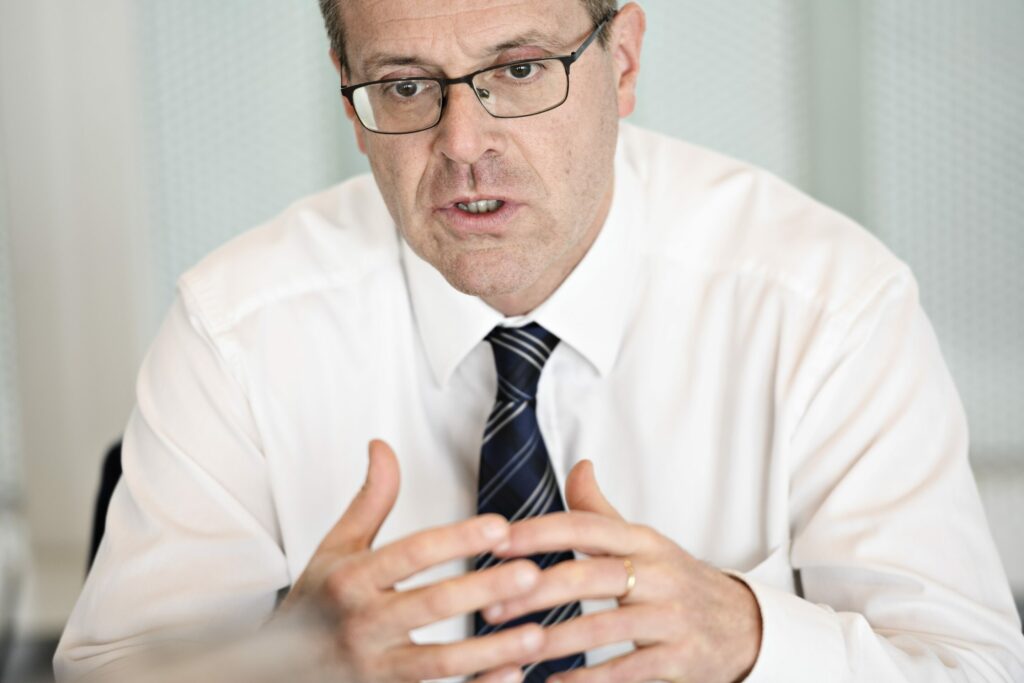
Facing disinformation, conflict and a worsening mental health crisis, Europe must take charge of its own well-being despite financial constraints, the World Health Organisation’s regional director for Europe, Belgian doctor Hans Kluge, told AFP on Friday.
"We face a huge challenge because most of our programmes were funded by USAID and the United States," he said ahead of a meeting of health leaders from 53 European member states. Since returning to the White House, Donald Trump has cut international aid and halted USAID operations.
The organisation is facing an "existential crisis" due to sharp drops in funding from major donors. "The United States, Germany, France and the United Kingdom are contributing far less," Kluge said. Despite a 20% budget cut, the UN body aims to strengthen its support for national health administrations across the continent.
"The WHO Europe of the future, reimagined, is healthier, stronger, trustworthy, evidence-based and politically neutral," he said, outlining a reform plan to refocus priorities and rebuild trust.
Citing lessons from the pandemic, Kluge said WHO Europe has adopted a "dual-track approach" to manage crises while maintaining public health programmes. He urged greater European engagement in Ukraine and called for more countries to treat critically ill patients from Gaza.
"Some 3,800 children urgently need specialised treatment outside Gaza," he said, adding that only 17 countries have so far accepted to host patients.
Mental health remains a "burning issue", he warned, with one in six Europeans and one in five children experiencing mental health problems at some point in their lives. Wars, isolation, anxiety and the aftermath of Covid-19 have deepened the crisis.
Kluge also highlighted rising youth addiction, poor digital protection, climate stress, ageing populations and non-communicable diseases as growing threats.
"We can channel our scarce resources in these directions," he said, stressing prevention and vaccination. In 2023, 366,000 "zero-dose" children had never been vaccinated; the number rose to 440,000 in 2024.
Vaccines, he said, remain "the most cost-effective public health tool we have". Investing in prevention, he added, "returns sevenfold".
"It is time for Europe to take care of Europe."
