
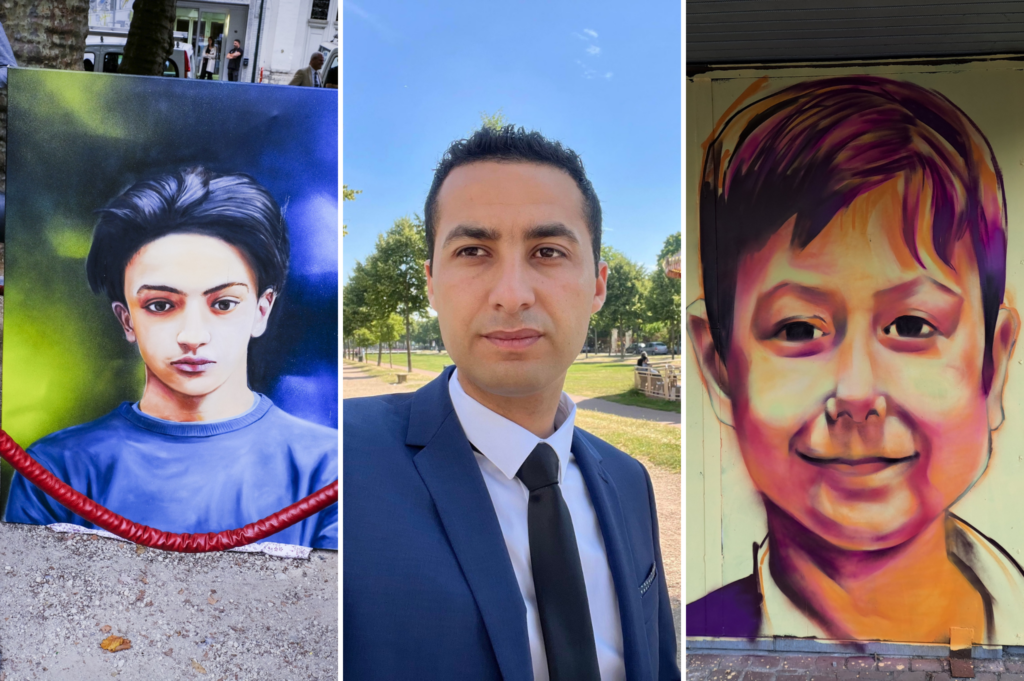
The death of a pedestrian who was struck by a police car in Ixelles has sparked concerns about police accountability and driving practices in Brussels.
Hocine Hamoudi, 33, who was a European Parliament employee, was killed last Monday morning while crossing Avenue de la Couronne at a zebra crossing. A friend told Het Nieuwsblad that Hamoudi was a "role model for everyone" and a boy the whole village was proud of".
The car involved in the accident, an unmarked black Mercedes, belonged to the Federal Police Directorate of Protection (DAP). Four other vehicles were also damaged in the crash.
According to Het Nieuwsblad, the vehicle was travelling at 90 km/h – three times the speed limit on the avenue. The DAP officers involved were reportedly on their way to the airport to collect the Israeli ambassador when the incident happened.
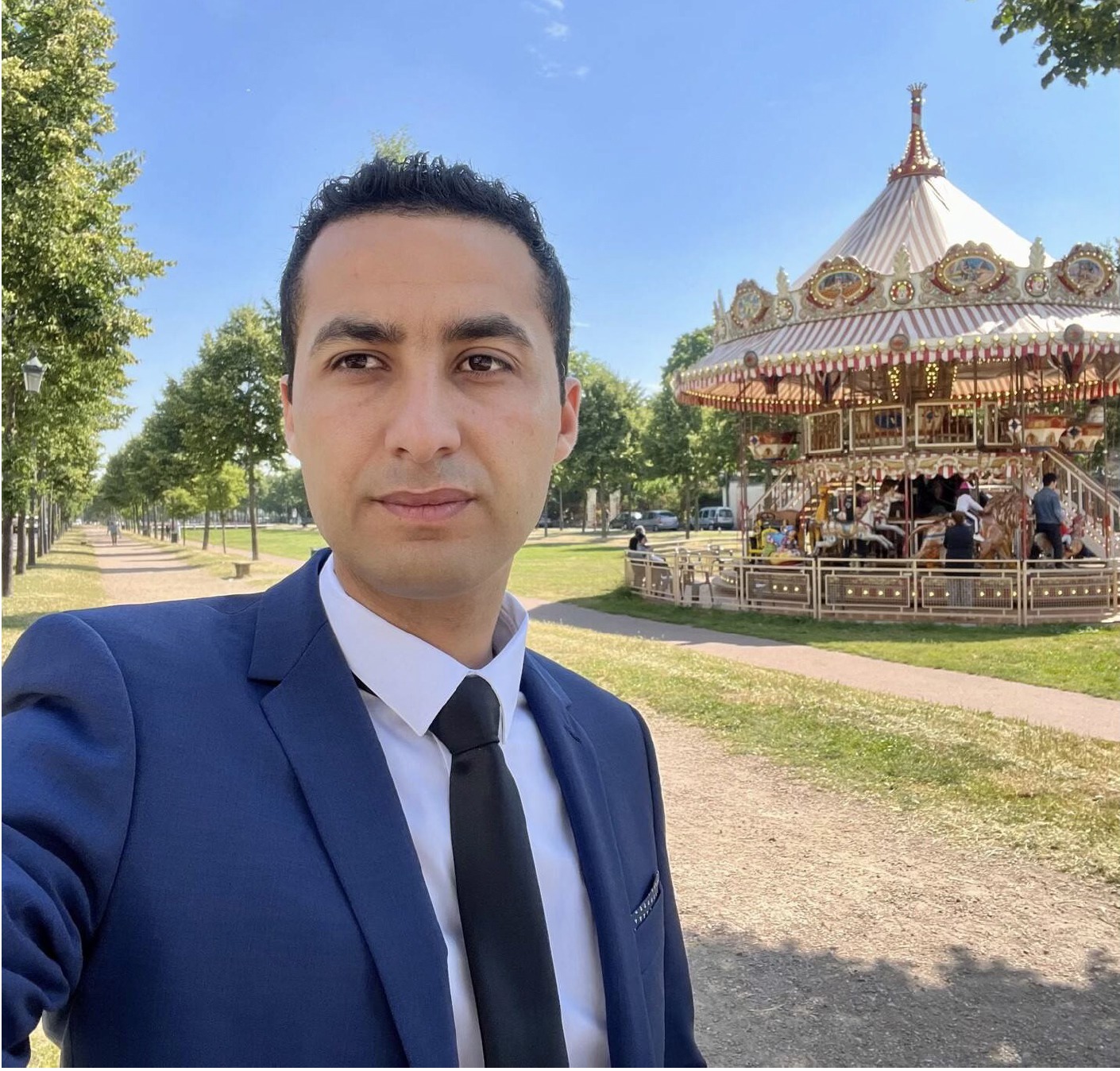
Hocine Hamoudi. Credit: Facebook
The officer behind the wheel, a 35-year-old man, was questioned on Tuesday by the investigating judge, who subsequently charged him with involuntary manslaughter.
"There were three members of the Federal Police in the vehicle," explained Laura Demullier, spokesperson for the public prosecutor's office. "All three suffered minor injuries, were in shock, and were taken to the hospital. The police officer behind the wheel, a 35-year-old man, tested negative for alcohol and drugs and held a valid driving licence."
A disturbing trend
A make-shift memorial to Hamoudi has been created by the Brussels Road Safety group, Heroes for Zero, near to where the accident happened. A pair of white "ghost shoes" was placed at the site to mark the tragedy.
Many observers have pointed out that Hamoudi's death is part of a disturbing trend in the capital. In the past three years, police have been involved in several road accidents where members of the public were killed. According to Heroes for Zero, since 2017, eight people have died after being hit by police vehicles in Brussels.
In August 2019, 17-year-old Mehid Bouda died after being struck by a speeding police vehicle near Mont des Arts. The vehicle, which was travelling at 98 km/h in a 30 km/h zone, had its emergency lights on, but no siren activated as officers responded to a burglary in Schaerbeek.
In April 2024, a Brussels court decided not to prosecute the officers involved.
Another tragic incident happened last year. Fabian, an 11-year-old schoolboy, died in a police chase as he rode his electric scooter through Parc Elisabeth in the Brussels municipality of Ganshoren.
The police vehicle involved was travelling at more than 40 km/h without a siren or flashing lights. The officer behind the wheel, a 26-year-old man, faces a possible sentence of 20 to 30 years in prison.
'Cities are not racetracks'
The latest incident has triggered a wave of anger across the city. In an impassioned social media post last week, Brussels resident Robin Roels said the incident had made his "blood boil".
"Cities are not racetracks," he said. "They are shared spaces. They belong first and foremost to pedestrians, cyclists, children, elderly people. Not to heavy, fast-moving metal machines granted near total impunity ... A city that prioritises speed and status over human life is a city that has lost its moral compass."
Speaking to Bruzz, Heroes for Zero denounced what it describes as "a culture of speed" within the police and the frequent, sometimes abusive, use of urgency to justify excessive speeds in urban areas.
"These are not isolated incidents," the organisation said in a post on social media. "They highlight the profound dysfunction of current practices and a normalised culture of speed within the police force.
"We refuse to accept these deaths as inevitable. We reject a system where the privileged access of VIPs comes at the expense of everyone's safety. The deaths of pedestrians can never be accepted as 'collateral damage' to police work."
Harold Habousha, the group's coordinator, has reportedly called on Interior Minister Bernard Quintin (MR) to review police driving practices.
Heroes for Zero also criticised the response from local authorities, noting that the recent accident in Ixelles occurred on communal roads and that the avenue has been in poor condition for years – a situation which makes residents feel abandoned, it says.
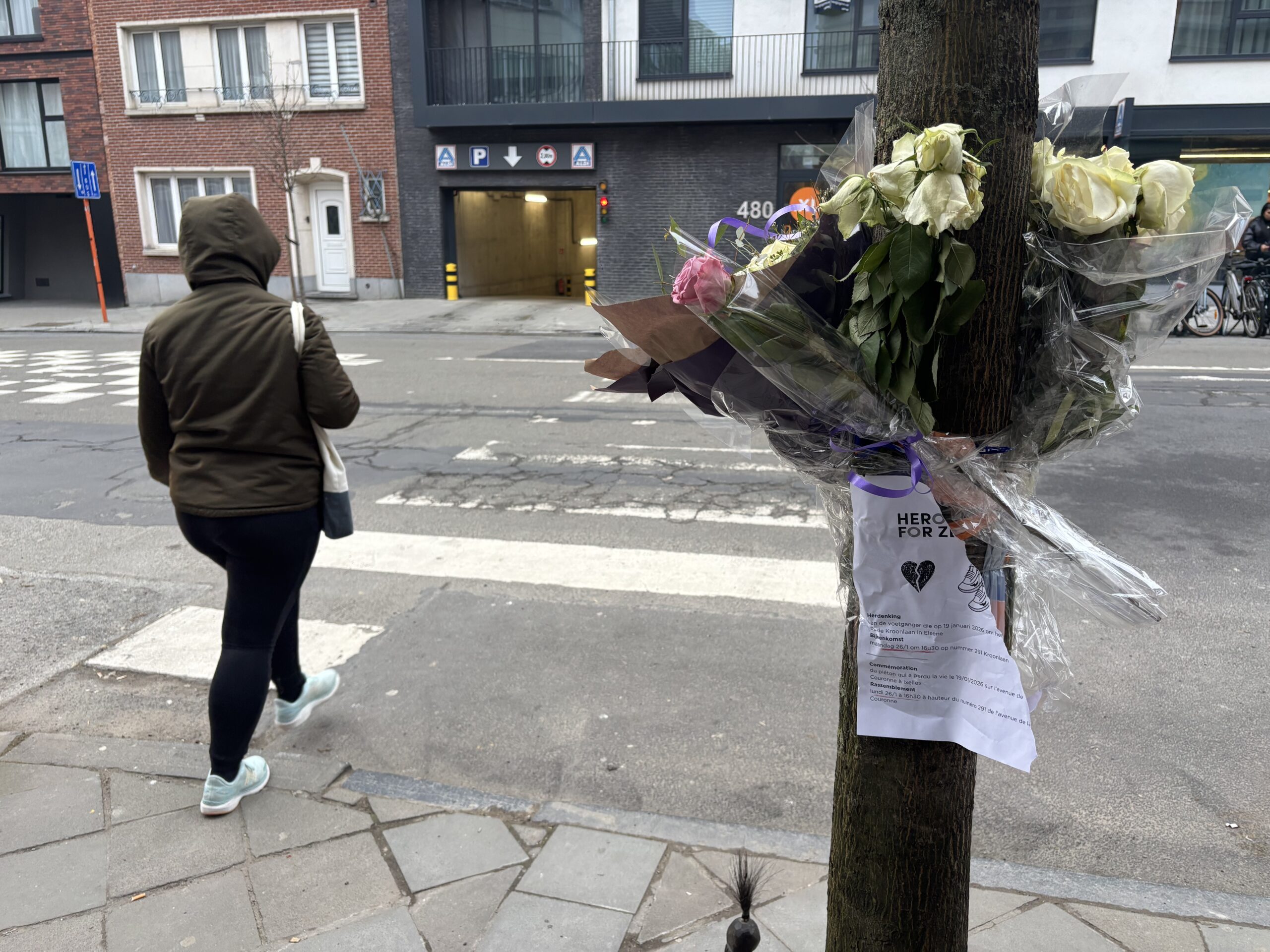
On Monday, a makeshift memorial was organised by Heroes for Zero following the death of Hamoudi. Credit: Belga/ Max Lohent
Troubling legal questions
A common denominator between these accidents is police use of flashing lights without a siren, a practice that raises troubling legal questions. Eyewitnesses questioned by Bruzz said the police vehicle involved in the fatal collision had its blue lights activated but the siren was not switched on.
Speaking to Radio 1, traffic law expert Dimitri de Béco explained that emergency vehicles may only disregard traffic rules such as speed limits when both blue lights and sirens are activated, as this signals an urgent mission.
Other road users must then clear the way and stop if necessary. But priority vehicles, such as police cars or emergency vehicles on an urgent mission, are permitted, according to traffic regulations, to ignore most traffic rules, provided they do not endanger other road users.
Another common feature in recent fatal accidents involving police vehicles is the relative youth and inexperience of the police officers involved. Are these young police officers deployed in urban environments without adequate driver training?
Anthony Turra from the CSC Police union told RTBF last year that the police training lasts about a year, including six months of on-the-job placement."Not all police academies are equipped with driving circuits. Some have simulators, but most trainees simply hold a standard driving licence and are not professionally trained for high-stress situations like a police chase," he added.
Calls to improve training are nothing new. It's a matter of political choice and the resources allocated, as for the regulatory framework. " That's always the issue," said Turra. "The structure of the police in Belgium means each entity can define its framework, which can vary from one zone to another. Since 2020-2021, we've been waiting for standardisation."
In an interview with The Brussels Times, Interior Minister Bernard Quintin stressed the importance of police zones merging as a practical and logistical solution to the administrative eccentricity that Brussels can seem to outsiders.
