
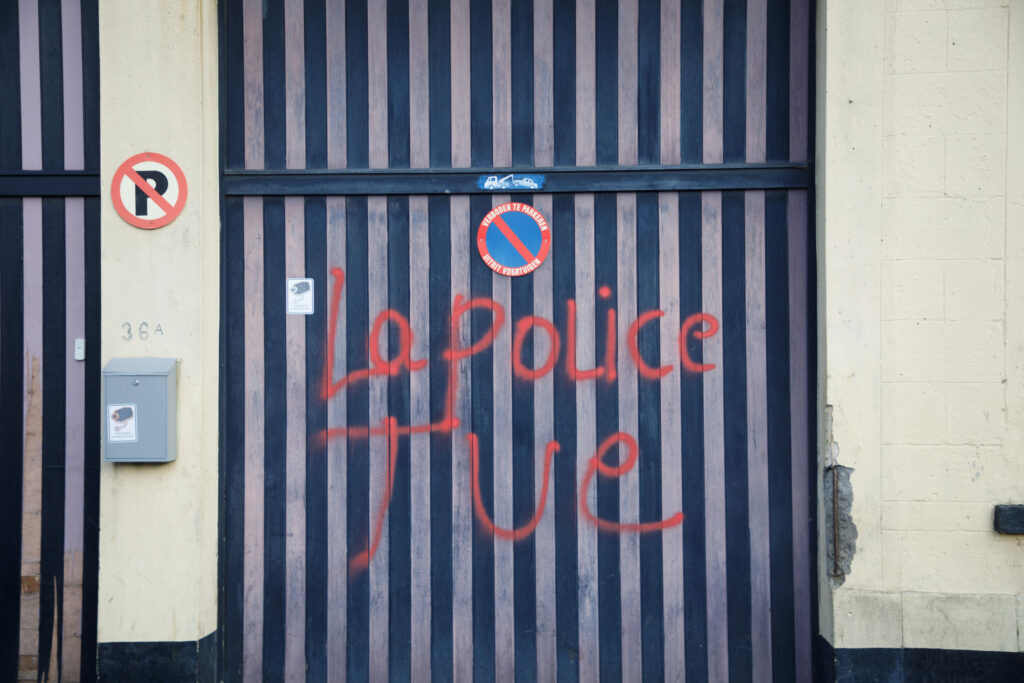
We've seen it written on garages and walls, chanted during demonstrations, scrawled on placards, and echoed across social media. The phrase is not futile; it's a symptom and a reckoning about the debate in Brussels society (and the Belgian one) about violence, accountability, and the fragile thread connecting citizens to the state.
On 9 May 2017, Ouassim Youmi and his girlfriend Sabrina El Bakkali were recklessly driving a motorcycle near Place Poelaert in the city centre. The patrol went after the motorcyclist, but he fled, and a chase ensued. The motorcyclist drove at high speed into a patrol car and was instantly killed. His girlfriend was seriously injured and died in the hospital later that night.
Mawda Shawry, a 2-year-old Kurdish toddler, was killed by an open fire from a Belgian police officer during a chase of a van carrying 26 people attempting to reach the UK.
Mehdi Bouda was on the Mont des Arts in central Brussels just before midnight on the evening of 20 August when police intervened in what they suspected to be a drugs deal. When the police approached, the 17-year-old ran off and was hit by a police vehicle (that was travelling to another incident)
Earlier this month, Fabian an 11-year-old schoolboy died in a police chase as he rode his electric scooter trough Parc Elisabeth in the Brussels municipality of Ganshoren, Three separate investigations have been opened: The death of Fabian that resulted in the arrest of the suspect (who appealed the decision), the brand of Fabian's scooter and the leaks to the press of the official report.
Yesterday, another child lost his life after he was tragically hit by a police car speeding to a priority incident. The Jewish community of Antwerp gathered today for his farewell funeral.
There have also been cases where police officers put themselves in danger, as in April 2024 in Couillet. While pursuing a fleeing driver at high speed, an officer lost control of the police van, which crashed into a building. The result: one officer injured and another, Benjamin Leduc, killed.
All of these incidents have a common denominator: a police chase that resulted in dramatic deaths, but does that translate to systemic violence from the police towards the citizens? In other words, do the Police kill?
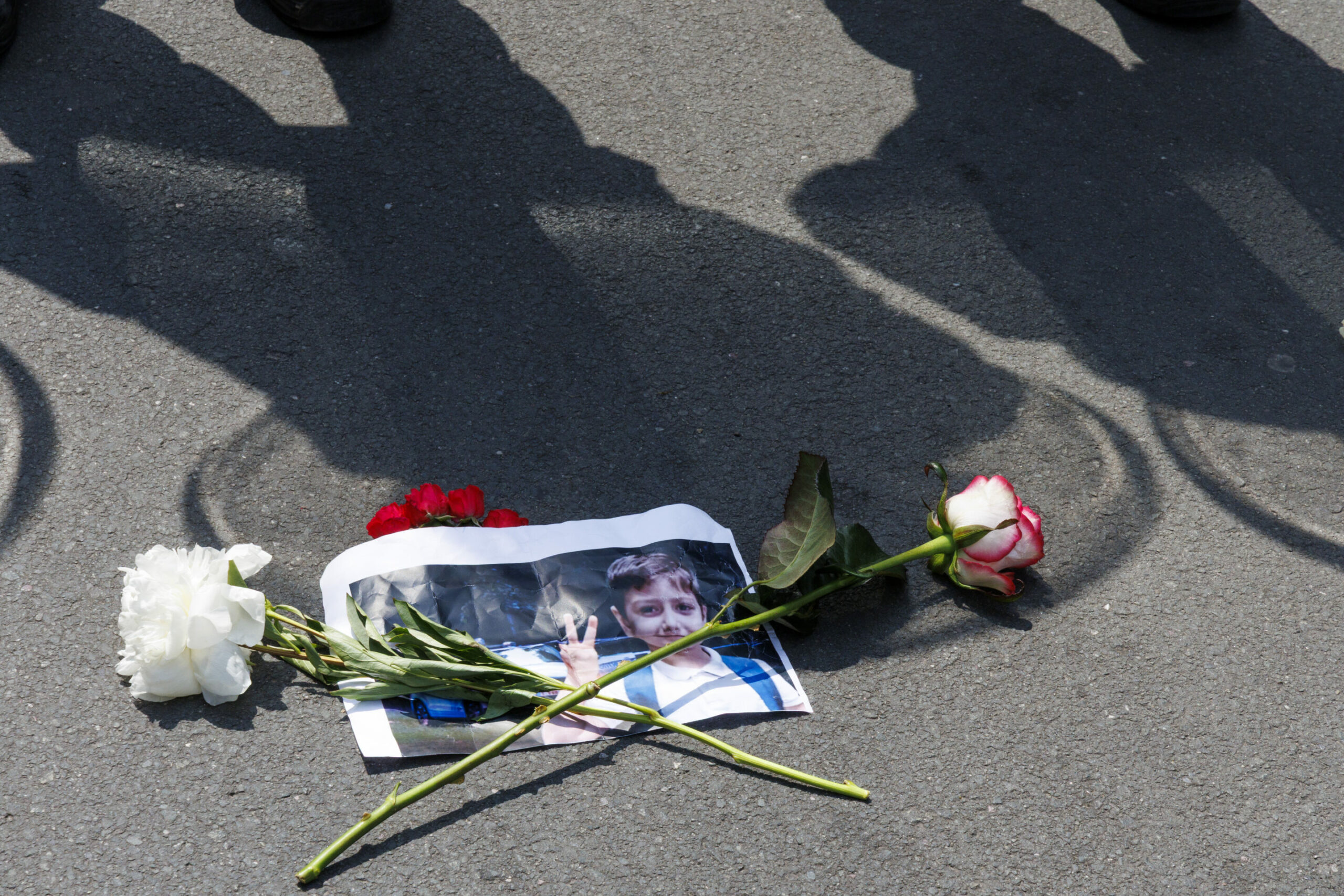
People attend a silent march in memory of the 11-year-old Fabian who died last Monday after he was was chased and hit by a police car, at the Elisabeth park in Ganshoren, Brussels, on Sunday 08 June 2025. Credit: Belga/Nicolas Maeterlinck
Article 37
Were the risks police officers took in these various cases proportionate, as required by Article 37 of the Law on the Police Function? This article stipulated that any use of force must be "reasonable and proportionate to the objective pursued". The question of proportionality resurfaces every time a police chase ends in tragedy.
Following the tragic incident of Mawda Shawry, Committee P conducted an investigation. It produced a report on police vehicle intervention techniques, this external oversight body issued a series of recommendations at the time, particularly concerning the training of officers, and strongly emphasised the principle of proportionate response: setting up a roadblock, forming a containment unit, guiding the fleeing vehicle, using spike strips or stop sticks, allowing the car to continue, etc).
In each instance, police officers must make a rapid decision, sometimes within just seconds, on whether or not to engage in a chase.
Driving licenses
Another common denominator of these incidents is the age of the police officers involved in these deaths (not more than 25 years old). Are these young police officers deployed in urban environments without adequate driver training?
Anthony Turra from the CSC Police union told RTBF that the police training lasts about a year, including six months of on-the-job placement."Not all police academies are equipped with driving circuits. Some have simulators, but most trainees simply hold a standard driving licence and are not professionally trained for high-stress situations like a police chase," he added.
Calls to improve training are nothing new. It's a matter of political choice and the resources allocated, as for the regulatory framework, Turra adds: " That's always the issue – the structure of the police in Belgium means each entity can define its framework, which can vary from one zone to another. Since 2020-2021, we've been waiting for standardisation"
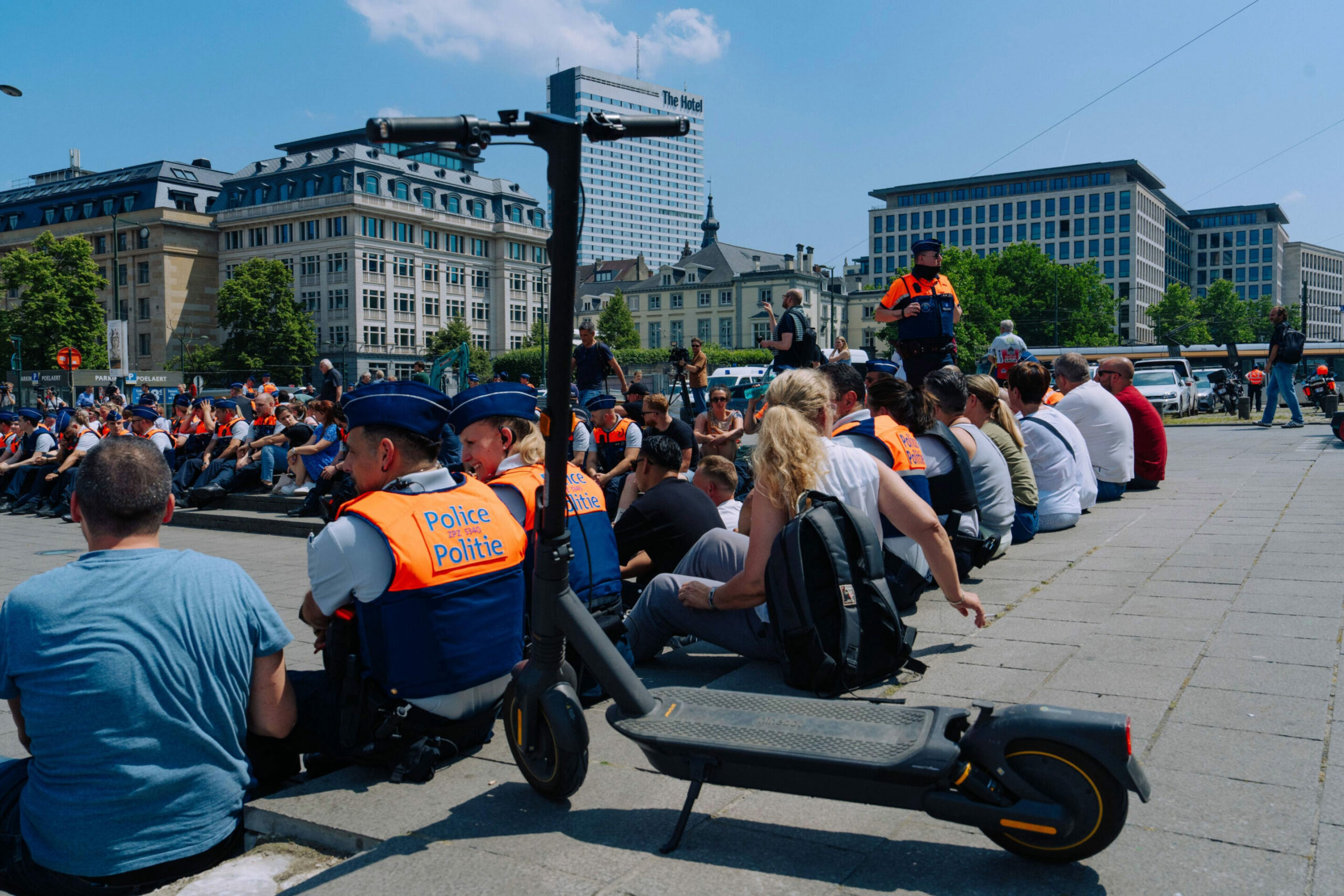
Police and counter-protestors pictured at a manifestation of police to support their colleague who was behind the steering wheel running over and killing Fabian (11), at the Brussels council chamber on Friday 13 June 2025. Credit : Belga/MARIUS BURGELMAN.
In a recent interview with The Brussels Times, Interior Minister Bernard Quintin (MR) stressed the importance of police zones merging as a practical and logistical solution to the administrative eccentricity that Brussels can seem to outsiders. But mostly, he warned about the term "police violence" as a dangerously loaded term.
"There is violence by police officers, which must be investigated and punished. That's not the same thing as "police violence" as a systemic fact," he argues. For him, the state holds the monopoly on legitimate violence, à la Max Weber – and in his view, that principle must remain non-negotiable.
A loaded phrase
At the heart of the debate lies this philosophical paradox. In democracies, the police are entrusted with a paradoxical role – empowered to use force but bound by the law to exercise restraint, transparency and accountability. When that balance slips, public outrage is inevitable.
The protest slogan "La police tue" (The Police kill) is a blunt reaction to real concerns about excessive use of force – particularly in marginalised communities.
For Eddy Quaino, a seasoned trade unionist and spokesperson for the CGSP police, the chant is more than provocative – it's profoundly unfair. "It's a bad slogan," Quaino tell The Brussels Times. "It turns a tragic event into a sweeping accusation. When you say 'the Police kill', you're not condemning a specific act – you're damning an entire institution. That's not just inaccurate. It's dangerous."
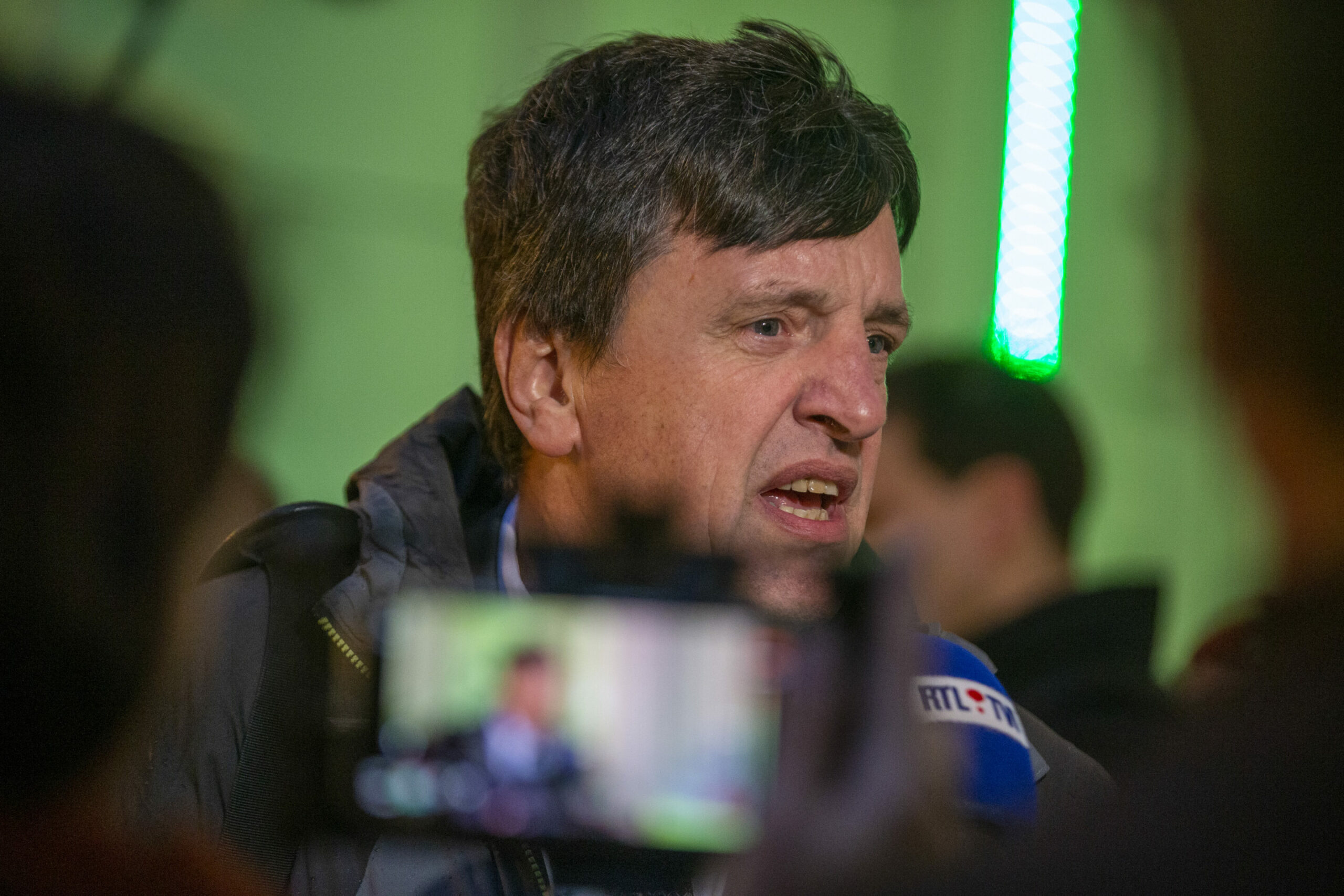
Eddy Quaino talks to the press ahead of a meeting between the police trade unions and the federal government, in Brussels. Credit : Belga/ NICOLAS MAETERLINCK.
The mechanisms are internal disciplinary units, the independent General Inspectorate, and the Committee P, the parliamentary watchdog overseeing police conduct.
"Out of tens of thousands of police interventions yearly, only a small number result in complaints. And every single one is investigated," he adds.
Still, Quaino admits that the system is under pressure. "Even these control bodies are under-resourced. When something like Ganshoren happens, the Committee P throws all available staff at the case to respond quickly. But that leaves other areas unattended. We're all firefighting," he regrets.
Institutional reality
Inside the federal government, the tone is more cautious. Bernard Quintin (MR) called the slogan "deeply painful for many officers who risk their lives daily," but acknowledged the need for dialogue and newer technologies for the agents.
These measures are overdue for Quaino "We were among the first to call for mandatory body cams. We support dashcams in patrol cars. But we can't do it without federal investment. Right now, we're holding the system together with goodwill" he adds.
So, where does the anger come from?
Sociologists have long warned that economic precarity, austerity and bureaucratic opacity foster the cynicism that slogans like "la police tue" crystallise. Frontline workers in public and social services such as CPAS, hospitals and commune offices are reporting rising aggression.
"People are frustrated, alienated. So when a tragedy hits, they don't see it as an exception – they see it as proof that the system doesn't care," Quaino added.
More blue in the streets
More police in the streets seems to be the solution in everyone's head. The irony Quaino notes, is that most police officers crave visibility – not for control, but for connection. "More blue in the streets shouldn’t mean more repression. It should mean more presence, more prevention, more conversation," he says. "But we’re short 5,500 officers. We can’t build community trust from a distance."
The phrase may galvanise protest. But in the eyes of those wearing the uniform, it feels like collective condemnation. And as Max Weber warned, when the monopoly on violence loses its legitimacy in the eyes of the governed, either the state doubles down with force, or it breaks.
"We don't deny that things must change, but change comes from engagement, not caricature. Justice for victims, absolutely! But justice, not vengeance. And certainly not slogans that burn bridges we've barely built." Eddy Quaino concludes.
Related News
- Student claims he was beaten by police after confusing officer for intruder
- Belgian paedophile deported from US after hiding conviction for 12 years
- Car fleeing police hits 9-year-old child in Antwerp
- Belgian traffic police lack resources to measure speed of e-scooters and e-bikes
- Man injured by 'detonation' in Brussels: Investigation opened for attempted murder
- Child killed by police car collision in Antwerp
- Haren prison searched by 145 police officers
- Fabian's death: More anguish for grieving family yet to receive an apology
