
One in two health and social care professionals want to continue working until retirement, but do not believe they will reach it due to stress and burnout.
Belgium’s Ministry of Health and national health institute Sciensano conducted a survey between January and March this year, mapping out the psychological well-being of health professionals at work, while monitoring changes over time.
It involved nearly 35,000 participants from 41 different professions: hospital and nursing home staff, frontline staff, mental health specialists and social workers.
Respondents highlights important areas needing attention, such as burnout, employee retention and work-life balance.
These are best exemplified by the 50.7% of respondents who do not see themselves continuing in their current job until retirement.
Among the 50.7% of respondents who do not see themselves continuing in their current job until retirement, 75.1% would be willing to do so if their work were adapted.
The professions where respondents who do not see themselves continuing until retirement are midwifes (64.2%) and nurses (62.4%).
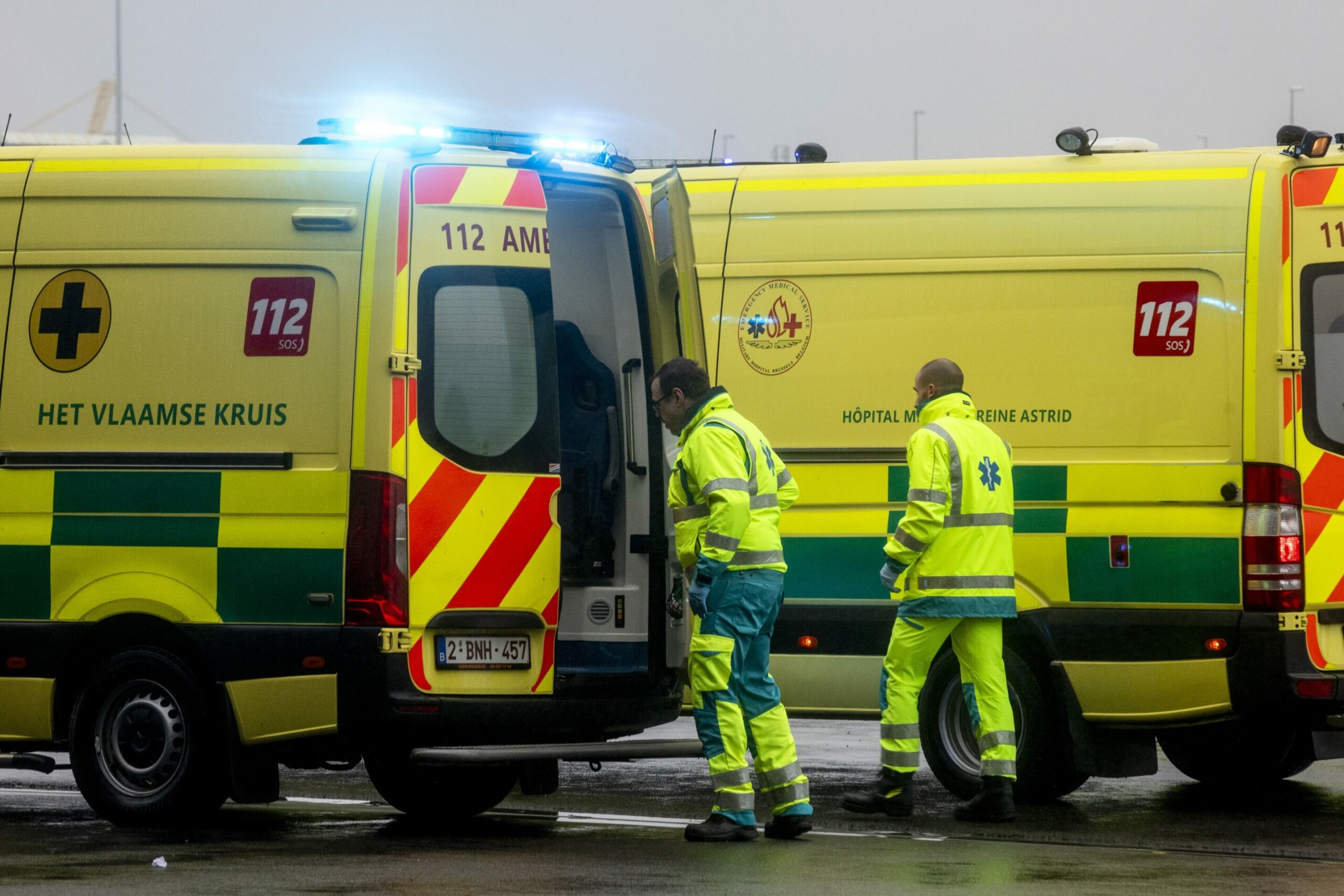
Illustration picture shows an emergency exercise at Brussels Airport, in Zaventem, Saturday 18 November 2023. Credit: Belga / Hatim Kaghat
Other key findings also paint a negative picture of the working in the Belgian healthcare sector. Nearly half (41.4%) of respondents say they feel mentally or physically exhausted from work.
Some 12.5% responded saying they are at the ‘very high’ risk of burnout. This is especially felt among younger age groups (25-44 years old) and certain professions, such as nurses and doctors in training.
Only 8.4% of respondents are dissatisfied with their work, while 25% do not feel sufficiently valued.
When it comes to professional retention, only half of respondents see themselves staying in their current job until retirement. However, three quarters would do so if the work was suitable.
On work-life balance, 68.6% of respondents believe that their work has a negative impact on their private life.

Credit: Belga
Experts say that these results show that structural action is needed to improve the well-being of healthcare professionals.
They recommend employing managers who have a driven focus on the staff's mental well-being, as this plays a crucial role in creating a healthy work environment. Training programmes should not only strengthen management skills, but also promote humane well-being focused leadership, researchers add.
An exceedingly high score on the negative work-life balance has also concerned experts. High scores on the show that many professionals suffer from work overload, which can be traced to organisational structure.
This would require adjustments in work organisation, working hours and schedules, via rotation models and workload management. Psychological education on work boundaries are also deemed essential, especially for young employees and intensive clinical professions.
"Well-being policies in healthcare should be adapted to specific needs," researchers say, "as needs vary greatly" between professional groups and age categories.
For example, the specific needs of young professionals (e.g., doctors in training) require a different approach than those of employees nearing the end of their careers. "A uniform policy is not enough', they underline.
Finally, they call on health employers to consider mentoring and coaching programmes for beginners, which may help alleviate the high risk of stress felt among workers.
Many of these issues were exacerbated by the Covid-19 pandemic, which added to previously existing pressures on the sector and contributed to the growing staff shortage.
At the start of the year, Belgium raised its statutory retirement age from 65 to 66, with plans to further raise it to 67 by 2030.
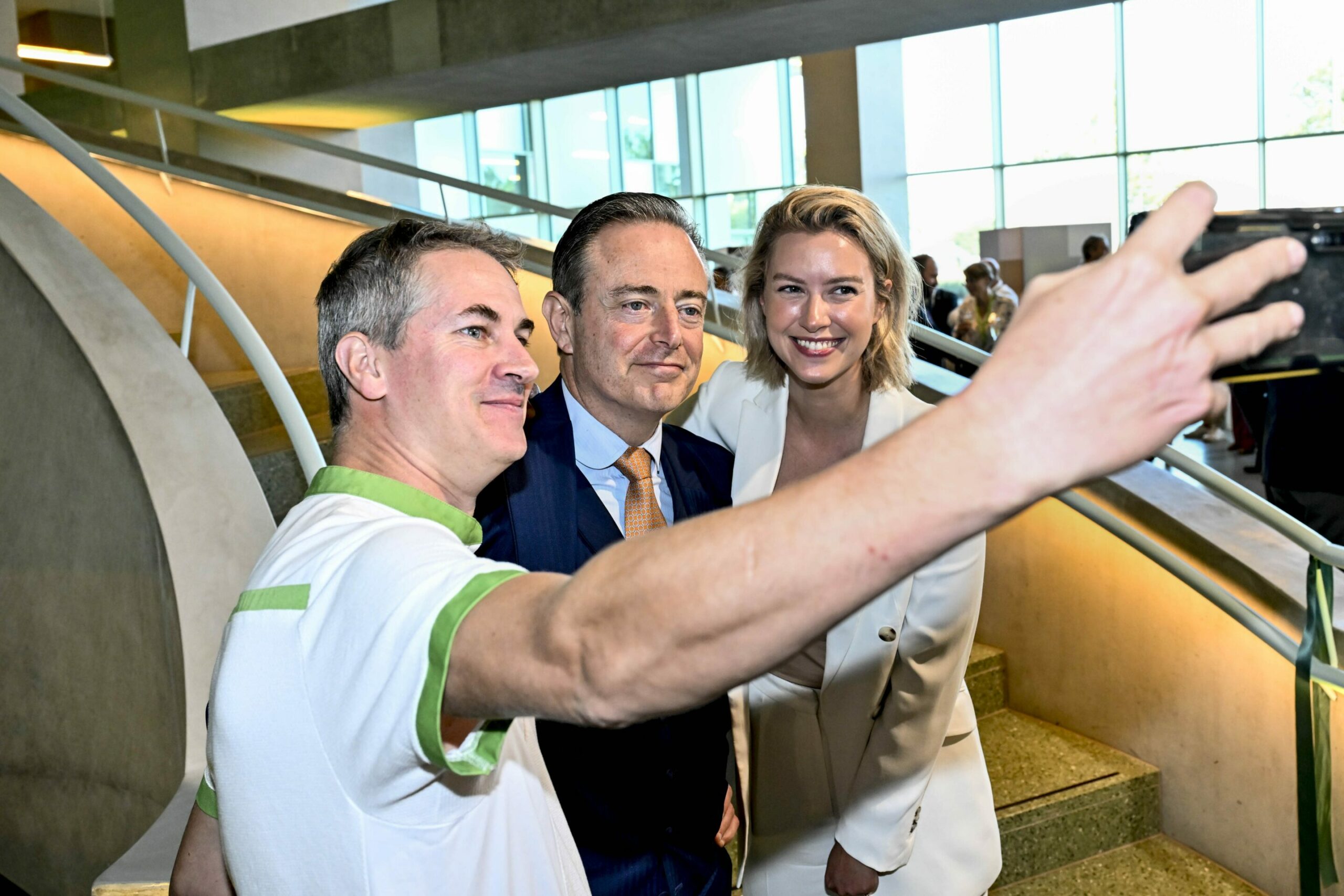
Former Antwerp Mayor (now Belgian PM) Bart De Wever and Els Van Doesburg (N-VA) pictured taking a selfie with a male nurse during the inauguration of the ZNA Cadix hospital, in Antwerp, Tuesday 05 September 2023. Credit: Belga
The Belgian Health Minister Frank Vandenbroucke has said he is seeking to make healthcare budget cuts of over €900 million, with some benefits for the long-term sick also set to be scrapped.
Despite the widespread cuts, Belgium is still facing a sizeable budget deficit under the new Arizona government.
Budget Minister Vincent Van Peteghem (CD&V) has said €16.6 billion still needs to be raised, in addition to the trajectory already planned in the government agreement.
He has opened the door to other ways of raising money for the national coffers beyond pushing for spending cuts, such as reviewing management companies, copyrights and flexible jobs – which he says all cause the Belgian State to lose revenue.
