
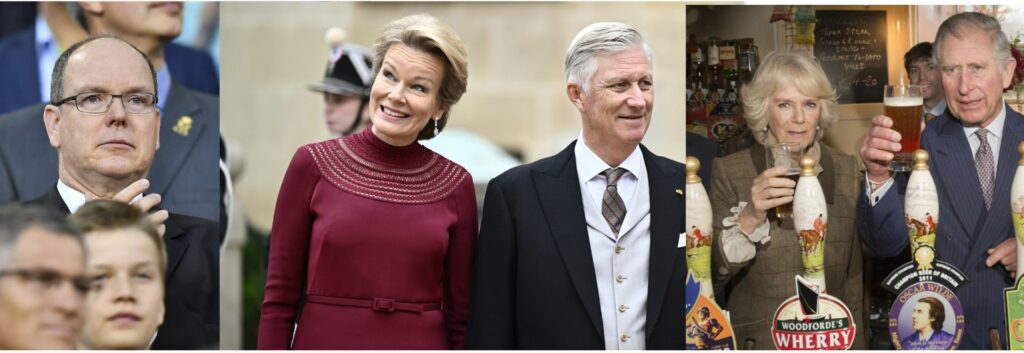
Despite Europe's image as the seat of democracy and a beacon of shared values, it is also home to a large number of the world's royal families; some of them amongst the richest on the planet. And when it comes to ranking their wealth - size isn't always what matters.
In Europe, 10 monarchies reign supreme: the Windsors in the UK; the Borbones (or Bourbons) in Spain; the Bernadottes in Sweden; the Glücksburgs in Denmark; the Glücksburgs in Norway; the van Orange-Nassau in the Netherlands; the von und zu Liechtenstein in Liechtenstein; the Grimaldi in Monaco, the Grand Ducal Family of Luxembourg; and finally, our very own van Belgie, de Belgique, von Belgien (of course Belgium would get the most complicated name).
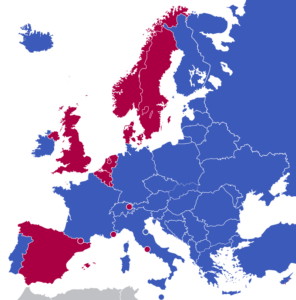
A map of Europe showing monarchies (red) and republics (blue). Credit: Wikipedia
An important division
Calculating the wealth of royal families is complex, as it combines public funds (endowments), private income (real estate, investments), and assets belonging to the state but managed by the family.
"Private income”, rarely refers to salaries, as most of the royals in any country (those in the line of succession or active members) cannot have a regular job.
Furthermore, the fortunes of one member of one family do not equal the entire family, as Hello magazine pointed out regarding the Grand Duke Henri of Luxembourg, who is suspected to be worth $4 million (around €3.5 million).
“Money, money, money”
“Those displaying the most luxury aren’t necessarily the wealthiest”, Thomas De Bergeyck, a Belgian journalist who specialises in the monarchy told The Brussels Times. Many people assume the Windsors are the wealthiest royals in Europe.
“It has a lot to do with the fact that in the United Kingdom, ostentation is quite important, so you really get the impression that they have a lot of money. Of course, they have a lot, but I'm not sure they're the richest,” explains De Bergeyck.
Caveats are always important to put here, because for most royal families, a part of their private funds are quite opaque: “There is what you are required to declare and what you are allowed to declare. Once you are allowed to declare without further ado, you are bound to underestimate your assets.”
De Bergeyck explains: “The problem with royal families is this constant confusion. I think it is very difficult to rank them, because we are talking about two very different types of assets: private assets, which by definition are private, and what belongs to the state, what belongs to the public.”
Which family is really the richest?
Princely Family of Liechtenstein
Estimated wealth: €4.6–9.2 billion.
The Liechtenstein family of Prince Hans-Adam is frequently listed as among the wealthiest of European royalty according to Bloomberg's billionaire tracker. The princely family is in charge of vast private properties, art collections, and the LGT Group, a sizeable private banking organisation - the only one in the world still owned by a royal family.
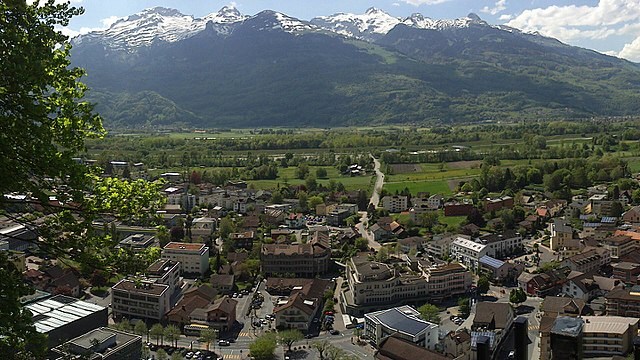
Panorama of Vaduz, capital of Liechtenstein Credit: zponout/Wikimedia Commons (CC BY-SA 3.0)
Grand Ducal Family of Luxembourg
Estimated wealth: €3–6 billion.
The Luxembourg grand ducal household is widely reported as being among Europe's wealthiest royal families. Long-standing private investments and stakes tied to family businesses and funds are major contributors to this estimate of up to €6 billion worth of assets, despite the royal family calling this sum "absurd" six years ago.
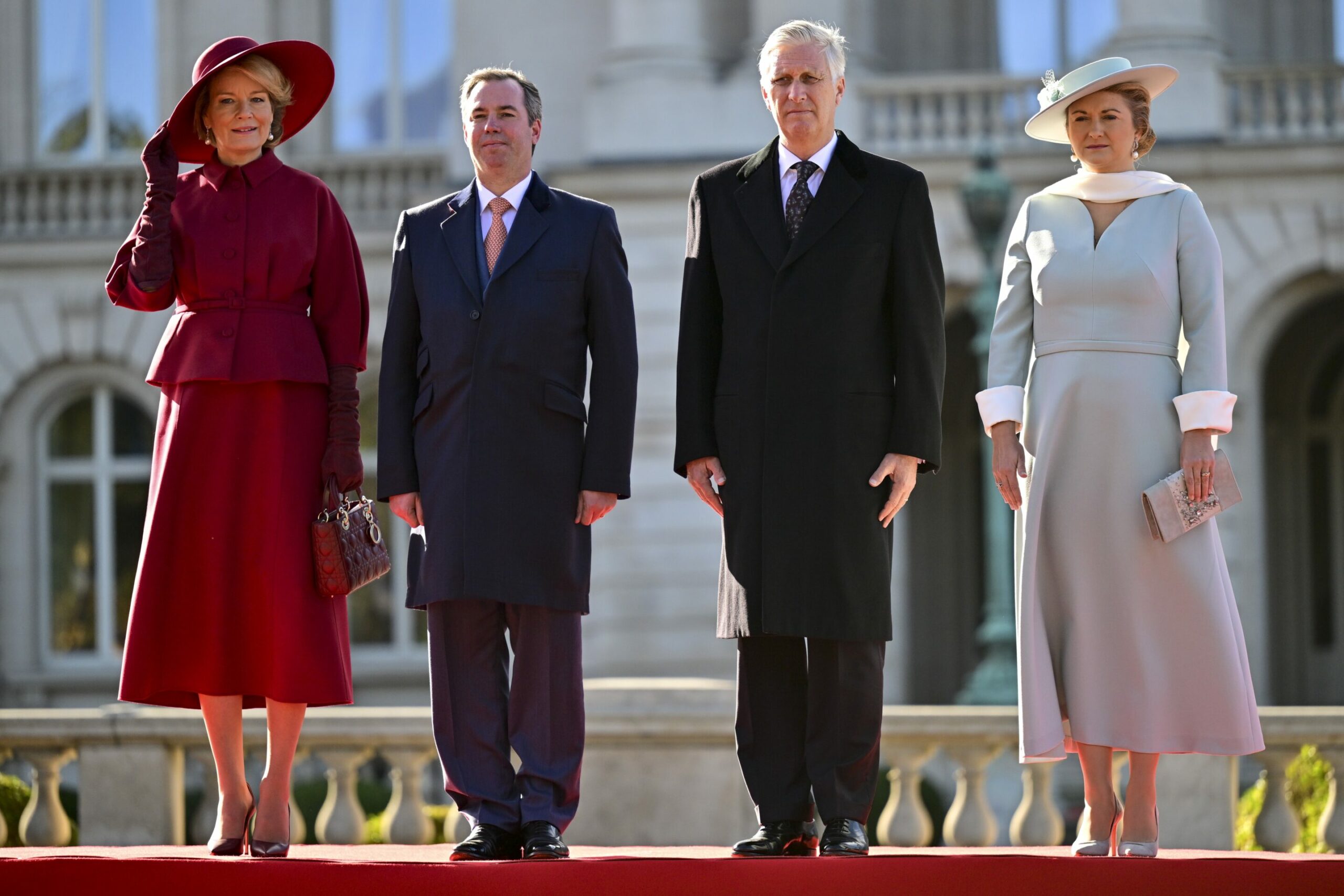
Queen Mathilde of Belgium, Prince Guillaume of Luxembourg, King Philippe of Belgium and Grand Duchess Stephanie of Luxembourg pictured during a visit to Belgium Credit : Belga
British Royal Family (House of Windsor)
Estimated wealth: €550 million - €46.4+ billion.
The UK case is the trickiest to calculate, as the wealth of the Windsors can be estimated in two different ways. The Crown Estate and associated portfolios (which deliver public revenue but are not personally owned) are huge; the royal family’s personal wealth (private portfolio, Balmoral/Sandringham, jewels) is much smaller.
If we count only private personal wealth (personal investments, the late Queen and the King’s private estates, private art holdings, jewellery, Duchy estates), you arrive at between €550 million and €1.38 billion.
If we include the Crown Estate and Duchies and royal real estate that are state-linked or managed on behalf of the nation, you arrive at a whopping €11.6 - 46.4+ billion. These are very widely reported figures, as the “Crown Estate” itself is often reported with a market value in the tens of billions.
Rules have changed over the years in the U.K. Since 1993, the monarch has agreed to pay income tax on a voluntary basis. However, they remain exempt from inheritance tax, which allowed the late Queen to pass her fortune to the King without any deductions benefiting the public.
“When we realised that, in fact, the royal family was, in a way, a family of welfare recipients, things changed. As soon as there is a fire at Windsor, the State is asked to pay. That's not normal, it's not logical, we all agree on that. So, obviously, things have changed”, notes Thomas De Bergeyck.
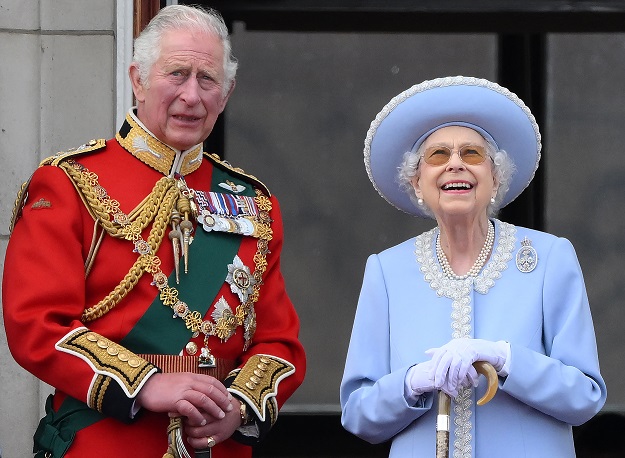
King Charles III and the late Queen. Credit: Belga
Grimaldi family (Monaco)
Estimated wealth: €900 million - €1.8+ billion.
Prince Albert's personal and immediate family assets are commonly estimated in the low-to-mid billions or high hundreds of millions. Monaco’s sovereign family has personal and family holdings in real estate and related businesses, and a significant stake in the company that operates the principality's casino and other entertainment complexes. The family also holds a valuable collection of art and jewellery.
Dutch Royal Family (House of Orange-Nassau)
Estimated wealth: €200 million to €1+ billion.
The Dutch royal family, lead by King Willem-Alexander, is consistently estimated to have a wealth in the high hundreds of millions. It's believed to be made up of a combination of lucrative private assets (personal investments, real estate, some family foundations) and state allowances. In addition, former Queen Beatrix of the Netherlands (she abdicated in 2013) has a substantial historical stake in the energy company Shell, which has significantly contributed to her family’s wealth.

From left to right: Dutch Queen Maxima, Dutch King Willem-Alexander, Belgian King Philippe and Belgian Queen Mathilde. Credit: Belga/Nicolas Maeterlinck
And the Belgians?
Estimated wealth: €12–€15 million
Belgium's royal family is widely regarded as one of the poorest in the world. King Philippe’s personal wealth, combined with inherited assets, is estimated at around €12–15 million. The family’s current assets mostly consist of private investments and limited real estate holdings, as royal residences like Laeken Palace actually belong to the state.
However, the fortune that they do have can be traced back to some of the Kings: “Firstly, they had a historical heritage dating back to Leopold I, who had managed to amass a small fortune from his pension as the widower of a British prince, in addition to the dowry of the daughter of the last King of France, who was our first queen, Louise-Marie,” explains Thomas De Bergeyck.
“And then, above all, Leopold II greatly enriched the fortune of the Saxe-Coburg Gotha family in Belgium, notably with the assets of the Congo”.
Part of the allowances granted to Belgium’s royal family annually cover staff and operational expenses, while another amount corresponds to compensation and is subject to taxes. The First President and the President of the Court of Auditors review the regularity and legality of the expenses charged to the latter half.
The Prime Minister receives an annual report from Royal Family members who receive endowments detailing their general interest actions throughout the previous year. This report is sent to the Federal Chambers by the Prime Minister.
