
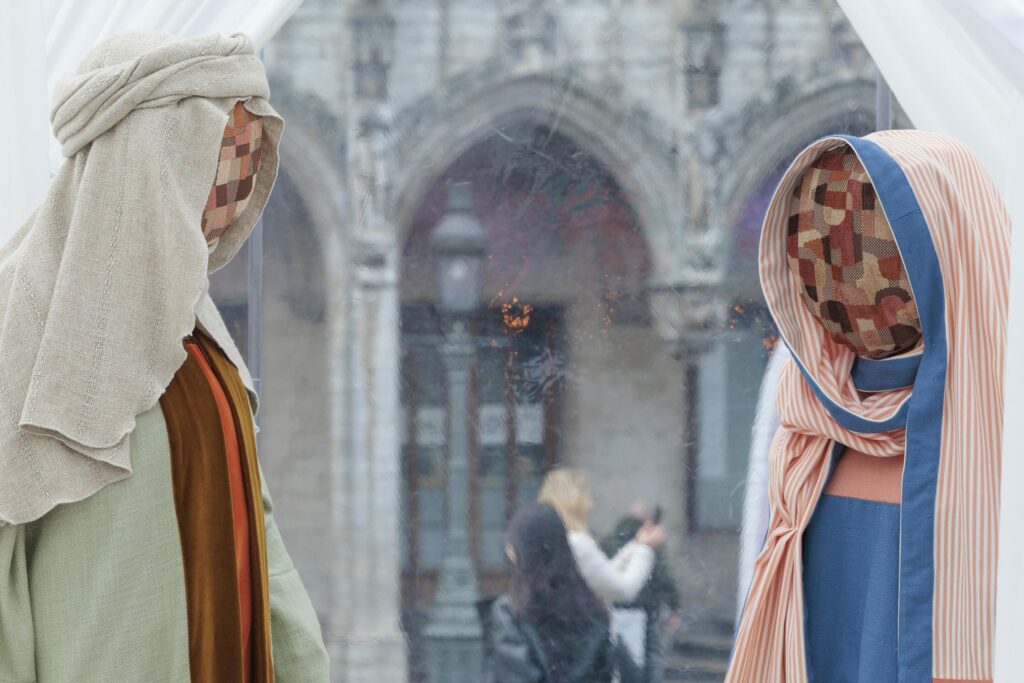
The new nativity scene in the Grand Place has stirred controversy since its installation, with opinion divided over the unusual design of the figurines.
The backlash intensified over the weekend after the baby Jesus figurine was decapitated and its head stolen from the display. The city subsequently introduced additional security measures to protect the installation.
This is not the first time that the Grand Place nativity scene has been a target for vandals. In 2017, the entire figurine of the baby Jesus disappeared and was never recovered. In 2014, the head of the Christ Child was removed by activists during a political protest. In 2015, three people aged 20,21 and 24 vandalised the nativity scene overnight.
This year, the heated polemic surrounding the nativity scene has really got people in the city talking. To find out what all the fuss is about, we went to the Grand Place to see the installation for ourselves and talk to some of the people involved in its creation.
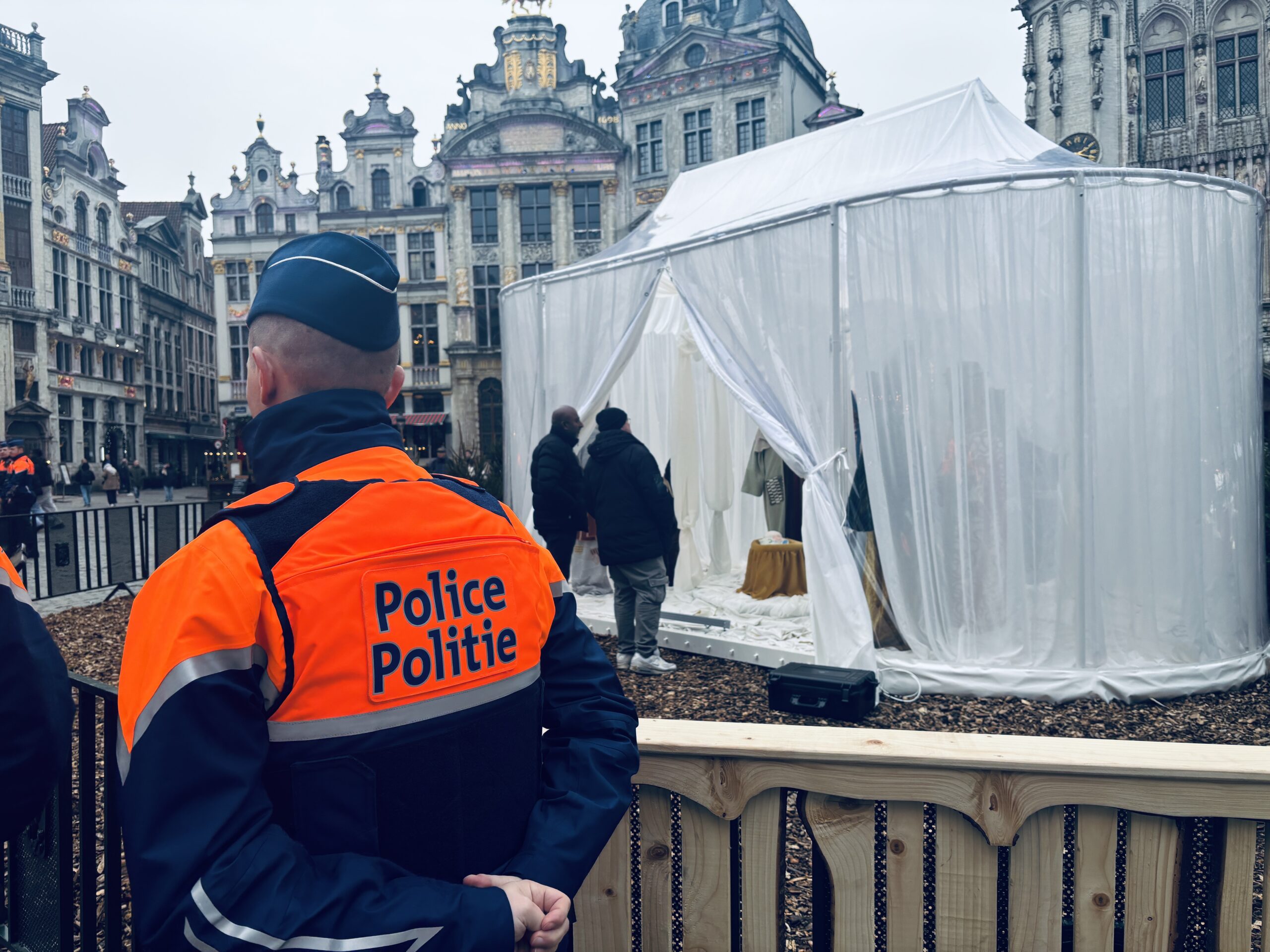
Credit : The Brussels Times/ Anas El Baye.
'People need to see themselves in it'
Across the cobblestones of the Grand Place, crowds gather by the minute to take a look at this year's nativity scene.
Instead of the classic wooden carved figures with painted expressions, they are met with a new depiction of the holy family: fabric silhouettes and faces made of multicoloured cloth.
A German-born designer was hired by the city to create the installation. Victoria-Maria Geyer, who is based in Brussels and is a practising Catholic, says she designed it "in 360 degrees so everyone could view it from every angle".
She stands by the choice, saying the figures are "deliberately without features so anyone can see themselves in them". But not everyone does.
Christine, a nursery school teacher, on a school excursion with her pupils, thinks that the idea could have worked, but feels it is misplaced.
"I think the concept could have been interesting, but I don't know if it makes much sense for the story of Christmas," she told The Brussels Times. "As an artwork, it could be nice, but maybe in a museum rather than a public square."

Credit : The Brussels Times/ Anas El Baye.
Sophie from Mons was seeing the set for the first time. "If the idea is to include everyone, the message is not clear at all. They could have shown different skin tones. But with pieces of fabric, nobody understands unless someone explains it," she told The Brussels Times.
For Sophie and her friends, the faceless figures stripped the scene of emotion. "It dehumanises it," one of them said. "The old set told a story. Anyone could connect. Christian or not. Here, we don't feel anything."
She also complained that there was no sign explaining the artistic choice. "If you need a long explanation for people to understand the nativity scene, then maybe it does not work," Sophie said.
Geert, a priest from Wezembeek-Oppem, told The Brussels Times that he sees no harm in the new depiction, "It is still a nativity," he said. "The meaning is there. It is beautiful, profound, simple, but people need to see themselves in it."

"The meaning is there. It is profound, simple, but people need to see themselves in it." Geert, head priest of Wezembeek-Oppem, told The Brussels Times. Credit: The Brussels Times/ Anas El Baye.
Eye-watering installation costs
According to Sudinfo, the total cost of the nativity scene mounted to €65,000, assembly and dismantling excluded, for an installation meant to last five years.
Seven artists were approached, but Geyer's design was the one selected.
A spokesperson for Brussels Major Events told The Brussels Times that the choice reflects a long-overdue shift.
She pointed out that "the old nativity had been there for 25 years and needed a rethink", adding that the final decision was made together with the archdiocese and the dean of Saints Michael and Gudula Cathedral.
The City of Brussels and the church had jointly approved the new style, which had received the endorsement of the dean.
But for Christine, it is still unclear why the set cost that much to create. "I imagine that making something by hand with fabrics costs more than plastic mannequins we reuse every year," she said. "But €65,000? I don't really understand it."
Her main concern is the meaning. "For me, it is a provocation without purpose. When I was little, there were even real animals in the set. Things change, of course, but the faces mattered. Expressions tell a story."
As a teacher, Christine supports more diverse imagery but struggles with the faceless design. "It makes sense to modernise the story. There is no reason for Mary or Jesus to be blond with blue eyes. But removing faces completely feels strange. Expressions are universal. They could have shown different origins. That would have worked too."
Still, she admitted the controversy has done one thing. "It brings people in. It works."
Political dispute
Over the weekend, the controversy shifted into the political arena after George-Louis Bouchez, the president of the Reformist Movement (MR), demanded the replacement of the display by asking citizens to sign a petition. Bouchez claimed the set symbolised "a society that denies its values".
However, not everyone at the party agreed. On Monday, MR deputy Michel De Maegd openly criticised the language used by Bouchez and others, calling it "nauseating" and warning against turning a Christmas display into a weapon of identity politics.
"It is dangerous to transform this set into an identity weapon," he wrote on social media. "Instrumentalising an aesthetic choice to suggest that our society is denying its values or under pressure from certain communities is a nauseating rhetoric. It plays with fears and fractures that already weaken our social cohesion."
De Maegd said he does not personally like the artwork and believes the designers may have lacked "sensitivity and caution", but insisted that the real problem lies in those "who use every opportunity to divide instead of bringing people together".
When a follower pointed out that his view contradicted his party leader's, De Maegd simply replied: "Everyone has their opinion."
On Monday night, the MR's Brussels leader, David Weytsman, formally called for the traditional wooden set to be reinstalled next year. His intervention came during a heated council meeting, adding another layer to a controversy already marked by party infighting, vandalism and confused visitors on the Grand Place.
Weytsman said the MR "never agreed" to replace the historic nativity set and claimed the sketches presented to the city in September looked "very different" from what now stands in the square.
"I am very conservative on this issue, and we must avoid any controversy," he told councillors. "When we received the first images on 10 November, we immediately said it did not suit us. Many Belgians and Brussels residents do not appreciate this artistic gesture. My group included."
He announced that the MR will propose that the restored traditional set return to the Grand Place next year and that the textile version be moved elsewhere.
Mayor calls for calm
Mayor Philippe Close (PS) urged councillors and commentators to "pipe down", saying the issue had spiralled far beyond its artistic intention.
"I want to return to a positive Christmas spirit," he told the council. "We will discuss this again with the ecclesiastical authorities for next year. They have already said they are open to it. We all have the right to like or dislike this nativity set, but we need to show some moderation."
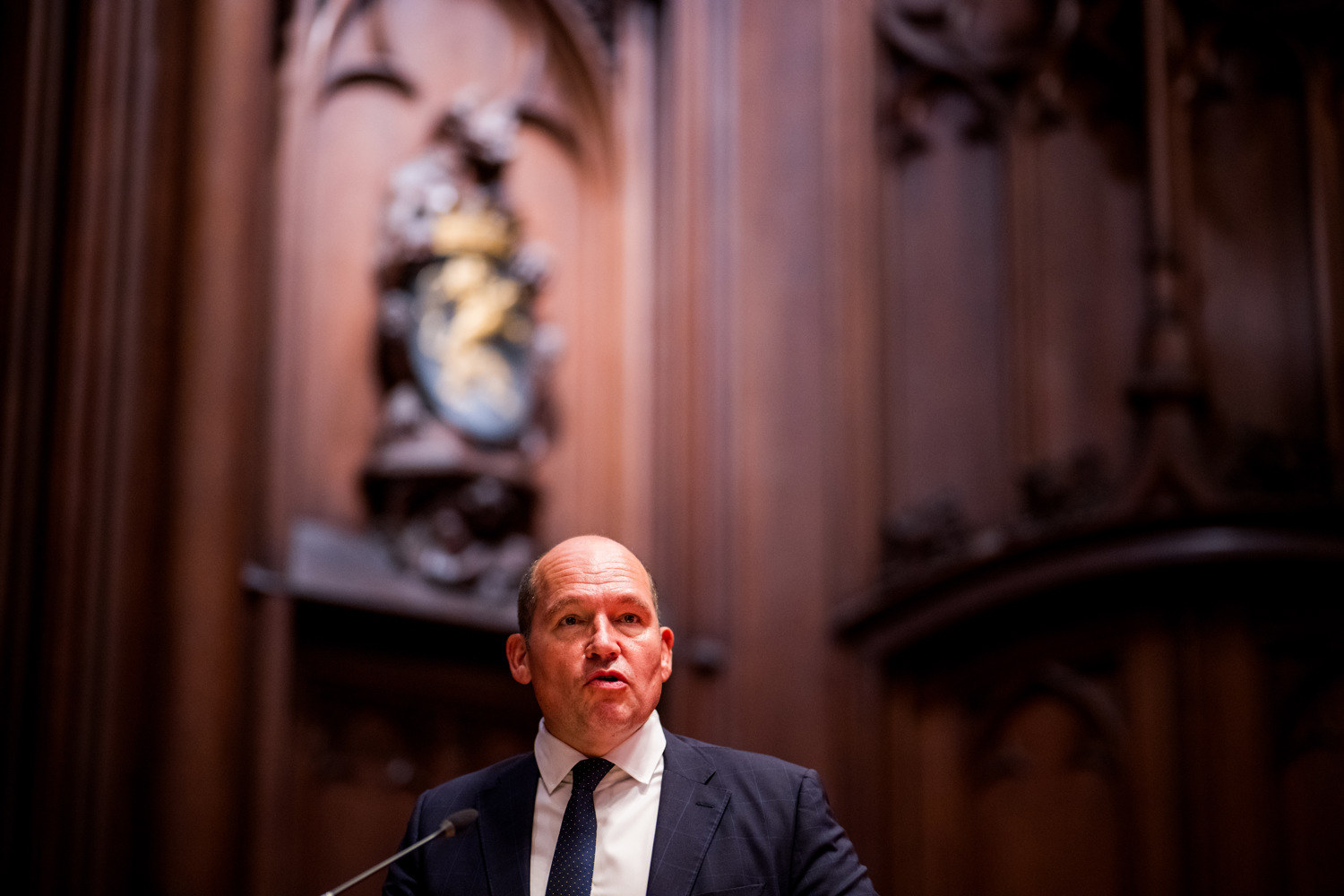
City of Brussels Mayor Philippe Close. Credit: Belga
By trying to modernise a familiar Christmas symbol, the city has sparked a broader argument that now pushes Brussels to reconsider how the nativity scene should be depicted next year.
