
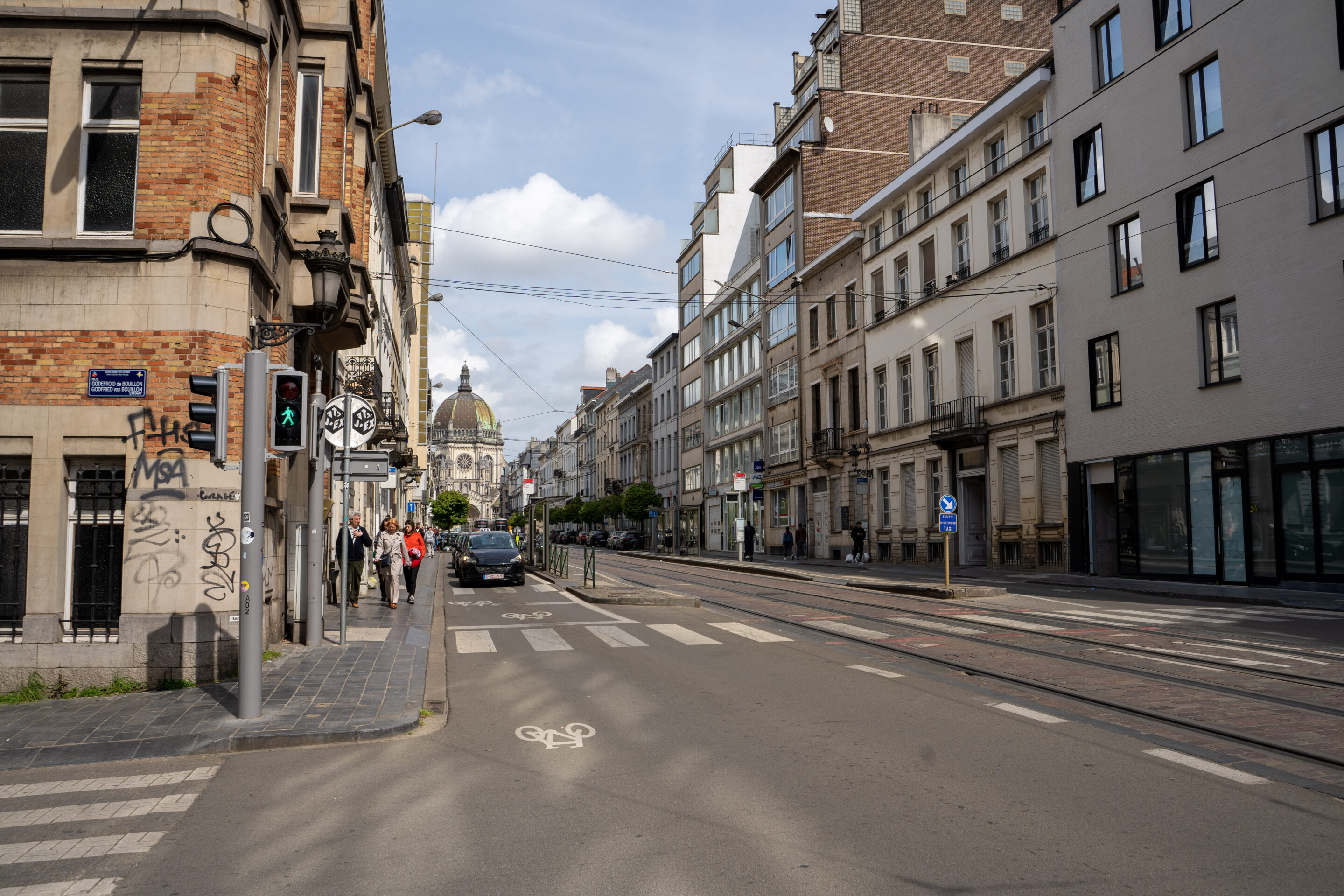
For political scientist Hanna Penzer, Saint-Josse-ten-Noode isn't just a statistic – it’s been home for a decade. While outsiders often focus on the commune’s social problems, Penzer sees a lively, diverse community that offers a rare "calm" amidst the Brussels bustle.
Nestled in the heart of Brussels, Saint-Josse is a municipality defined by its striking contradictions. It is the smallest, poorest and most densely populated commune in the country, with a population of over 24,000 people from more than 150 countries.
Over 60 languages are commonly spoken amongst neighbours in the commune. By way of comparison, that is just 14 languages fewer than Pakistan, a country known for its linguistic diversity, with 74 languages spoken and a population of over 257 million.
In contrast to neighbouring communes, salaries in Saint-Josse are low. According to the latest statistics from Statbel in 2023, the commune reported Belgium's lowest median income at €20,862, followed by two other Brussels communes, Molenbeek-Saint-Jean at €21,289 and Anderlecht at €21,995.
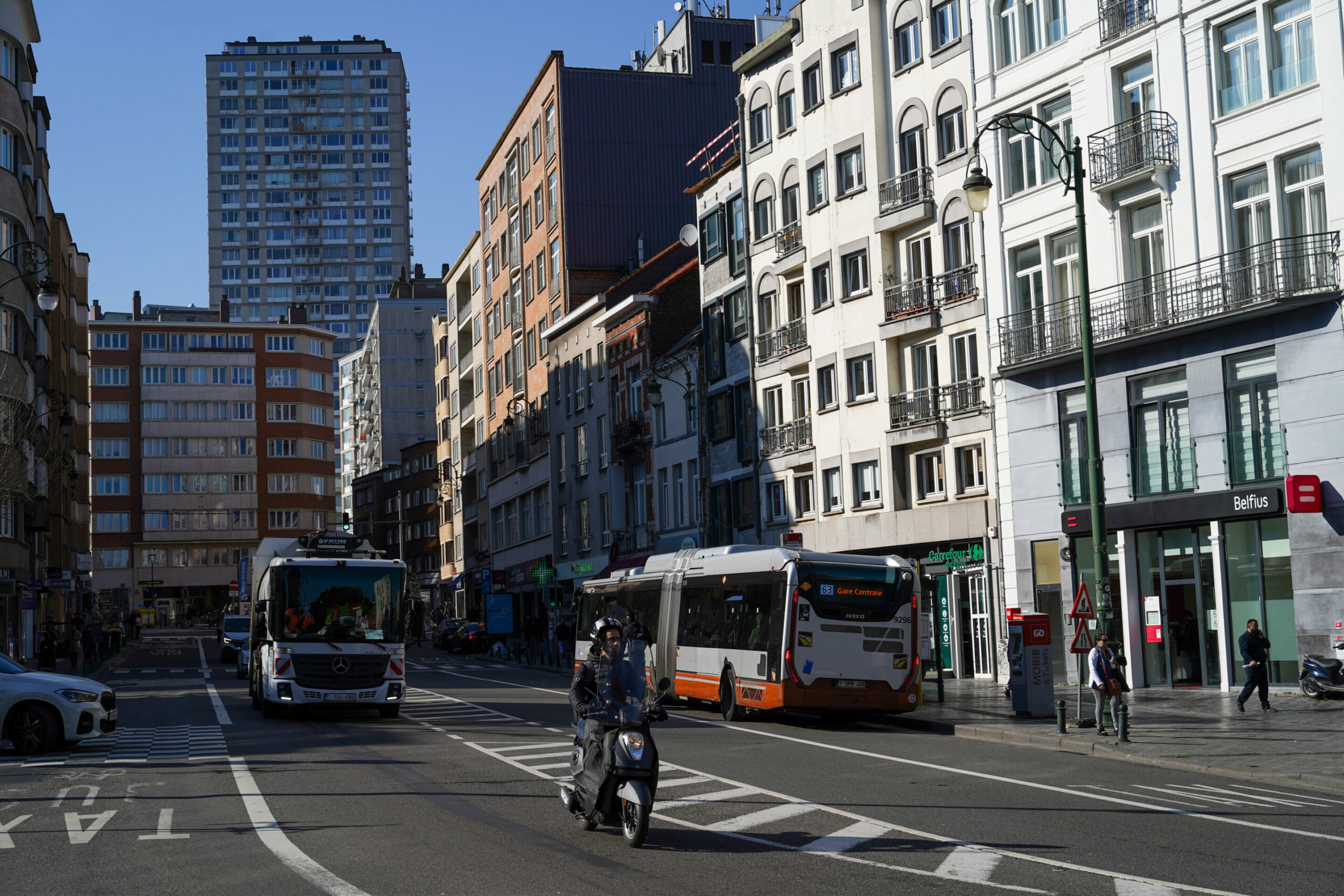
Saint-Josse in 2026. Credit: Vicente Torre Hovelson/ The Brussels Times.
'Feels like home'
Penzer, a former EU worker, has chosen to live in Saint-Josse for 10 of her 17 years as a Brussels resident. "When I completed my studies, I had the choice between Berlin and Brussels. Since I've always loved languages and my French was quite good, I thought Brussels was the better option for me," she said.
Penzer sees many advantages of living in Saint-Josse. "I really like how lively it is here," she explained. "I like the people, and how diverse it is. Also, since I'm originally from Germany, we have a big Turkish community. So living in this partly Turkish community sometimes feels a bit like home.
"And it’s calm and lively at the same time. There's no tourism, there’s not much nightlife or anything. So that's the calm part. But then we also have a lot of families, all generations, not only professionals."
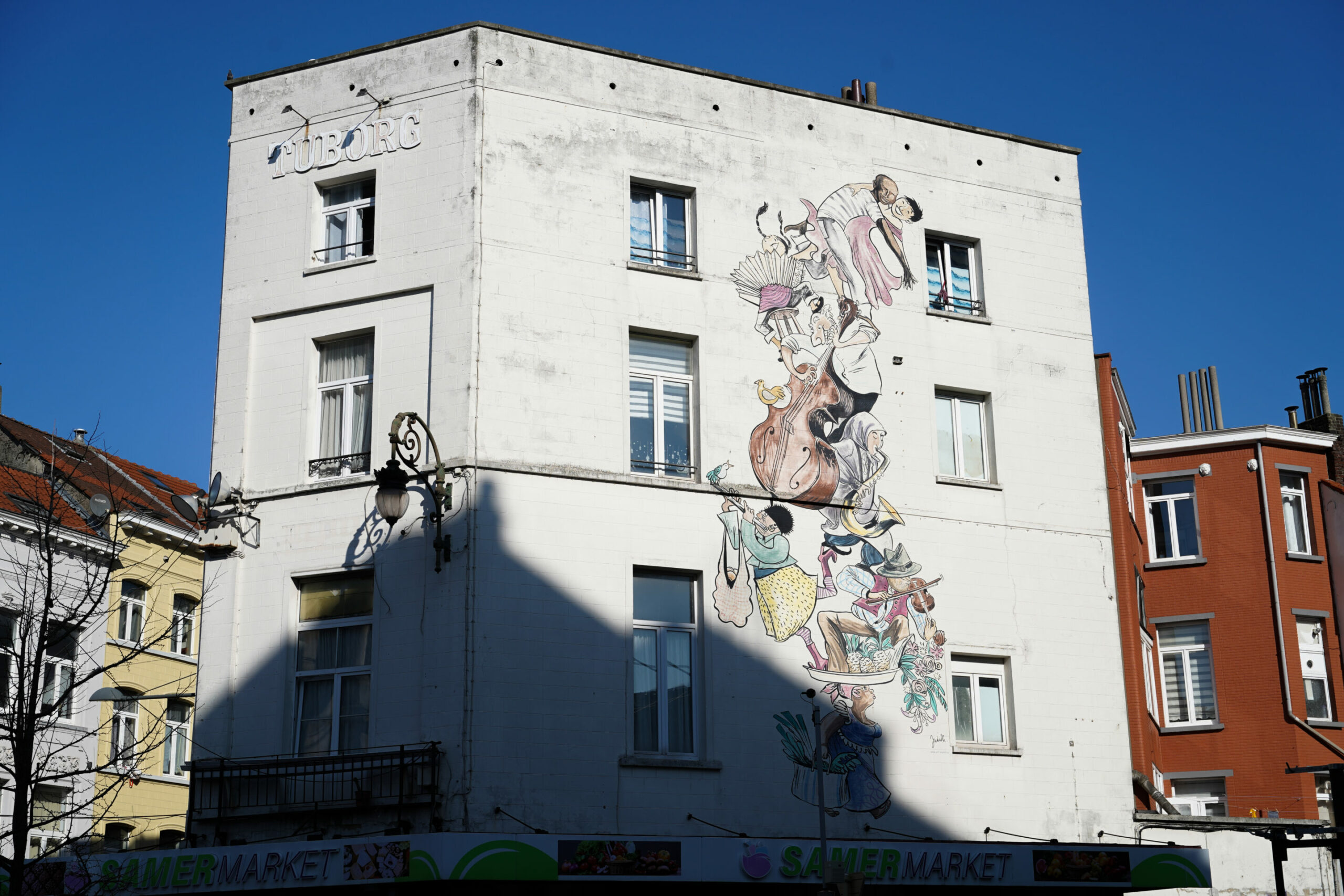
A mural in the towns centre of Saint-Josse. Credit: Vicente Torre Hovelson/The Brussels Times.
Security issues
"I do feel pretty safe in Saint-Josse, although there are definitely problems with drugs that shouldn't be neglected. Even on my street, which is quite nice, you do have teenagers, and sometimes even children who are clearly working in the drug trade and using drugs. It is very sad to see.
"Also, when I travel by train and arrive late at night, I'd rather step out at Brussels Central to head home instead of Brussels North," Penzer explained when asked about the negative reputation Saint-Josse and the other communes in the Northern police district have earned over the years.
Despite the overall positive feelings that she has for the neighbourhood, she certainly believes that more could be done by the local and even national governments to improve life for people in the commune.
"I think the commune definitely has a lot of problems," she said. "There's a lot of poverty and I think that a lot of young residents need more help and support. But these problems are certainly not easy ones to solve."
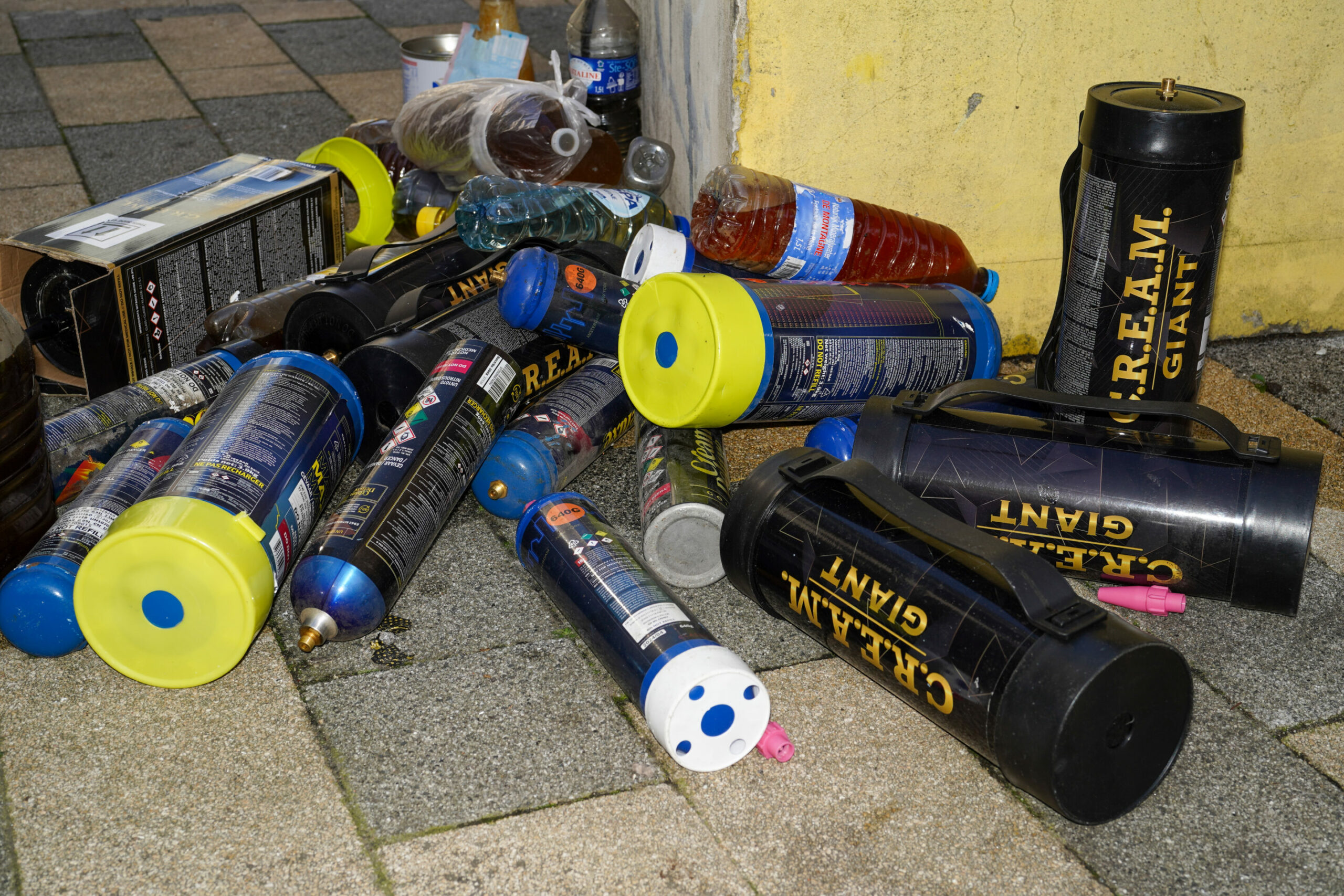
A pile of discarded nitrous-oxide (laughing gas) canisters in Saint-Josse. Credit: Vicente Torre Hovelson/The Brussels Times.
Penzer also explained that not much has changed since she moved into the area: the same problems the commune had 10 years ago persist to this day. Although statistics show improvement in the commune in terms of GDP per capita and a decrease in crime, there is always room for improvement. "I think it's a task for the whole region also to invest in these neighbourhoods and to do something for the population there."
When speaking about the overall divide in Brussels, specifically between high-income residents working in the EU bubble and native Brusselers and or working-class immigrants, Penzer explained her thoughts on the best way that we can learn to understand each other. "Be curious, ask questions, don't just judge someone based off of where they live or where they are originally from," she said.
Insights from members of the Turkish community
Saint-Josse has a sizeable Turkish community, whose members are socially and politically active in the commune. Mayor Emir Kir was first sworn in here in 2012, becoming the first mayor of non-European origin in Belgium.
But what do community groups think of life in the commune? To get a different perspective, we spoke to Rukiye, 50, who works as a teacher, trainer, facilitator and animator at the Belgian-Turkish Women’s Association (Association Féminine Belgo-Turque).
"I’m deeply attached to Saint-Josse," said Rukiye. "I have strong roots in this area. I’ve always been here - I’m 50 years old now. I’ve seen people grow up, get married, have children. All my reference points are here. There is a strong sense of solidarity within the community here.
"We support each other during weddings, funerals, moves. We invite each other, we share. When someone enters the community, they are truly welcomed."
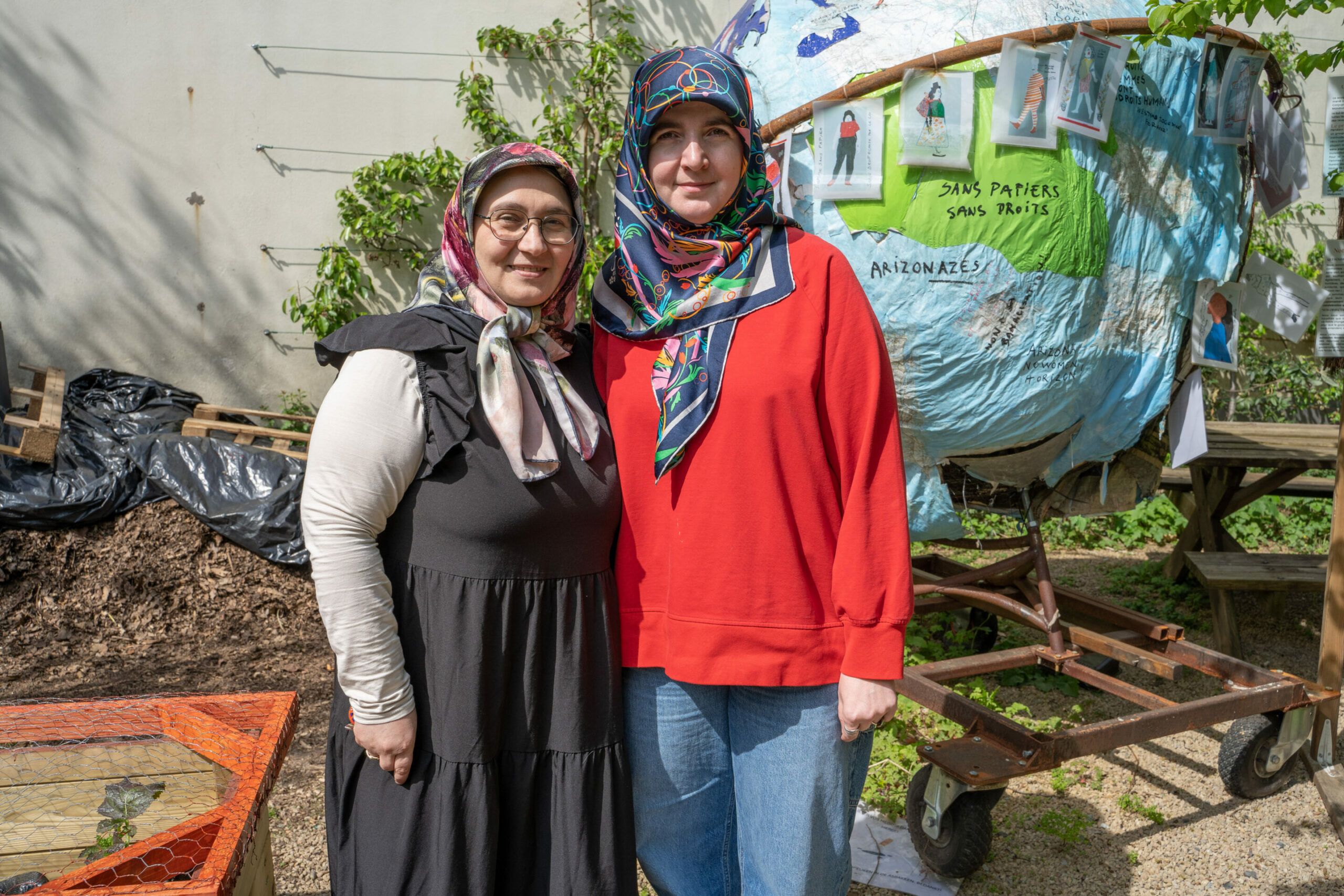
Rukiye and Hasibe in Saint-Josse. Credit: Vicente Torre Hovelson/The Brussels Times
Room for improvement
The association, which opened in 1995, is based in Saint-Josse and was created by the Turkish diaspora to meet a very concrete need: supporting women who had recently arrived in Belgium. One of its most important roles is facilitating integration into Belgian society by helping women learn French, learn about Belgian culture, administration and how society functions overall.
Today, the administration welcomes not only Turks but many people from other countries such as Morocco and Syria. The administration also now works with families, but mainly women and children.
Although safety is often cited as a concern in Saint-Josse, Hasibe, an administrator and secretary at the Belgian-Turkish Women’s Association says she doesn't feel unsafe in most places, but, like Penzer, she tends to avoid the area around Brussels-North station. "I feel pretty safe in Saint-Josse, except in the North Station neighbourhood, especially at night." explained Hasibe.
Although the women we spoke to were mostly positive about their community, they said there is room for improvement.
One concern they had was over education in the commune. “Schools struggle to deal with multiculturalism. Teachers are not always prepared for classes with very different cultural backgrounds" said Hasibe.
Saint-Josse being so diverse is both its greatest strength and the greatest challenge it faces. With diversity comes new challenges in administration, education and overall understanding between neighbours.
Beyond social challenges, Saint-Josse has many advantages, according to the women. "We’re in the centre, we have access to everything," said Rukiye. "We also are in close proximity with the European institutions, plenty of shops and restaurants, and job opportunities. There are many places to work. I enjoy working in Saint-Josse."
Related News
- Legendary Brussels fritkot will reopen soon with the same beloved figure behind the counter
- The stories buried in Saint-Josse’s cemetery
- From child robberies to spotting fakes: Life inside Antwerp's diamond trade
- The American nightmare: Why Belgium doesn’t need 'ICE on steroids'
- The secret legacy of Brussels' Albanian community
- Charleroi: Europe’s ‘ugliest’ city that tourists can’t stop visiting
