
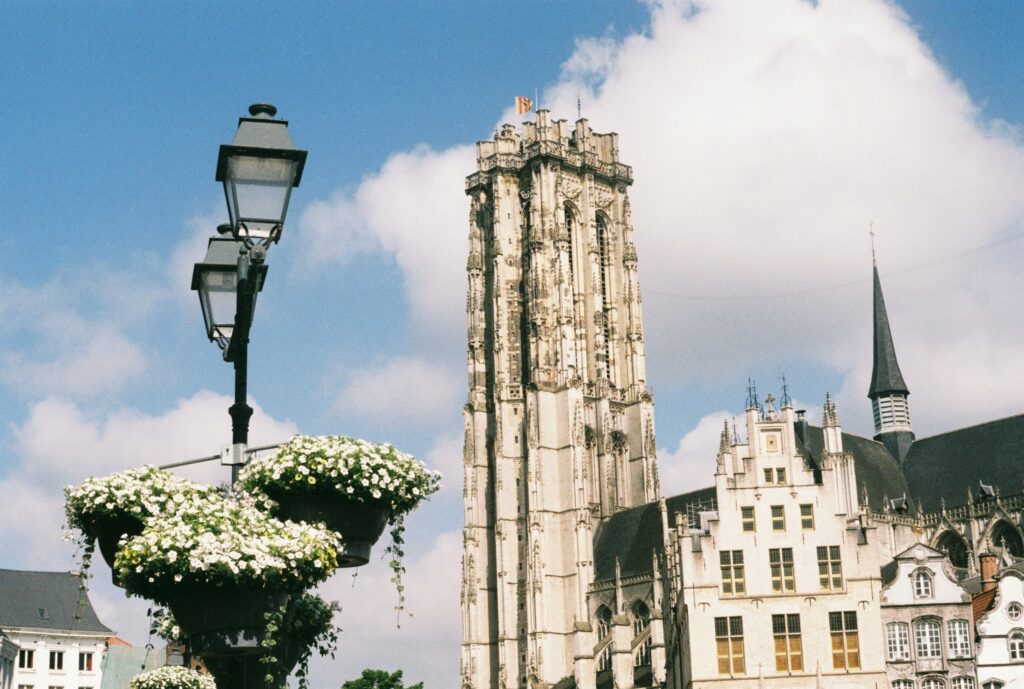
If you want an authentic Flemish experience, hop on a 25-minute train to a stunning medieval town just outside Brussels.
Mechelen, or Malines in French, is somehow both compact and exquisitely majestic, making it a perfect day-trip destination. If you come here even once, you will fall in love and want to return.
Central Mechelen
Once you arrive at the central station, head straight to Bruul, Mechelen’s cobblestone-lined high street. Make sure to stop at the bridge of Fonteinburg and admire the dome of Onze-Lieve-Vrouw-van-Hanswijk Basilica on one side and Sint-Jans church on the other.
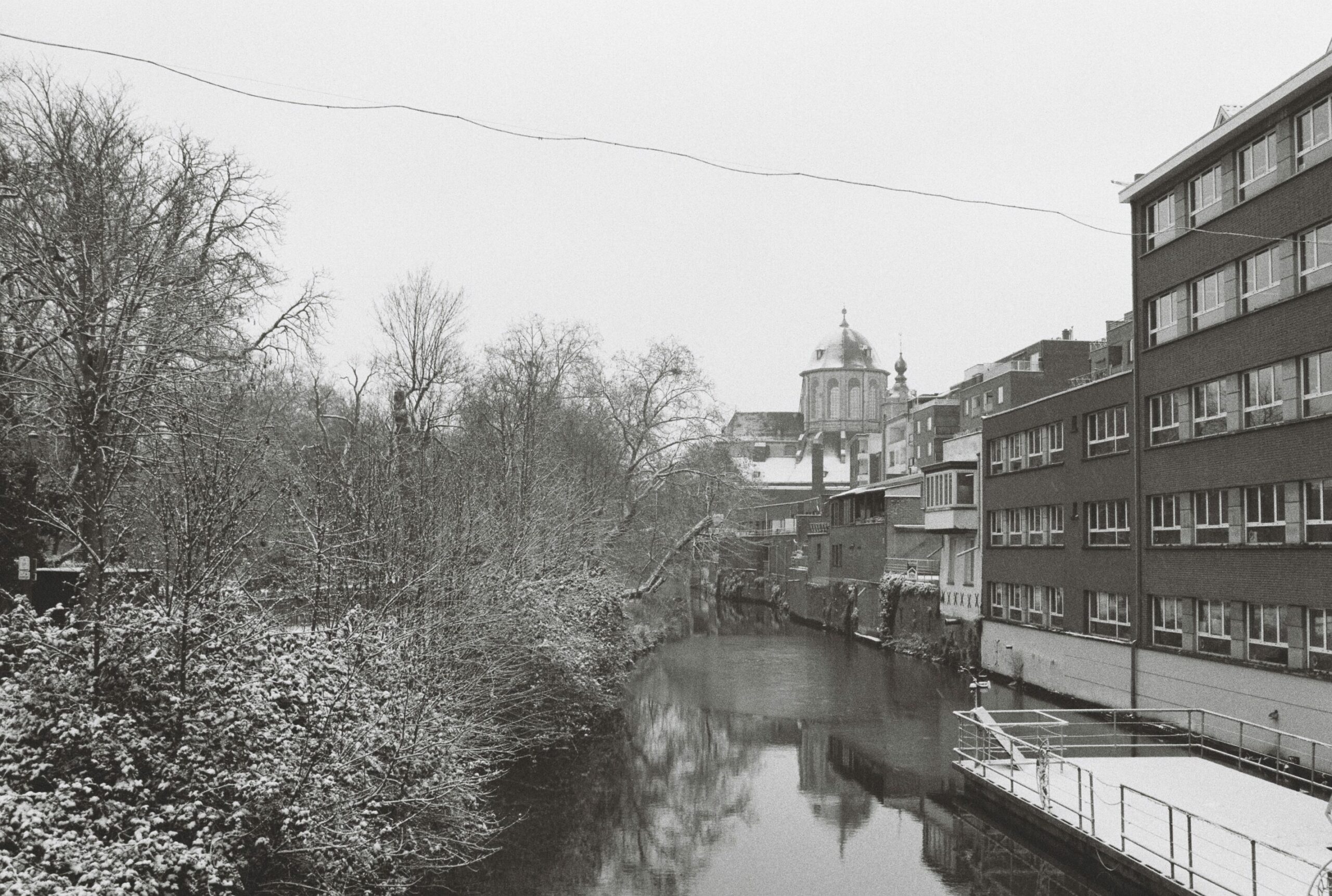
The view of Onze-Lieve-Vrouw-van-Hanswijk Basilica and Dijlepad during winter in Mechelen. Credit: Kosmos Khoroshavin / The Brussels Times [Agfa APX 400]
Once you walk to the end of the Bruul, you will arrive at one of the most important spots of any Flemish town – the Grote Markt. Mechelen's take on the main city square is uniquely impressive, with architecture ranging from the 16th to the 20th century in different historic styles. Most-eye catching is perhaps the flamboyant Gothic façade of Mechelen City Hall.

Mechelen's Grote Markt. Credit: Wikimedia Commons
In general, the medieval character of the city is one of its main appeals. The ring preserved its old street layout and architectural core with nine churches. To dive deeper into the historic centre, visit Grote Markt on a Saturday morning and experience the local market. Alternatively, give Vlesshalle a try: a fully renovated indoor market turned trendy food hall.
As one of the oldest towns in Belgium, Mechelen has the second-largest number of protected buildings in Flanders, including many on the UNESCO-heritage list. It is a town of details, with almost every street carrying significance or some sort of curiosity, be it monuments, street art or historic sights.
Next to the Grote Markt stands Saint Rumbold's cathedral, the town's most iconic building, named after its patron. Reaching almost 100 metres in height, it towers over Mechelen and can be seen from almost any point in the city.
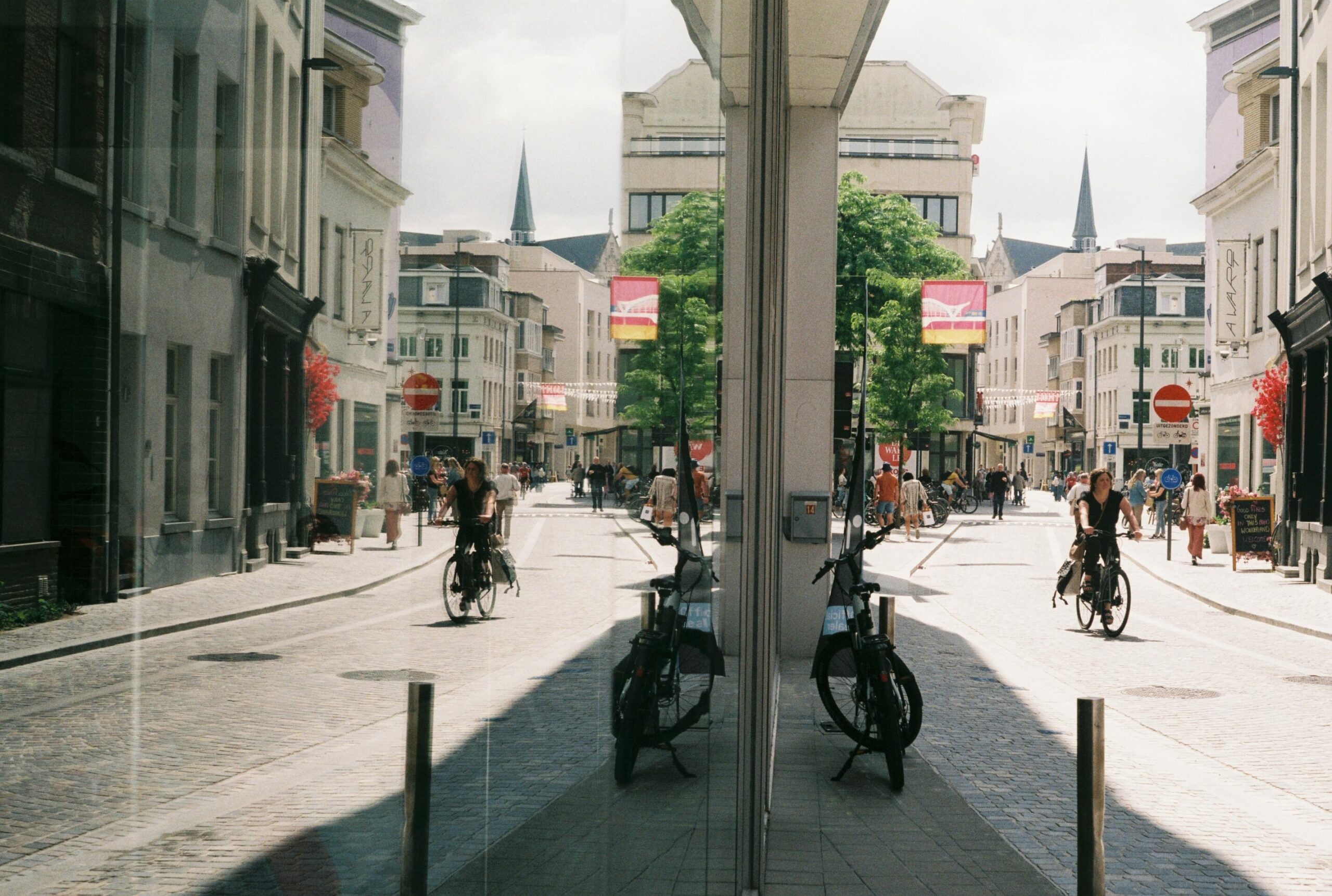
Credit: Vicente Torre / The Brussels Times [Fuji Superia 200]
The entire town began extinguishing the non-existent fire, earning locals the nickname maneblussers (moon extinguishers). Despite first being used in a derogatory context, often by Brussels residents, the nickname has stuck to this day and even made its way into beer and folklore.
The cathedral welcomes visitors and showcases impressive art collections by classic Flemish Masters. For €8, you can even climb the UNESCO-recognised tower with its 49 bells.
Waterfronts and greenery
Past Saint Rumbold's cathedral, you'll find Ijzerenleen, Mechelen's answer to Paris' Champs-Élysées, which is packed with more imposing façades, restaurants, cafés and bistros for every taste. Stop at Beans for a quick coffee or snack in a cosy, relaxed atmosphere.
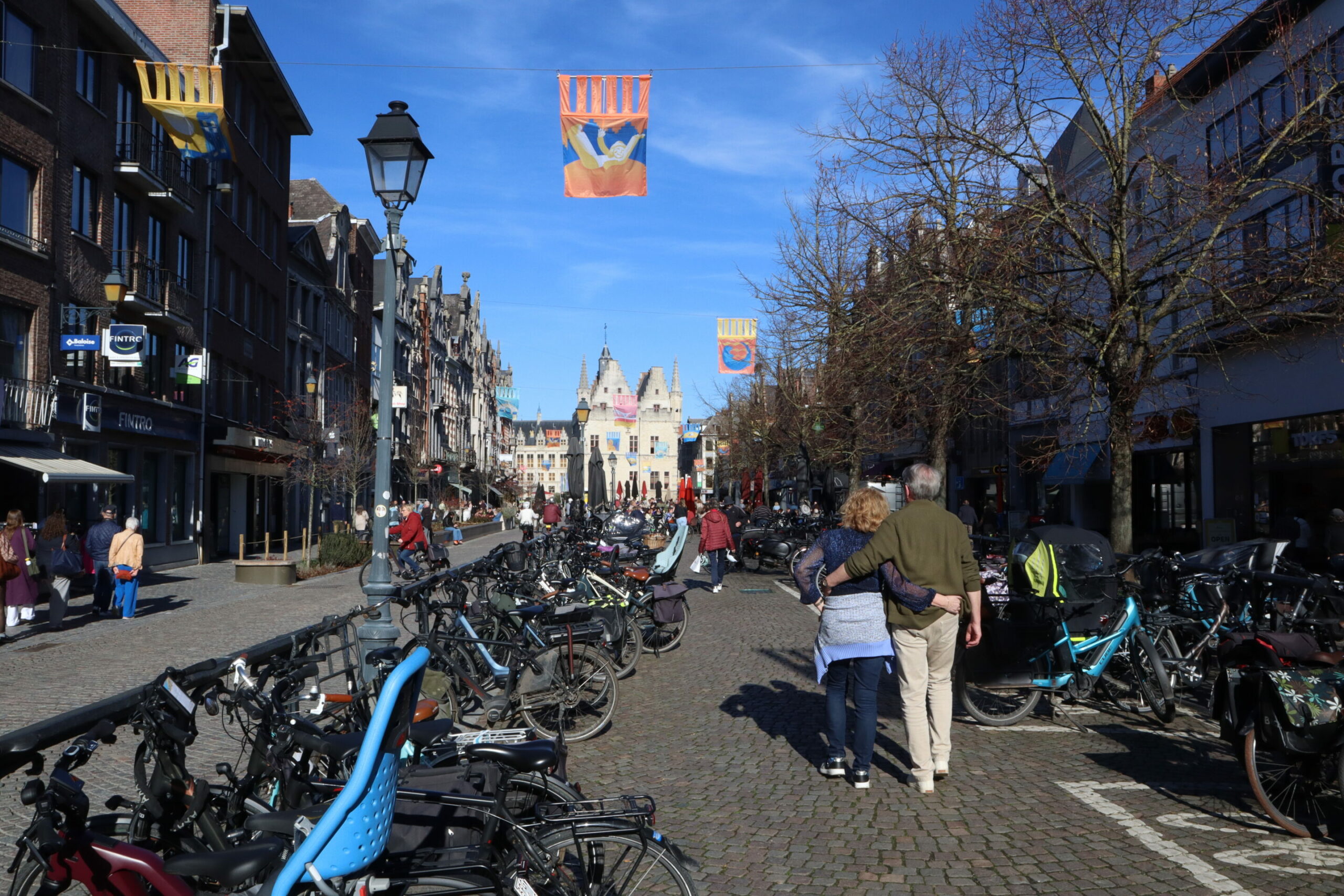
Ijzerenleen. Credit: Kosmos Khoroshavin / The Brussels Times
From Ijzerenleen, you can easily access Vismarkt and Lamot, a waterfront full of bars and picturesque river views. You can take a boat tour on the Dijle River, cutting through Mechelen or walk through a beautiful wood-lined path over it.
The three most photographed buildings in town are also found nearby, Sint-Jozef, de Duivels (the Devils) and het Paradijs (the Paradise).
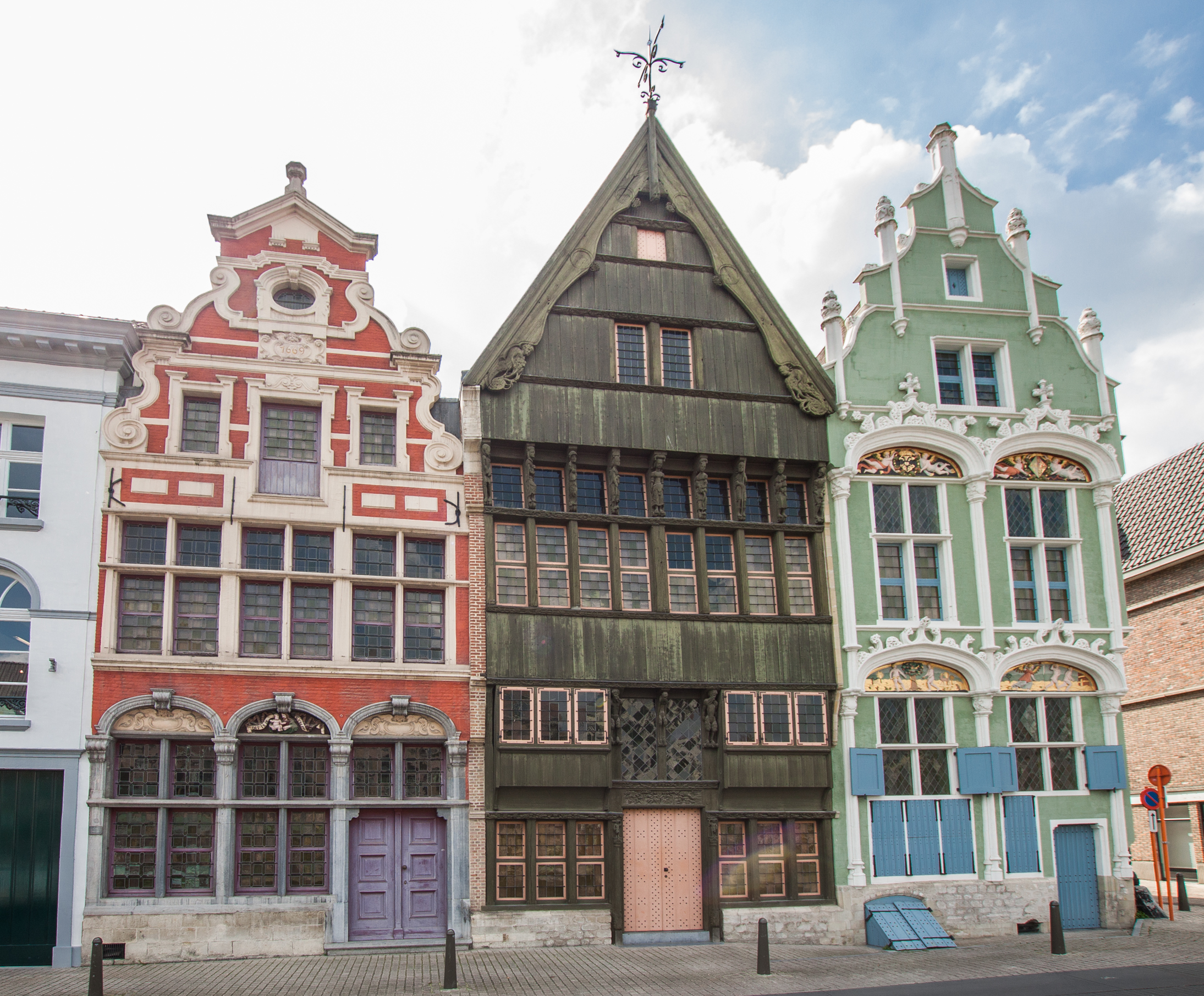
These three townhouses are often nicknamed as the most-photographed in Mechelen. Going by Sint-Jozef, de Duivels and het Paradijs respectively, they were built in different times between the 16th to 17th century. Side by side there are features of Renaissance, Baroque and Gothic architecture. Credit: Wikimedia Commons
If you fancy some greenery, there is a beautiful park close to the city centre – Kruidtuin (Botanical garden). Featuring impressive monuments and sprawling lawns, it makes for a perfect picnic location. To find the park, go through Onze-Lieve-Vrouwstraat, a street full of artisanal shops, passing a magnificent church.
If you're craving even more nature, there is a much larger park a bit out of the way. Head in the direction of Brusselpoort, the huge ancient gate that used to filter the road between Mechelen and Brussels. The area around is informally known as the local Moroccan neighbourhood, with many cheap, hearty pastries and street food options.
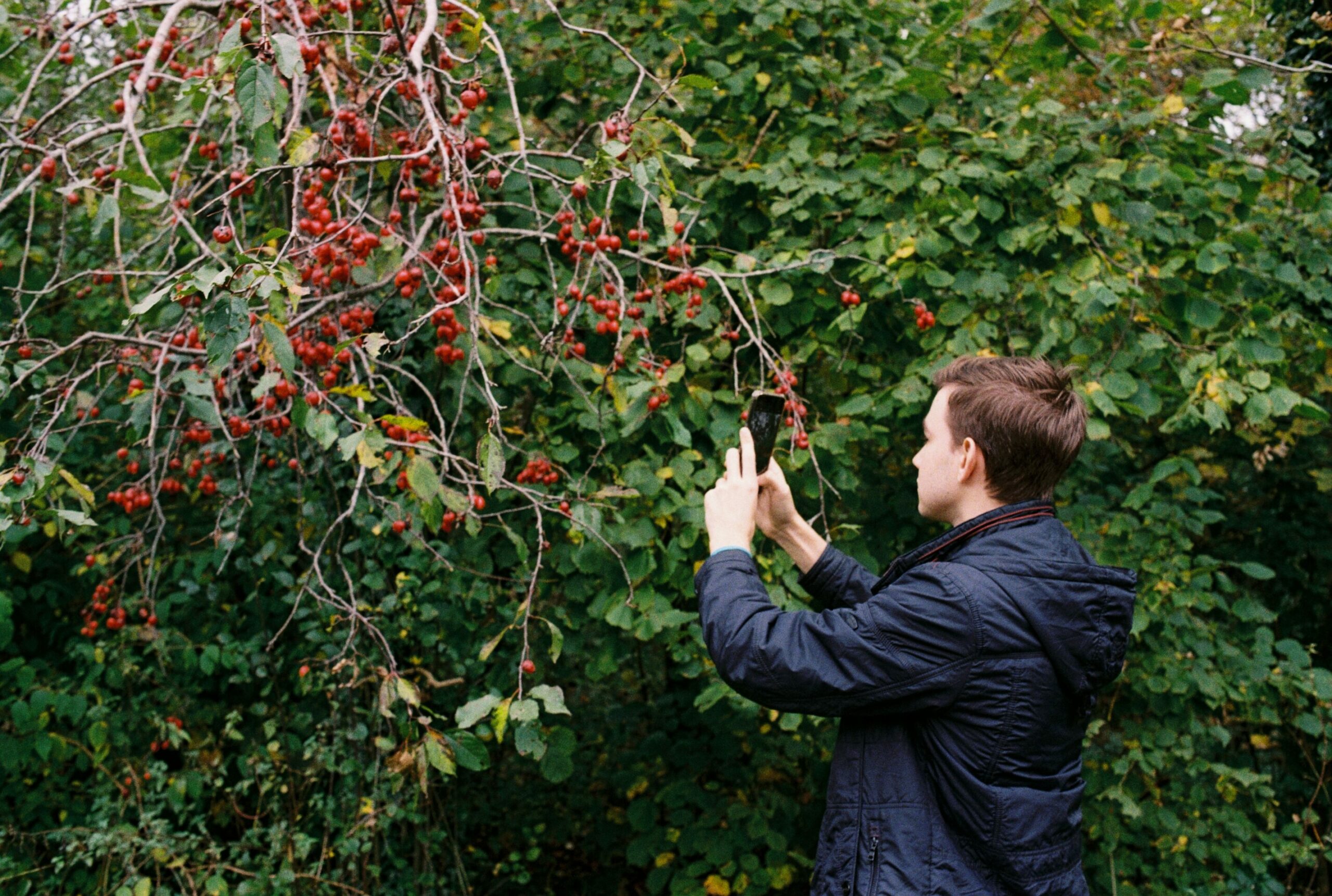
A visitor photographs a plant in Vrijbroekpark. Credit: Kosmos Khoroshavin / The Brussels Times [Kodak Gold 200]
Mechelen has much more to offer, with museums like the Toy Museum, which is perfect for children, or even one of the best natural zoos in the country, Planckendael. Whether you decide to explore this Flemish town on foot or on a two-wheeler, with a guide or without, it is a definitive must-see.
