
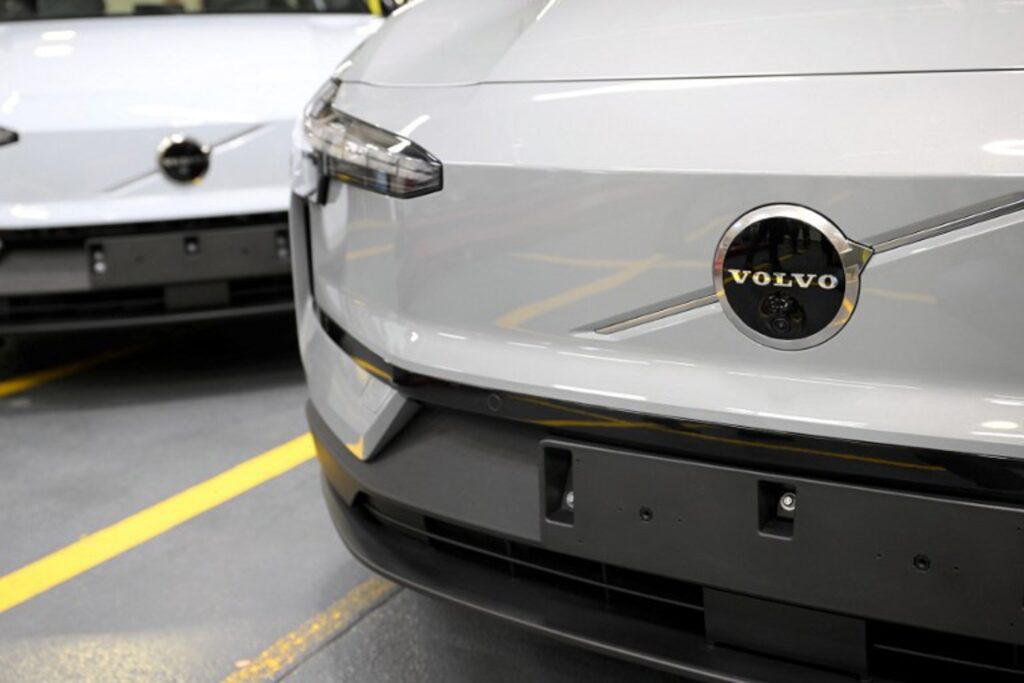
Fears rise over the future of two electric models of the Volvo Ghent factory, as Volvo Cars reports falling revenue and profit in the 2026 first quarter.
Employing around 6,500 people, the plant in Ghent is one of the largest industrial employers in Flanders and the last remaining car factory in Belgium.
The factory manufactures XC40, EX40, EC40, V60, and EX30 models. Last year, 212,177 cars rolled off its assembly line.
However, the trade unions fear that the Ghent factory could lose two of its three electric models to a new factory in Kosice, Slovakia, starting next year.
The Federal Government, led by Prime Minister Bart De Wever (N-VA), has already launched a task force to secure the future of the site.
Following the closure of Renault Vilvoorde, Opel Antwerp, Ford Genk, and Audi Vorst, this concerns the last car factory in Belgium.
According to De Morgen, the task force will meet with the management of Volvo Car Ghent on Wednesday.
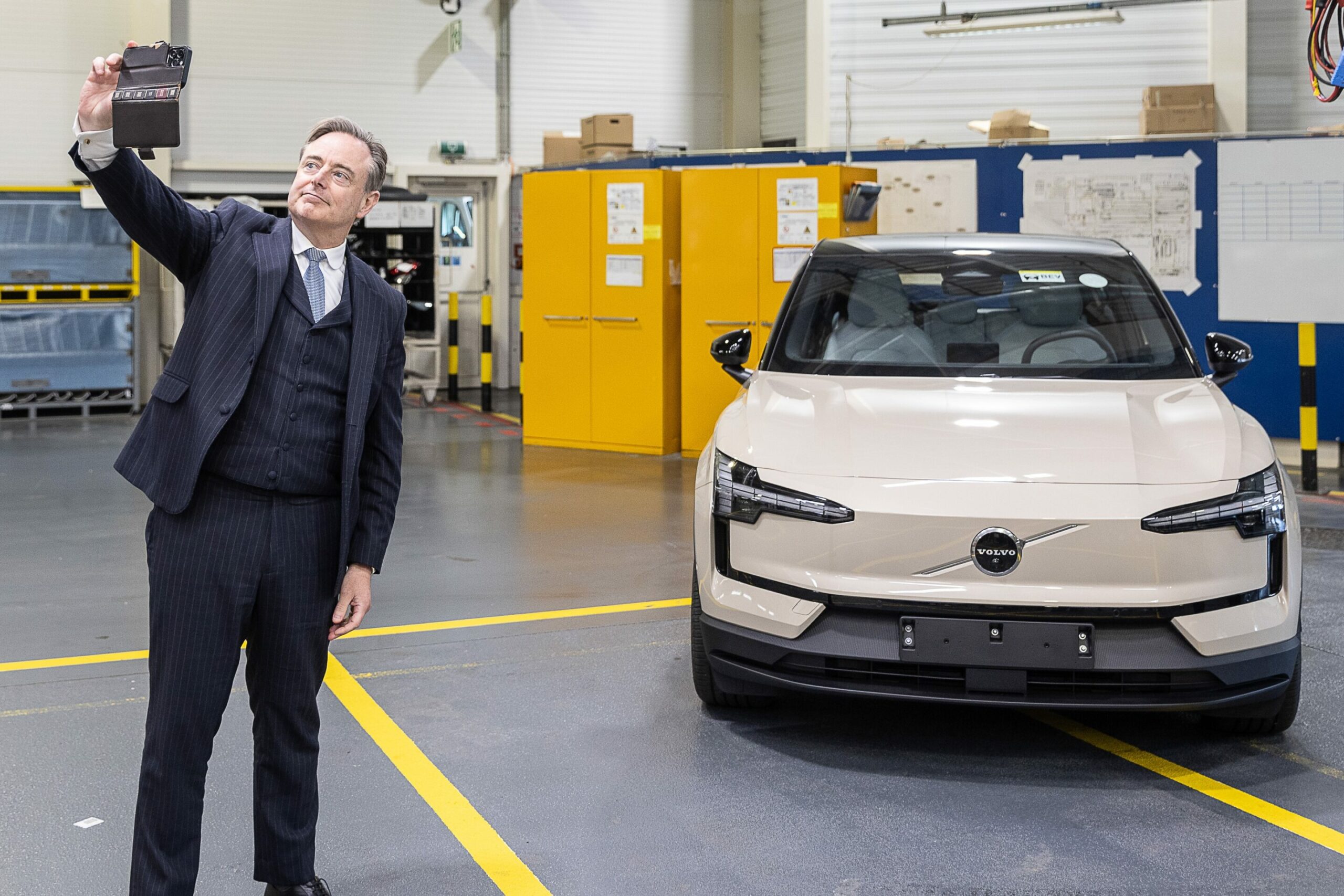
Prime Minister Bart De Wever (N-VA) at a press moment about the start of production of the Volvo EX30 at Volvo Car Gent, in Gent, on Friday, 25 April 2025. Credit: Belga / James Arthur Gekiere
Foreign Minister Maxime Prévot (Les Engagés) said he was optimistic about the future of Volvo Ghent after a visit to the research and development site of its parent company in Hangzhou.
"Geely wants to invest more in Europe, and I tried to convince them that Belgium has many advantages, particularly the Ghent site, and that our country is recognised globally as a hub for Research and Development. Logistically, Belgium is also an important hub, with the port of Antwerp-Bruges and the numerous rail connections," he said.
Furthermore, Belgium offers "a favourable ecosystem" for automotive production, he stressed.
Prévot is "convinced that Belgium's position will be assessed positively" by Hangzhou.
Sales plummet
From January through March, Volvo delivered a total of 153,316 cars to customers, a decrease of 11%. However, sales of fully electric cars rose by 12%.
In its two main markets, China and the US, sales fell by 18% and 32% respectively, to approximately 33,300 units in each.
In China, Volvo faces strong competition from Chinese manufacturers, and in the US, the elimination of tax benefits on the purchase of e-cars plays a role.
Sales also plummeted in Germany (-25%) and home market Sweden (-11%)—the fourth and fifth largest markets—as well as in Belgium (-14%)—the ninth largest market.
As a result, quarterly revenue fell by 12% to 72.6 billion Swedish krona (€6.7 billion). Operating profit (EBIT) dropped by 17% to 1.6 billion Swedish krona, further hampered by US import tariffs, impairments, and depreciation.
These were partially offset by further cost savings, it is stated. The bottom line showed a net profit of over a quarter less, at 700 million Swedish krona.
Volvo still expects to sell more cars for the full year than in 2025. While there will still be "headwinds" in the second quarter, the automaker is pinning its hopes on the new EX60 model, an electric SUV.
Production of this model began last week at the factory in Torslanda, Sweden, and deliveries will start in the summer. "Orders remain above expectations," it is stated. "And the margins on ordered cars have also exceeded the company's expectations so far."
