
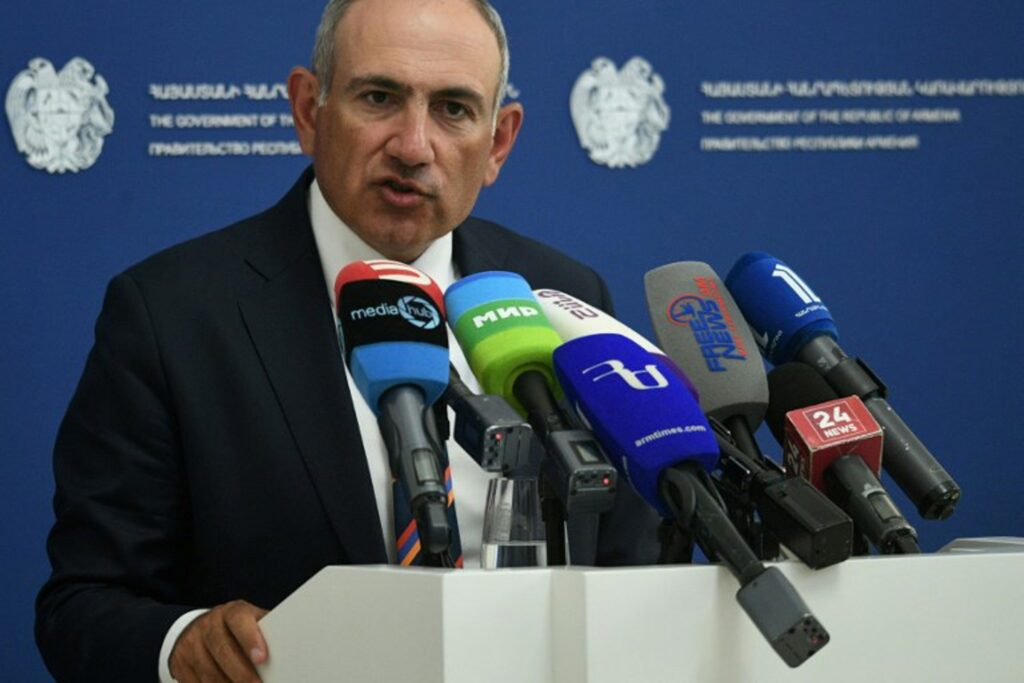
Armenians head to the polls today to elect a new parliament, with Prime Minister Nikol Pashinyan, leader of the 2018 Velvet Revolution, currently leading the race amid tensions with Russia and criticism related to a peace deal with Azerbaijan.
Armenia has been steadily moving away from Russia’s influence since 2018. That year, Pashinyan, then an opposition leader, led widespread protests that forced Prime Minister Serzh Sargsyan to resign. Sargsyan had been in power as president for two terms before transitioning to a prime minister—a move that many Armenians strongly opposed.
Pashinyan consolidated his power after the 2021 elections. Under his leadership, Armenia’s parliament expressed aspirations to join the European Union. In May 2026, Yerevan hosted the first EU-Armenia summit aimed at strengthening ties in energy and transport sectors.
This shift has sparked anger in Moscow, which has threatened economic sanctions reminiscent of the tactics used in Ukraine. Restrictions could include reducing Armenia’s fruit and vegetable exports and limiting oil supplies, on which Armenia heavily depends.
Additionally, the Kremlin is accused of spreading disinformation online to influence the elections, according to media experts. However, these experts also warn that Armenian political parties themselves are engaging in online misinformation.
Relations with Azerbaijan remain particularly sensitive. In September 2023, Azerbaijan launched a military operation to seize Nagorno-Karabakh, a region historically home to ethnic Armenians but internationally recognised as Azerbaijan’s territory. The offensive displaced around 100,000 Armenians and marked the end of a decades-long dispute.
Pashinyan has since prioritised rebuilding ties with Azerbaijan, a move that many voters view as dismissive of the conflict’s traumatic legacy. Marina Ohanjanyan, a researcher at the Clingendael Institute, notes that such pro-European strategies can be fragile if too closely tied to a single politician or party, especially amid accusations against Pashinyan’s administration of authoritarianism.
Critics, including Kenneth Roth, former director of Human Rights Watch, argue that Pashinyan is consolidating power and cracking down on journalists, opposition voices, and the judiciary. Despite mounting concerns over his governance, Pashinyan’s Civil Contract party remains the frontrunner in polls, partly due to the lack of credible alternatives.
Samvel Karapetyan, a billionaire businessman, has emerged as a surprising challenger. He launched the pro-Russia “Strong Armenia” bloc, accusing Pashinyan of betraying Armenia by making concessions to Azerbaijan. Karapetyan warns that Armenia under Pashinyan risks becoming a “province of Azerbaijan,” not Russia.
However, Karapetyan’s ambitions face constitutional hurdles. Holding Russian and Cypriot citizenship, he is ineligible for the premiership under Armenian law, which requires uninterrupted residency in Armenia for the past four years. Karapetyan plans to amend the constitution through parliament if elected and promises to renounce his other nationalities.
Adding to the drama, Karapetyan is currently campaigning from his villa under house arrest. He faces charges related to comments perceived as incitement to overthrow Pashinyan and his government following a dispute involving the Armenian Apostolic Church.
With many voters undecided, the elections could take an unexpected turn, leaving the outcome uncertain until the very last moment.
