
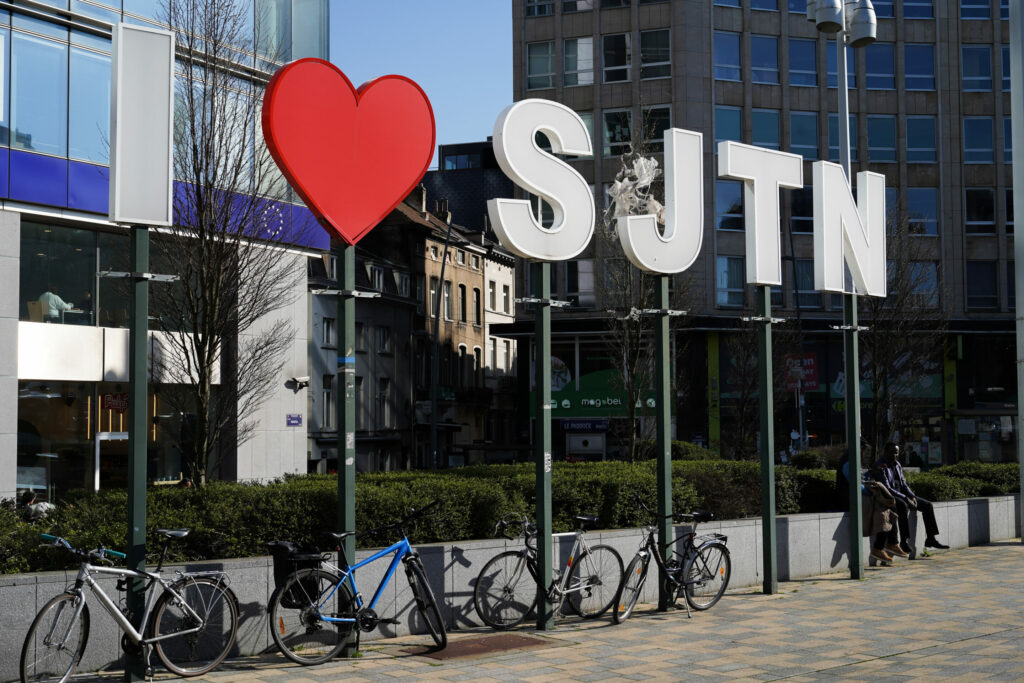
Across European regions, Brussels has the fourth-highest population density, sitting behind Paris, central Athens and Hauts-de-Seine, according to data from Eurostat for 2024.
Paris had a population density of 20,147 per km2, compared to Brussels at 7,827. Brussels has always had a high population density, and this has been climbing.
In 2022, Brussels overtook Bucharest to move into fourth place, ahead of regions such as Basel, Vienna and Berlin, as well as the suburbs of Athens.
The density of Brussels is surprising to some. Visually, it does not have the hallmarks of a dense city, as Kristophe Thijs from the Confederation of Real Estate Professionals (CIB) explained to The Brussels Times.
"Brussels may not appear as dense as some other European cities because it has relatively little high-rise residential development. The urban landscape is characterised more by mid-rise buildings and compact neighbourhoods than by clusters of tall apartment towers," Thijs said.
For Brussels, that density is concentrated in certain communes such as Saint-Josse-ten-Noode, Saint-Gilles and Koekelberg.
Saint-Josse had a population density of 23,266 inhabitants per km2 in 2025, according to the latest figures published by the Belgian statistics office Statbel this month. The least dense population area in the Belgian capital is the City of Brussels, at 6,005 inhabitants per km2.
Saint-Josse is one of Belgium's smallest geographical communes – along with Saint-Gilles and Koekelberg – and that partly explains why the figures are so stark.
Compared to other parts of Belgium, Saint-Josse also has a much lower share of buildings with only one household. The last Belgian census showed that just 6% of buildings in Saint-Josse had one household, a significant difference from other parts of Brussels, such as Watermael-Boitsfort (47%) and Auderghem (34%), or for Belgium overall (70%).
Overall, figures from Statbel show that in 2025 Brussels had 7,732 inhabitants per km2 compared to 506 in Flanders and 220 in Wallonia.
"Population density in itself is neither inherently good nor bad," notes Thijs. "The challenge arises when population growth is not matched by sufficient housing supply, mobility infrastructure and public amenities. In that case, density can translate into pressure on housing affordability, congestion and reduced quality of life."
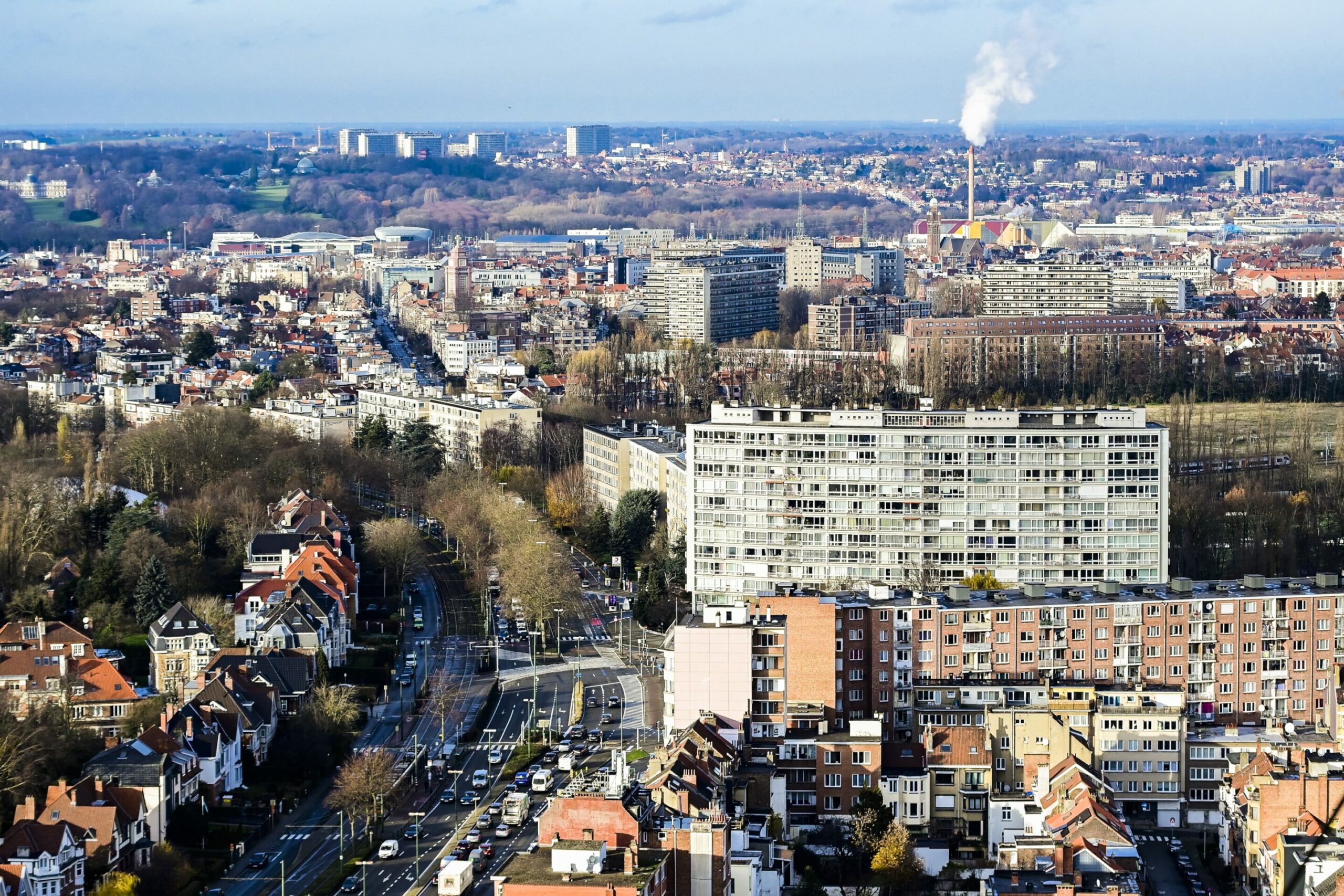
Illustration picture shows an aerial view of Brussels, Wednesday 16 December 2020. Credit: Belga / Laurie Dieffembacq
A report from Federia, the Federation of French-speaking Real Estate Agents in Belgium, released earlier this year, showed that affordable rental properties were "disappearing rapidly" in Brussels.
Addressing these challenges is more important than worrying about the density of the city, notes Thijs. "The lesson is that density should not be viewed as a problem in itself. Well-managed density can make a city more vibrant, sustainable and economically dynamic. Poorly managed density, however, can create tensions on the housing market and in the wider urban environment."
Brussels inhabitants have started to feel that tension. In May, the Brussels Institute for Statistics and Analysis (BISA) highlighted the growing share of Belgian household budgets being eaten up by housing costs.
"In the Brussels-Capital Region, house prices and rents have risen faster than the cost of living in recent years. This trend is making it increasingly difficult for more and more households to find a home," BISA said.
