
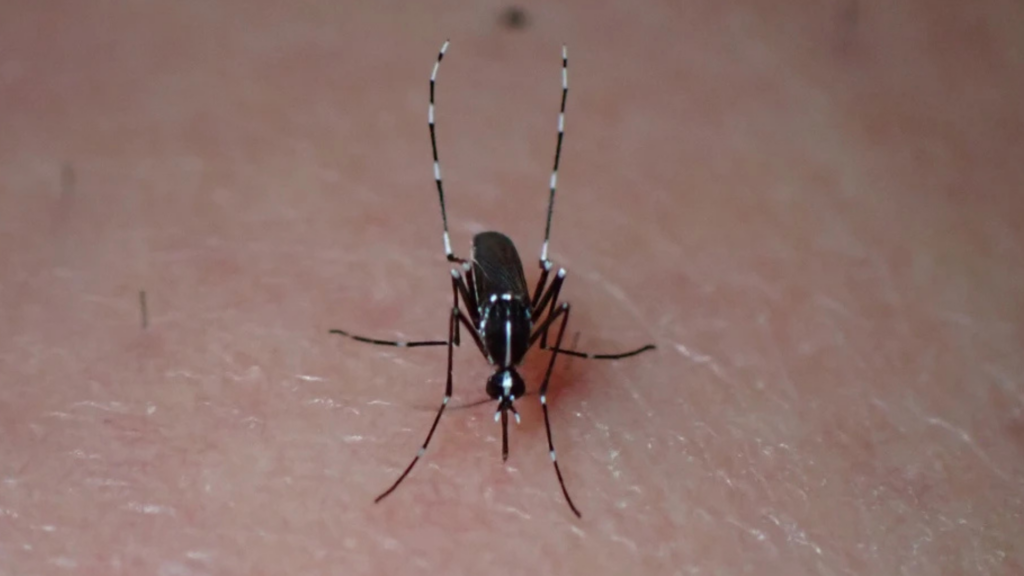
In the Netherlands, three people have died after being infected with the West Nile virus. In total, 18 cases have been reported, according to the National Institute for Public Health and the Environment (RIVM).
On 3 September, the Netherlands had reported nine cases. Since then, a further nine have been added. The patients contracted the West Nile virus following a bite from an infected mosquito in the provinces of Utrecht, North Brabant, North Holland, South Holland, Overijssel and Gelderland.
Three infected people have already died in the Netherlands this year. Last week, the RIVM had reported just one death: a woman who contracted the virus whilst on holiday in south-eastern Europe.
Since August, evidence has been found in various locations across the Netherlands that the West Nile virus is circulating. According to the RIVM, this is evident from investigations into people and horses presenting with symptoms, scientific research by Sanquin Research, and studies of birds and common house mosquitoes.
Related News
- Over 1,000 Europeans infected by West Nile virus
- How Belgium went through one of its biggest wildfires ever
- One person died from West Nile virus infection in the Netherlands
- Should Belgium worry about the spread of the West Nile Virus?
Since the last update, the Dutch Food and Consumer Product Safety Authority (NVWA) has received 53 reports of horses infected with the West Nile virus, bringing the total number of reports this year to 58 horses.
The West Nile virus working group, comprising experts from various organisations, also reports that last week 23 dead and 10 live wild birds tested positive for the West Nile virus. In total, the virus has now been detected in 39 birds, and according to the RIVM, the relatively high mortality rate among corvids is striking.
What about Belgium?
In Belgium, 25 cases of West Nile virus have already been detected in horses since the first infection in early August. The virus has also been detected in around 60 birds, announced the Federal Agency for the Safety of the Food Chain (FASFC) on Thursday.
The FASFC expects the figures for animals to rise further, as samples are still being tested, including those from bird rescue centres, explains spokeswoman Hélène Bonte.
Of the 25 horses, two have been euthanised because they were too ill. In most horses (80%), however, the disease is asymptomatic. Among the 20% of horses showing clinical signs, 30-40% of the animals die. All the horses that contracted the virus are located in Flanders.
Meanwhile, the virus has also been detected in birds at two locations in Wallonia. Brussels had previously reported that dead birds carrying the virus had been found.
Importantly, neither infected horses nor infected humans can transmit the virus to other individuals. Therefore, they pose no danger to those around them. The confirmed cases of infection in horses are mainly concentrated in certain regions, such as Antwerp.
Nevertheless, the FAVV is taking a broader view, as the virus could be present anywhere. "Birds and mosquitoes don’t confine themselves specific regions," said Bonte. “We are calling on all vets throughout Belgium to report symptoms and take samples.”
The virus is spread by mosquitoes. People cannot transmit it to one another.
Around 80% of people infected with the virus experience no symptoms, while some develop mild symptoms. Only 1% of those infected become seriously ill and may develop encephalitis or meningitis, according to the FASFC's website.
Those who do fall ill usually experience flu-like symptoms. A small proportion of elderly people and/or those with weakened immune systems could die if infected.
The virus has been circulating abroad for some time, for example, in parts of Africa, the Middle East, West Asia and North America. In Europe, the virus has been detected further north in recent years.
