
Belgium has become an unlikely pigeon country. It is known for its unique racing culture, a deep love of pigeon meat as a decadent delicacy, and even the only statue dedicated to avian soldiers in the world. So how was this unusual pigeon-land born?
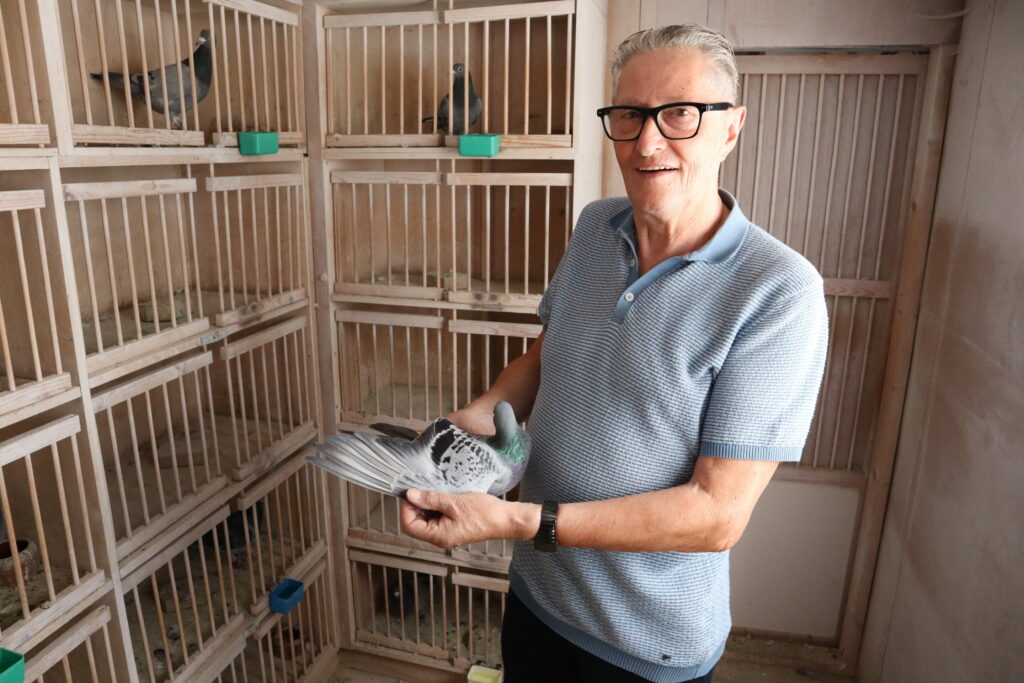
Today, the sport survives through dedicated fanciers like Eric De Smet. Following a 30-year career as CEO for Rombouts coffee, De Smet retired to Beveren-Waas and built a formidable colony of 200 racing birds.
"I am a winner, so I always want to be the best," he told The Brussels Times.
His 32 trophies for local Waasland championships back up the claim.

De Smet's large collection of trophies. Credit: Kosmos Khoroshavin / The Brussels Times
Romans were the first to cultivate early European pigeon husbandry and trade. Their legions marched across the continent with the birds in tow, relying on them as flying messengers capable of carrying military intelligence from ship to shore.
They established a rigid breeding tradition that eventually took root in the Low Countries. There, it morphed into a symbol of medieval feudal life.
Across French and Belgian territories, the right to construct imposing pigeon towers was restricted exclusively to the nobility and tied to land ownership.
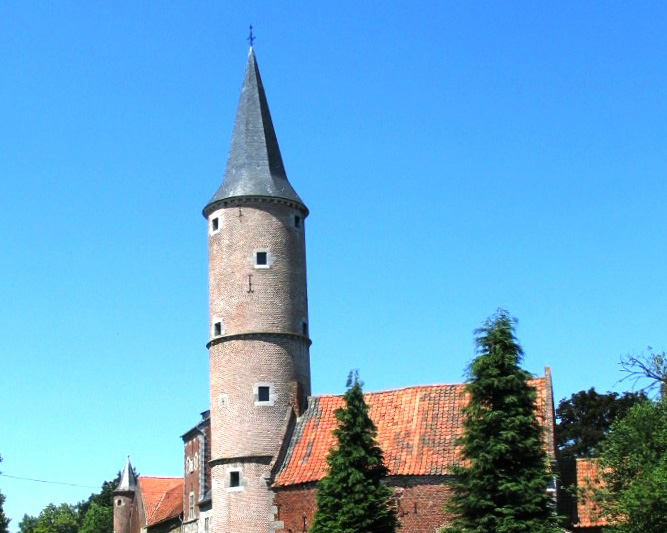
Example of a pigeon tower from Liège province. Credit: Wikimedia Commons
Pigeons proved popular as farm animals due to their ability to feed themselves on their surroundings.
This system meant aristocratic pigeons routinely descended upon commoners' fields, devouring seeds and wheat without consequence. Killing a lord’s bird carried severe punishments.
Democratisation of the pigeon trade
The French Revolution and later rapid industrialisation brought massive changes. Revolutionaries abolished the exclusivity of pigeon husbandry. Chickens also began replacing pigeons, as farmers found them much easier to breed in dense cages on a mass scale.
With democratisation, pigeons experienced a working-class boom in popularity. Alongside enjoying a dove roast, the tradition of pigeon racing started forming.
Belgian manual labourers worked long hours during the day. They found relief in gathering at local pubs, carrying their animals to race them against each other.
"50, 60 years ago, almost everybody played with the pigeons in Flanders," De Smet said. The sport ignored language borders. The earliest mention of pigeon racing dates back to 1815 in Liège, followed by Antwerp in 1826.
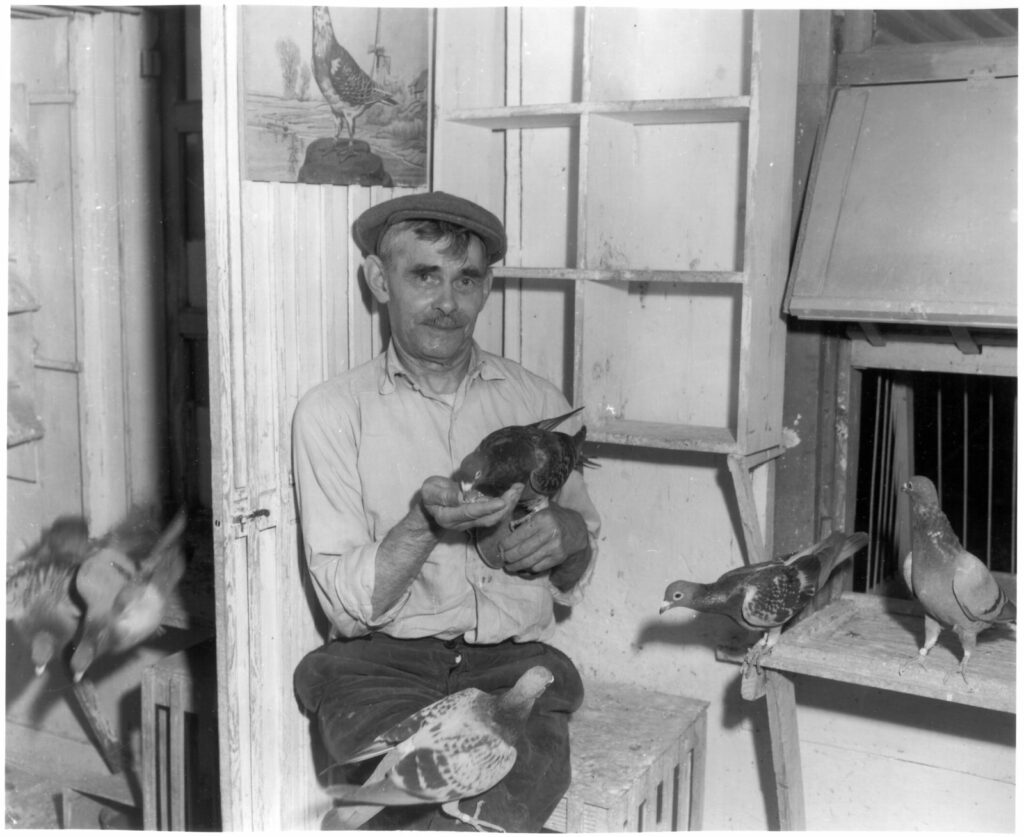
Historic photo of a working-class Dutch pigeon racer. Credit: Wikimedia Commons
Miners and factory workers aggressively bred local varieties like the speedy Smerle and the endurance-focused Cumulet with English Carriers.
This selective process engineered a distinct Belgian hybrid called the Voyageur. Known for incredible stamina and speed, this breed retains the status of the ultimate racing pigeon.
De Smet’s modern Voyageurs race the 98-kilometre sprint from Quiévrain or the 204-kilometre route from Noyon. Flight times depend heavily on atmospheric conditions.
"With a headwind, a pigeon can go 1,200 to 1,300 metres per minute," he explained. With a tailwind, they easily hit 1,700 metres per minute.
Belgium's rapidly expanding railway network provided the last piece of the puzzle for Belgian dominance. Railway guards loaded thousands of woven baskets onto outbound trains on race weekends – transporting the birds hundreds of kilometres away.
At a designated rural station, the baskets opened simultaneously. This launched the race, sending massive flocks navigating back toward their home lofts.
Exactly how these birds find their way home remains heavily debated among researchers. Local breeders rely on geographical observation.
"We think that the pigeons come home via the waters, the Scheldt or so," De Smet said. "Most pigeons always look for the water side. If you have the opportunity on the water side, you also take the earliest prizes."
His worker, a retired fancier who helps record De Smet's arrivals, points to invisible atmospheric phenomena instead. "It seems that it has to hang in the air – the rays. To come home from so far off with such a small head..."
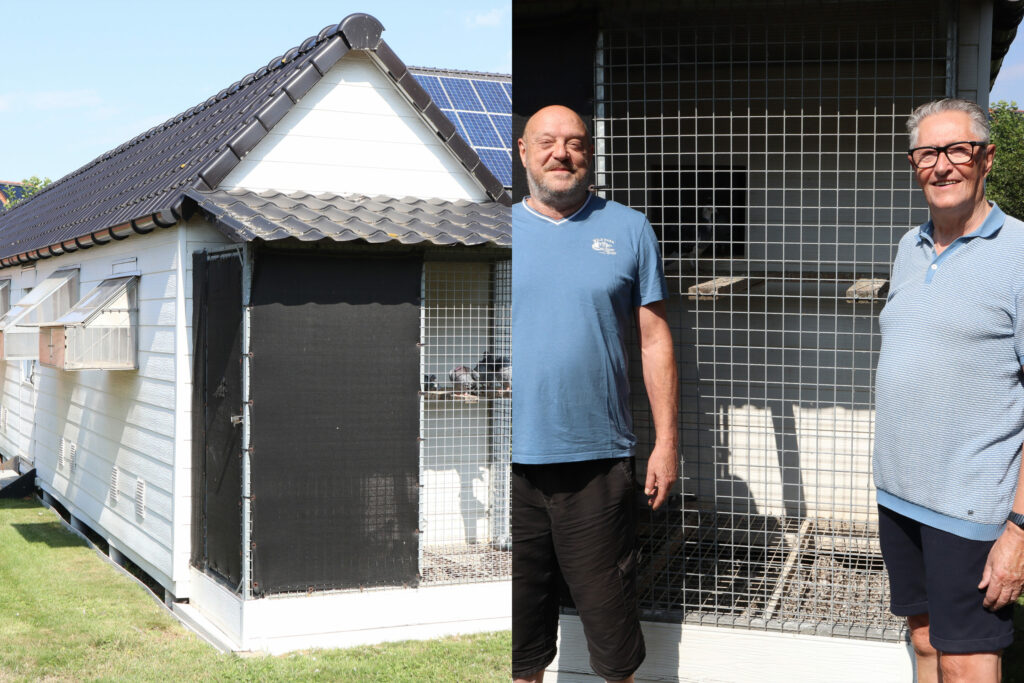
Credit: Kosmos Khoroshavin / The Brussels Times
Winning requires strict biological maintenance. De Smet works in his loft from 06:30 until mid-morning, returning again from 15:00 to 17:00. His racing pigeons are released at 07:00 sharp, rain or shine.
"A human eats in the morning, afternoon, evening. My pigeons eat at eight o'clock and they eat at three o'clock," he says, noting he feeds them specific Paloma grain mixtures without peas. "You must have regularity, then you have already won a lot."
Medical regimens are equally rigid. Birds receive annual injections and specialised medicine every three weeks to combat diseases.
Young pigeons face the highest mortality risks, regularly contracting the Adenovirus. Survivors begin training at four months old. De Smet pushes them incrementally to 30-kilometre distances; after 15 contests, he culls the slowest performers. Some are kept purely for reproduction.
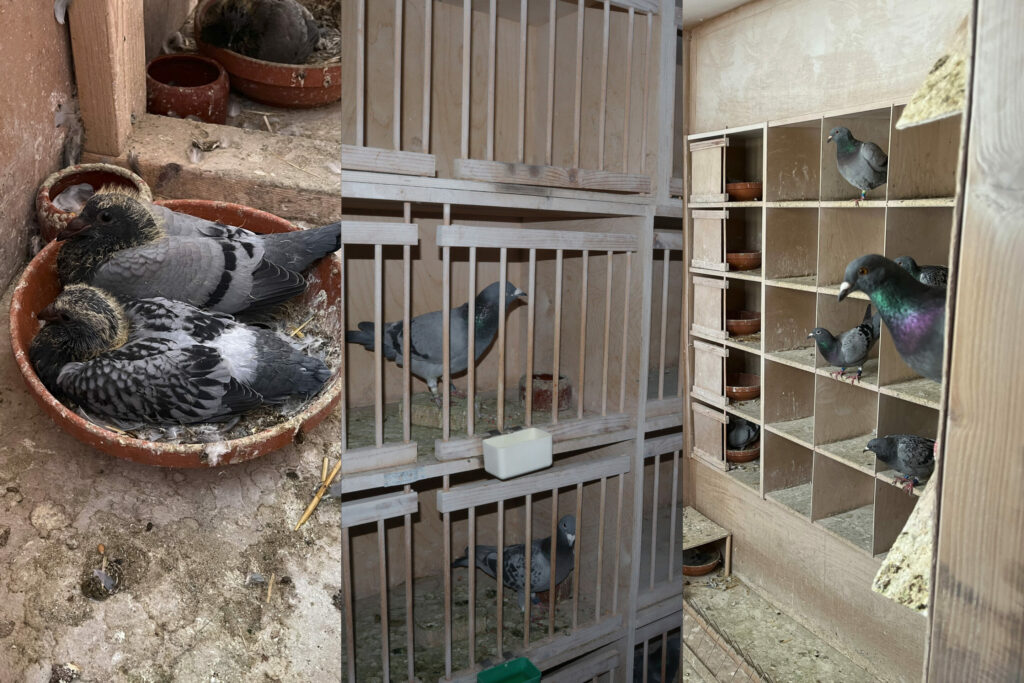
Pigeons inside of Eric's loft. Credit: Kosmos Khoroshavin / The Brussels Times
"It's not because she doesn't fly well that she doesn't breed well," he notes.
Champions are chosen by physical traits. "Shape of the beak. And mostly the head," De Smet explains. "They must have nice pupils that are straight. That is the most prominent feature."
Winged war heroes
European-wide conflicts violently interrupted the hobby on Belgian soil.
German occupying forces strictly prohibited pigeon keeping during both World Wars, recognising the animals as devastatingly effective espionage tools.
The birds could fly unnoticed over trenches, carrying micro-messages across enemy lines. Soldiers ordered the mass culling of flocks across the country.
Inaugurated in 1931, the bronze statue depicts a winged bird shielding a military helmet, honouring both the animals and the breeders who died for the country.
To save the national breed during WWII, a sympathetic German general allowed Belgian fanciers to secretly harbour select birds in restricted Brussels lofts until liberation.
Belgium remains one of the only nations to explicitly immortalise these pigeons. The Monument au Pigeon-Soldat in central Brussels stands as a unique tribute.
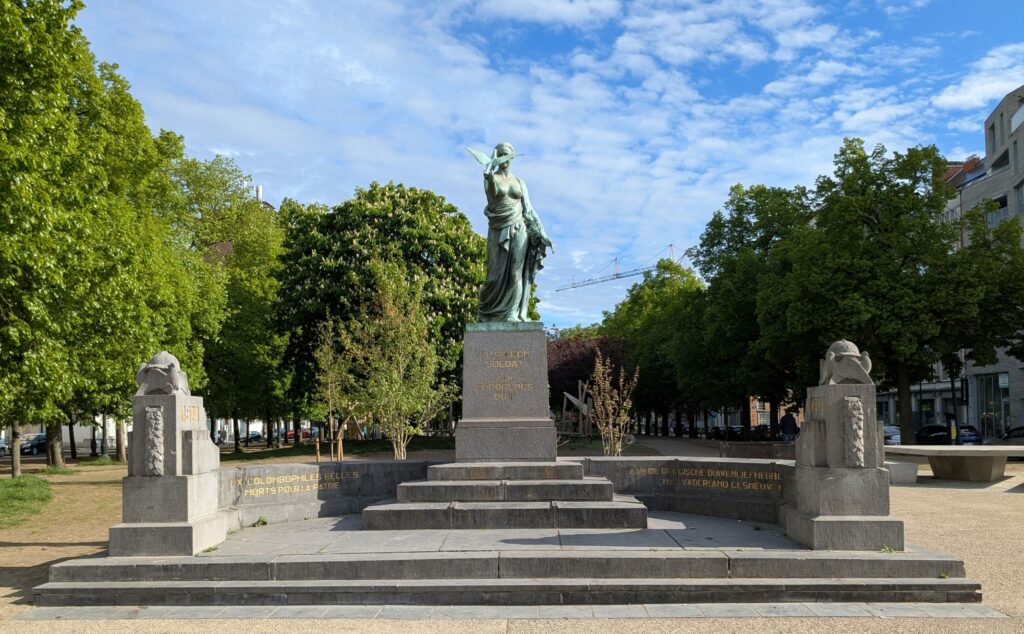
The Monument au Pigeon-Soldat in central Brussels. Credit: Wikimedia Commons
That wartime resilience persists in modern genetics. De Smet recalled one of his top hens colliding with high-tension wires mid-flight in 2020.
"She had broken both legs when she came home from the flight," he says. "And nevertheless, she still won a prize."
Today, concrete jungles and changing leisure habits have severely eroded the local, working-class foundation of the sport. Yet Belgians retain absolute supremacy in breeding, transforming a backyard hobby into a multi-million-euro export industry.
Going professional requires serious capital. Setting up a loft easily drains €25,000 before a single bird races.
Every premium bird sold demands a pedigree tracing its parents and grandparents. High-end transactions now require DNA tests to verify lineage.
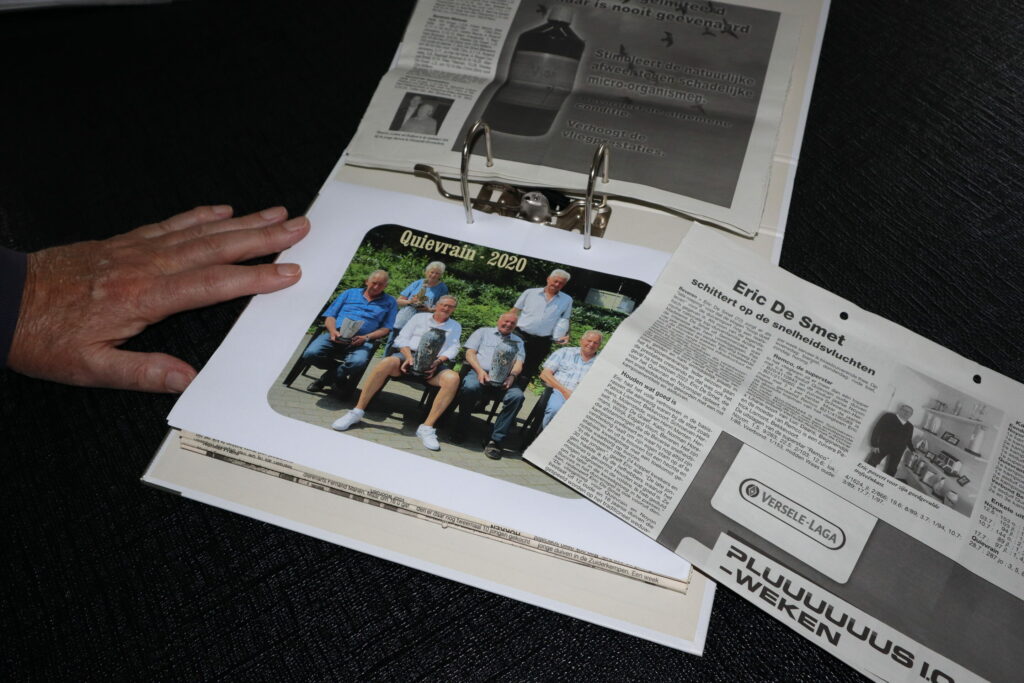
Eric showing off a dedicated pigeon racing newspaper, featuring him. Credit: Kosmos Khoroshavin / The Brussels Times
Wealthy tycoons from China and the Middle East dominate modern auctions, usually seeking birds for extreme 800-kilometre endurance flights.
In 2020, a Chinese buyer operating under the pseudonym “Super Duper” purchased a Belgian female pigeon named New Kim for an eye-watering €1.6 million. He had previously bought the male champion Armando for €1.2 million, aiming to breed the two.
