
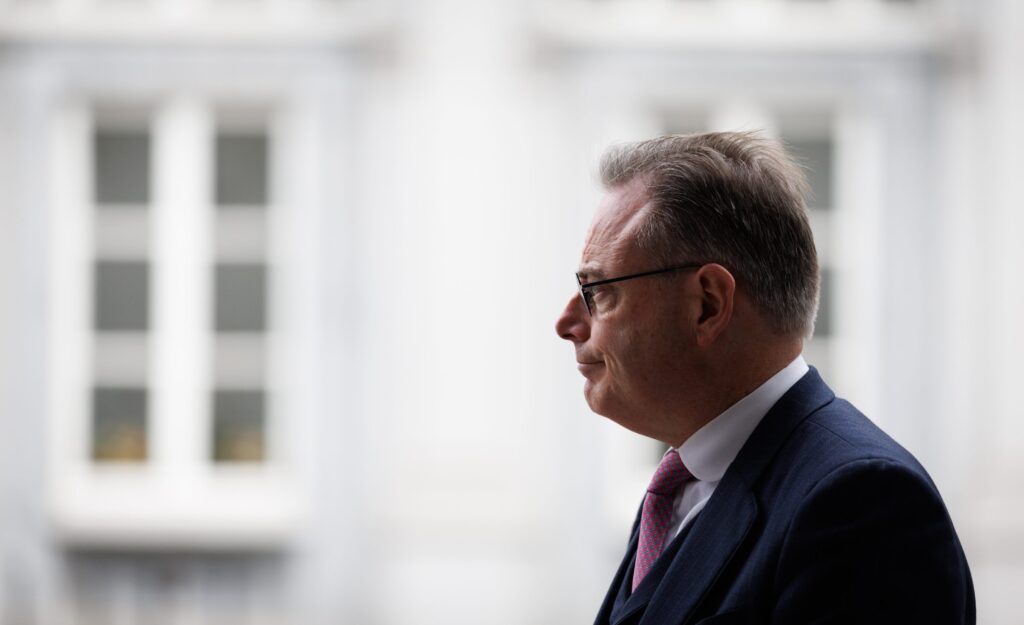
Belgium's Prime Minister Bart De Wever (N-VA) has offered his resignation to King Philippe on Monday morning after he failed to reach an agreement on the 2027 federal budget.
The monarch said that he will take the resignation in abeyance while holding talks with the parties involved in the federal coalition over the next days.
He called on all parties to take their political responsibility, stressing that Belgium cannot sustain a prolonged political crisis in the current climate.
De Wever decided to visit the king following a weekend of unsuccessful bilateral meetings with his ministers. The talks have stalled after Vooruit (Flemish social democrats), CD&V (Flemish Christian democrats) and Les Engagés (Francophone centrists) reportedly asked for increased taxes on the "strongest financial shoulders," something MR (Francophone liberals) and N-VA (Flemish nationalists) strongly oppose.
De Wever arrived at the Royal Palace shortly after 09:30 and spoke with Philippe for more than an hour. He left the Palace shortly after 11:00.
If the king accepts De Wever's resignation, new elections may be scheduled. However, forming a new government based on the balance of power from the previous elections could also still be an option.
However, in the past, governments often continued working after an initial visit to the king. It may therefore still be possible to meet Tuesday’s deadline and avoid working with provisional budgets.
Related News
- How religious is Belgium?
- On PM De Wever's chopping block to fix Belgium's budget: Non-profits, VAT and health care
- North–South: The line that remade Brussels
De Wever had previously made clear that he wanted nothing to do with a system of provisional twelfths, which would allow monthly expenditure of no more than one twelfth of the last approved budget for 2026.
De Wever hoped to find €10 billion in either cuts or new revenue for next year's budget, as the federal government needs to curb its deficit by 2029, as it might be hit by the so-called snowball effect of compounding interest. In practice, this would see the government forced to borrow money to make interest payments.
The Belgian deficit sits at 5.2% of GDP, the highest in the eurozone, with the debt rising to over 110% of GDP this year.
Across the eurozone, only France (116%), Italy (137%) and Greece (146%) have a higher relative debt than Belgium.
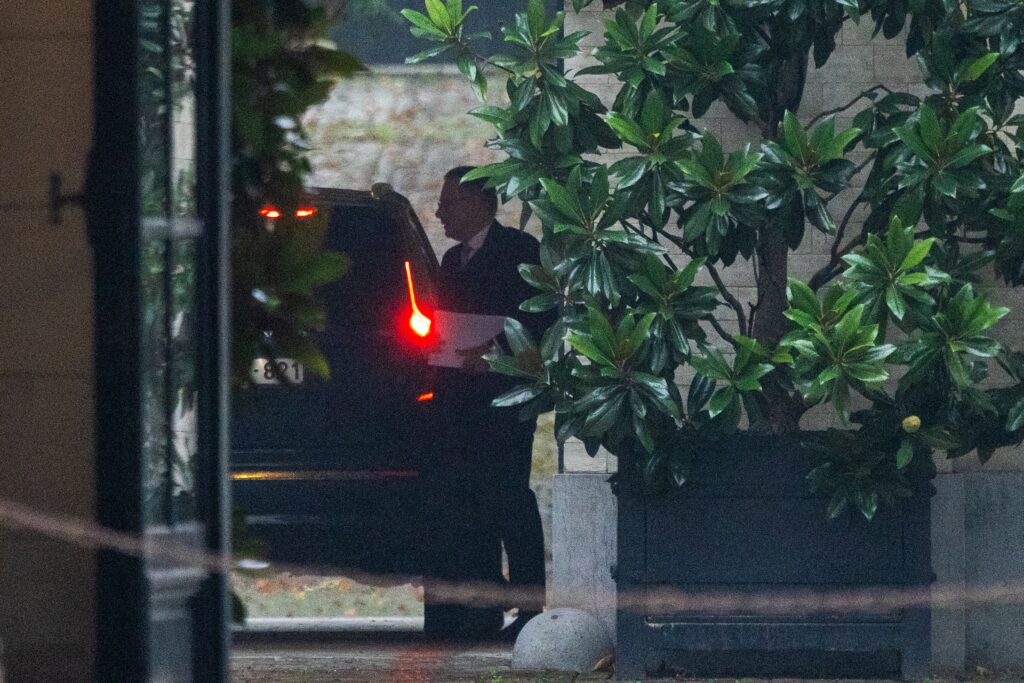
Prime Minister Bart De Wever arrives for a meeting at the Royal Palace Monday morning. Credit: Nicolas Maeterlinck
"Tax rate remains too high"
Minister of Economics David Clarinval (MR) responded to the collapse of the budget talks in a post on X. He blames De Wever for not tackling what he calls a "far too high" tax rate.
"By refusing to implement genuine reforms to reduce public spending, our country is being condemned to an ever-increasing budget deficit that can no longer be offset by taxation, as international organisations confirm," the minister wrote. "The only solution for sound public finances and a future for our country is to get growth and the economy back on track."
Clarinval calls for structural reform of government spending and support for competitiveness and job creation. He claims that the final proposal discussed Sunday evening included over €3 billion in new taxes.
