
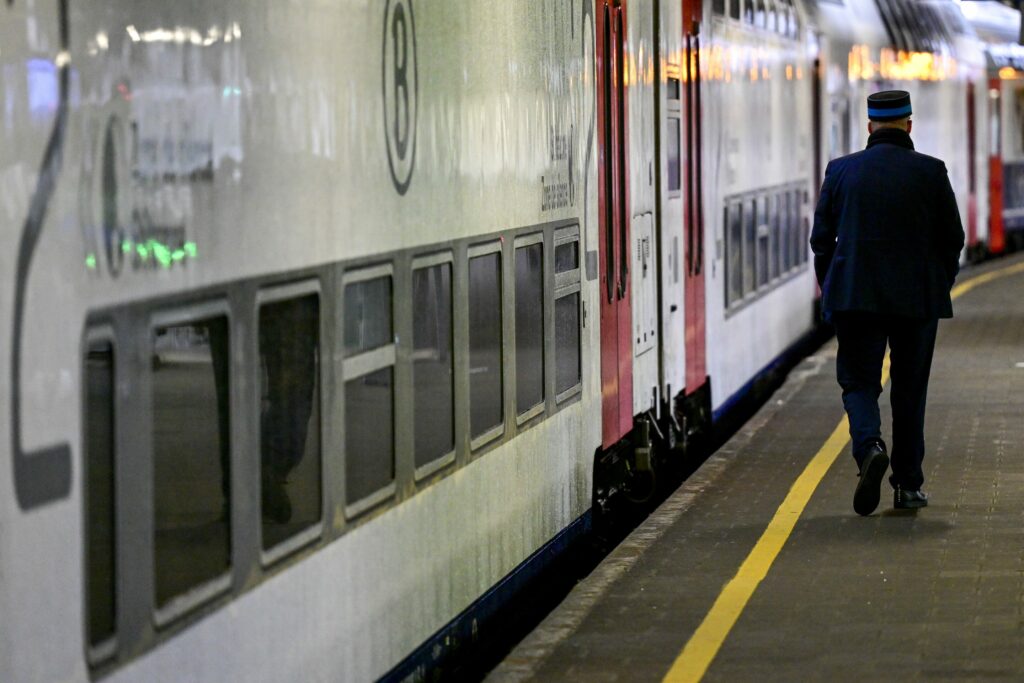
In the event of a significant train delay or cancellations, passengers in Belgium have rights to varying types of alternative transport, assistance or even compensation.
This week, Belgium has been hit by a five-day railway strike, impacting national and international train journeys. For those passengers affected, it might be useful to understand what your rights are when railway traffic is disrupted.
While exact practices may vary depending on the transport operator or specific circumstances, there are general rules and rights that train passengers have in Belgium.
Refunds & alternative routes
Once a train trip is cancelled or delayed by sixty minutes or more, passengers are usually able to choose between a ticket refund, if they choose not to travel, or taking an alternative route to reach their destination.
If passengers choose to be reimbursed, train operators must offer the reimbursement within 30 days from the day the request is made, according to the consumer rights platform European Consumer Centre Belgium. Requests can typically be made online on the official website of the rail operator.
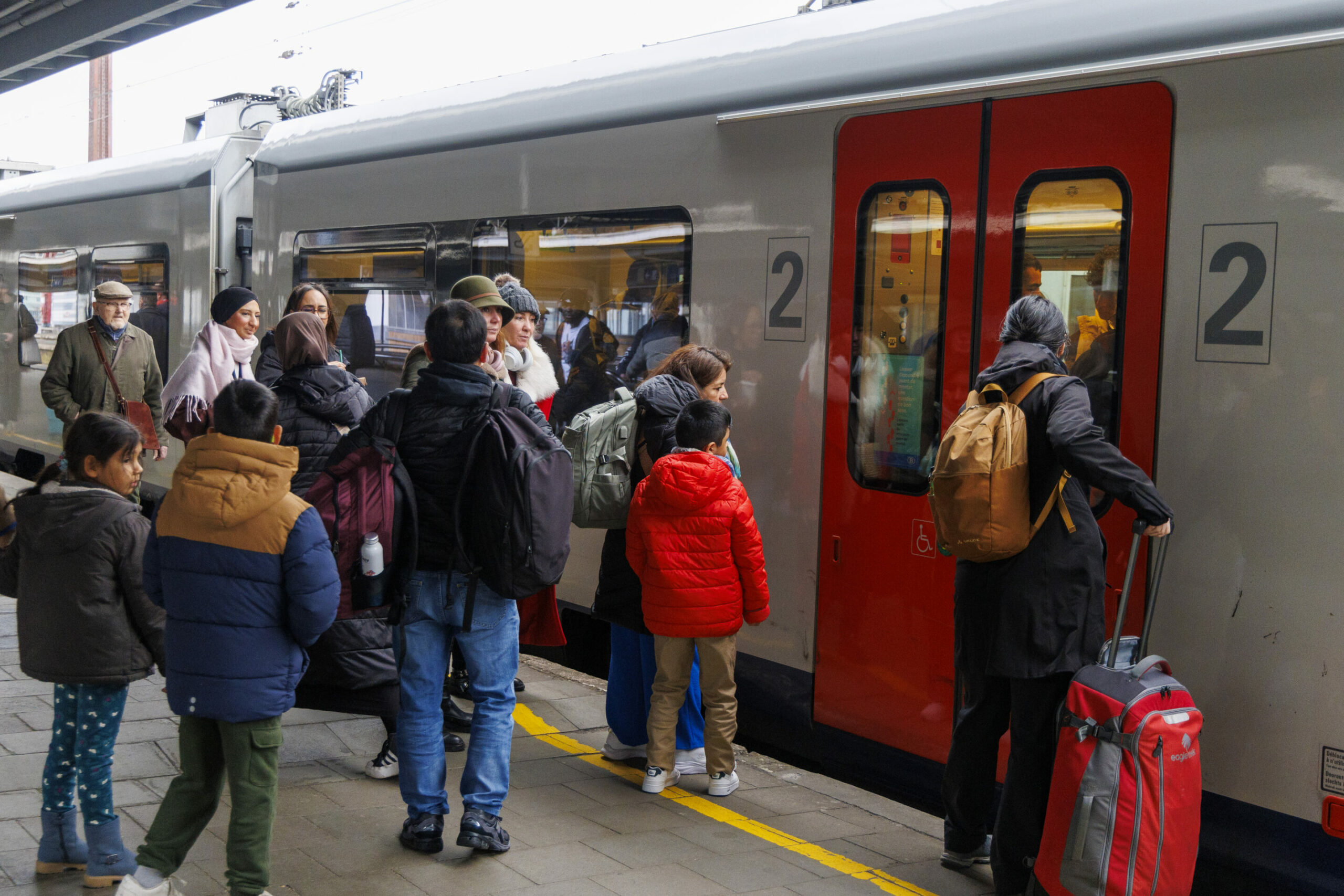
Illustrative image of people by a train. Credit: Belga / Nicolas Maeterlinck
For the re-routing option, passengers should be offered, without extra charge, another travel option that falls under comparable transport conditions. Additionally, passengers should not be asked to travel in a lower class than the one they originally booked in, unless that is the only option.
If no alternative travel options are offered within 100 minutes after the original departure time, passengers are typically allowed to book alternative travel services, such as buses, for example, to reach the final destination.
According to the European Consumer Centre Belgium, this should be reimbursed within 30 days by the rail company.
However, the consumer platform warns that for the reimbursement request to be fulfilled, passengers must have limited the cost of their alternative journey by choosing options that were strictly necessary, reasonable and appropriate.
Vouchers & cash compensations
If a train has been cancelled or significantly delayed and passengers opted to re-route to their final destination, they are, in principle, entitled to financial compensation. The railway operators usually have 30 days to compensate passengers.
Typically, if passengers reach their final destination with a delay of 60 to 119 minutes, they can reclaim 25% of the ticket price. If the delay is 120 minutes or more, passengers can reclaim 50% of their ticket price.
Credit: Belga / Eric Lalmand
While the compensation may be offered in the form of a voucher to book another train in the future, passengers are not obliged to accept the voucher and can ask to be reimbursed in cash, according to the European Consumer Centre Belgium.
Notably, the Belgian railway operator, SNCB/NMBS, does not offer financial compensation below €4.
Nonetheless, if a train service is cancelled or disrupted by force majeure, passengers are not entitled to financial compensation but instead may be given a reimbursement of their ticket or assistance in finding an alternative route.
Events which count as a force majeure include, for example, extreme weather conditions, major public health crises, or cable thefts.
Stranded at a station?
If the last SNCB/NMBS train a passenger was set to take is cancelled, or a passenger misses the last connecting train due to a railway delay, passengers should contact a station staff member or the customer contact centre.
If an alternative route, for example, another train service or bus, is not found, the Belgian railway operator, in principle, should offer the passengers a voucher to use for a taxi service. In the event these vouchers are not available, refunds may be requested via a customer service form within 15 days.
Passengers should keep their original train ticket and proof of payment for the taxi to request their refund.
