The new Secretary-General of the Benelux Union sits down with The Brussels Times to discuss Europe's place on the geopolitical chessboard, Schengen, and the possibility of unifying the Benelux as a single country.
Since the start of the year, the Benelux Union has had a new Secretary-General: Ariadne Petridis, the first woman to hold the position since the cooperation began over 80 years ago.
Having cut short her four-year term as Belgium's ambassador to NATO to head the Benelux Union, Petridis was quick to underline that "Europe must defend its rightful place on the geopolitical chessboard" when she took office.
After two months in her new position at what was the European Union's precursor, The Brussels Times met her in her office at Petit Sablon on a sunny day at the end of February to ask what she meant by Europe's "rightful place", and if the Benelux is more than a pawn in this international game of chess.
In other words, what can the small but mighty Belgium, the Netherlands and Luxembourg achieve when up against global superpowers such as the United States, Russia and China?
"Against this new geopolitical reality, the Benelux can really play a role as a laboratory, as a front-runner within the EU," Petridis stresses. "We can carry things forward faster, in a more ambitious manner, and go beyond what the EU with 27 Member States can achieve."
Decision-making is not always smooth or quick, with 27 parties involved – each with their own national situation and agenda. "But in the Benelux, we have the experience. Our economies are similar. We trust each other," she says. "We can really do things beyond what the EU does."
Small countries, giant leaps
For her, the Benelux Union is not necessarily about making a difference in the face of the current geopolitical tensions, but about joining forces and defending common interests. "We can be a model, an example that is attractive for others to follow, so we can make things move faster on a bigger scale," she says.
The EU, with 450 million inhabitants and the second-largest GDP per capita in the world, is one of the highest and best-performing regions globally, Petridis underlines.
"We are the strongest trading bloc, and with the euro, we are home to one of the most important currencies internationally," she says. "But we are caught, so to speak, between countries that see themselves as great powers."
The picture she paints is less than reassuring: Russia, with its imperialistic ambitions in the east, is waging a hybrid war against Europe and has brought a full-scale war back to the continent. China also poses a systemic challenge to the EU's interests, values and security.
"China increasingly controls key areas, such as the industrial and technological sectors, critical raw materials and supply chains. It is also quite opaque on its military strategy," Petridis says, adding that the regime challenges the rules-based international order as it was built after the Second World War.
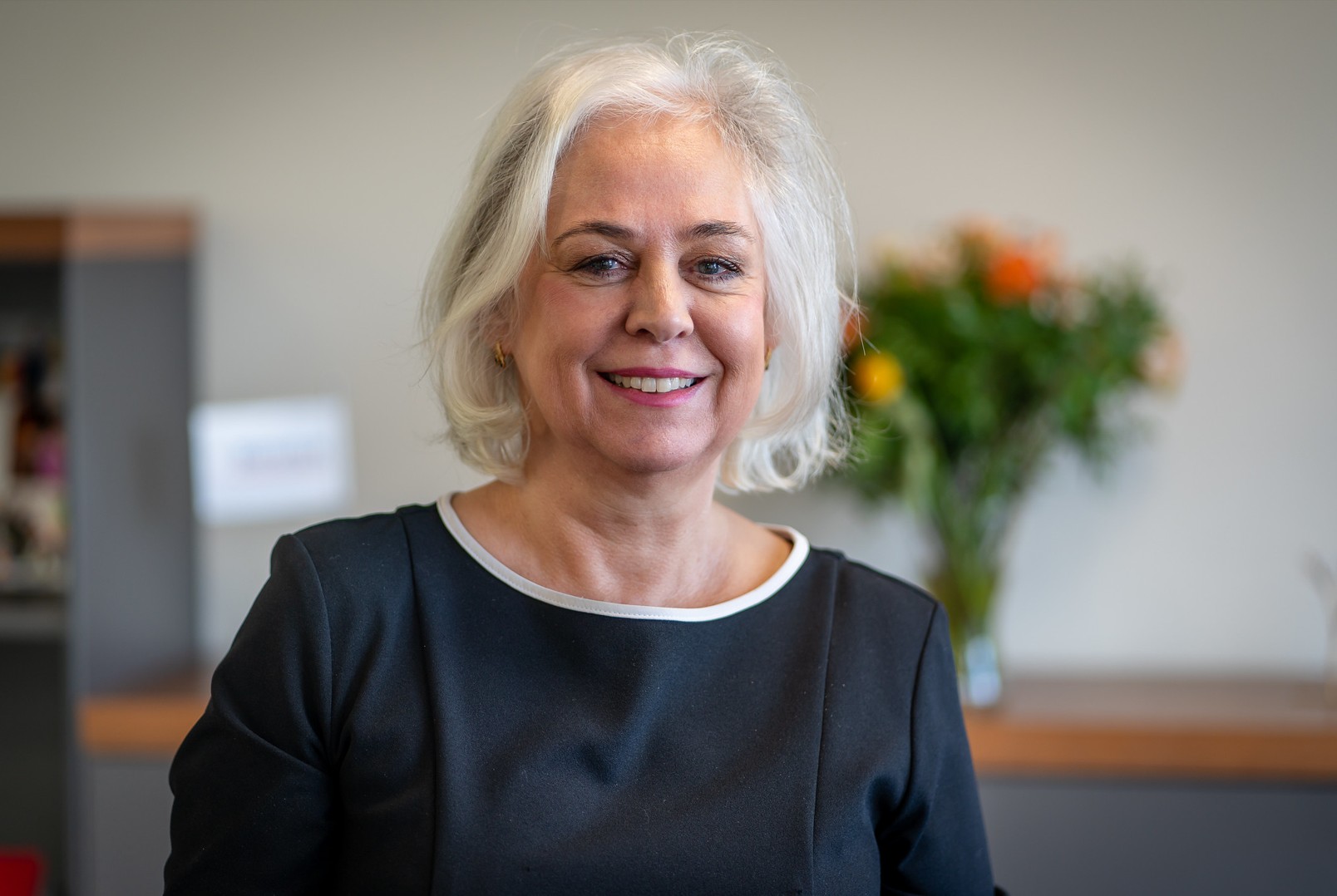
The Benelux Union's new Secretary-General, Ariadne Petridis. Credit: Benelux Union
The EU also faces President Donald Trump's second term in the United States. "We are confronted with a new administration in Washington that views the EU differently than previous administrations, and not necessarily always in a friendly way."
In this context, Petridis emphasises the importance of the EU and Europe more broadly becoming more self-reliant, less dependent on others, and more autonomous. "And that means we need to take a giant leap forward."
While she considers it "obvious for everyone" that the EU needs to invest more in its defence, Petridis believes that there is much work to be done in other areas as well: "In spite of what we have been working on in the past decades, Europe is still too fragmented."
"There are still too many different rules," she says. "We need to define a number of priority areas that will lead us to become even more united, more unified, stronger. Then, the result would be that we have more leverage in world affairs."
And that is exactly where the Benelux adds important value, she says. In addition to being a laboratory, a testing ground that can move faster and further than the EU can, Petridis underlines that its second strong point lies in the way the Benelux has been operating since the very beginning.
She highlights the Benelux police treaty that came into force in October 2023 and provides a framework for cooperation between the three countries' police forces, including information exchange to tackle drug trafficking, human trafficking, organised crime and all sorts of abuse.
Common solutions
The three countries also introduced a recognition of each other's higher education diplomas and professional qualifications – cutting costs and red tape for people who cross borders to work in another Member State. Several Baltic countries took the Benelux's lead and are now also part of the scheme. This year, Poland will likely join as well.
"We are a model of best practice. We do things among the three of us. Everything is perfectly in line with the ambitions and objectives of the EU, but we just try to go faster and set the example for the others," she says.
On Monday, the new Benelux treaty on combating social fraud is also being signed. It aims to tackle social fraud, undeclared work and benefit abuse through better and faster information sharing, but also joint inspections and controls.
"We try to find common solutions to challenges that our citizens have on a daily basis. And that works well because it is demand-driven and bottom-up," she says.
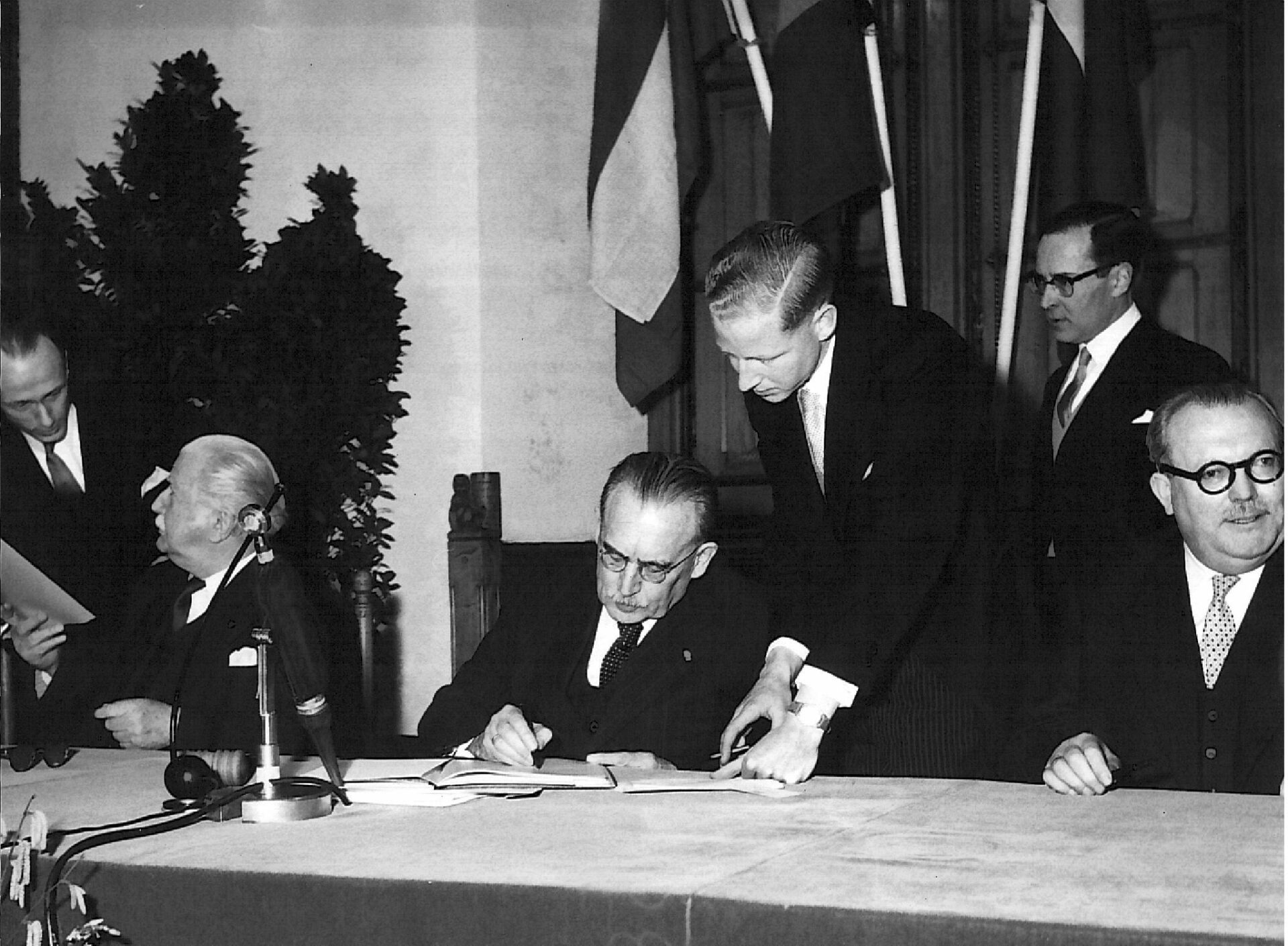
Singing of the treaty of the Economic Union of Benelux, 3 February 1958. J.Bech (Minister of Foreign Affairs of Luxembourg), W. Dries (Prime Minister of the Netherlands) and Achille Van Acker (Belgian Prime Minister). Credit: Belga Archives
Potential outside attempts to weaken Europe – the US' security strategy published in December 2025 shows a clear shift in Washington's relationship with Brussels – therefore do not faze her. She strongly believes the Benelux countries are close enough to survive whatever is thrown at them.
"I don't see why we wouldn't. We have for the past 80 years. We are geographically close, we have built so much trust among ourselves," she says. "Yes, I definitely believe we can stick together."
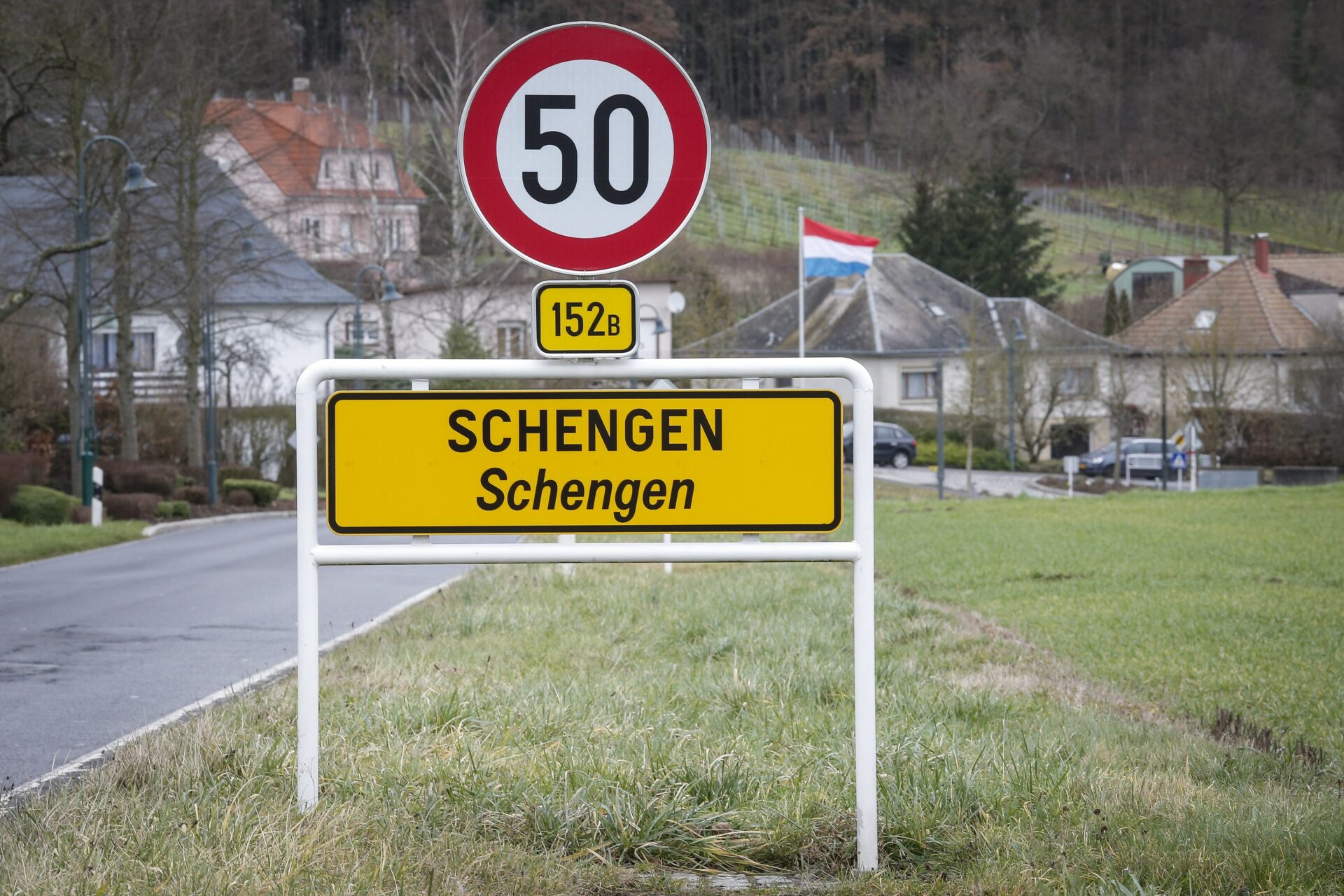
But threats aren't only coming from across the pond: the passport-free Schengen travel area across the European continent – perhaps the most notable accomplishment of the Benelux Union – is under threat from within the EU itself.
Germany introduced temporary border checks to curb irregular migration in September 2024. More than a year and a half later, the checks are still in force. The Netherlands introduced similar "temporary" border controls at the end of 2024 as well, which have now been extended until at least mid-2026.
But they are not alone: France, Austria, Denmark, Norway, Sweden, Slovakia, Bulgaria, Slovenia, and Italy have all reintroduced some form of border controls in recent years – symbolising a political climate at odds with European ideals and the spirit of Schengen.
Credit: Belga
Now much bigger than it used to be, Petridis is proud of the Schengen agreement and says that being able to move freely through the Schengen area has brought many benefits for millions of citizens.
"We are staunch defenders of that principle. I also think it has benefited our economies," she says. "It is a pity to see that border controls are being reintroduced."
She specifies that the Schengen agreement allows for the temporary reintroduction of border controls under clearly defined conditions and with specific procedures to be followed. "It's not up to me to judge whether the countries that reintroduced controls are right or wrong."
"The only thing I can say is that we hope that the spirit of Schengen will remain untouched, and that the conditions and the modalities of reinstalling border controls will be respected," she says. "They must be temporary, last resort, exceptional, and proportionate. The main thing is that Schengen remains alive."
A Benelux reunification?
Belgium's Flemish nationalist and Eurosceptic-turned-European statesman Prime Minister Bart De Wever is somewhat surprisingly a big fan of the Benelux Union – at least historically speaking.
Last year, De Wever said that the separation of the former Netherlands the way it was in the 16th century was "the greatest disaster that has ever befallen" the country and advocated for an "intimate union" of Belgium, the Netherlands and Luxembourg.
He believes the Benelux as a single country could become the "beating heart of Europe," and added that "bringing it back together is not a romantic dream, but a political aim needed for our future."
At the time, The Brussels Times approached the Dutch and Luxembourg embassies in Belgium for comment. While the permanent representation of the Netherlands pointed to the "very close and effective" cooperation in many areas, it added that the issue of reunification was "not on the radar". The Luxembourg embassy did not respond.
When asked the same question, Petridis responds that her role is not "to agree or disagree" with the Belgian Prime Minister's statements.
"Bart De Wever is a historian, and he made it very clear that he expressed his personal opinions, not the official position of the Belgian, Luxembourg or Dutch government. So who am I to say whether it's a good idea or not?"
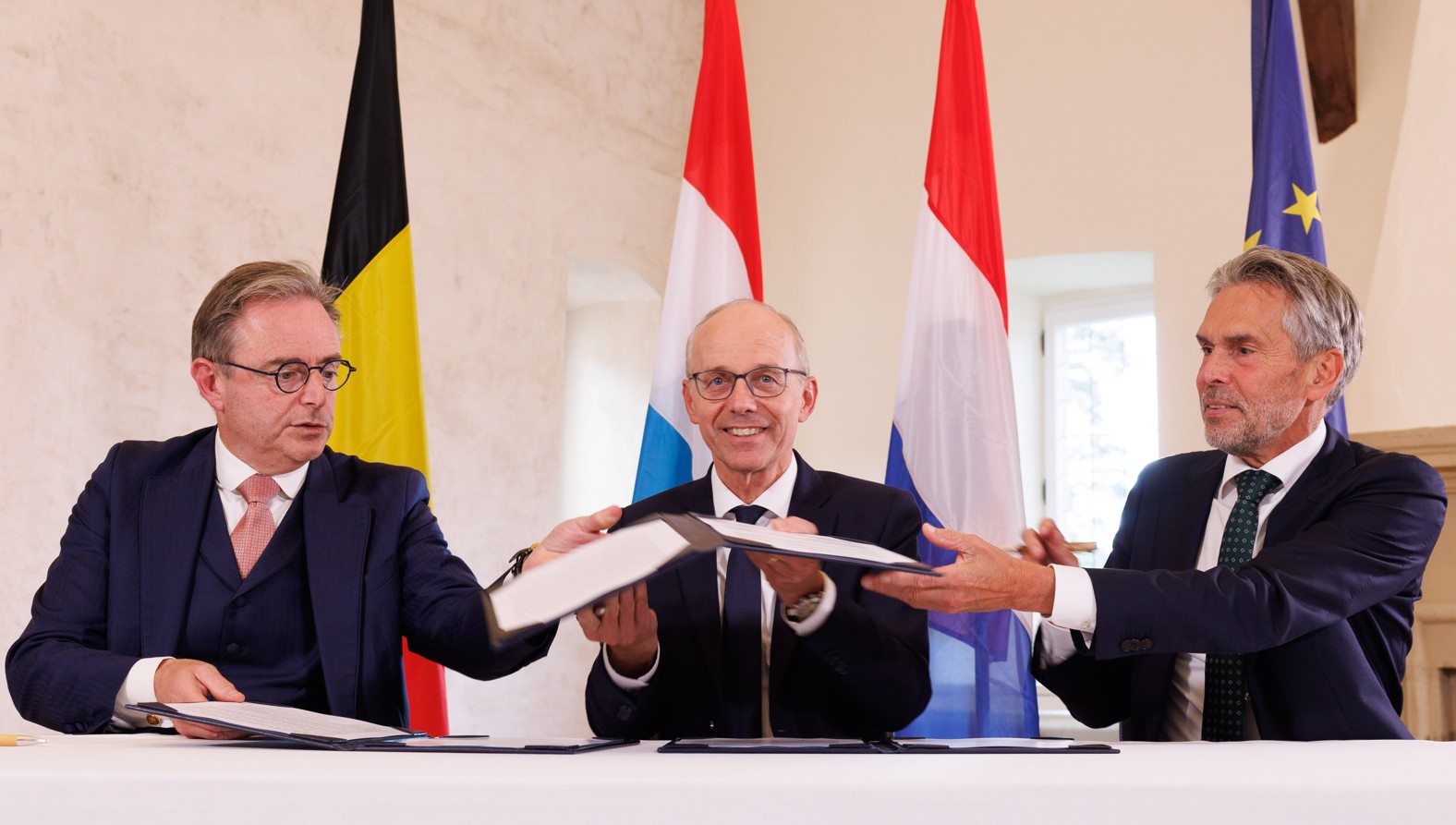
Belgium's Prime Minister Bart De Wever (left), Luxembourgish Prime Minister Luc Frieden (middle) and former Dutch Prime Minister Dick Schoof, during the signing of the 'Renewed Political Declaration of the Governments of the Member States of the Benelux Union.' Credit: Belga/Benoit Doppagne
For her, pragmatism should prevail. "Let's focus on concrete outcomes and set priorities. What are our shared interests? How can the Benelux be of added value? We do not necessarily need to re-unify as one country to make progress or do the things that we can do as the Benelux, as foreseen in article 350."
By article 350, Petridis refers to the Treaty on the Functioning of the European Union, which explicitly states that the Benelux is the only region that has the right to initiate cooperation that goes beyond what the EU does.
Yet, the Benelux Union is not a clique with a special status as the EU's founding countries, imposing their will or excluding other Member States. On the contrary, Petridis says, it is an invitation for others to join.
"Our job is to make things work, and this cooperation is a way of showing what is possible, because the three of us are already doing it," she explains. "If initiatives work within the Benelux, they can be gradually expanded and also applied at EU level. And as you can see, we get results."
She points to the three-country police cooperation, which resulted in solving kidnapping cases and arresting drug traffickers.
"As long as we can keep demonstrating operational results, I think we will demonstrate the attractiveness of the model. What we are telling the others is basically: this works, jump on the bandwagon."
