
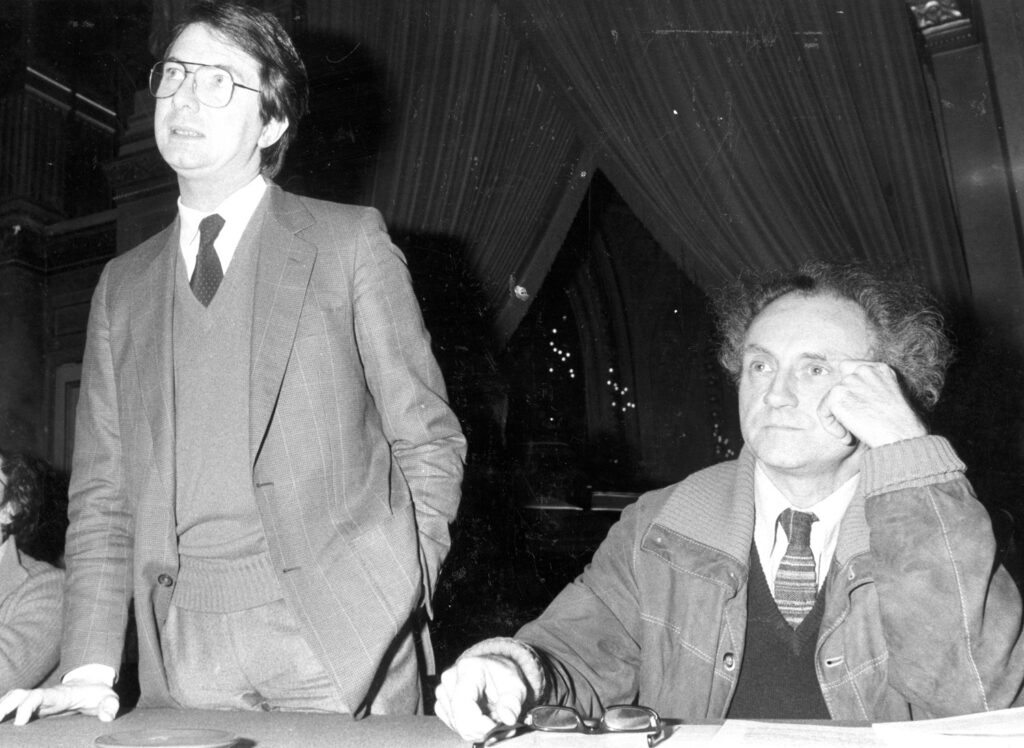
Considered the father of modern Belgian cinema, André Delvaux would have turned 100 this Saturday.
Born on 21 March 1926 in Heverlee, Flemish Brabant, Delvaux shaped Belgian cinema by infusing it with a poetic yet mysterious identity, rooted deeply in the country’s cultural reality.
After earning degrees in Germanic philology and law at the Université libre de Bruxelles, his passion for music led him to the world of film, where he started accompanying silent films on the piano.
Later, as a language professor, he established a cinema class and began directing alongside his students. This initial collaboration spurred his career, leading him to make short films and begin working with Belgian television.
His early projects focused on documentaries, but he soon shifted to fiction with the short film “Le Temps des écoliers,” paving the way for his transition to feature films.
Delvaux became renowned for his distinctive cinematic style, often described as “magical realism.” His notable works include “L’Homme au crâne rasé” (1965) and “Un soir, un train” (1968, starring Yves Montand), which brought Belgian cinema to the global stage.
A staunch advocate for literature, Delvaux helped elevate Belgian culture internationally by adapting works from local authors. He also played a crucial role in nurturing future talent, cofounding the INSAS (Institut national supérieur des arts du spectacle et des techniques de diffusion) in Brussels in 1962.
Passing away in 2002 in Valencia, Spain, André Delvaux leaves behind a legacy of timeless films that continue to inspire generations of filmmakers.
