
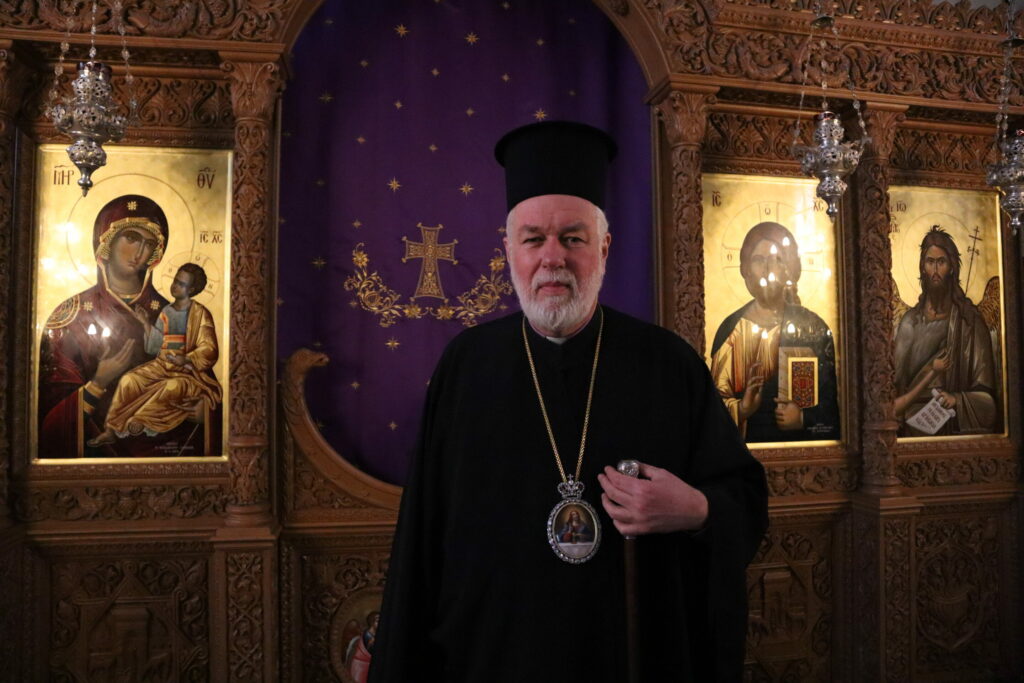
Today is a special day for followers of eastern Orthodox Christianity, who are celebrating Easter – the most important festival in the Orthodox Christian calendar.
In an interview with The Brussels Times ahead of Easter Sunday, his Eminence Metropolitan Athenagoras, the representative of Orthodox Christians in the Benelux, took the opportunity to condemn the ongoing war in Ukraine and said he found it "deplorable" for Orthodox Christians to fight one another.
Russia and Ukraine have agreed to a temporary 32-hour truce for Orthodox Easter, but after more than four years of fighting, the conflict shows no real sign of abating.
“We cannot accept violence in our society today," said the bishop. "We have experienced a lot of misery caused by war here in this country. We had two world wars in the 21st century and my own grandfather was serving in it. Russia attacked Ukraine and it is deplorable that Orthodox Christians fight against each other. I'm ashamed to have to recognise that this happens.”
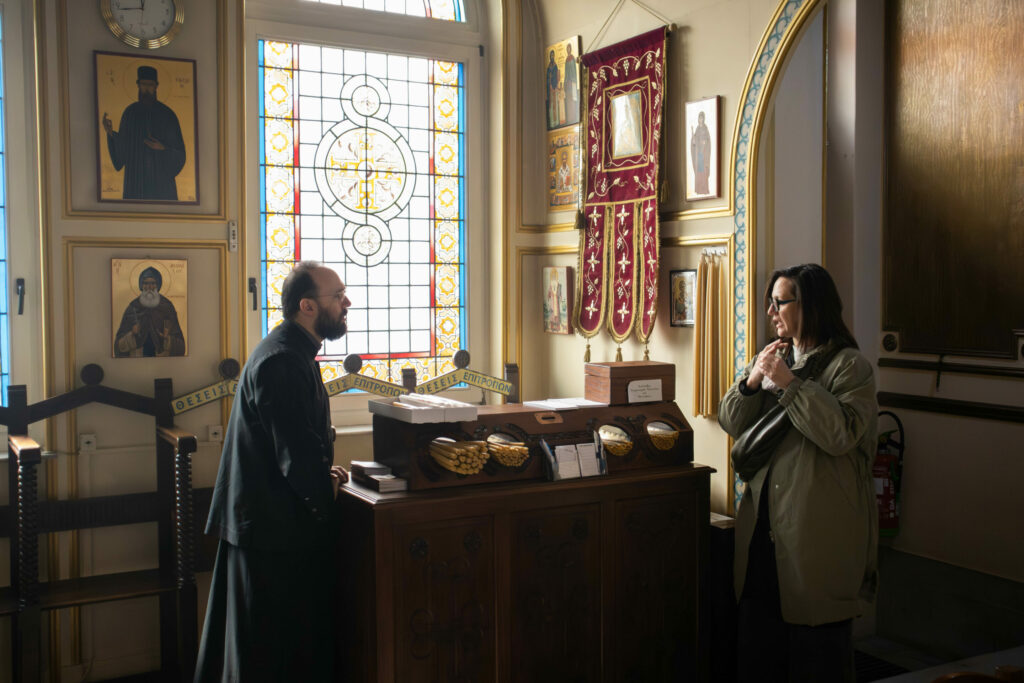
Greek Orthodox Church at Rue de Stassart in Ixelles. Credit: Kosmos Khoroshavin/The Brussels Times
Orthodox Christianity in Belgium
Born in Ghent in 1962, Athenagoras has lived through what he calls “the evolution of the Orthodox presence in the country”. His role is to keep in touch with communities, represents their interests and assure the unity of the country’s Orthodox Christians.
The bishop's flock is a large one. In Belgium, there are around 250,000 Orthodox Christians, with over 100 active parishes throughout the country, part of a mosaic of different cultures, ethnicities and languages.
Followers of the eastern Orthodox traditions include Bulgarians, Greeks, Romanians, Ukrainians, Serbians and Russians but also ancient Oriental Orthodox communities: the Coptic church (Egyptian), Syro-Jacobites (Syrian), Ethiopians, Eritreans, Assyrians and the South Indian Malankara Church of Saint Thomas.
Athenagoras argues the Orthodox Church remains largely unknown in Belgium "because we don’t seek to convert people to Orthodoxy – although the doors to our churches are open".
Like any Christian denomination today, the number of regularly practising members has significantly fallen by historic standards – something the bishop laments. “When we celebrate Easter next Sunday, every church will be full," he said, "but that’s one moment of the liturgical tradition that people come in such numbers.”
Orthodox Easter
Easter, the day of Christ’s resurrection, is considered by most to be the most important of the Christian celebrations, even surpassing Christmas. “In ancient text it is called the feast of feasts, the solemnity of solemnities," said Athenagoras. "We sing hymns about this great shining day.”
In Orthodox Christianity, preparations for Easter begin with Great Lent – a fasting period beginning 40 days before the holy day. It includes abstention of meat, dairy and even oil.
Unlike in Catholicism or Protestantism, there is a greater focus on the Holy Week as a whole, compared to just Good Friday and Easter Sunday within the Western branches. In Romania and Ukraine, the Thursday is often referred to as 'Clean Thursday', a day to clean your house, body and soul.
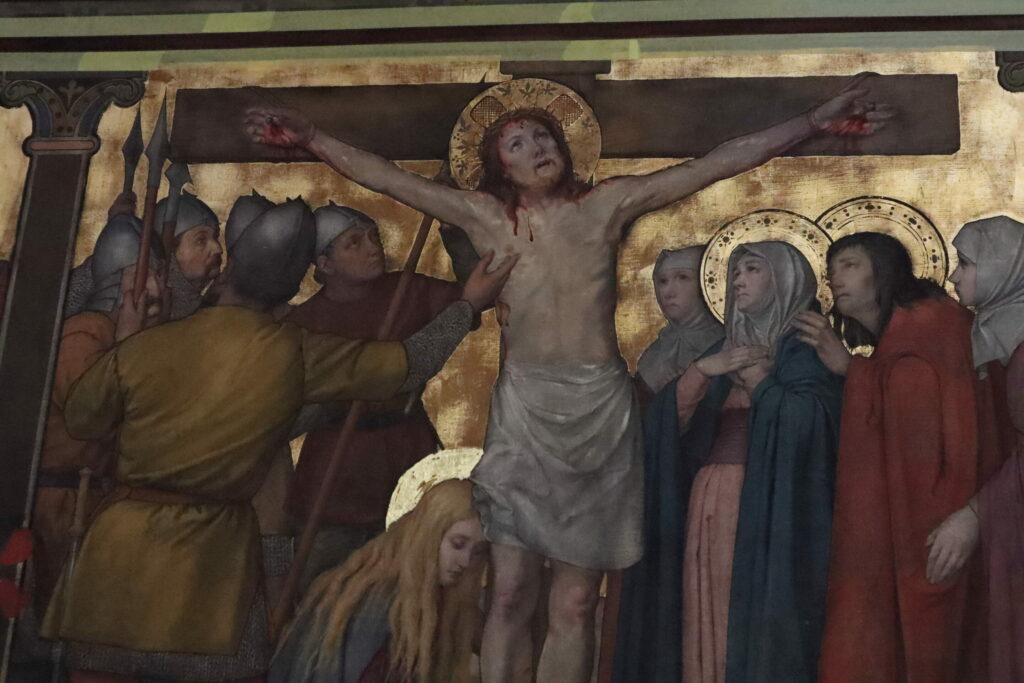
Icon in the Cathedral of Holy archangels Saints Michael and Gabriel in the Stalingrad neighbourhood Credit: Kosmos Khoroshavin / The Brussels Times
During the Holy Week the fasting gets stricter, secular celebrations are discouraged and there is a daily church service. Gossiping, arguing and swearing is avoided, while acts of mercy and charity are encouraged. This is the time to prepare for the Great Sunday.
Athenagoras explained to us the solemnity of the traditional Easter service: “The Easter night service goes from obscurity to light – it starts in almost complete darkness. The celebrant comes out with a candle and sings, 'Come ye take light from the light that is never overtaken by night. Come glorify the Christ, risen from the dead.
“At the end, we sing the Troparion: ‘Christ is risen from the dead, trampling down death by death’. For 40 days, we greet each other with ‘Christ is risen,’ and ‘Indeed he is risen’ instead of ‘Good morning’.” He joked that it's hard to go back to the normal greeting once the 40 days end.
An Easter message
The bishop ended our conversation with a plea for all Christians to come together to celebrate Easter on the same date to coincide with a special upcoming anniversary.
“In 2033, we will celebrate 2000 years of the resurrection of Christ. We cannot celebrate that separately. At least not on a different date. We should do everything in order to find a way and celebrate Easter together,” he said.
