The European Commission has adopted a package of social measures aimed at combating child poverty, improving access to housing, and supporting people with disabilities.
The EU has committed to lifting at least 15 million people out of poverty by 2030, including five million children. However, internal sources have acknowledged that this goal may be difficult to achieve.
By 2050, the bloc aims to eradicate poverty entirely. But as of 2025, over one-fifth of Europeans—approximately 93 million people – remain at risk of poverty or social exclusion, including one in four children.
The Commission notes that child poverty rates have not significantly declined over the past five years and may worsen due to the energy crisis.
To tackle child poverty, the Commission plans to strengthen the European Child Guarantee, which calls on Member States to provide free access to essential services for children in need, including early childhood education, healthcare, and school meals.
New proposals include ensuring families have access to quality jobs, childcare services, and mental health support. The Commission also intends to trial a European Child Guarantee card with Member States to simplify access to these services.
The social package also includes launching consultations with social partners to integrate people excluded from the labour market. The Commission is considering legislation and will form a “coalition against poverty” with national authorities, businesses, and civil society groups. A structured dialogue will enable people experiencing poverty to be directly involved in shaping relevant policies.
When questioned about the recommendations’ non-binding nature, Vice-President Roxana Minzatu defended their effectiveness, stating that they drive Member States to amend their laws and policies in areas where direct action by the Commission is limited. For example, in housing, where prices have risen by 60% since 2013, the Commission has recommended measures to prevent homelessness and promote social and affordable housing.
To support the EU’s 90 million people with disabilities, the Commission aims to launch a platform promoting assistive technologies and artificial intelligence, such as connected glasses for the visually impaired and smart home systems.
The European Disability Card, successfully implemented in Belgium, will continue its rollout, enabling seamless accessibility across Member States. Physical versions of the card will include QR codes to ensure universal recognition.
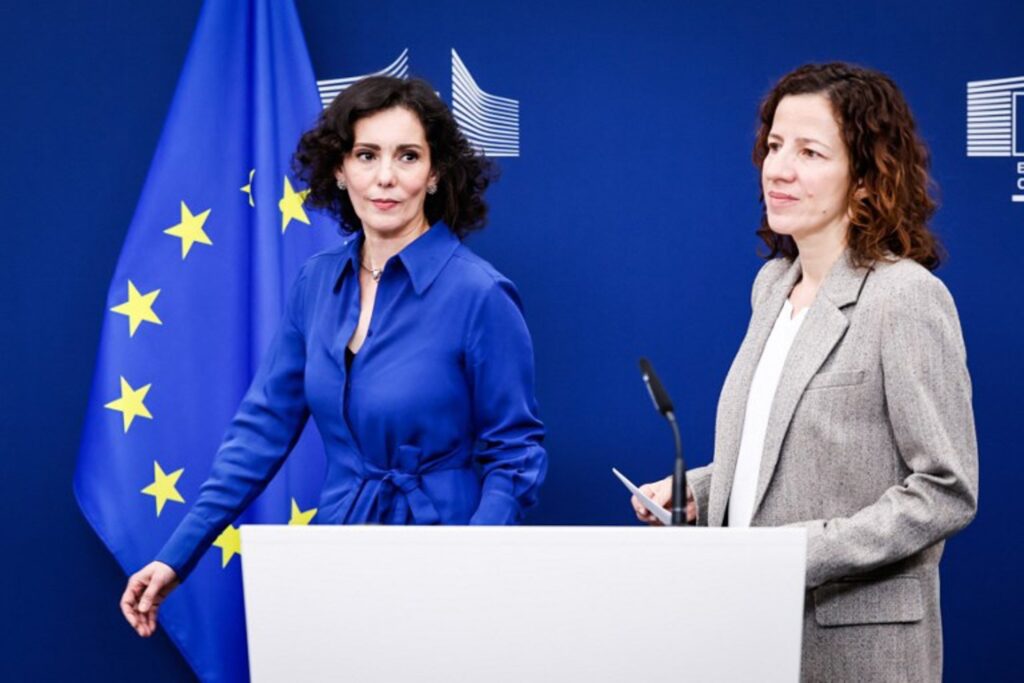
Recent incidents, such as a train conductor refusing a passenger’s European Disability Card, highlight the need for such advancements. Commissioner Hadja Lahbib stated that QR codes and digital wallets would ensure that such situations are avoided.
Lahbib is also engaging the business sector, promoting inclusion as an opportunity to enhance employee well-being, attract talent, and reduce staff turnover.
However, the Commission has criticised Member States for failing to implement "reasonable accommodations" in workplaces, a key barrier to integrating people with disabilities. While prioritising dialogue and cooperation, Lahbib has kept infringement procedures as a last resort to encourage progress.
In housing, the Commission will fund adapted apartments and service-based communal living arrangements to enable people with disabilities to live independently within society, rather than in institutionalised settings.
In education, early childhood services will be expanded to detect developmental delays and provide tailored support to families more quickly.
Emergency responders and humanitarian workers, including those working with the 112 helpline, will receive specialised training to better interact with and meet the needs of visually or hearing-impaired individuals.
While the European Socialists and Democrats (S&D) have welcomed the social package, they have called for increased efforts to turn strong intentions into tangible results.
The Greens/EFA welcomed this step in the right direction but also called for more ambitious measures.
"We need to reverse the trend of deregulation and privatisation pushed by the far right that they use to keep corporations and greedy oligarchs satisfied," commented Greens/EFA leader and MEP Bas Eickhout. "We need strong economic and social measures and ambitious public investments."
Related News
- Costa vows EU leaders will push affordable housing to budget debate forefront
- EU unveils roadmap to tackle energy poverty and drive clean transition
- Poverty risk persists in EU as nearly 1 in 5 affected in 2025
- Poverty risk higher in EU households with dependent children
- Belgium finalises new anti-poverty plan
