
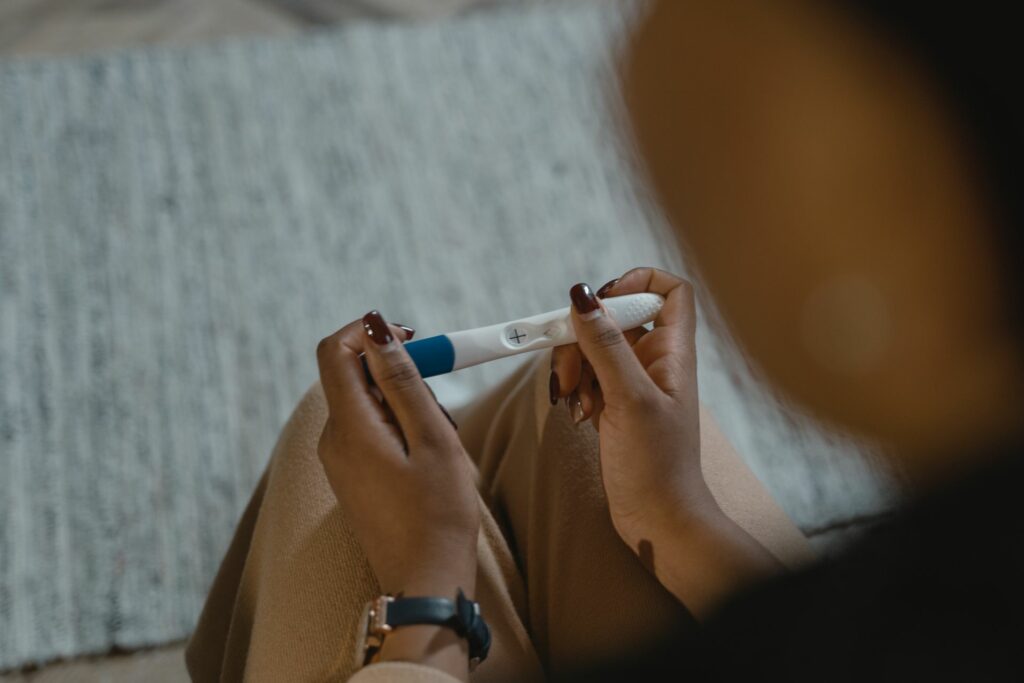
Belgium is looking into extending the country's legal abortion limit from 12 to 14 weeks – ignoring the advice of an expert report, commissioned by the Federal Government, that suggested an 18-week term.
This week, 18 months after the Federal Government took office, Justice Minister Annelies Verlinden (CD&V) finalised her proposal to relax the current abortion laws. In doing so, she went against the 2023 consensus among experts commissioned by her party to examine abortion term limits.
"It is a shame," Dr Anne Verougstraete (VUB), one of the pioneers among Belgian abortion doctors and former head of the VUB-Dilemma abortion clinic, told The Brussels Times.
Verougstraete was appointed by her university, VUB, as one of the experts to draw up the scientific advice report in 2023, under the previous Federal Government. Having worked on the report for 18 months, she regrets that CD&V (the Flemish Christian Democrats) are not taking their recommendation.
"We agreed on a limit of 18 weeks after conception, and we wanted to do away with the mandatory reflection period. But even before the report was published, CD&V made it clear they would not go beyond 14 weeks," said Verougstraete.
Ideological divide
In Belgium, abortion has been legal under certain conditions since 1990. Under the current law, a pregnancy must be terminated before the end of the 12th week after conception. Those wishing to have an abortion also have a mandatory reflection period of six days and are required to be informed on adoption options.
However, figures show that some 400 women a year (more than one per day) go to the Netherlands for an abortion, where the procedure is permitted up to 24 weeks.
"By extending the legal limit to 14 weeks, we would be able to help 22% of the women in Belgium who currently travel to the Netherlands for an abortion," Verougstraete said. "If we were to extend it to 18 weeks, that figure would rise to 74%."
According to Verlinden, her proposal is the only way to bridge the ideological divide within the government, between conservatives and progressives.
The issue is a sensitive one for Verlinden's Christian Democratic party, and the debate on relaxing Belgium's abortion laws has been going on since the previous Federal Government took office in October 2020 – and even before that, when it briefly looked as if discussions on a possible extension would block the coalition's formation.
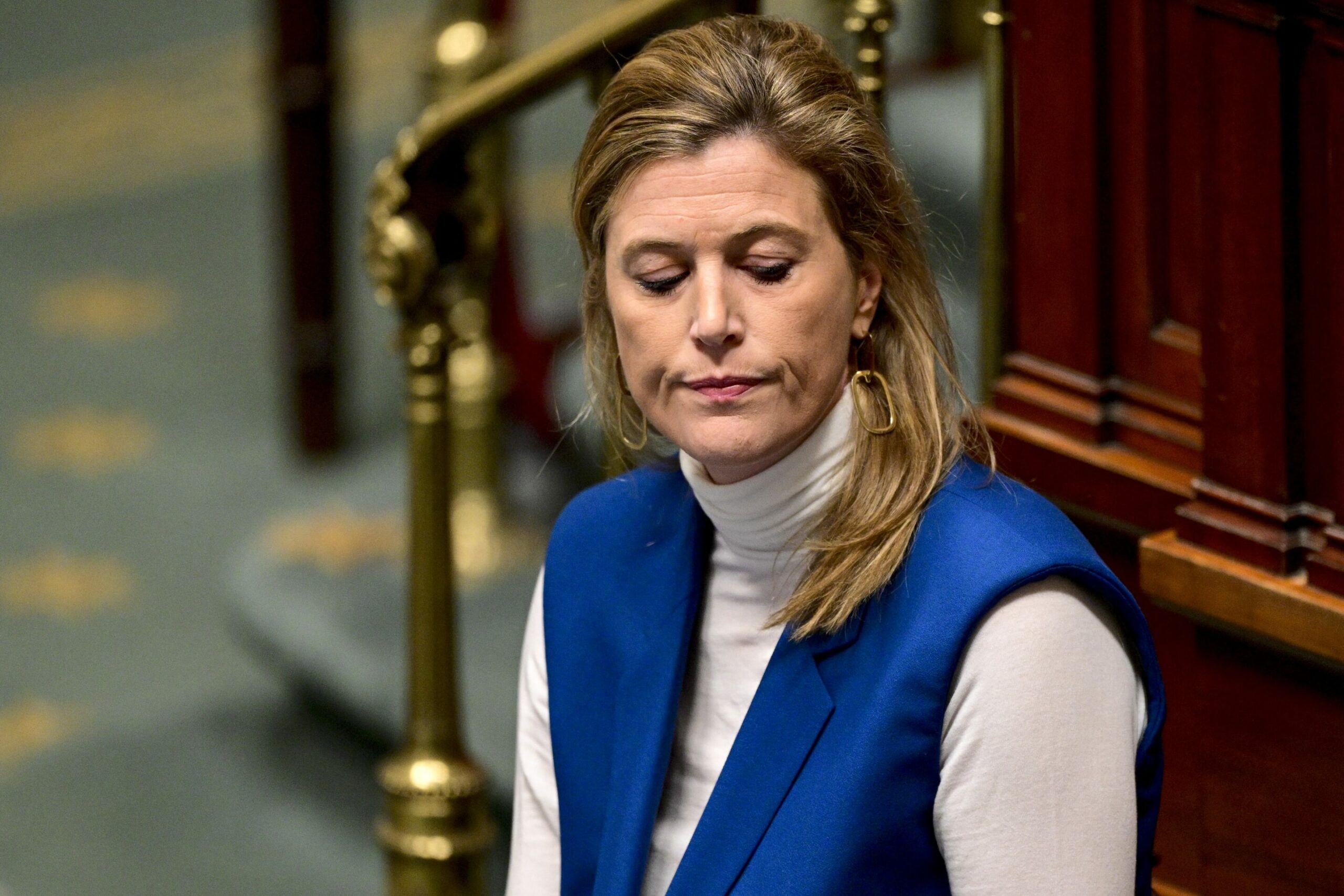
Former Interior Minister and Minister of Justice Annelies Verlinden (CD&V). Credit: Belga/Dirk Waem
"For me, the limit is 14 weeks. I will not negotiate on that," Verlinden told Het Nieuwsblad when she announced her proposal this weekend. She argues there is insufficient scientific certainty that a foetus of 15 weeks or older does not experience pain.
"That is all nonsense, of course. The brain structures necessary for experiencing pain, such as all those neural pathways, are not yet present at 15 weeks," Verougstraete stressed.
The expert report states that pain perception "is thought to develop between 22 and 26 weeks after conception".
Additionally, when a pregnancy is terminated later than 12 weeks after conception, women are put under general anaesthetic for the procedure. "And when the woman is asleep, the foetus is asleep too."
What's more, the first step in such a late-term procedure is cutting the umbilical cord. "So the foetus is effectively already dead before you even start the procedure. These political arguments are not based on science."
No hierarchy of reasons
Verougstraete also argued that there is a much higher proportion of women facing significant psychosocial problems among those who discover a pregnancy too late for Belgian law to allow a termination.
"They need supplementary support, but they will not get that in the Netherlands. They will just go for the procedure," she said. "So the group that needs the support the most does not get any at all."
Importantly, Verlinden wishes to provide for one exception to her 14-week limit: women who are victims of rape would be able to terminate their pregnancies at 18 weeks, following assessment by a multidisciplinary committee at the hospital concerned. In these circumstances, it will not be necessary to file a formal complaint with the police.
"Women who have been raped must absolutely be helped, but we do not agree with a hierarchy of reasons for why one might be unable to raise a child," Verougstraete said. "The most important reason for ending a pregnancy is that the woman does not want to go through with it."

Credit: Pexels
Lastly, Verlinden wants to reduce the mandatory reflection period between the initial consultation and the procedure from six to two days.
The expert report, meanwhile, had recommended not including a mandatory reflection period in the law at all. "We advised against putting a time limit into law. For many, this mandatory reflection period feels patronising," Verougstraete said.
Some women, she stressed, have already been to their GP to say they do not want the pregnancy. The GP then refers them to a gynaecologist, who in turn refers them to an abortion clinic. "For some women, a week is far too short; others know from the very start that they do not want the pregnancy."
Several parties, including Vooruit and Groen, have criticised Verlinden's proposal, but are seemingly not preparing to fight it in parliament.
While Vooruit leader Conner Rousseau remarked rather nonchalantly that Verlinden "is usually a fan of experts, but not this time apparently”, he stressed that the most important thing for him is "that the whole range of ethical issues continues to make progressive headway".
Verlinden emphasised that the text still needs to be debated in parliament, and that she hopes this can take place "serenely".
