
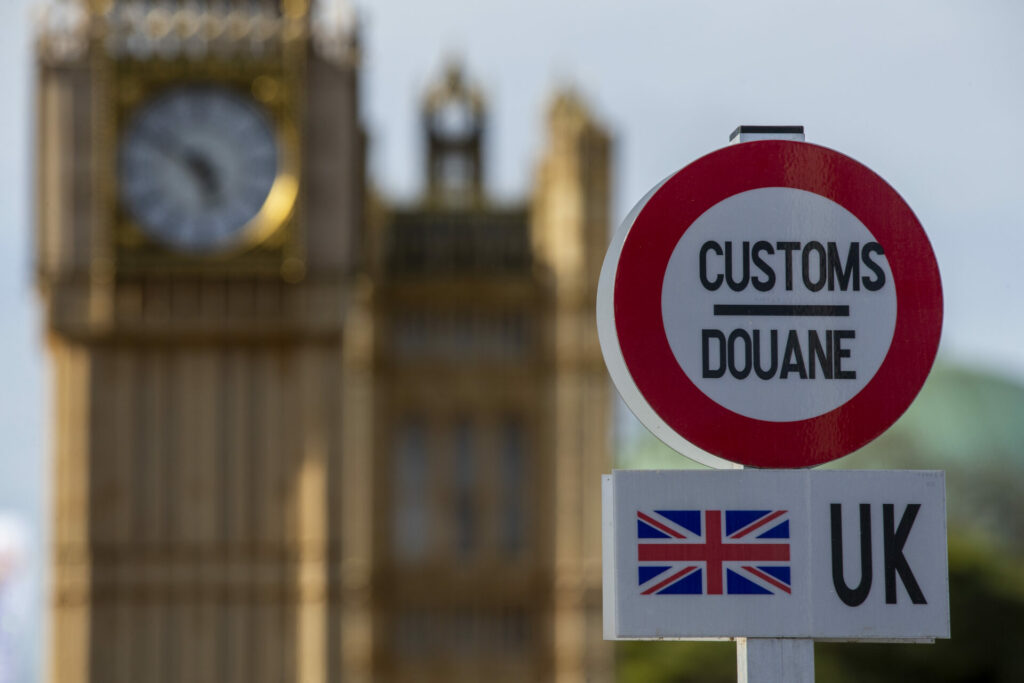
Brexit's impact on the Belgian economy has been limited, according to a new study by the National Bank of Belgium (NBB). However, it also warns that diverging regulation presents a risk.
Ten years on since the UK voted to leave the EU, the NBB has conducted an analysis of the effect of Brexit on the Belgian economy.
While Belgium has seen some "tangible consequences", the bank notes that "they have been relatively limited at the macroeconomic level."
This limited effect is a result of active steps to mitigate the effects, with Belgian importers having already diversified away their supply chain from the UK.
The signing of the UK-EU Trade and Cooperation Agreement (TCA), which prevented the UK from crashing out of the EU without a trade deal, also helped to avoid any true economic damage.
Belgium's national bank stresses that it has been difficult to isolate the effects of Brexit to provide robust analysis.
This is largely due to the last decade which has also seen the Covid-19 pandemic, Russia's invasion of Ukraine and other factors which have clouded the economic data, making a direct report on the Brexit effect difficult to do.
Nevertheless, the Bank highlights that Belgian imports from the UK fell sharply between 2015 and 2025, and exports grew more slowly.
"If you take exports for Belgium to the UK, and compare it to the exports of Belgium to the rest of the world, you clearly see that there has been slower growth of exports to the UK than to the world, the natural conclusion that can explain that is Brexit," Philippe Ledent an economist at ING Belgium told The Brussels Times.
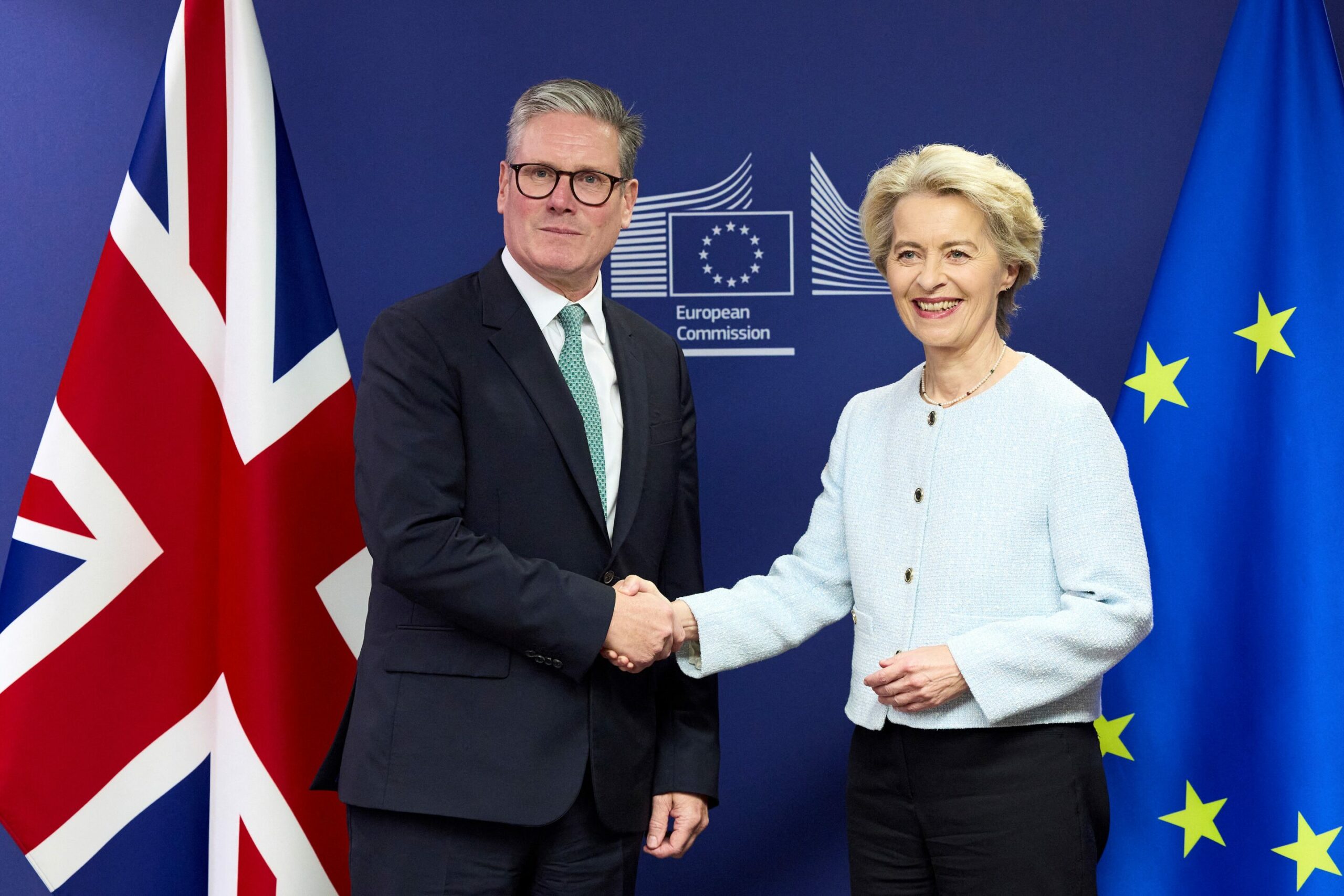
Britain's Prime Minister Keir Starmer (left) shakes hands with European Commission president Ursula von der Leyen (R) at the European Commission headquarters in Brussels on October 2, 2024. Credit: Belga/Benjamin Cremel/AFP
Ledent agrees with the National Bank that it has been difficult to isolate the effect of Brexit, but he stresses that "if you look at the direct commercial link between Belgium and the UK, there has been a slowdown as a result of Brexit."
Previous analysis in 2023 by Hylke Vandenbussche, an academic at KU Leuven, found that Belgium's goods exports to the UK fell by 13%, the equivalent of a €4bn decrease, between 2018 and 2021.
Additional analysis by Florian Forsthuber in 2024, also of KU Leuven, found that much of the decline in exports started after the TCA came into force at the start of 2021.
However, ahead of the TCA, Belgian imports had already started to decline, "coinciding with Boris Johnson’s election as UK Prime Minister." The conclusion Forsthuber reaches is that Belgian firms started to diversify their supply chains away from the UK as soon as the risk of a hard Brexit increased.
Belgium's missed Brexit bonuses
For Belgium, there has been some upside from Brexit. The National Bank notes that Brussels has benefited in the financial services field, with some insurance companies and payment service providers setting up to retain access to the EU market.
Ledent, however, notes one missed upside for Belgium in the area of employment. Brexit created a constraint in the labour market for the UK, these migrants would have looked to Europe instead, boosting the labour supply available.
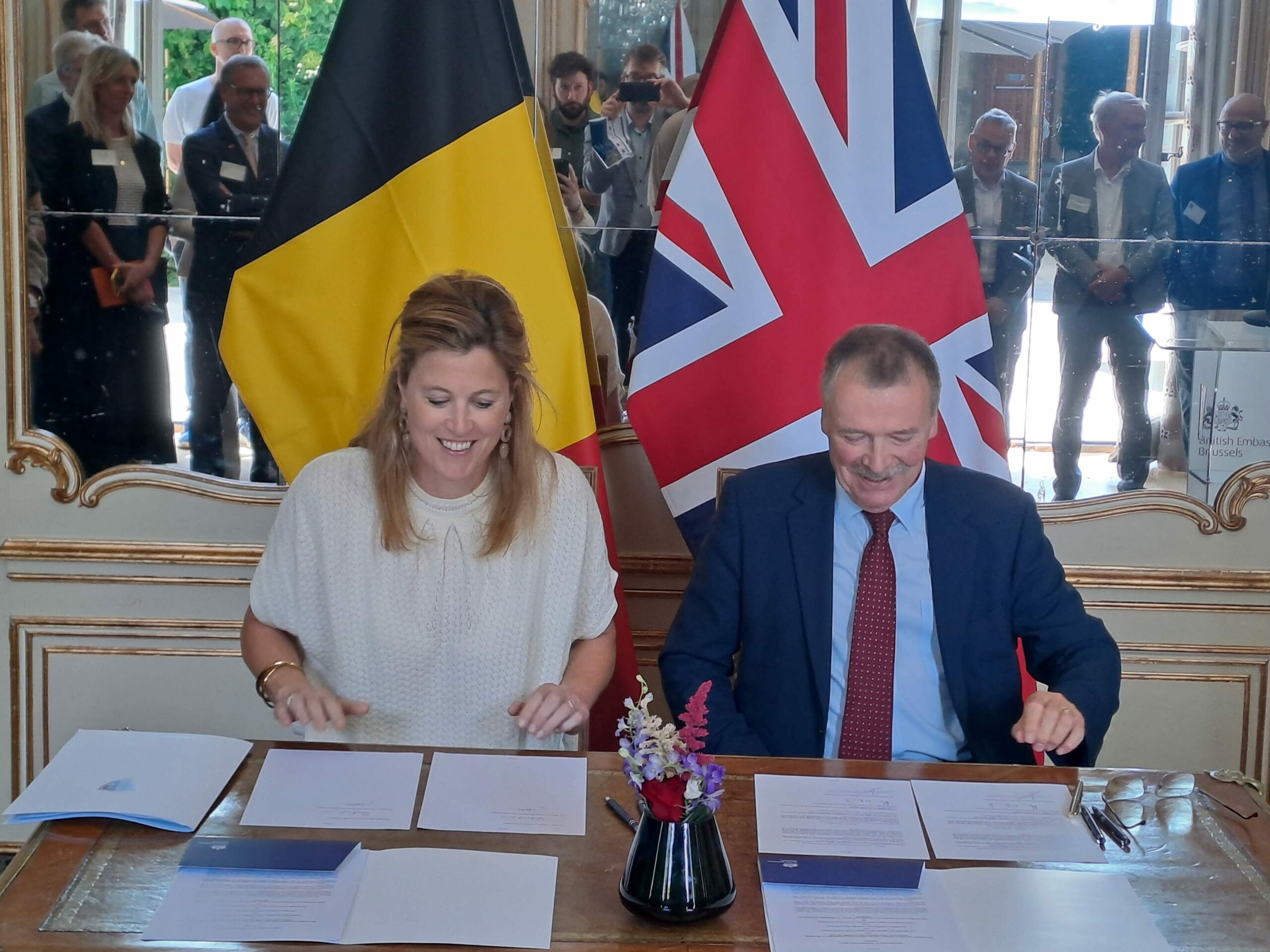
Justice Minister Annelies Verlinden and UK Energy Minister for Security and Net Zero, Lord Alan Whitehead, pictured during the signing of the MoU on cross-border CO2 transport between Belgium and the UK, on 16 June 2026, in Brussels. Credit: Belga
"European countries benefited from this," suggested Ledent, "but the Belgian economy is not good at helping migrants find a job. In the case of Belgium, therefore, we can't say if there has been a positive impact compared to countries like Germany."
'Brexit is a process and not an event' was a widely used phrase during the post-referendum debate, with the bank's analysis highlighting that the process is still ongoing.
Divergence risks
In their report, they argued that "the effects of Brexit are not entirely behind us. One of the main challenges in the coming years will be differing norms and standards between the UK and the EU. The more the two regulatory frameworks diverge, the greater the risk of rising economic costs."
The current relationship between the UK and the EU is one where there is no dynamic alignment on regulation. The UK has to decide each time if it wishes to go with the EU's regulation on an issue. Some divergence has already happened, according to the UK in a Changing Europe, a think tank.
In its reports on UK-EU divergence, the group highlights changes in chemicals, digital and data, mobility and financial services as just some of the ways the UK has actively diverged.
"On AI, the UK has deliberately moved more slowly than the EU," a report from 2024 notes, "in contrast, the UK has provided regulators with a more flexible set of guiding principles to implement, and seemingly been rewarded with major international investment."
The group shines a light on the areas of passive divergence, which often go under-reported, in areas such as corporate rules and industrial policy. In July, the UK and EU will hold a summit to 'reset' the post-Brexit relationship and look for opportunities to align to limit future divergence on regulation.
Related News
- Brits should move to Belgium, says the UK’s newspaper of record
- UK edges closer to EU in post-Brexit reset – but migration remains a sticking point
- 'It's not if, it's when': Brits walk from London to Brussels to urge UK to rejoin EU
- Ten years on from the Brexit referendum, is Trump pushing the UK back into the arms of the EU?
- EU confirms UK return to Erasmus+, ending years of separation
