
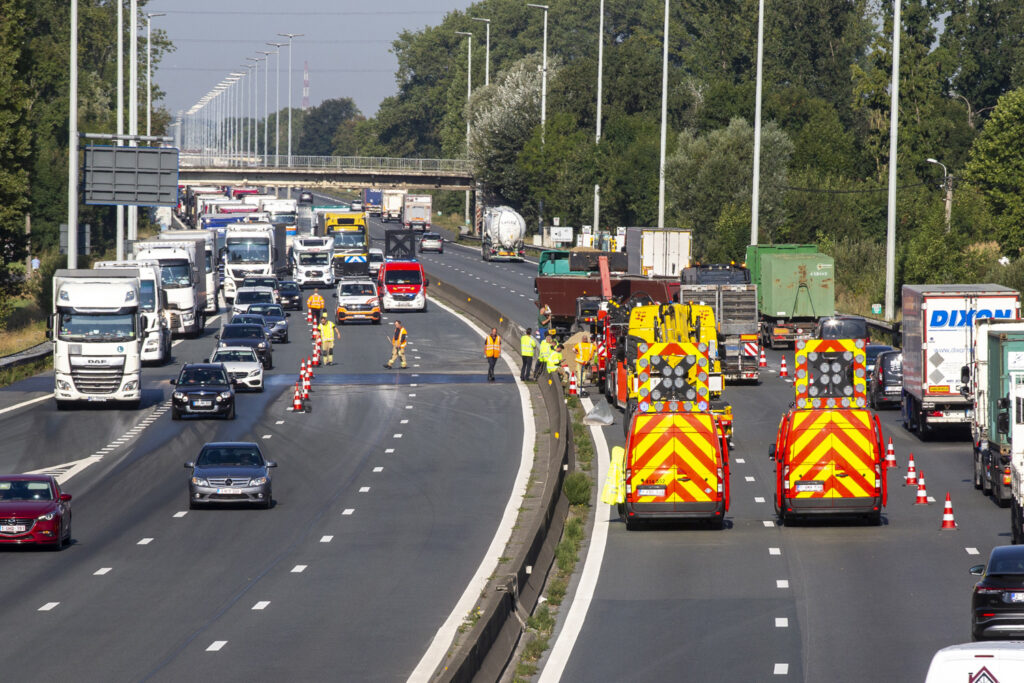
In 2025, Belgium recorded 36,968 road accidents, of which 440 involved fatalities and nearly 3,000 resulted in serious injuries.
Despite having a smaller road network than other Belgian regions, the Brussels-Capital Region recorded the highest relative number of accidents and victims in 2025, with 112 accidents and six fatalities per 100 km of road.
This is more than five times the rate in Flanders and 10 times the rate in Wallonia .
The Flemish Region has 90,624 km of road and had 21.3 accidents per 100 km of road in 2025. Wallonia had the lowest number of accidents per 100 km of road: the region has a total of 86,937 km of road and had 11 accidents per 100 km of road in 2025.
Which are the most dangerous communes for driving?
Some communes in Belgium have a significantly higher share of road accidents than the Belgian average, according to Stabel.
As the smallest municipality in Belgium, Saint-Josse-ten-Noode had the most victims per 100km of road, at 20.95 in 2025. This was the highest in Belgium and a significant outlier compared to other communes. Overall, 39% of Belgium's communes saw less than one road traffic death or serious injury per 100km of road over the same period.
Saint-Josse also topped the overall list for deaths and serious injuries in 2024, with 15.47 deaths or serious injuries per 100km of road.
The other most dangerous communes for road traffic accidents in 2025 were all in the Brussels Region. Saint-Josse was joined by Ixelles (9.77), Berchem-Sainte-Agathe (9.34), Bruxelles (8.26), and Ganshoren (7.86). Saint-Gilles, which was second in 2024 has fallen significantly in the most recent data to 77th place.
Accidents involving bikes, scooters and other vehicles
According to Statbel, serious road accidents not involving a motor vehicle increased last year by 22.3% from 523 in 2024 to 640.
Seven of Belgium's 15 e-scooter deaths in 2025 did not involve a motor vehicle at all – in contrast to 2024 where Belgium's four e-scooter deaths all involved a car, van or lorry.
E-scooter accidents are increasingly becoming a Belgium-wide problem, having previously been mainly a challenge in Brussels, according to the Belgian road safety institute, Vias.
"E-scooter crashes are, in general, on the rise in Belgium. What was first a typical problem in Brussels seems to shift now largely to Flanders," Kishan Vandael Schreurs, a senior researcher at Vias, told The Brussels Times.
"This large presence of deaths can perhaps also be explained through e-scooter crashes in which the e-scooter was tampered with," he explains. "It speaks for itself that e-scooters with a design speed higher than 25km/h (sometimes even higher than 80km/h) will result in heavier injuries, and possibly death. This problem is seriously on the rise."
While Vias advise that a reduction in serious injuries can be achieved through helmet wearing, this does not avoid a crash from happening, particularly when tampered e-scooters ride at speeds of above 50km/h.
"That is why more checks on the tampered e-scooters are essential since they are not allowed on the public road and do pose serious threats to traffic safety."
From January 2027, shared e-scooters will be banned in Brussels – a move designed to improve safety, de-clutter pavements and reduce their use in crime. However private e-scooters, which include the illegal models, will still be allowed.
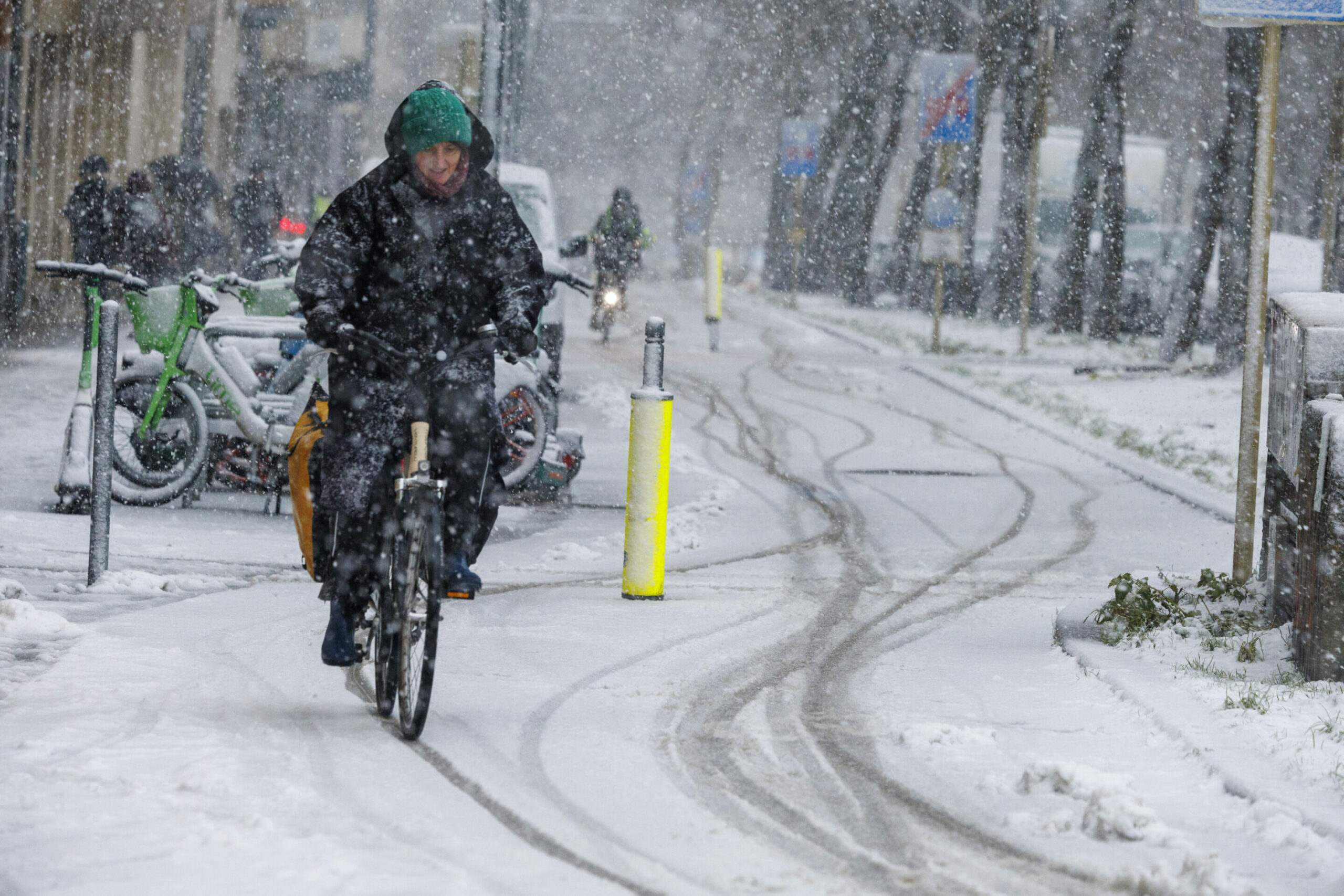
A person on bicycle rides through snowy streets in Brussels on Thursday 09 January 2025. Credit: Belga/Nicoals Maeterlinck
In 2025, deaths and serious injuries on bicycles increased from 242 to 273. There were also notable increases recorded among e-bikes users (from 140 to 173), speed pedelecs (from 41 to 60) and among pedestrians (from 33 to 46).
While recent EU and Belgian government strategies have focused on reducing road-traffic deaths to zero, this focus has been on accidents involving cars. Statbel's figures are likely to draw attention to the need to also address traffic accidents involving non-motor vehicles.
Related News
- Police urged to act amid alarming increase in e-scooter deaths and injuries in Belgium
- After approval in Flanders, are self-driving cars coming to Brussels?
- Everything you need to know about Belgium's new road toll
- 'Is the convenience really worth the cost?' Brussels residents divided over e-scooter ban
