
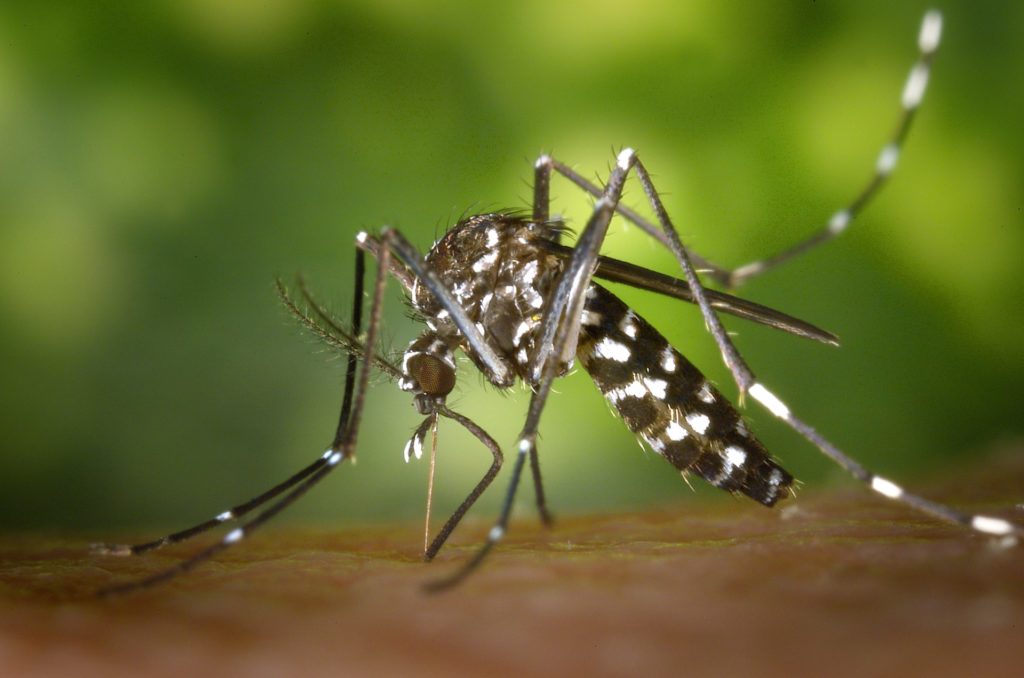
The Asian tiger mosquito (Aedes albopictus) is gradually spreading across Belgium, increasing the risk of viral diseases such as dengue, chikungunya and Zika.
Tiger mosquitoes have already been spotted in six Belgian municipalities this year, according to the Sciensano national health institute. The mosquito was first sighted in Kuurne, near Kortrijk, close to the French border.
Tiger mosquitoes have also been spotted in Boom, Hoegaarden, Merelbeke-Melle, Wijnegem and Zaventem – all places where the mosquito was already known to be present.
Field inspections will be carried out there in the coming weeks
Importantly, Sciensano pointed out that these are only preliminary figures, as the mosquito season is still in full swing.
Low risk
Last year, members of the public confirmed sightings in ten municipalities, five of which were first-time sightings: Etterbeek and Watermael-Boitsfort in Brussels, and Heusden, Kortenberg and Zaventem in Flanders. The other sightings last year were in Wijnegem, Merelbeke-Melle, Kessel-Lo and Hoegaarden in Flanders, and Ath in Wallonia.
Since monitoring began in 2022, sightings have been recorded in 41 municipalities.
Additionally, the mosquito is already wintering in various parts of Belgium, notably in Ath, Hoegaarden, Kessel-Lo, Lebbeke, Puurs-Sint-Amands, Wijnegem and Wilrijk.
However, the risk of local disease transmission remains low for now. For this to happen, an infected traveller would need to be bitten by a tiger mosquito, after which the mosquito could then infect other people.
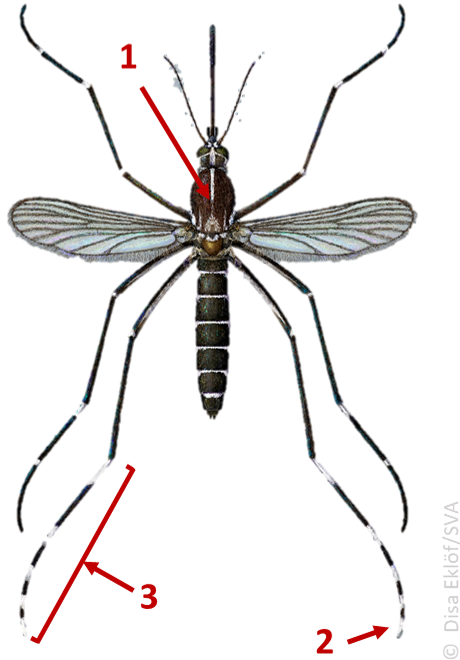
Tiger mosquito. Credit: Sciensano
According to an evaluation by the Superior Health Council, the Flemish communication and response plan provides a "scientifically sound and appropriate framework" for public health prevention.
They stressed the importance of a proactive approach based on prevention, surveillance, early detection and rapid response. That way, the focus is on preventing mosquito populations from establishing themselves or expanding, reducing the risk of local transmission of viral diseases, and limiting the need for more intensive control measures.
Therefore, they recommend that this approach should serve as a reference framework for all Belgian regions to ensure a coherent, effective and equitable response.
Sciensano advises everyone to continue reporting tiger mosquitoes via muggensurveillance.be.
