
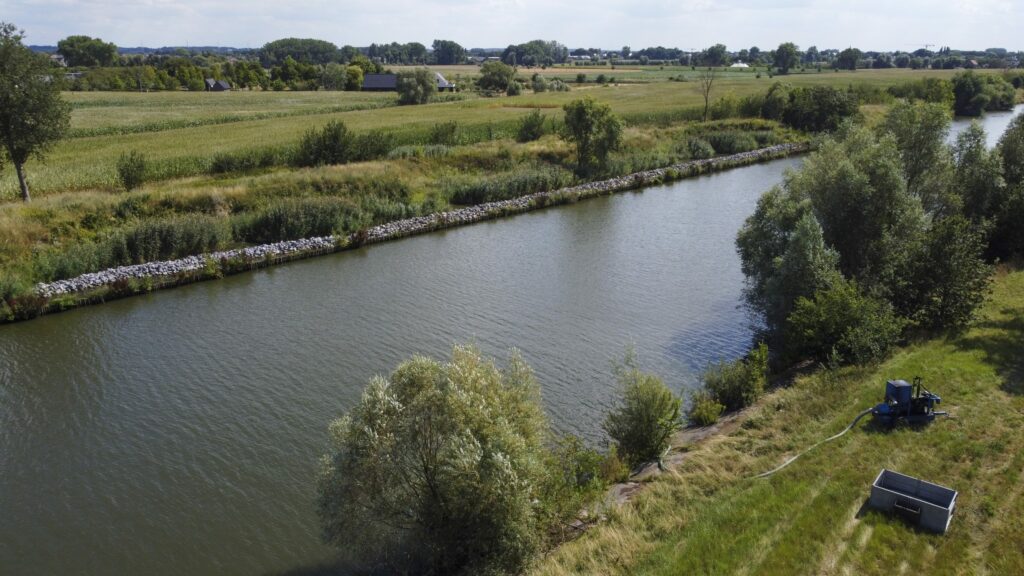
Rivers and waterways across Belgium are reaching critically low levels as the summer drought continues, with warm weather and little rain predicted for the upcoming days.
Last week, the Brussels Region’s regional ‘drought’ task force activated a yellow alert – the drought vigilance phase – calling for increased awareness of water levels in the region.
While water levels are low, they fall within the expected window for July. The Brussels Canal has reached low levels at certain times, but remains stable. The Port of Brussels has implemented measures to maintain water levels, including the consolidation of lock operations and restrictions on recreational boating, following the example of Flanders.
There are concerns over drinking water supplies from the Meuse river, as the water level of the river is dropping, but the overall provision of water is not deemed to be at risk.
However, on 23 July, the Brussels government urged residents to moderate tap water usage, advising people to avoid and postpone non-essential uses such as washing cars, filling swimming pools, non-essential floor cleaning, and watering lawns and plants.
"This is a collective responsibility, whether for public authorities, citizens, businesses or sports clubs," said Brussels Environment.
The ban on lighting fires in forests and regional green spaces, as well as on discarding cigarette ends or litter on the ground, remains in force.
Code orange in Flanders
The situation is more critical in the north, where the Flemish government has issued an official code orange drought warning.
Multiple rivers have fallen below critical levels, and the majority of groundwater levels have been designated "low or extremely low". Water levels in some smaller rivers have fallen to historic lows. As there is no significant rain predicted in Flanders for at least another week, the dedicated governmental drought commission has indicated that the levels will continue to drop.
The rainfall in the region last weekend made little to no impact to water levels.
Authorities have come up with a series of measures to stabilise water levels. It is currently forbidden to pump water from rivers, there are restrictions on hull depths, and ship locks have to group multiple boats to save water.
In Wallonia, the situation has become worrying, according to the Centre for Coordination of Risks and Transmission of Expertise (CORTEX). Rainfall on Thursday was not able to reverse the trend of declining water reserves. The level in many rivers and waterways still falls within seasonal expectations, but at several measuring points the situation has become critical.
Wallonia uses reservoirs and dams for its drinking water. Most are still at a normal level or have a slight deficit, and the dam on the Vesdre has restricted its use as a turbine. The only reservoir causing serious concern is the Nisramont reservoir, where the level is severely low.
To date, eight municipalities have issued orders restricting water use.
