
Belgian hockey is no stranger to success. Yet as the country prepares to co-host the men's and women's Hockey World Cups with the Netherlands from August 15 to 30, both national teams arrive with a point to prove.
The Red Lions and Red Panthers endured disappointing European Championships in 2025, finishing fourth and fifth, respectively. By most sporting standards, those are respectable results. For Belgian hockey, they felt like missed opportunities.
"The men and women both have a good chance to be on the podium," says Red Lions head coach Shane McLeod. "They've both been on the podium or close to it since the Rio Olympics in 2016."
Recent history explains the ambition. The Red Lions have enjoyed one of the most successful periods in the sport's history, winning the World Cup in 2018, the European Championship in 2019 and Olympic gold in Tokyo. The Red Panthers have steadily climbed the international rankings, collecting European Championship silver medals in 2017 and 2023, bronze in 2021, and narrowly missing an Olympic medal in Paris in 2024.
Today, the women are ranked third in the world. The men sit second and currently lead the International Hockey Federation's Pro League, the annual competition contested by the world's leading nations. Victory there would secure automatic qualification for the Los Angeles Olympics.
The Pro League, which concludes in late June, is also the final major test before the World Cup. Both tournaments will be played in the new stadium in Wavre, where Belgium hopes home support can provide a crucial edge.
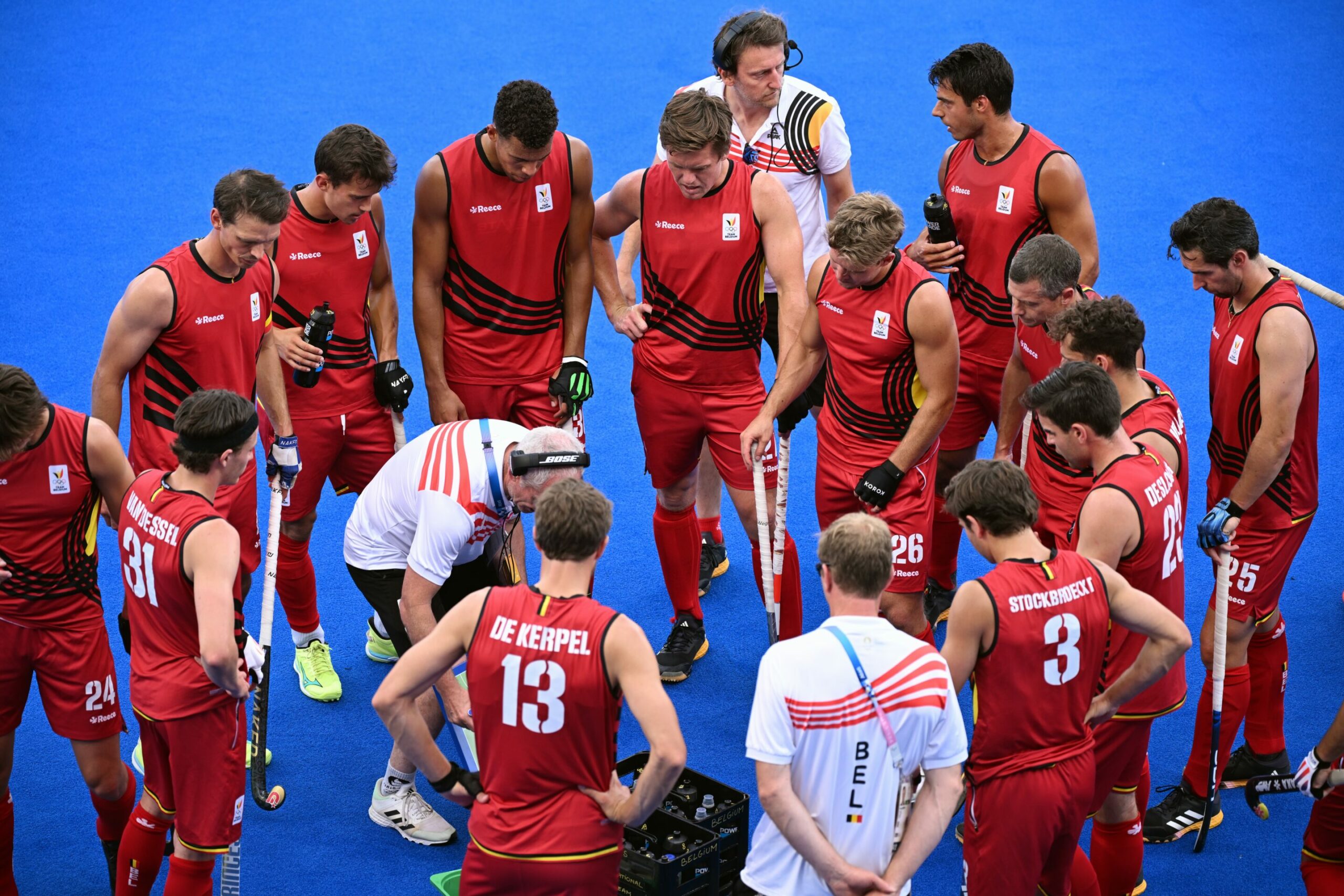
Belgium's assistant coach Shane McLeod and The Red Lions pictured during a hockey game between Belgium's national team the Red Lions and Argentina at the Paris 2024 Olympic Games, on Friday 02 August 2024 in Paris, France. Credit: Belga
The memory of Antwerp in 2019 still looms large. Backed by a partisan crowd, the Red Lions recovered from 0-2 down to defeat Germany 3-2 in a thrilling European Championship final. Hockey fans will be hoping for similar drama this summer.
They may get it. Modern international hockey embraces technology, with video assistant referee (VAR) reviews regularly producing moments of tension and controversy. During that 2019 final, goalkeeper Vincent Vanasch successfully challenged a German goal that would have put Belgium 3-0 behind. The decision was overturned, helping to change the course of the match.
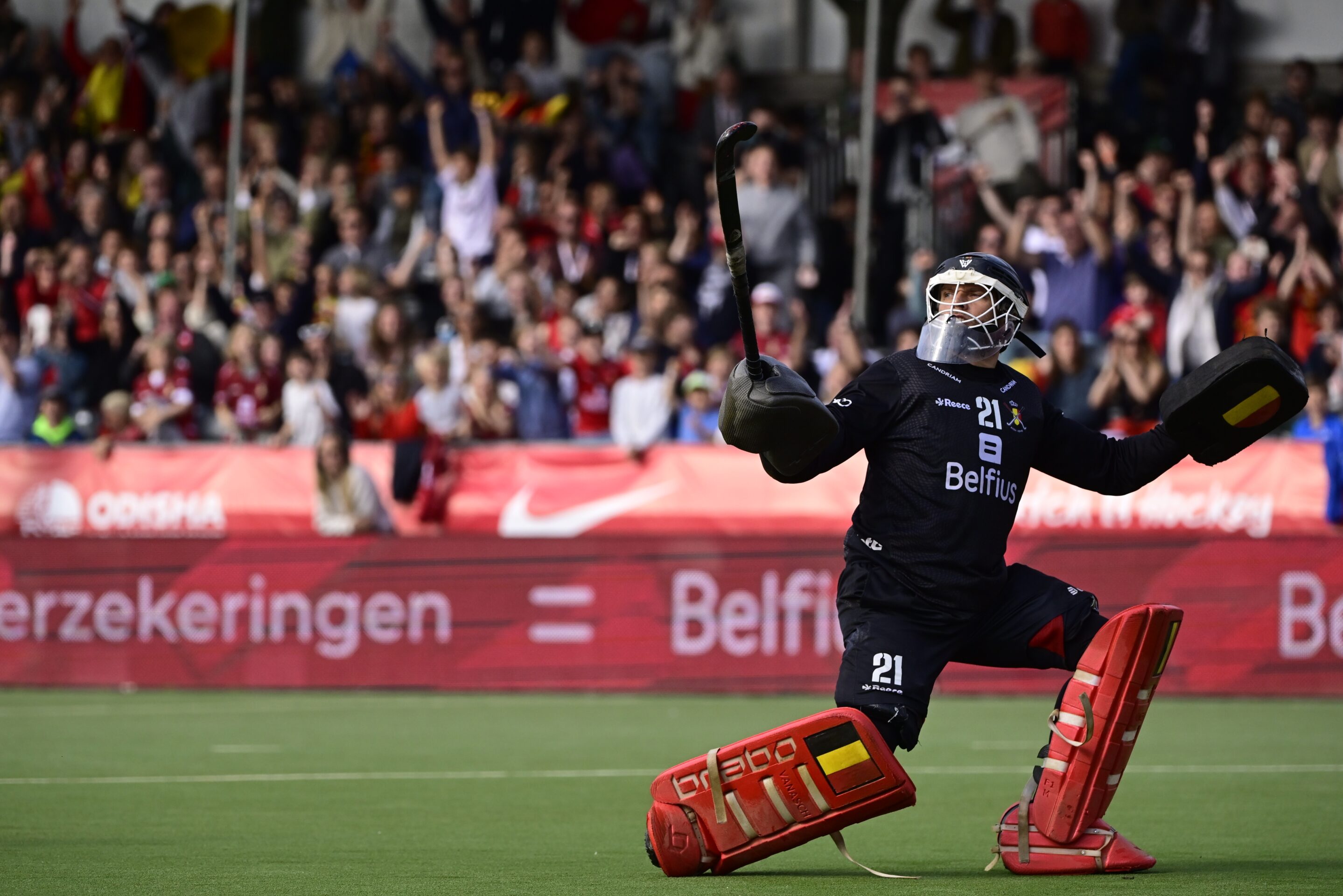
Now 38, Vanasch remains one of the team's most important figures. Nicknamed The Wall, he has been voted World Goalkeeper of the Year three times and continues to anchor a defence that is among the strongest in the game.
From Manchester to the top
Belgium's rise has been dramatic. As recently as 2007, the men's team sat outside the world's top ten. The breakthrough came at the 2008 European Championships in Manchester, when Belgium secured Olympic qualification by defeating Germany with a goal scored just four seconds before the final whistle.
The victory, quickly dubbed the "Miracle of Manchester", marked the start of a transformation that would eventually make Belgium the dominant force in world hockey.
Part of that success stems from a willingness to learn from abroad. Belgian hockey has drawn heavily on international coaching expertise, particularly from New Zealand, Australia, the Netherlands and Argentina. The country's strong domestic league has also attracted leading foreign players, helping to raise standards and expose Belgian talent to different styles of play.
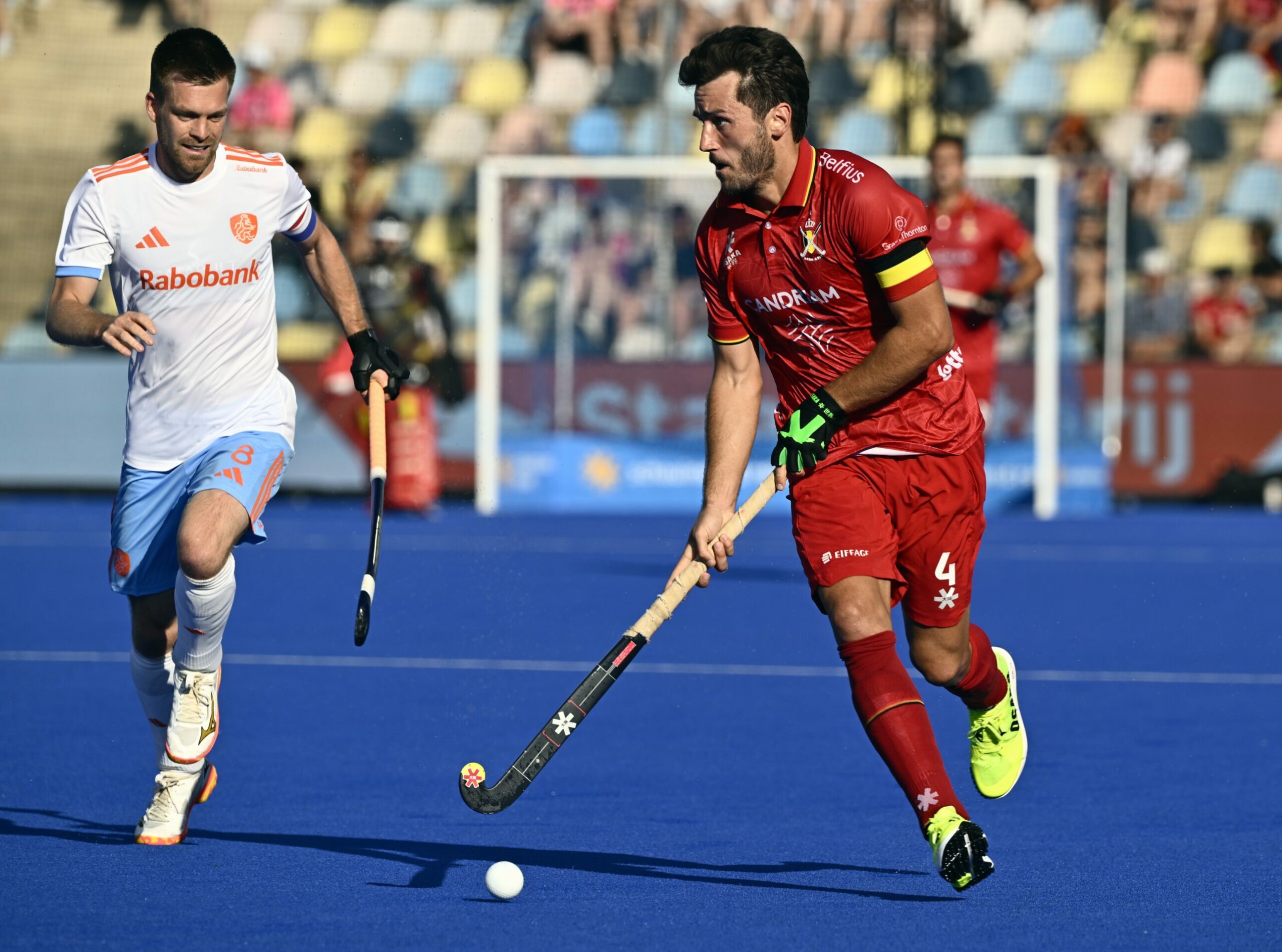
Belgium's Arthur Van Doren pictured in action during a hockey game with the Netherlands, the 2025 men's European championships, Sunday 10 August 2025 in Mönchengladbach, Germany. Credit: Belga
Attention to detail has become a hallmark of the programme. Former coaches embraced the philosophy that small gains, accumulated over time, could produce major improvements on the pitch. The result has been a highly professional system that combines elite coaching with a strong focus on youth development.
The impact has extended beyond the national teams. Belgium now has around 63,000 registered hockey players, while television coverage and international success have brought the sport into the mainstream.
Built to entertain
If there is one thing Belgian hockey rarely lacks, it is goals.
"Traditionally, we're very attacking, so we score a lot of goals," says McLeod. "Added to that, we're working on our defence. So expect a solid defence and an exciting attacking line."
Among the stars to watch are captain Arthur Van Doren, twice named the world's best player, defender Arthur De Sloover and emerging midfielder Arno Van Dessel.
The squad also blends experience with youth. Vanasch remains indispensable, while Tom Boon, now 36, was named World Player of the Year in 2025. Midfielder Victor Wegnez provides leadership, while younger attackers such as Thibeau Stockbroekx and Roman Duvekot represent the next generation.
Penalty corners are likely to play a decisive role. These set-piece situations are among hockey's most dangerous attacking weapons, and Belgium possesses one of the sport's finest specialists in Alexander Hendrickx. The drag-flick expert scored 14 goals during Belgium's Olympic triumph in Tokyo and remains capable of changing matches almost single-handedly.
The tournament itself follows a familiar format, with four groups of four teams feeding into the knockout stages. The Red Lions begin against France before facing Germany and Malaysia. The Red Panthers open their campaign against New Zealand before taking on Spain and Ireland.
Once a niche pursuit played largely in affluent suburbs, hockey has become one of the country's great sporting success stories. The challenge now is to turn home advantage into silverware and ensure that the summer of 2026 becomes another landmark chapter in Belgian hockey's golden age.
