
What are the most delicious foods, refreshing drinks, coolest cafés and intriguing restaurants in Brussels now?
Here are some that recently caught the eye of our food and drink expert.
Restaurant
Les Brasseurs
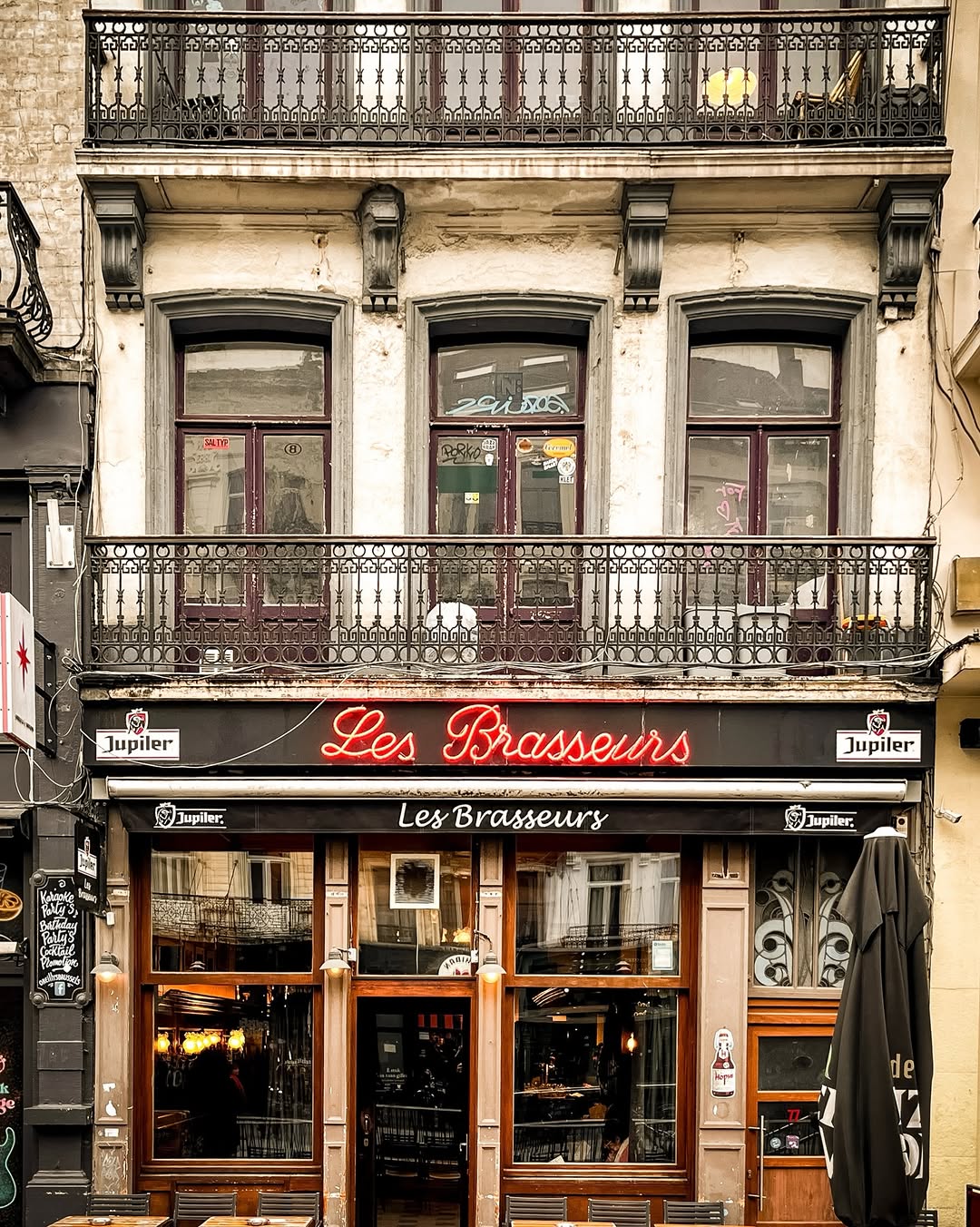
Les Brasseurs. Credit: Copyright Fabien Seb
The quest began with a simple question: where can you find the best half-and-half in Brussels?
For those who don’t know, a half & half is simply a blend of still and sparkling white wine, producing something less acidic than still wine and less sweet than the sparkling.
The obvious starting point is Cirio, the beautiful Art Nouveau café beside the former Stock Exchange. Legend has it that the city’s famous half-and-half was invented there.
But it is also served at Les Brasseurs, a café less than 100 metres from Cirio. Its version combines cava with a mysteriously unnamed white wine to excellent effect.
The half-and-half is only part of the attraction. People come to Les Brasseurs for a dose of Brussels zwanze, the city’s distinctive brand of humour.
“Eighty percent of our customers are regulars,” says Dominique Deslauriers, a waitress and social media personality behind tipsfromawaitress.be. “It’s a real melting pot of generations.”
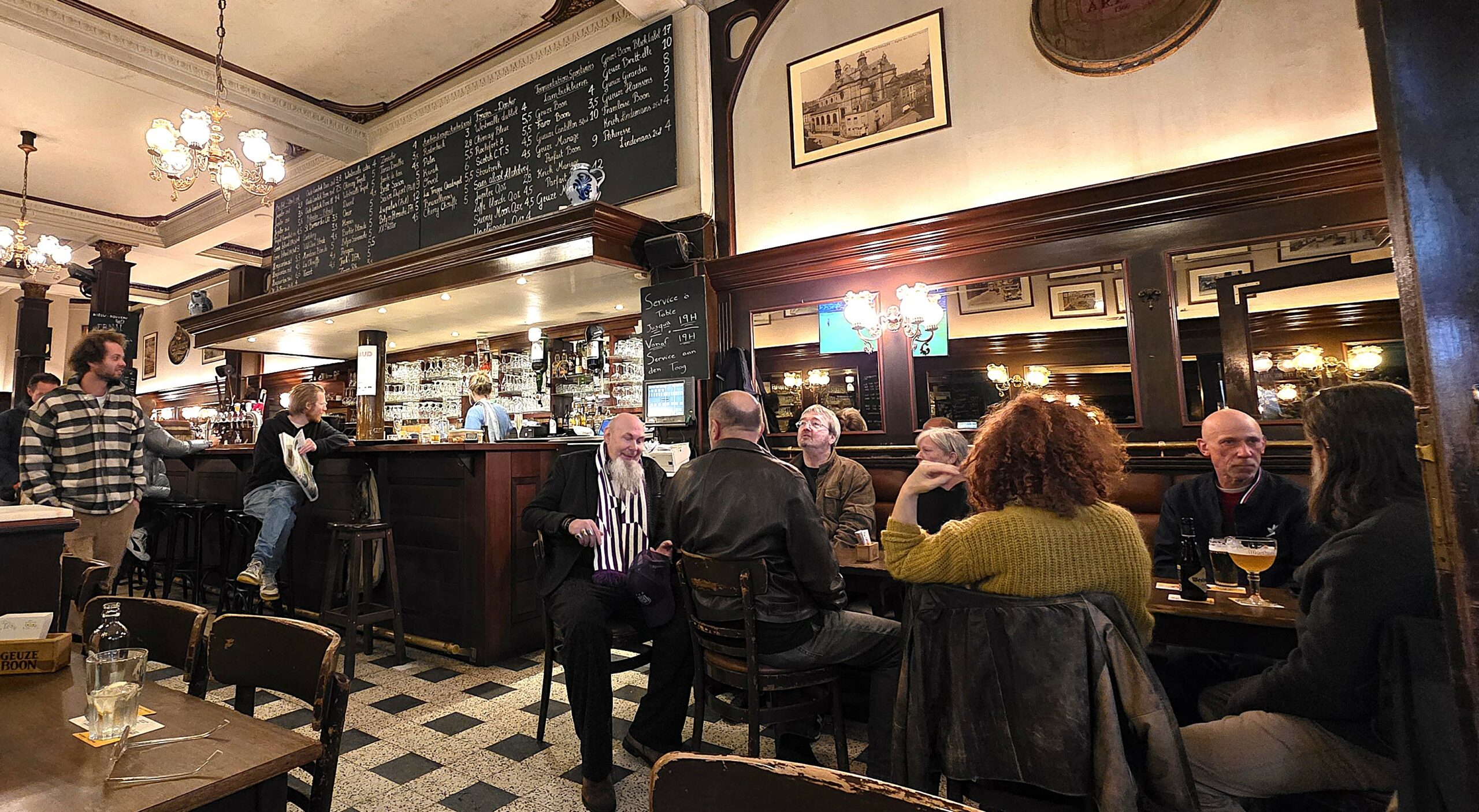
Les Brasseurs. Credit: Copyright Fabien Seb
“When people walk in, we often put their usual order on the table without saying a word. Everybody knows everybody. It’s like a village.”
The building itself has a long history. Originally a clothing shop in the 19th century, it became the brasserie Le Petit Louvain in 1901. Subsequent incarnations included Le Kapiteintje and La Brabançonne before it became Les Brasseurs in 1983.
Change came in 1989 when new owners extended opening hours into the evening, attracting a younger clientele. Today the café opens at 10am – unusual in the city centre – and stays open until late every night of the year.
Urban redevelopment has altered the surroundings. A metro entrance now sits directly in front of the café, reducing terrace space. Yet the loss hardly seems to matter.
“The 100-seat interior works even better in winter,” says Deslauriers. “It’s always packed.”
Like any self-respecting Brussels café, Les Brasseurs offers a formidable beer selection. Around 60 beers are available, including seven on draught. There is a geuze, a kriek – unusually served on tap in handmade half-litre terracotta jugs – and a rotating guest beer that changes every month.
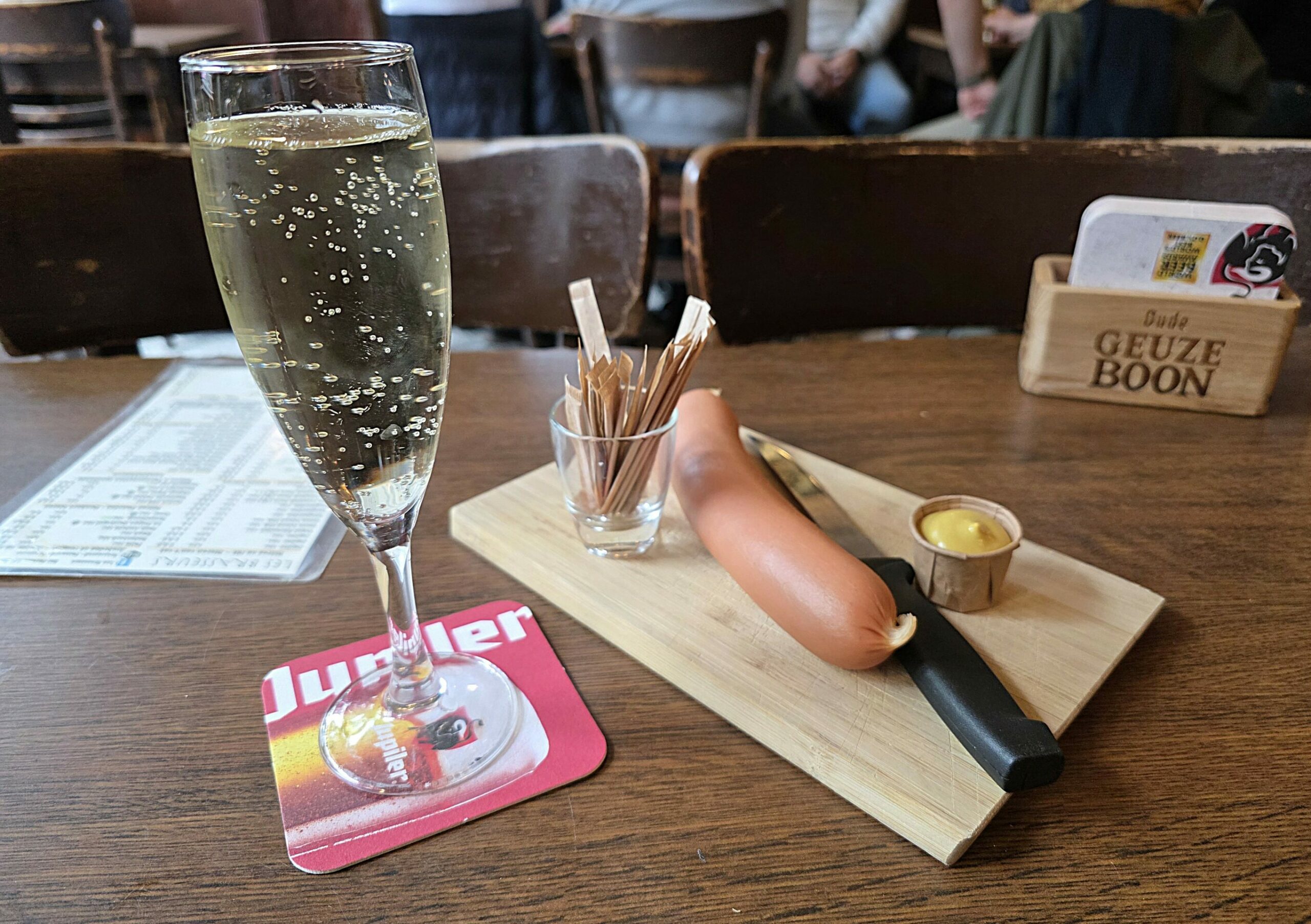
Les Brasseurs snack. Credit: Copyright Fabien Seb
The décor is quintessentially Brussels: mirrors, dark wood, vintage fittings and an atmosphere that seems immune to fashion. Traditional snacks include local sausages, cubes of Gouda and slices of Chimay cheese served, naturally, with mustard. Those seeking something heavier can order a meatball supplied by L’Os à Moelle, the acclaimed butcher in Jette.
Les Brasseurs has endured difficult times. Like many cafés, it suffered heavily during the pandemic, surviving thanks in part to a crowdfunding campaign that helped pay the bills.
Today, however, the spirit of the place remains intact. For visitors seeking an authentic taste of Brussels – and of its irreverent sense of humour – Les Brasseurs remains one of the city’s great institutions.
Les Brasseurs, Avenue Adolphe Max 77, 1000 Brussels
Food
Life is Bananas
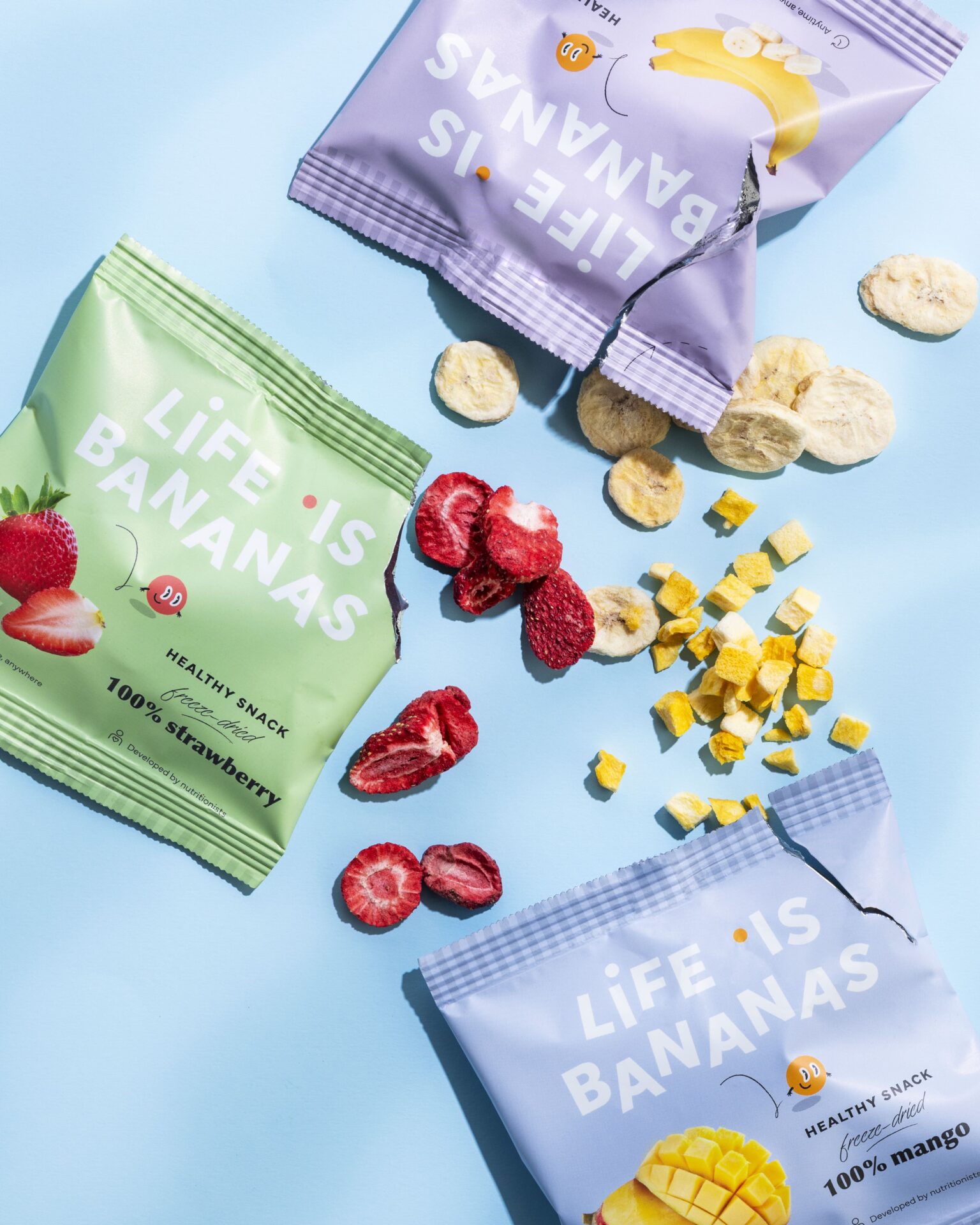
Life is Bananas
Belgium has a remarkable ability to produce food entrepreneurs. Many start businesses because they cannot find the product they want on supermarket shelves. Sigrid Severijns is one of them.
A food engineer who spent 18 years developing chocolate snacks and bakery products, Severijns was inspired by a challenge familiar to many parents: feeding a young child quickly without compromising on nutrition.
Living in Deinze, near Ghent, she wanted a convenient vegetable purée that retained flavour, colour and nutrients. Freeze-drying seemed to offer the perfect solution. Add hot water and the product would be ready in moments.
There was just one problem: it did not exist.
Severijns began experimenting and discovered that new baby foods have to pass complex regulations and lengthy supplier approval processes. The idea remained promising, but it would take time.
Then chance intervened. At a trade fair, she was offered some freeze-dried fruit and took samples home to her children. The response was immediate. Unlike vegetable purées, fruit snacks were relatively simple to develop and bring to market.
Life is Bananas was born.
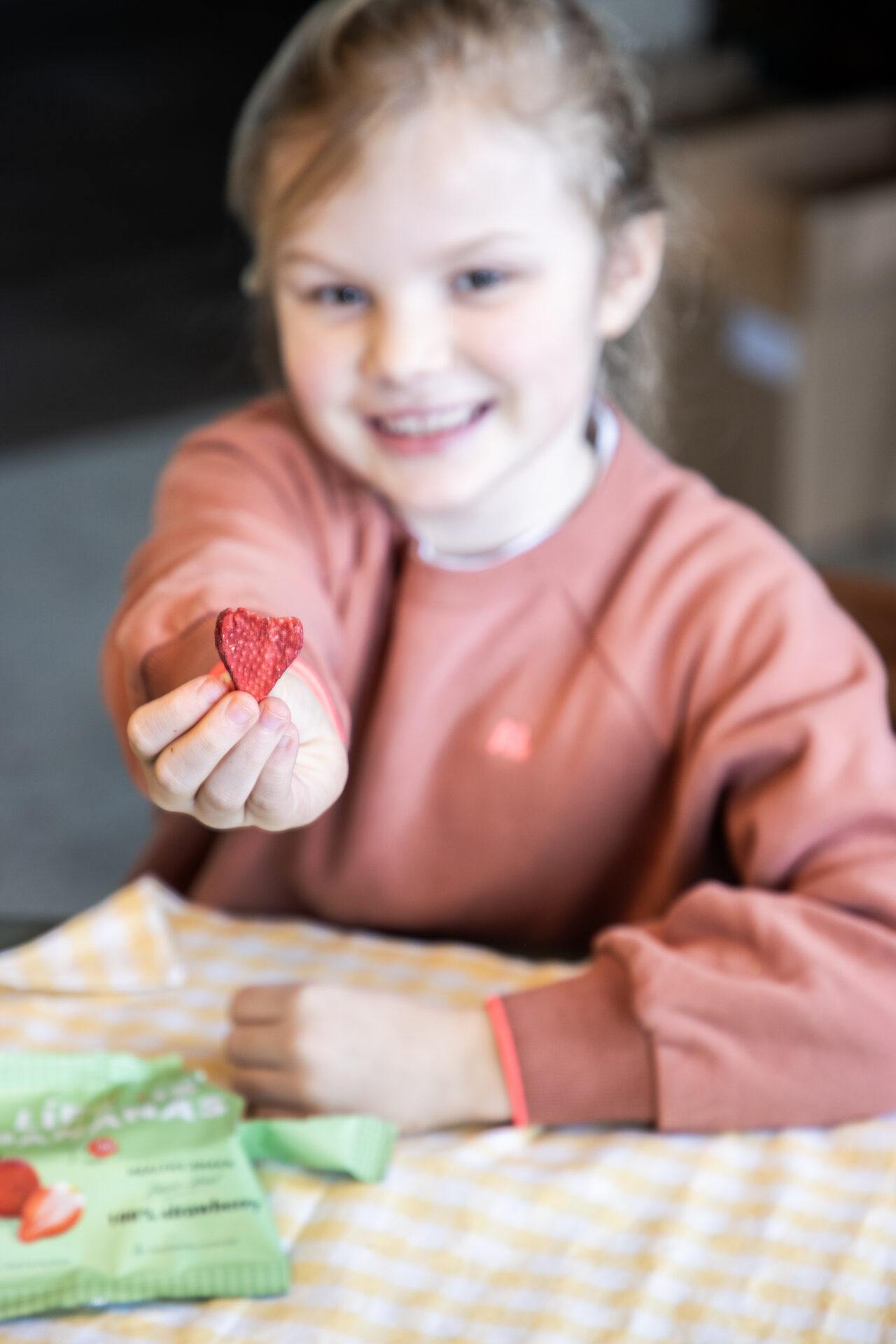
Life is Bananas
The products are aimed squarely at families. Their appeal lies in a simple proposition: fruit that is as crunchy as a biscuit but contains no added sugar. Because freeze-drying removes most of the water, the fruit becomes intensely flavoured while retaining much of its nutritional value. Children enjoy it as a snack, but it also works sprinkled over yoghurt or granola.
The branding is playful, designed to appeal to busy parents seeking healthier shortcuts rather than culinary perfection. The company’s message is persuasive: convenient food does not have to mean processed food.
Mango, banana and strawberry proved the most popular among early testers, while pineapple is expected to join the line-up soon. The focus is on fruits that are often inconvenient to carry, peel or prepare.
Products are sold in portable 10-gram packs, while larger 100-gram bags contain the equivalent of around a kilogram of fresh fruit.
They are already stocked by major retailers including Delhaize, Carrefour and Rob. Further expansion could see them appearing in cinemas, amusement parks and even airlines.
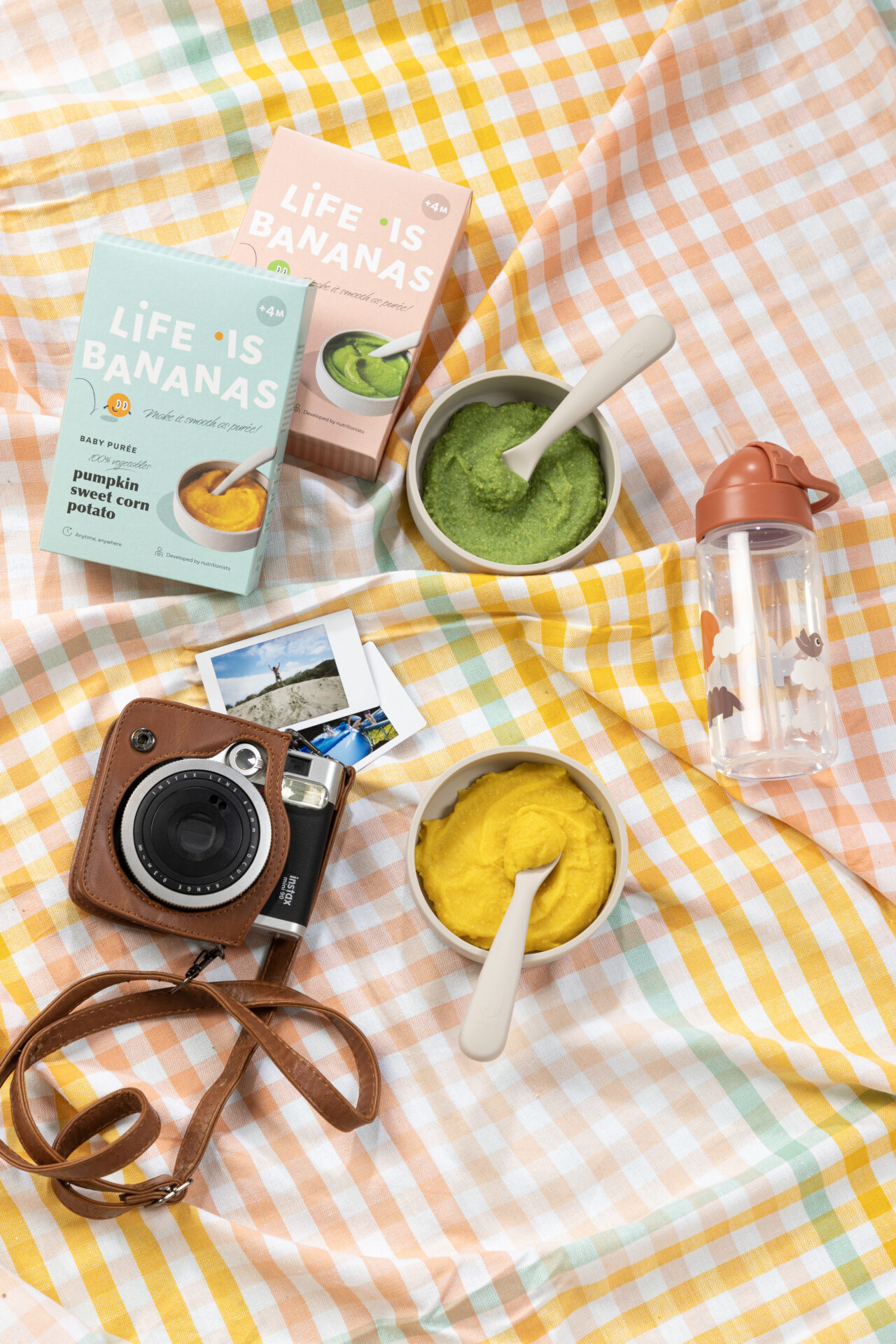
Life is Bananas
Unexpectedly, bartenders have also shown interest. Freeze-dried fruit offers a practical garnish that lasts far longer than fresh produce.
Meanwhile, Severijns has not abandoned her original ambition. The freeze-dried vegetable purées that inspired the business are finally nearing launch and are expected to arrive in time for summer family travel.
By then, customers will already be familiar with the technology. The fruit snacks may prove to be the perfect introduction to a broader range of freeze-dried foods.
Café
Kay 36
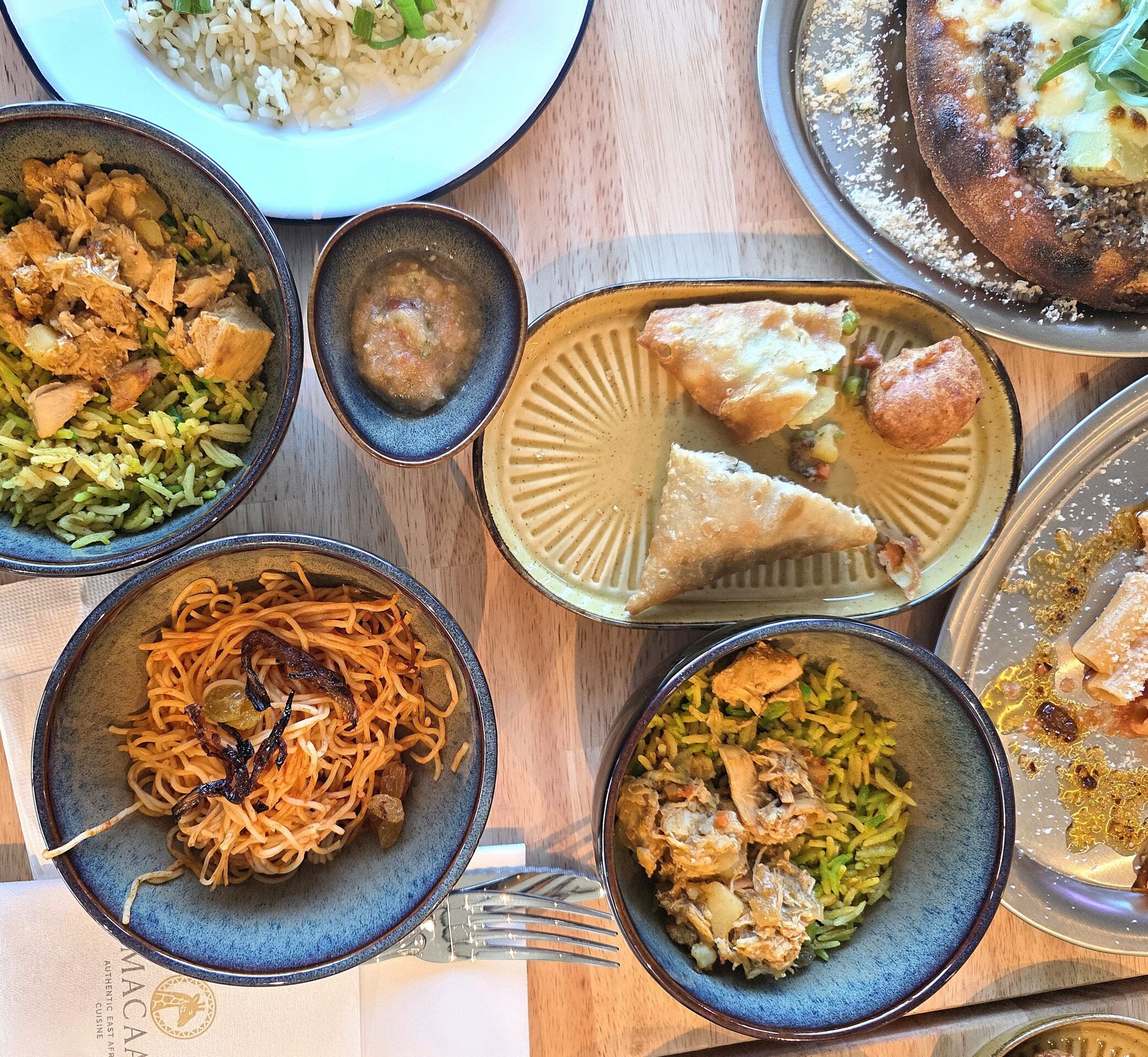
Kay 36
Just when it seemed Brussels had reached peak food-court saturation, another contender arrived.
After The Brussels Times Magazine published its guide to the city’s food courts in April, a new opening was announced beside the canal. Ironically, it stands only a stone’s throw from what was Brussels’ first modern food court, launched eight years ago in the former Citroën garage now being transformed into the Kanal-Centre Pompidou.
Kay 36 is part of the wider redevelopment of the canal district near Tour & Taxis and has quickly established itself as one of the area’s most interesting food destinations.
At first glance, the concept sounds improbable. Six street-food operators and a bar squeezed into a 170-square-metre space – barely larger than a conventional restaurant. Each vendor occupies no more than six square metres.
Yet somehow it works.
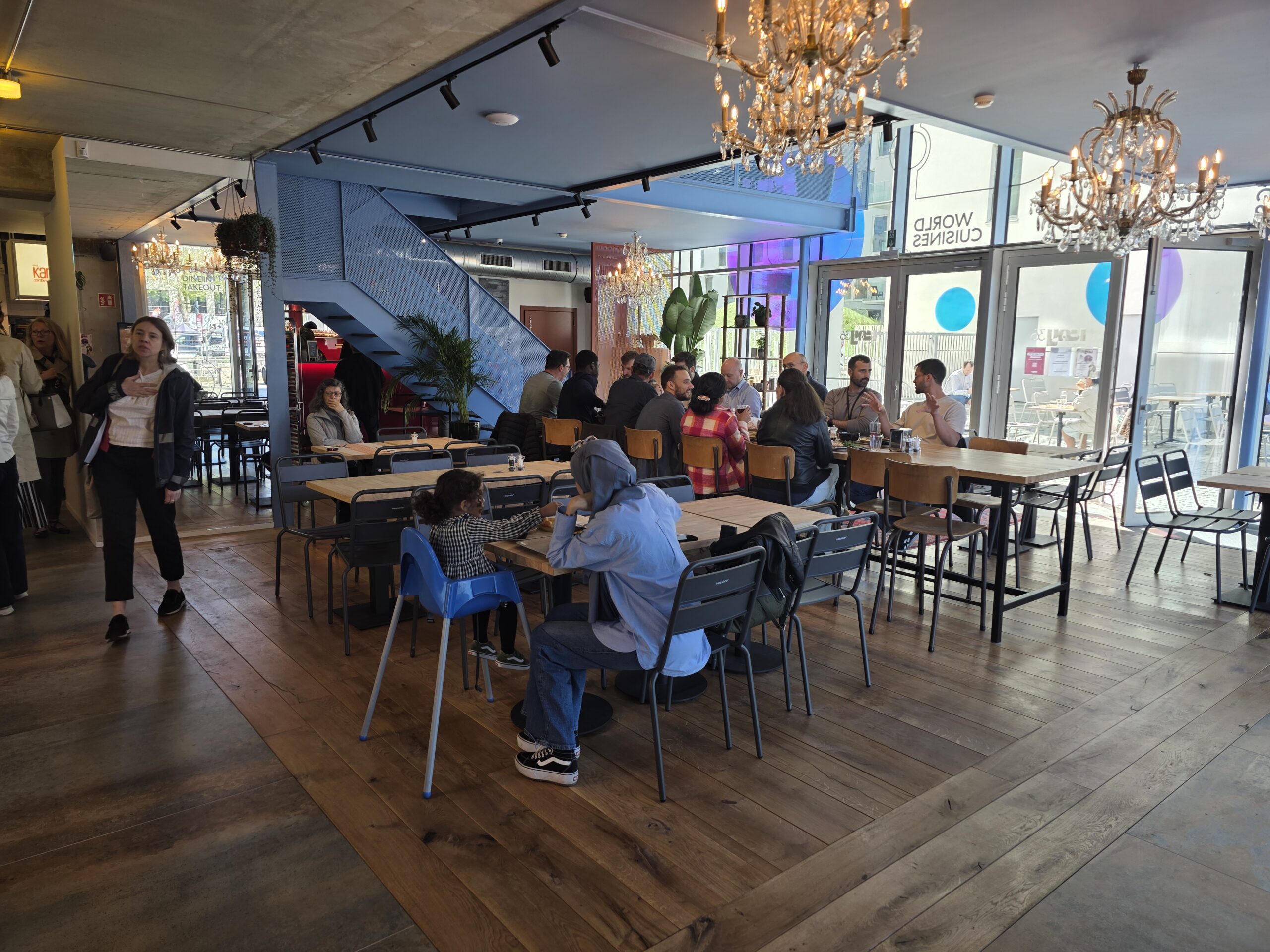
Kay 36 food court in Brussels
The choices range from burgers and sushi to Tex-Mex, Somali dishes and Italian cooking, followed by vegan pastries for dessert.
More interesting than the variety, however, is the philosophy behind the project. Kay 36 places inclusivity, seasonality and local sourcing at the centre of its identity.
Here, dietary requirements feel like a genuine commitment rather than a box-ticking exercise. Vegan, halal and gluten-free options are integrated naturally into the offering.
The gluten-free burgers, for example, lose none of the flavour or generosity of their traditional counterparts.
Desserts may be the strongest suit. Bastille, a vegan pastry business from Liège, creates striking trompe-l’oeil creations resembling fruits and nuts. Lighter than traditional pâtisserie but every bit as indulgent, they justify their €79 price tag.
Elsewhere, Ancho serves richly loaded nachos on the spacious terrace, while Tadao offers fresh sushi and poke bowls built around perfectly cooked rice. Those seeking bolder flavours can turn to Somali dishes seasoned with aromatic spices influenced by Indian cuisine.
Belgian sourcing is taken seriously. The bar stocks Brussels craft beers from breweries including Brasserie Surréaliste, Drink Drink and En Stoemelings. Wines come from the urban winery Gudule, while spirits arrive from Maredsous. Even the cocktails and mocktails are entirely Belgian-made.
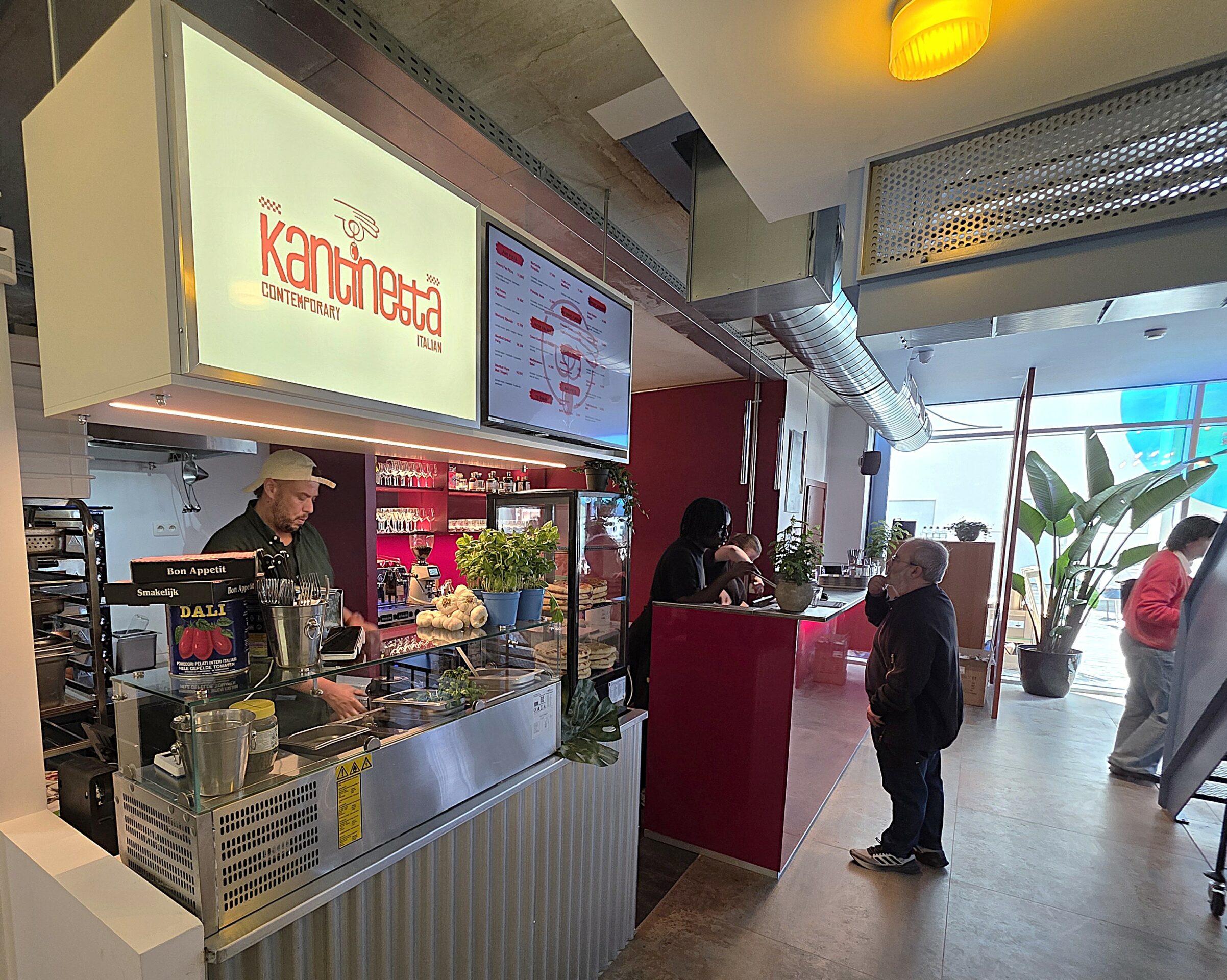
Kay 36 food court in Brussels
A special mention goes to Kantinetta, run by Arnaud Bingoni, who launched Brussels’ first Italian vegetarian catering company more than two decades ago. His generously topped pizzas and pasta dishes alone justify a visit.
The best spot may be the mezzanine overlooking the canal, where guests can relax with their feet resting on a genuine Middle Eastern carpet. The venue is dog-friendly too.
Accessibility is another advantage. Kay 36 sits just metres from the southern end of the Suzan Daniel Bridge linking Tour & Taxis with Brussels North station.
The result is a food project that feels both ambitious and personal. Askell’s values are visible in every detail. Whether for a sunny lunch or an evening drink overlooking the canal, Kay 36 is well worth the detour.
Kay 36, Quai des Péniches 36, 1000 Brussels
Drink
Iduna Cider
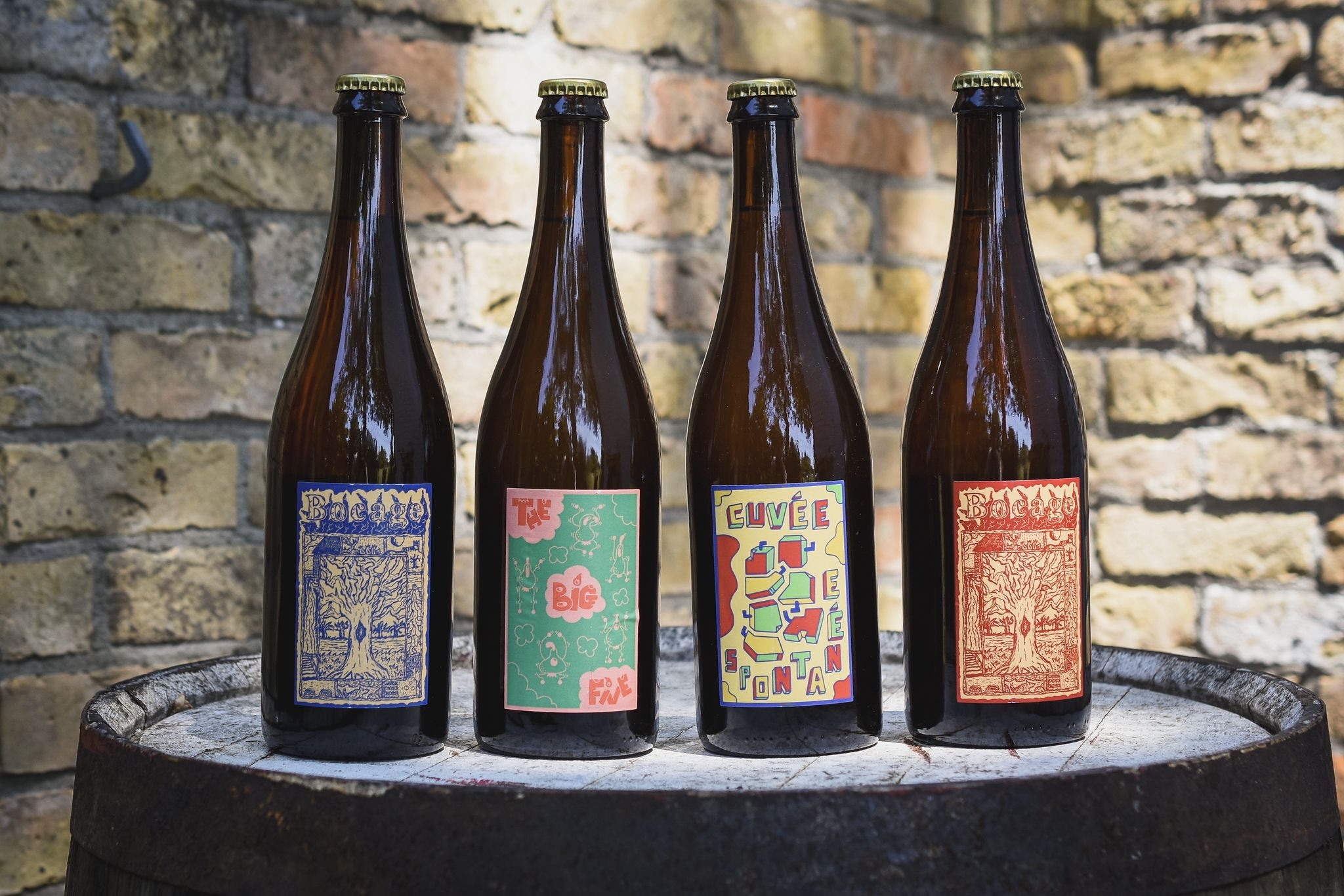
Iduna Cider
Bertjan Olivier was 15 when he first spent summers working in youth camps between Honfleur and Rouen, helping restore monuments in small Norman villages. The farming families who hosted the camps invited him back each autumn for cider making, and he kept returning – eventually spending a month or two in Normandy each year, learning the craft properly.
That early passion found its natural outlet when the trained agro-engineer launched his own cider business in Eernegem, West Flanders, four years ago. The name comes from Idunn, the Norse goddess of eternal youth, who bestows it through extraordinary apples. The philosophy runs deeper than the mythology: Olivier wants drinkers to understand the connection between landscape and liquid.
Everything at Iduna begins with high-stem apple trees – standard, non-industrial varieties that must be harvested by hand. Olivier produces around 3,000 litres annually from old Belgian apple and pear varieties, combining his own fruit with that of neighbouring farmers. There are no additives, not even added yeast: all fermentation is spontaneous, as with natural wine. Alcohol levels typically sit at 6–7%.
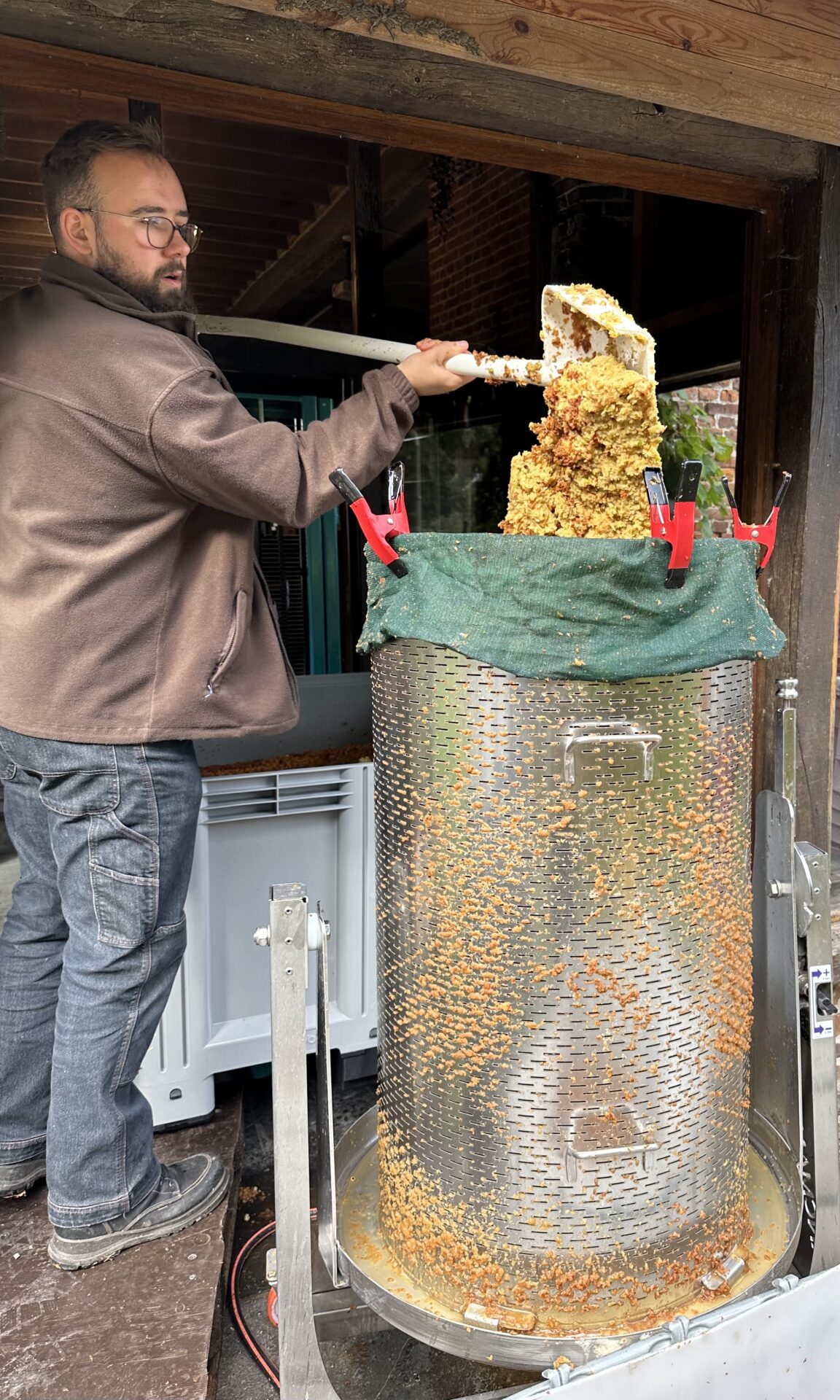
Bertjan Olivier from Iduna Cider
The range rewards curiosity. The Brut de Poiré is closer to a mineral natural sparkling wine than anything you'd associate with cider, with notes of flint. The Brut de Verger blends over 25 old Belgian varieties and undergoes a light skin maceration before bottle re-fermentation. The Bocage series is barrel-aged – one in whisky oak with a pinch of local hop, another in Burgundy pinot noir barrels – and named after the distinctive bocage landscapes of ecological significance that shaped the orchards.
“Cider is still a niche product in Belgium,” Olivier says. “When you sell wine, there’s nothing to explain. With cider, you need half an hour before people understand what it is and how it’s made.”
The effort is worthwhile. Priced at around €13–15 per bottle, the ciders compete comfortably with quality wines. Some chefs already pair them with fish and seafood.
They can be found in Brussels through natural wine specialists including Vin Vivant and Fermenthings.
The apple orchards of West Flanders were largely destroyed during the First World War, and most survivors were cleared after the Second to make way for food crops. Olivier is quietly rebuilding something. These ciders, as he puts it, let you drink the landscape.
