
While LGBTQ+ people in Belgium are feeling increasingly unsafe, the Federal Government has committed to a 2026-2030 interfederal plan to better protect the community. While the plan is welcomed by organisations, they also have their reservations.
With 28 priority measures (compared to 133 actions in the previous plan), the Federal Government aims to demonstrate a new, more streamlined and focused approach to its policy in support of LGBTQ+ people.
The plan, spearheaded by the Federal Minister for Equal Opportunities, Rob Beenders (Vooruit), has generally been well received by LGBTQ+ rights advocates. However, it was not accompanied by a detailed budget, meaning some concerns remain.
Additionally, contributions from Brussels and the German-speaking Community are still pending.
Yet, the urgency for LGBTQ+ people is undeniable: in 2025, the Centre for Equal Opportunities and Opposition to Racism, Unia, received more than 300 reports, leading to the opening of 151 cases – one of the highest figures recorded in recent years.
Additionally, a large-scale survey carried out in Flanders found that three in four (74%) people from the LGBTQ+ community feel less accepted today than they did five years ago.
Manosphere
While Belgium likes to present itself as one of the pioneers in the field of LGBTQ+ rights, people from the community are feeling increasingly less accepted in the country – despite strong legal protections.
Many LGBTQ+ people reported that they are increasingly being verbally abused or given strange looks when they are themselves in public.
Victims point to the growing intolerance from religious-conservative quarters, as well as the rise of the "manosphere" and right-wing populism glorifying masculinity and traditional gender roles, fuelled in part by influencers such as Andrew Tate.
As a result, more than half of those surveyed (53%) said that they do not always dare to openly express their sexual orientation or gender identity.
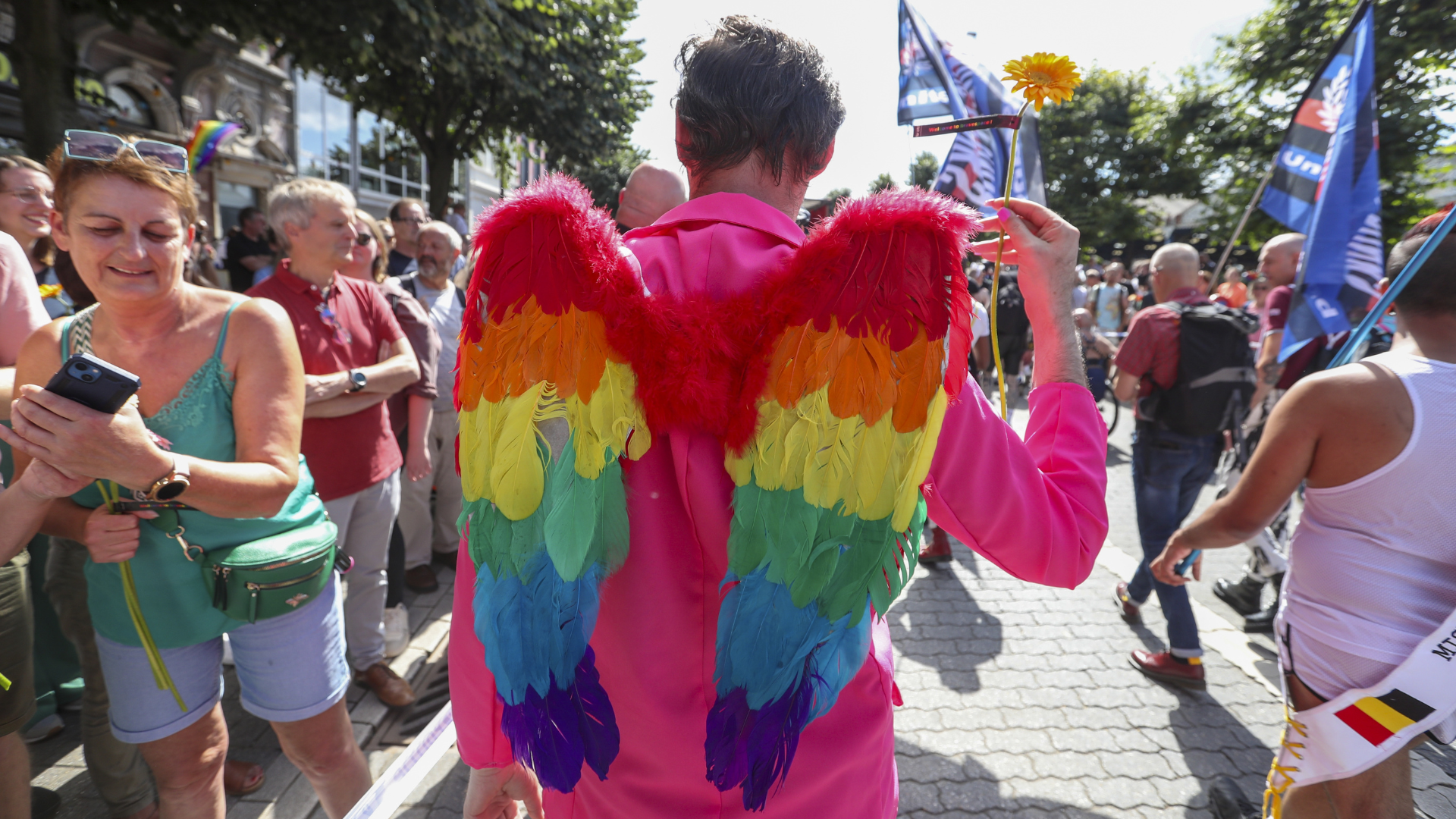
Antwerp Pride 2023. Credit: Belga
The research also reveals clear differences between men and women: one in five men (21%) say they feel 'uncomfortable' or are even 'completely opposed' to seeing two men walking hand in hand down the street. Among women, that figure is considerably lower, at 7-8%.
These differences between men and women become even more pronounced when it comes to transgender people: 45% of men say they have difficulty accepting a trans woman. Among women, that figure stands at 27%.
The way in which gender is discussed also remains a sensitive issue. Nearly three in four Flemish people (73%) believe that adapting language – for example, by using gender-neutral pronouns – goes "too far".
The survey was carried out between 31 July and 4 August in collaboration with iVox. A total of 11,016 people were interviewed, giving a representative sample for age, gender, education level, income and political preference.
What is in the plan?
As a key factor, the plan proposes a change in approach: while the previous vision comprised 133 actions spread across a wide range of areas, this one is much more targeted.
The 28 measures focus in particular on access to healthcare, combating online hate and online dating app scams, training for police officers and magistrates, preventing discrimination in the workplace, and improving support for LGBTQ+ asylum seekers.
Another notable development is the interfederal approach. Previous federal, Walloon or French-speaking plans were often drawn up in isolation, the various levels of government have this time sought to align their priorities.
"This is a real step forward," LGBTQ+ support organisation Prisme told Le Soir. They also highlighted a "more structured" consultation with organisations during the drafting of the federal component.
From next year, the plan also provides for a permanent consultation framework, bringing together civil society organisations, the Equal Opportunities Service and the Institute for Gender Equality twice a year.
The sector, which until now did not have a formalised forum for dialogue, has been asking for this for a long time.
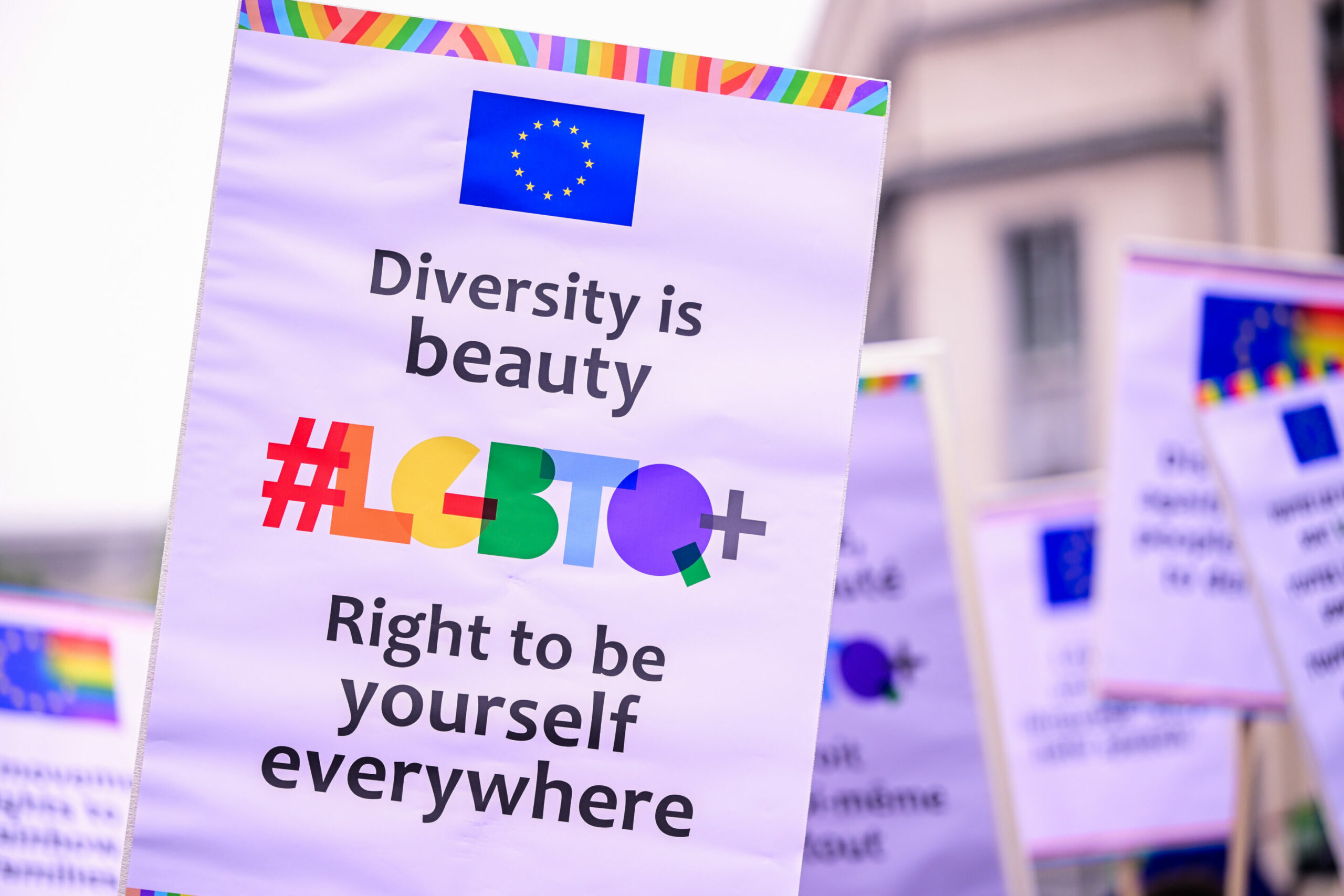
Banners promoting LGBTQ+ rights at a demonstration in Brussels. Credit: Belga/Laurie Dieffembacq
However, sector organisations agree that while the document sets out ambitious goals, it often remains cautious when it comes to putting them into practice. "Many of the measures involve carrying out a study, organising a consultation or examining a possibility," said Prisme.
The deadlines are also a source of criticism: 2030, which marks the very end of the plan. Specifically, the proposed abolition of the abstinence period imposed on men who have sex with men for blood donation – a big issue for the community – is currently limited to a commitment to "examine the possibility" of ending it.
The same caution applies to healthcare for intersex people and the recognition of non-binary people.
"The 2030 deadline does not in any way mean that the measures are being postponed until the next parliamentary term. It is common for an action plan to cover the entire duration of a parliamentary term," Beenders' office said. An interim review is planned 18 months after the plan's launch.
Shift in political climate
Lastly, the sector also regrets the lack of clearly identified budgets. For some measures, the document specifically states that they will be implemented "subject to available resources", against a backdrop of continued pressure on public finances.
"With the plan’s approval, the implementation phase begins. The measures will now be translated into concrete actions, for which the necessary resources will be allocated," Beenders' office said. Resources have already been set aside in the Equal Opportunities budget.
Beyond the content of the plan, organisations defending the rights of LGBTQ+ people have been warning for many months about a political climate that is less favourable than it was a few years ago.
They point to the rise in hostile rhetoric, the questioning of certain equality policies, and the budgetary pressures weighing on the associations and institutions responsible for combating discrimination.
