
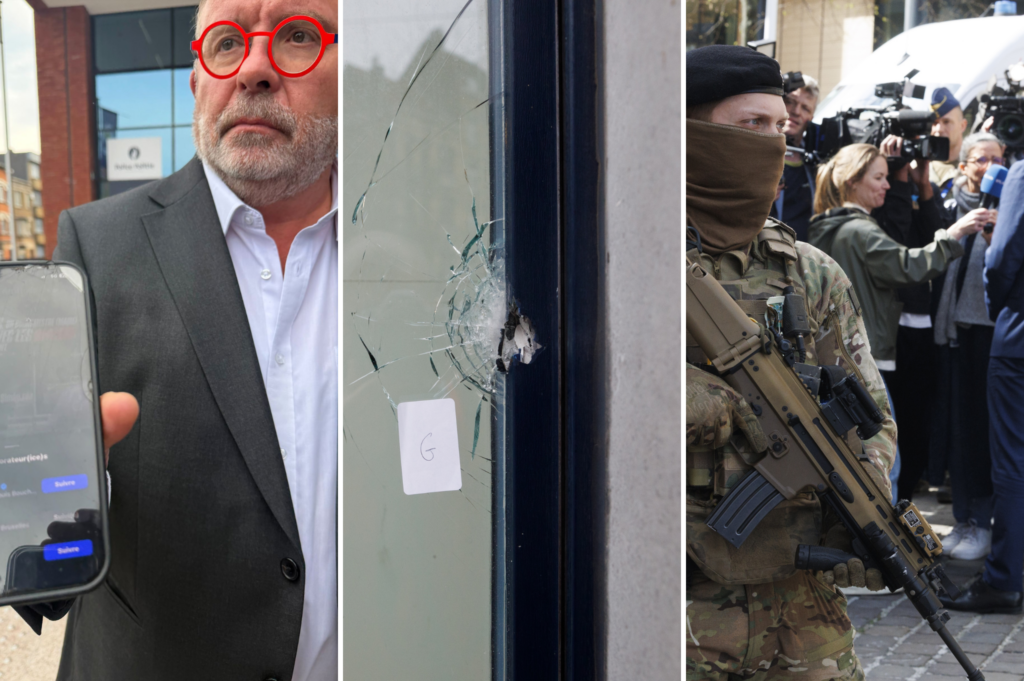
Extra police officers, citizen protests and political games are dominating the debate following the recent spate of shooting incidents tied to the drug trafficking world in Brussels.
This Sunday, fed-up Saint-Gilles residents will hold a rally at 15:00 in Place de Bethléem, a vibrant community hub and drug-dealing hotspot which is located just a few metres from the scene of two recent shootings.
Six shooting incidents have taken place in just four days inside the Midi police zone (which covers Anderlecht, Forest and Saint-Gilles) – including targeting an old police station in Anderlecht – between Friday and Monday night.
One of the organisers of the rally, the anti-mafia non-profit, Basta! (Italian for enough), launched an appeal to Brussels residents to mobilise against the recent spate of violent incidents, which have mainly occurred in Saint-Gilles.
"Doesn’t this outrage you anymore? In a few days, organised crime crossed a particularly worrying threshold in Brussels: several vehicles set on fire as a warning, shots fired at a police station, two gun attacks injuring two people, in busy places and times," Basta! said in a statement.
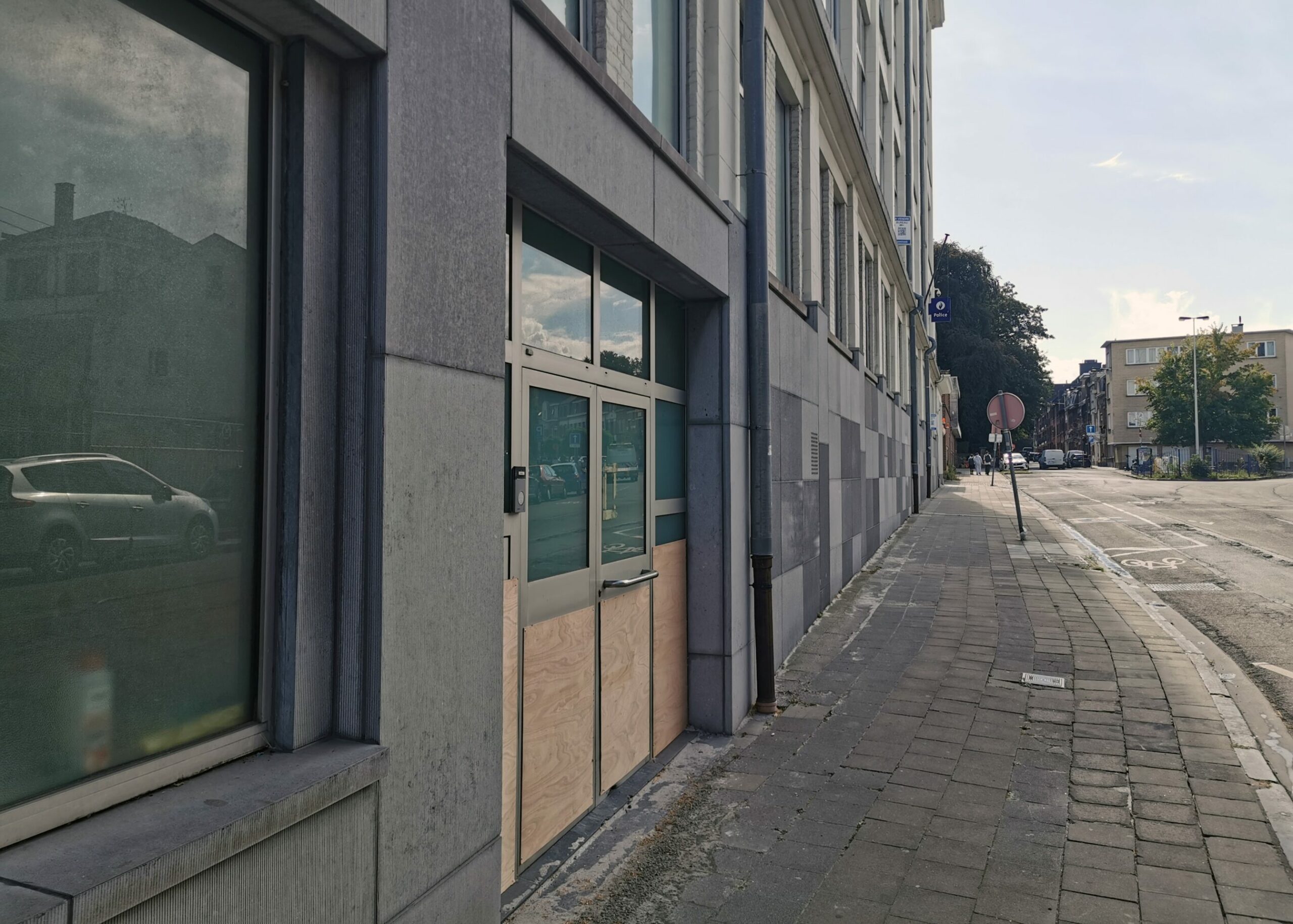
The police station of the Brussels Midi zone in Anderlecht is damaged after shots were fired at its facade, Saturday 22 August 2026. Credit: Belga
The organisation has been active on the ground to raise awareness and mobilise against organised crime in the streets of Saint-Gilles, using the techniques of Italian anti-mafia organisations in Sicily.
Working alongside Saint-Gilles Mayor Jean Spinette (PS), they were instrumental in dislodging a dealing network that had taken root in the Square Jacques Franck in summer 2024, namely by organising events and rallies that allowed the community to reoccupy the public space.
However, Spinette has often called out a situation of whack-a-mole – when one dealer is arrested or convicted, others often appear "100 metres away", as he told reporters after the shooting last weekend.
What is being done?
On the authorities' side, the Brussels Public Prosecutor will hold a first press conference on the incidents on Friday, one week after the first incident.
On Wednesday evening, Brussels Minister-President Boris Dilliès (MR) convened the Regional Security Council (Cores), bringing together Interior Minister Bernard Quintin (MR), Chief Prosecutor Julien Moinil, National Drug Commissioner Ine Van Wymersch, representatives of police zones, certain federal ministers, and all 19 Brussels mayors.
Crime linked to drug trafficking in Brussels constitutes a "national emergency situation", Interior Minister Quintin said after the meeting to the Belga News Agency.
He announced that he will make available a platoon from the federal reserve to Brussels police zones. This includes 40 additional police officers, 20 mobile cameras in drug hotspots and round-the-clock coordination.
"Federal police special forces will strengthen their collaboration with local police,” he announced, also recalling that 77 agents had already reinforced the federal police in Brussels.
Quintin discussed the decision to strengthen the military presence in Brussels. "I wish there were more [soldiers] and that they could leave train stations and metro stations."
The possibility for Brussels mayors to establish curfews or areas to which access would be reserved for local residents, in the most sensitive areas, was also seen as a possible measure.
The liberal minister also spoke about opening more detention centres, as well as bringing in the registration of private e-scooters, which would enable them to be tracked by ANPR cameras.
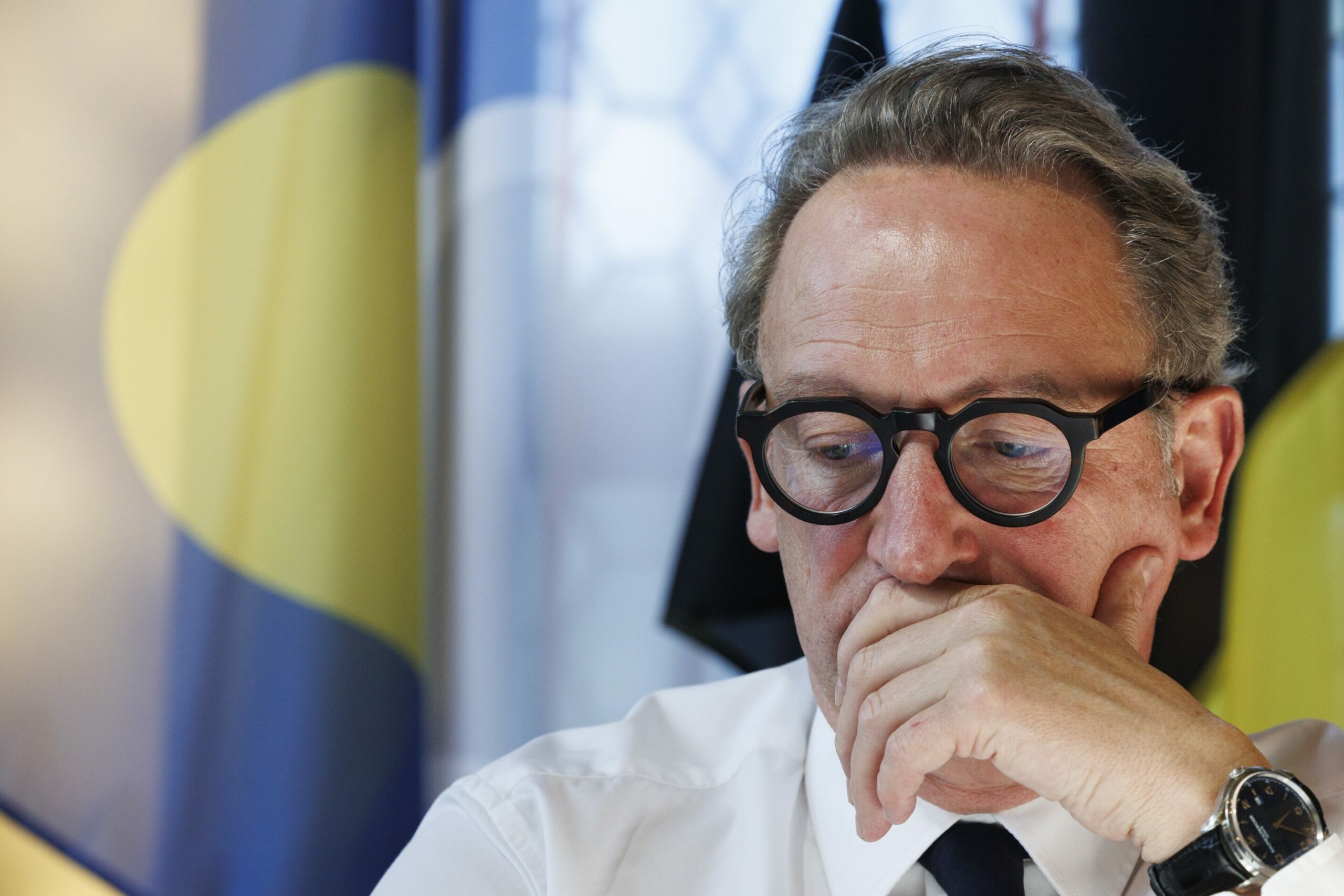
Brussels Region Minister-President Boris Dilliès pictured during a press conference following a Cabinet meeting, in Brussels, on Thursday 16 July 2026. Credit: Belga / Nicolas Maeterlinck
A new permanent coordination mechanism was also confirmed, set up to improve the flow of information between the local and federal police, the judiciary, the municipalities and the Region.
It will also work with health and prevention organisations, and the future Regional Commissioner for Drugs, a post for which recruitment is currently underway.
"We need this as much as we need bread in Brussels to ensure we stop working in isolation," said Minister-President Dilliès after the meeting. He is calling for an approach combining law enforcement, prevention, strengthening the justice system and enforcing deportation orders.
"If we do nothing, nothing will improve," Dilliès concluded, adding that he had sensed a willingness among those around the table to take concrete action, a feeling also shared by the minister of the interior.
Citizens have had enough
Yet whether these measures can convince Brussels residents remains to be seen. Ahead of the regional security meeting, the non-profit Basta! had called out the Brussels Region and the Federal Government, criticising their inaction on the issue of security and organised crime.
"What is exhausting for ordinary citizens is hearing politicians speak as if they were in opposition, while in power," the organisation said. "The Federal Government refers to the Region, the Region to the municipality, one minister to another."
"And meanwhile, the population is still waiting for change, while organised crime takes advantage of political inaction," they added.
An open letter signed by 40 neighbourhood associations in Brussels, shared by Le Soir on Wednesday, also pointed out that police officers, magistrates, mayors, aid organisations and residents have been warning for years about the growing influence of criminal networks.
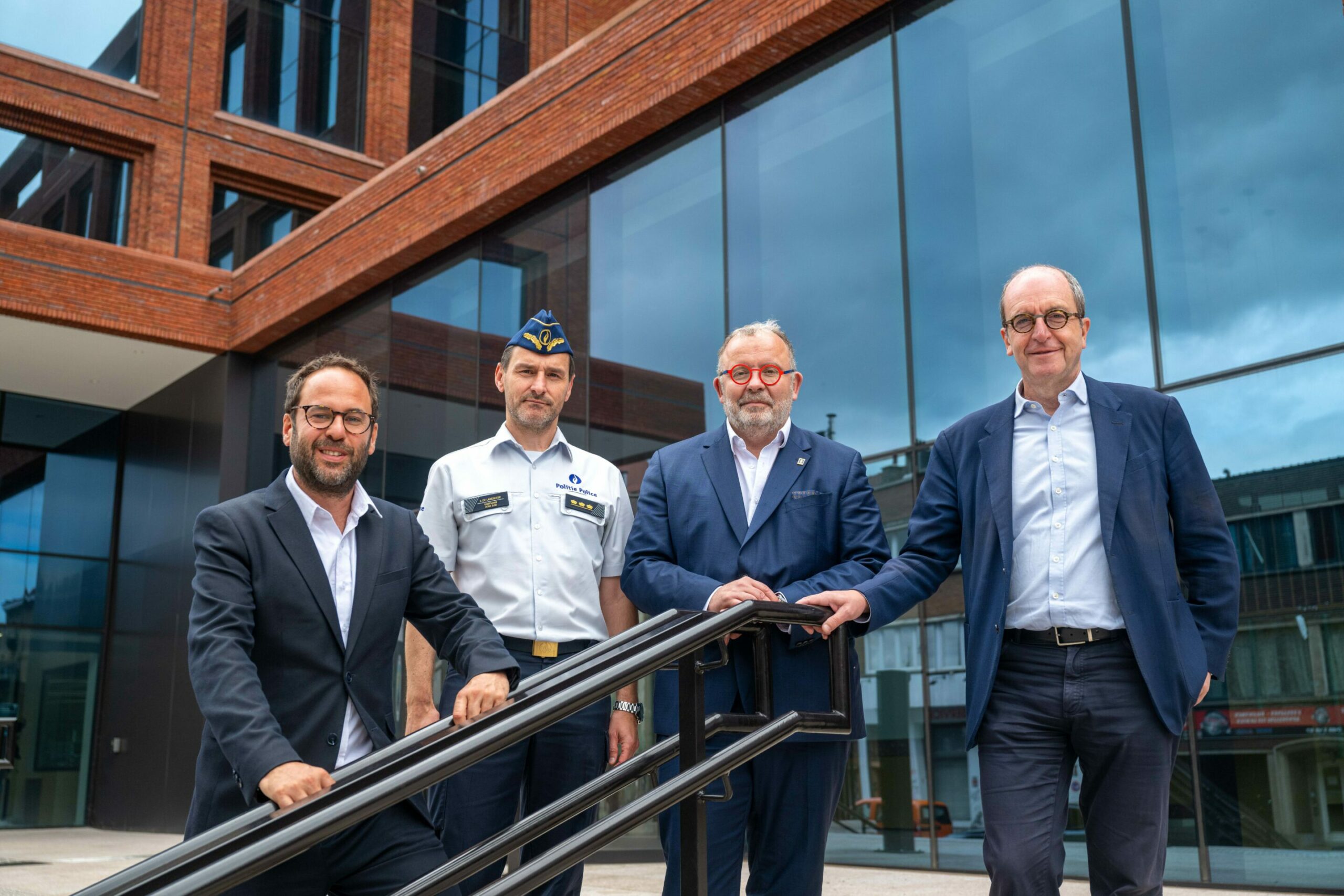
Mayor Charles Spapens (Forest), Police chief Jurgen De Landsheer, Mayor Jean Spinette (Saint-Gilles) and Mayor Fabrice Cumps (Anderlecht) outside the new police station in the Midi police zone in Brussels, on 03 June 2026. Credit: Belga/Jonas Roosens
Too often, the letter reads, the response amounts to nothing more than "drawing up plans, making announcements, holding meetings and setting up task forces, combined with the perpetual passing the buck."
At the same time, they argue that concrete resources for the police and the judiciary are lagging behind, notably the strengthening of the federal judicial police, the railway police and the Brussels Public Prosecutor’s Office.
"Brussels is not a narco-state. But every neglected neighbourhood, every criminal network we allow to flourish, every public order or judicial institution that is denied resources, brings us dangerously close to that.”
The criticism is not limited to security, with residents highlighting the treatment of undocumented migrants, the pressure on social organisations and the decline of neighbourhoods around the Midi and North stations. "This human misery has become a breeding ground for organised crime," they warned.
The open letter is addressed to the Brussels, federal and regional authorities. It calls for "a strong Brussels Minister-President" who can define responsibilities and demand concrete results, while "personally taking charge of coordination in the fight against violence linked to drug trafficking".
Political games
By Tuesday, the situation had fallen prey to politicisation. Saint-Gilles socialist mayor Jean Spinette (PS) called out the weaponisation of this week’s shootings by the French-speaking liberal MR.
The ruling party had gone on the attack after the mayor appealed to the federal Ministry of the Interior (held by MR) for extra resources, particularly calling for 80 extra police officers.
MR responded by attacking the socialists' record in Brussels at the municipal level. Its activists posted a video from RTBF which shows the mayor confronting dealers in Saint-Gilles, saying: "This is not possible, lads, there are police everywhere. Don’t even think about it."
MR claim that he is negotiating with them, but the video shows the mayor telling them to move on.
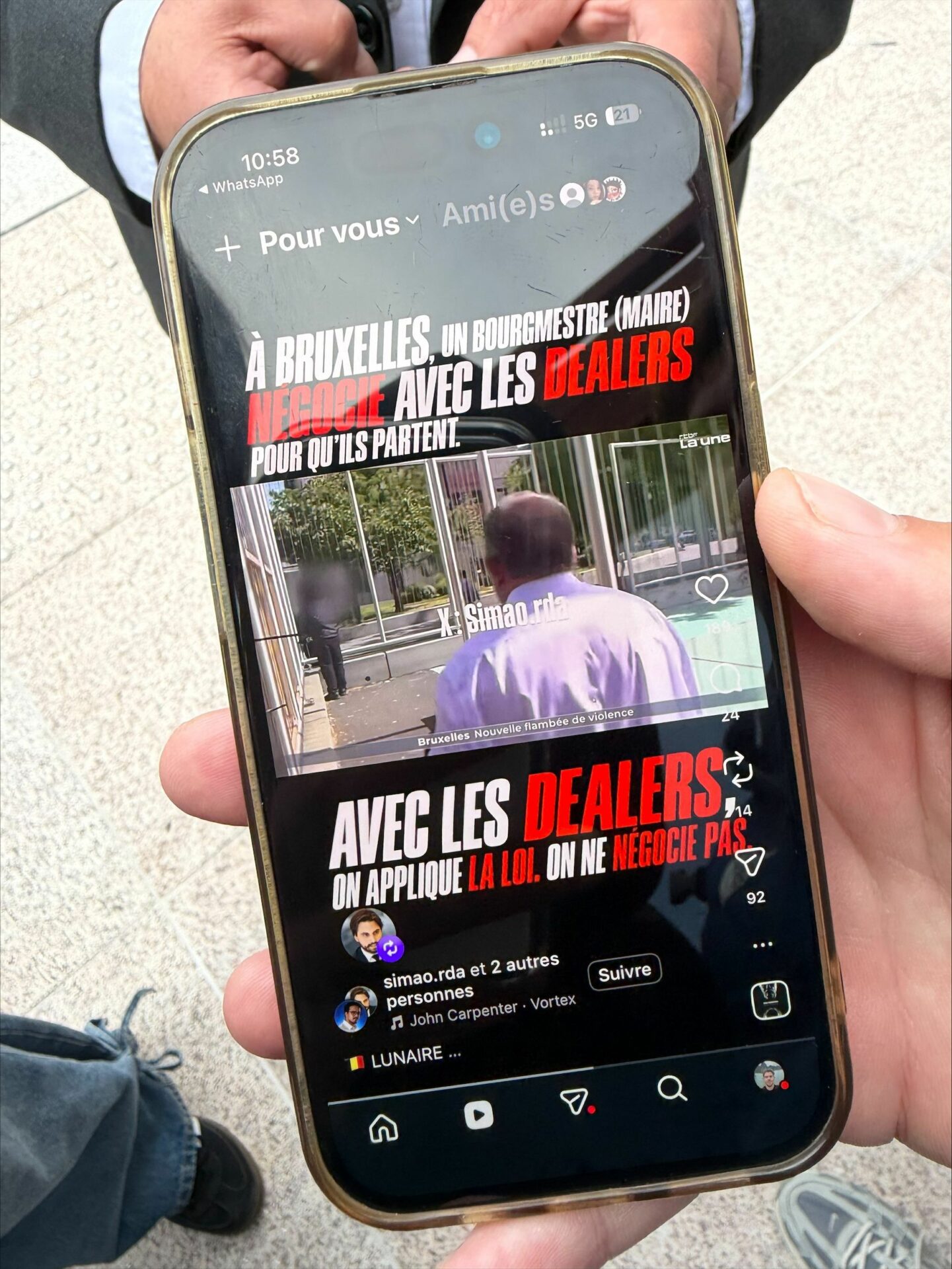
The video being circulated by MR against Saint-Gilles Mayor Jean Spinette, in Brussels on Tuesday 25 August 2026 in Brussels. Credit: Belga
Socialist activists have also pointed out online that right-wing-leaning parties – like Anders, MR, CD&V, and the nationalist N-VA – have filled the interior minister post since the early 2000s.
"My life and that of my fellow citizens are constantly in danger, but I see that politicians are exploiting the situation," Spinette said on Tuesday. "Every day I go to speak to the drug dealers to ask them to stop, and they turn on me. The accusation that I am doing nothing is a disgrace."
'National issue'
Yet the measures announced on Wednesday evening by the regional Brussels Government appear to have somewhat satisfied the Saint-Gilles mayor.
Speaking after the meeting, Spinette welcomed the newfound "national awareness" of the problem, which is "destabilising and problematic for the entire country, not just for Brussels and Saint-Gilles", referencing the federal boost in police officers.
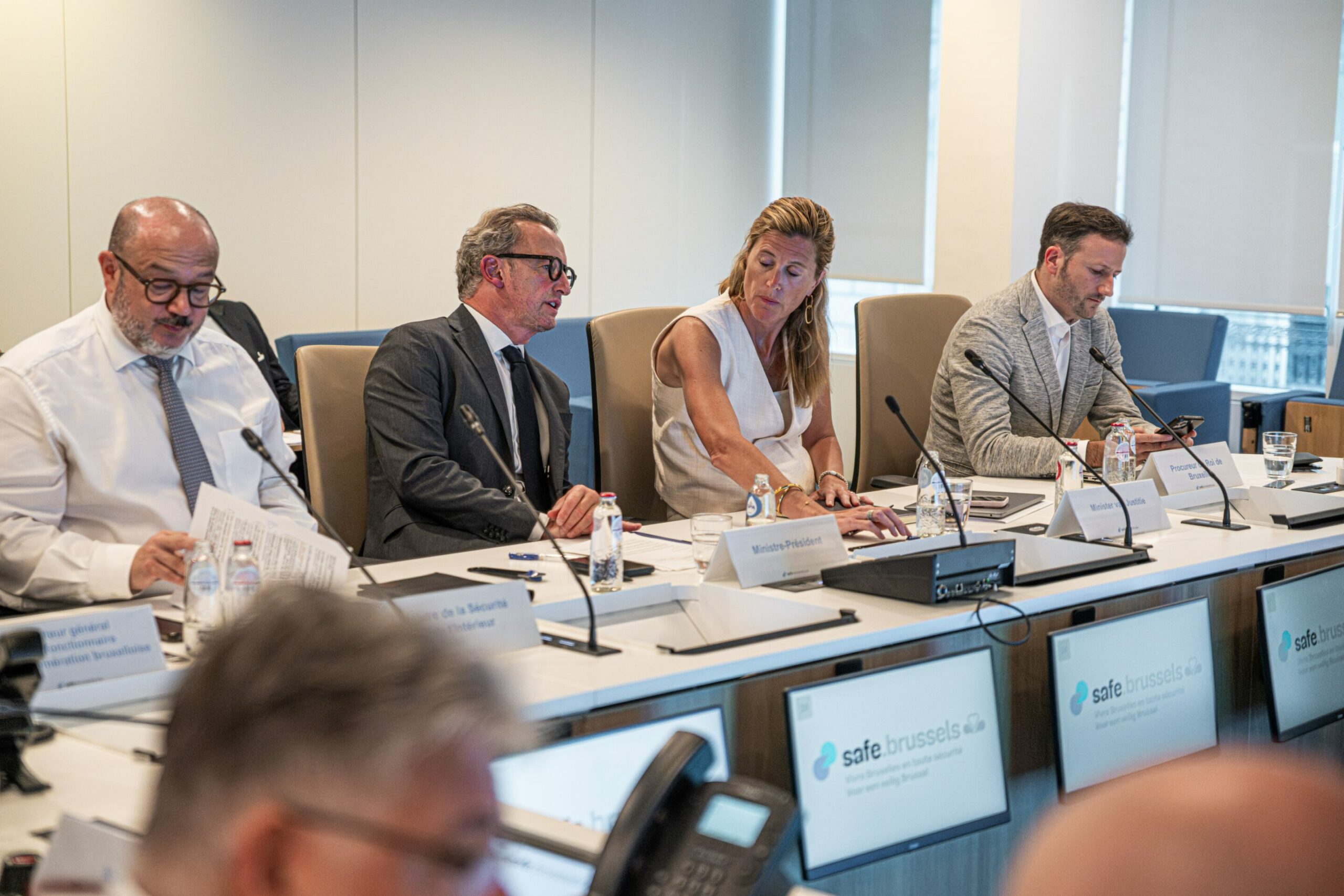
From left to right: Federal Minister of the Interior Bernard Quintin, Brussels region Minister-President Boris Dilliès, Federal Minister for Justice Annelies Verlinden and Chief Brussels Prosecutor Julien Moinil, during a meeting of the Regional Security Council (CORES) in Brussels, Wednesday 26 August 2026. Credit: Belga
Before the regional security meeting, the group of southern Brussels mayors had called for greater resources and a federal action plan, stressing that this is "a national issue".
"This is no longer a game between the Federal Government and Brussels. The question is whether a national initiative can be launched to combat drug trafficking in Belgium," Spinette said before the meeting.
He now hopes that this "national unity" will be followed by concrete action. Reinforcements from the City of Brussels are already visible in Saint-Gilles, with more patrols, he says. "The police unit wasn’t promised for months. It’s being put in place straight away."
The Saint-Gilles mayor remains cautious, however. "I’ve learnt to wait and see. But here, I must admit, I’ve been able to thank people," he concluded.
Related News
- Turf wars in Brussels: Rival gangs feud again in violent week of explosions and shootings
- Gun violence escalates in Brussels again: What's happening?
- Brussels Security Council to meet on Wednesday after spate of shootings
- 'Shocking, detached from reality': How is Brussels responding to latest drug explosions?
