
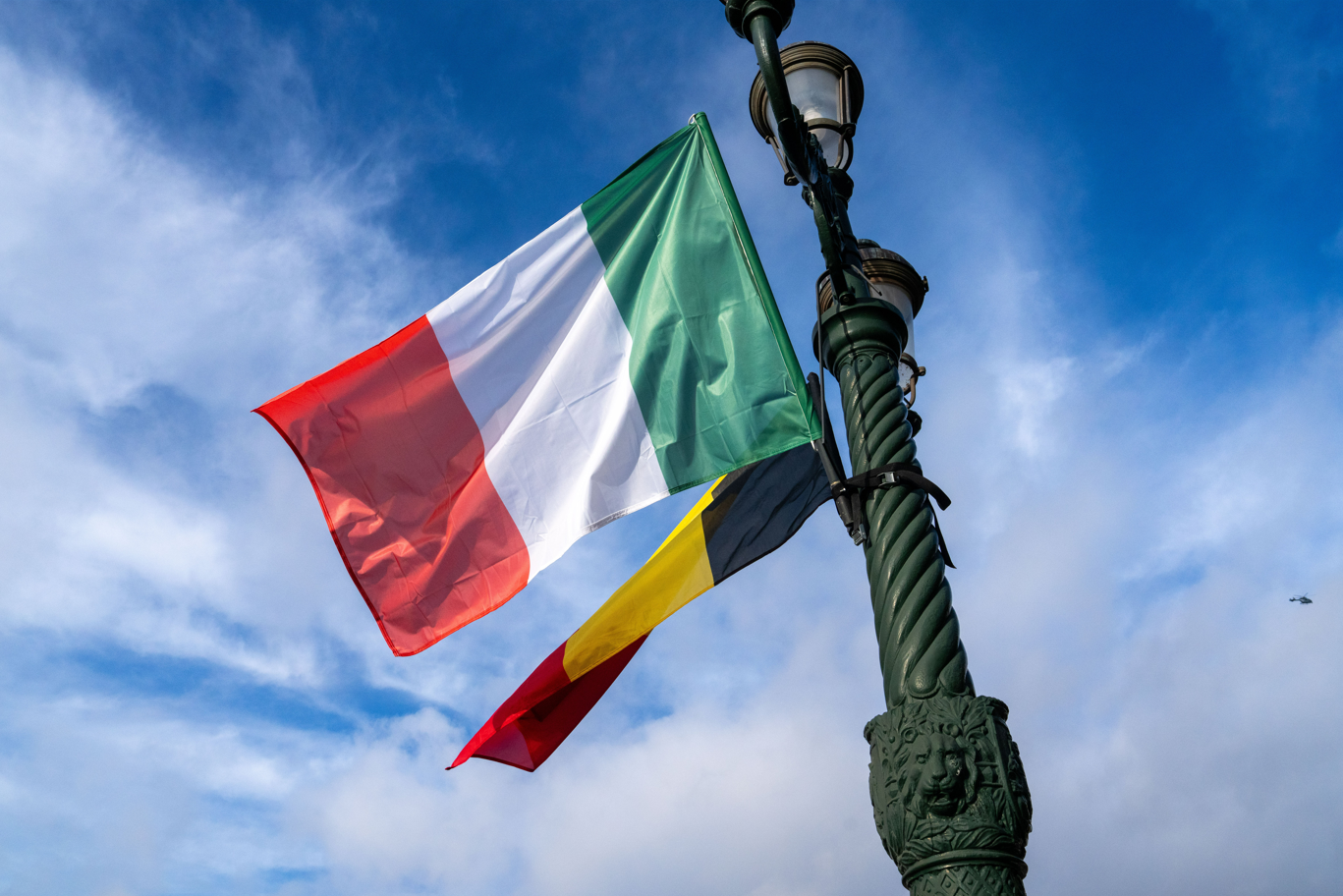
Despite already having a European passport, 11,289 Italians took on a second EU nationality in 2024 – a 72% increase compared to a decade ago. Finishing just behind Germany, Belgian citizenship is the second most popular option for Italians.
Whether it concerns deeply personal reasons, practical considerations or – in some cases – pure happenstance, thousands of Italians formally become Belgian every year.
Building on the large Italian community established by the generations who started a life in Belgium following two world wars and a years-long mining history, Belgium appears to be an easy place for Italians to come and settle.
Despite the legacy of migration between the two countries, figures by European statistics agency Eurostat are showing a new trend of Italian migrants adopting Belgian citizenship.
The Brussels Times spoke to some of them to find out why.
Nudged into being Belgian
"It is quite a recent trend," Marco Martiniello, a professor of sociology at the University of Liege, told The Brussels Times. "One part of the explanation is that Belgium recognised dual nationality in 2006, so you could become Belgian without losing your Italian nationality."
This was Ivan's experience. He moved to Belgium in 2012 when he was 22 and has spent his working life in the country. "Now, after 14 years, I feel Belgian, even if, of course, I feel more Italian," he said.
Ivan decided to obtain Belgian nationality, even though it does not change anything in his day-to-day life, he said. "You never know what might happen. I have been here for so long, I thought to myself, 'why not?'."
For Desiree (24), who moved to Belgium with her family 11 years ago, it was pure coincidence that made her decide to take on Belgian citizenship in 2022.
"My wallet was stolen and my Italian ID was inside," she said. With a looming holiday, she contacted the Italian embassy to ask what she needed to do, but to her frustration quickly realised that it would be faster to gain Belgian citizenship than to wait for a remade Italian ID.
Virginia*, who moved to Belgium to study 15 years ago and decided to stay to start a family, echoed the desire to avoid the Italian embassy.
When she needed to renew her passport, she could do so in "a couple of weeks" as a Belgian citizen, while an appointment for a passport renewal at the Italian consulate was only possible after a six-month wait.
Serena (34), too, described the Italian embassy's unreliable appointment system, which she described as "a kind of lottery," as an added reason for getting Belgian nationality.
Having moved to Belgium to do a PhD, she was caught in the country by the Covid-19 pandemic. By the time that was over, she had met her partner, and they decided to remain in Belgium.
A safe haven from conservative Italy
Beyond the practical considerations, some Italians gained Belgian nationality as a recognition of reality: they simply cannot see themselves returning.
"Many people think that Italy is no longer the place where they can be themselves. Whether that is an artist, a member of the LGBTQ+ community, or a woman," said Martiniello, who co-authored a paper on the new wave of Italian migration to Belgium in 2017.
"Italian society feels too narrow, too closed, maybe too illiberal compared to a country like Belgium," he said, adding that many Italians feel like their home country is not developing "in a positive way" in terms of opportunities for building a career or a life.
This was the case for Sara, who was 21 when she moved to Belgium in 2019. She always wanted to be a midwife, but could not get into her preferred programme due to Italy's restrictions on the number of people who can be admitted.
Instead, she decided to study in Belgium, and remained after her graduation. "Now, my [Belgian] degree is recognised in Italy."
Earlier this year, she applied for Belgian citizenship – a process which is still pending.
For Matteo*, a law change that could see him jailed in Italy was the push he needed to take on Belgian citizenship.
After moving to Belgium in 2016, he quickly built a life in Brussels: working, paying taxes, and even owning property. He also started the citizenship process but abandoned it because he felt it "wasn't a priority" at the time.
However, his circumstances changed when he decided he wanted to start a family. "I'm a single father, and my son is the result of a surrogacy."
While the practice of surrogacy is not allowed or heavily restricted in many European countries, parents can still undertake the practice in a country where it is legal and then register their child back in Europe – which is what Matteo did.
In 2024, however, the far-right Italian government led by Giorgia Meloni adopted a new law, criminalising "surrogacy tourism" – banning any Italian citizen from travelling to have a baby through surrogacy. "Even if they don't live in Italy, but they are Italian, they are guilty," Matteo explained.
As a result, he adopted Belgian citizenship to protect himself and ensure his son had the same nationality as him, as his son would not be eligible for Italian citizenship. "Once I took my son back to Belgium, I did not have any problem registering him at the municipality."
Maddalena, who is in a relationship with another woman, also cited conservative legal rules in Italy as a reason to pursue Belgian citizenship. "For me, gaining Belgian citizenship is a way of protecting my family and the future rights of my kids."
Previously, children born to a same-sex couple through IVF could have both partners registered as the parent. Under the Meloni government, however, efforts were made to stop the registration of the non-biological parent, forcing them instead to "adopt" the child – a judicial procedure that can last up to two years.
"Having Belgian citizenship will allow me to avoid all of that," Maddalena said.
No less Italian
The desire to be an active citizen who can vote, rather than a passive resident, also plays a big role for many Italians becoming Belgian, according to Martiniello. "They would like to participate more."
The Italian embassy recognised this too, said Francesco Varriale, Consul General of Italy in Brussels.
"For many Italians, Belgium has simply become home," he told The Brussels Times. "The possibility of holding both Italian and Belgian citizenship means being able to participate in Belgian public life while also maintaining their Italian identity."
Francesco (45) and his wife Stefania (40) recognise this feeling. "Becoming Belgian did not make us less Italian. We are still very Italian in many ways," Francesco said. "We cook Italian food and watch the Italian news. We also feel very Belgian. I want to say we feel a little bit of both," Stefania added.
In 2013, the couple moved to Belgium to escape the poor economic prospects in Sicily. By 2020, they decided they wanted to stay.
"We have built our life here. We work here. We have our friends here, we study the languages, and feel part of this society," they said. "Becoming Belgian, for us, was a way to say this is also our country now."
Brussels' Migration Museum goes deeper into these stories with a new Italo 2000 exhibit, offering a portrait of Italians choosing to make Brussels their home.
*Name has been changed to protect the speaker's identity.
