
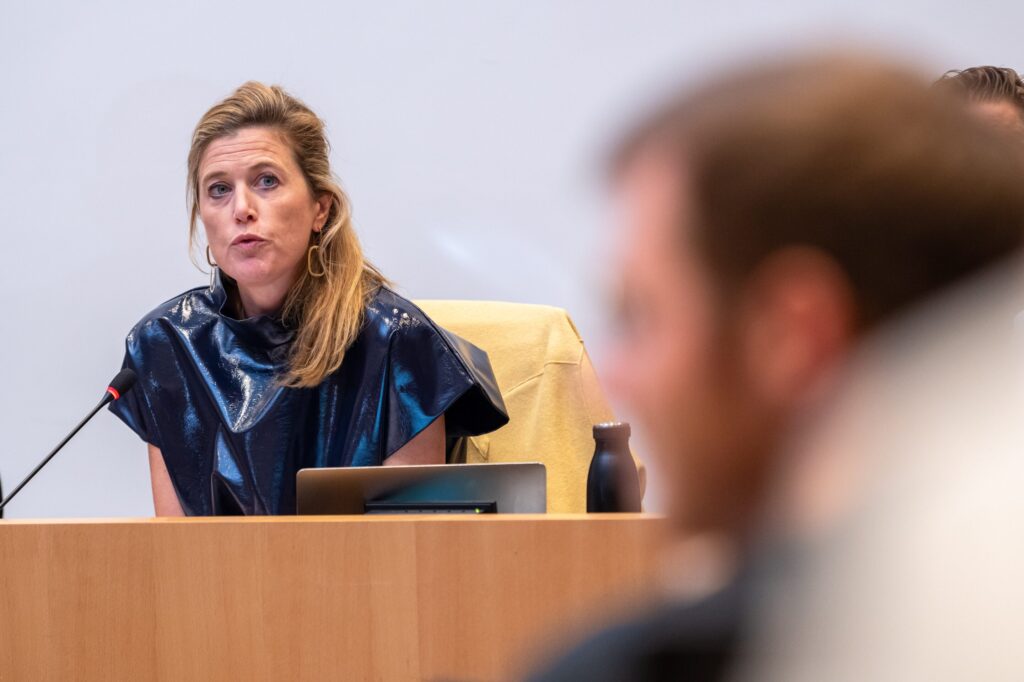
The Brussels public prosecutor's office is investigating the role of Justice Minister Annelies Verlinden (CD&V) in awarding the flopped i-Police digitalisation project to French IT consultancy firm Sopra Steria.
Verlinden awarded the project to the French bid while she was Minister of the Interior in the previous Flemish government. The public prosecutor told Le Soir and De Standaard that it is investigating the minister's role in a broader probe into embezzlement of public funds and potential conflicts of interest.
According to the ministerial office, Verlinden herself asked to be interrogated as part of the investigation. It supports the decision to continue the investigation, "as it involves the role of a minister."
"We therefore understand that this is an investigation at the level of the public prosecutor’s office into the facts of the i-Police case, the aim of which is to ensure that all elements of the case can be taken into account in the investigation, without this being directed specifically against the Minister," said the ministerial office.
Related News
- Trapped in the English bubble: Living in Belgium for years without French or Dutch
- Stolen, forgotten or taken home: How Belgium lost track of more than 2,700 works of art
- Three unwritten rules: How to become a true Belgian
The i-Police project aimed to upgrade information technology (IT) tools for Belgium's Federal Police to modernise its internal systems.
The first contract was awarded in 2021 to Sopra Steria, when Belgium earmarked €299 million for the project until 2027.
In December 2025, Verlinden's successor, Bernard Quintin (MR), officially pulled the plug on the project, citing a lack of progress despite the €75.8 million paid out to the French company.
Before becoming minister of the Interior in 2021, Verlinden was co-managing partner at the Belgian branch of international law firm DLA Piper. Alongside two colleagues, she represented Sopra Steria in a case before the EU’s General Court in Luxembourg.
Verlinden has denied any connection between her legal work for Sopra Steria and her ministerial role. She explained that talks with Sopra Steria about i-Police had already been ongoing for years before she became minister. Furthermore, all procedural rules were followed, and the contract’s daily management was led by the police.
