
After nights of unrest following Morocco’s matches at the Africa Cup of Nations, the atmosphere in Étangs Noirs, Molenbeek, took a markedly different turn on Wednesday, 14 January.
Following Morocco’s latest win against Nigeria, celebrations unfolded without any trouble, thanks largely to a community-led prevention initiative involving local residents, associations and elected officials.
Just days earlier, the same square had been the scene of repeated clashes. On Monday 29 December, after Morocco’s final group match, celebrations quickly spiralled into unrest.
According to the Brussels-West police zone, bins were set on fire, fireworks were launched horizontally and urban furniture was damaged. One person was administratively arrested, police reports were issued for arson and misuse of fireworks, and CCTV footage was used to identify those involved. Firefighters intervened in eight outdoor fires across Brussels that evening.
A similar scenario unfolded again on Friday, 9 January, after Morocco’s victory against Cameroon. Around 11 pm, groups of rioters vandalised street furniture and fired mortars towards police officers. Water cannons were deployed to disperse the crowd — a scene that had become all too familiar in the Étangs Noirs neighbourhood.
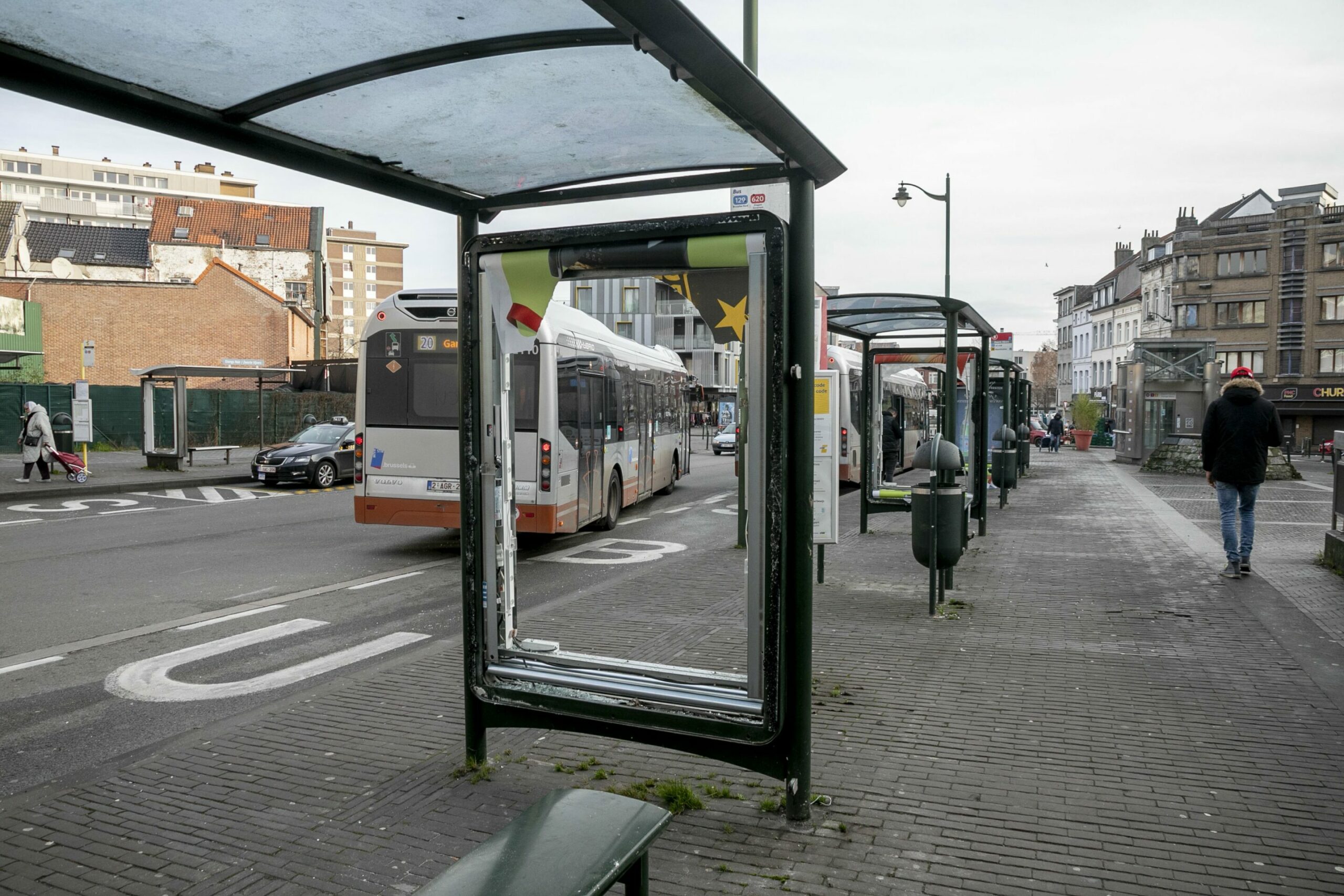
Illustration picture shows a destroyed bus shelter in Etangs Noirs on New Year's Day 2022 in Brussels. Credit: Hatim Kaghat/Belga
A different approach on Wednesday night
Faced with the risk of renewed violence ahead of the semi-final on Wednesday, authorities had announced reinforced security measures: the Étangs Noirs metro station closed at 9 pm, police presence was increased and some local businesses shut early.
But on the ground, it was above all dialogue and community presence that ensured the evening went smoothly.
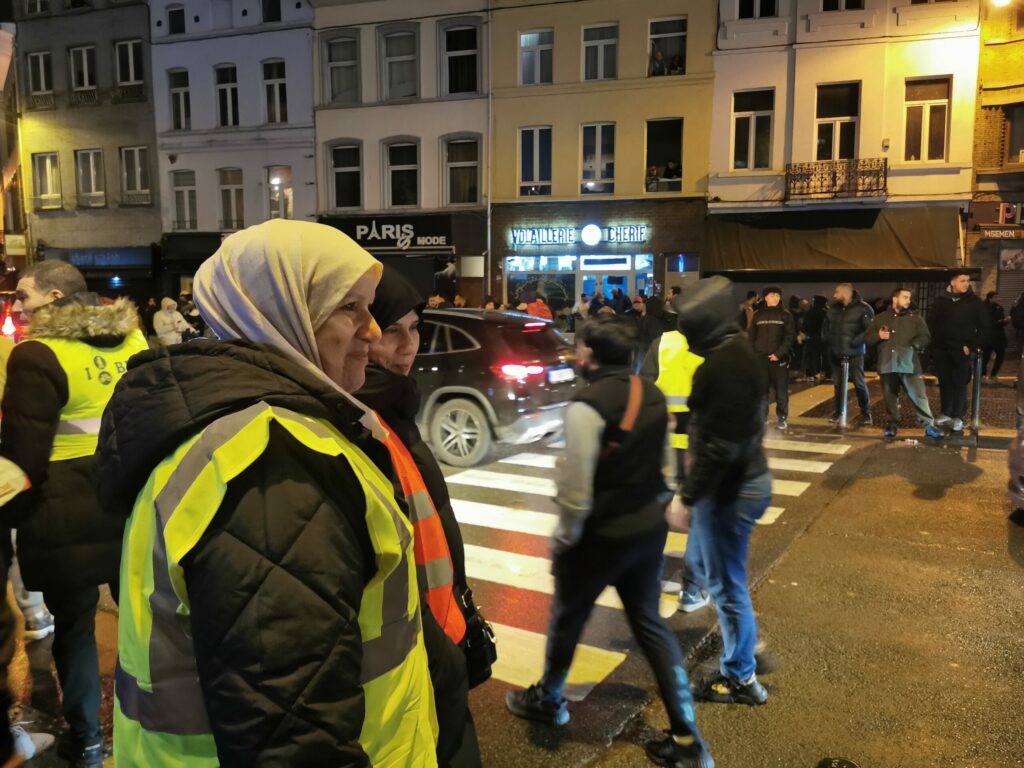
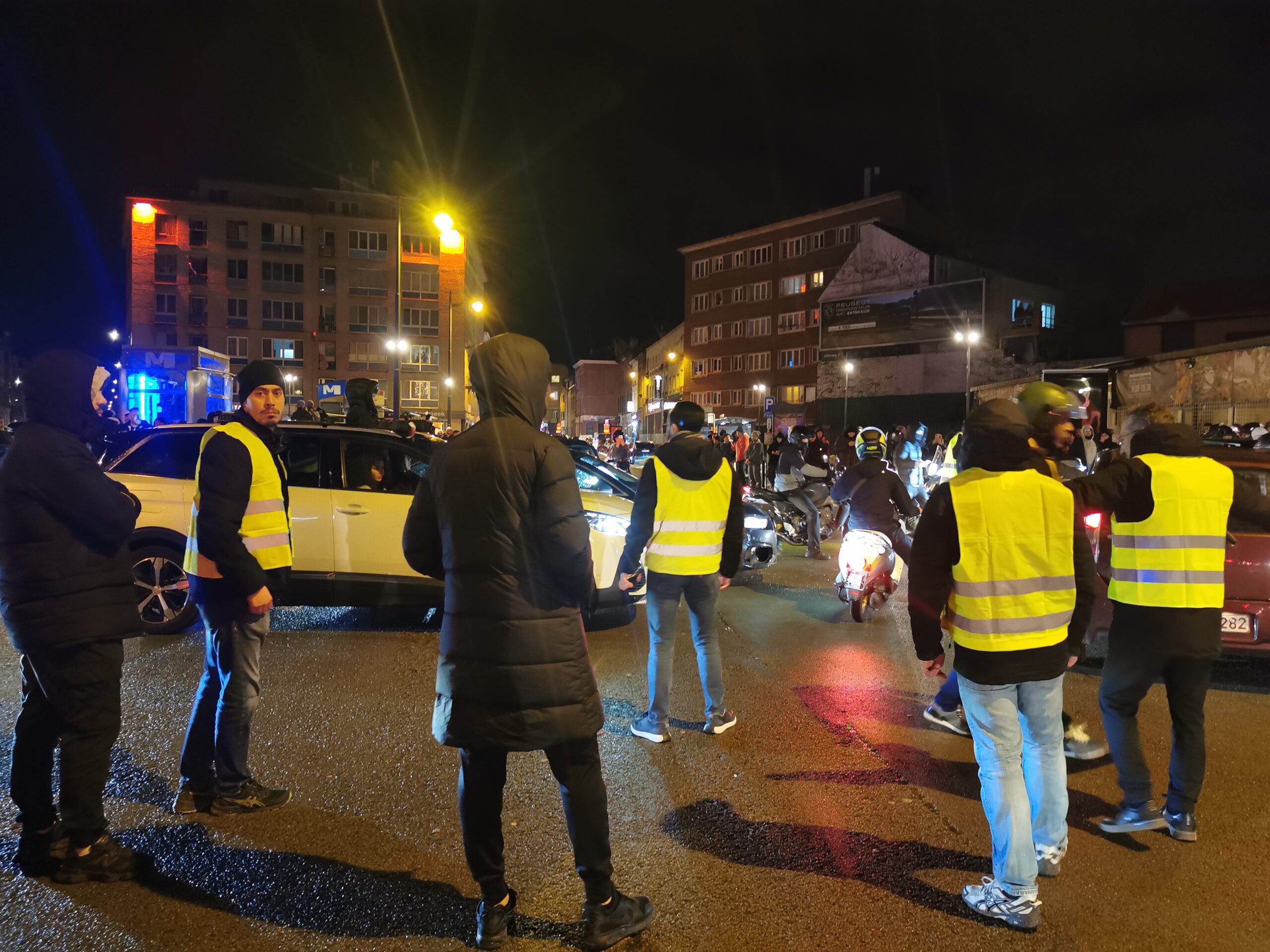
Around 30 people wearing yellow vests, many of them local residents and members of community associations, positioned themselves around the square after the game. Among them was Abdel Bohlahl, head of the ASBL Mini Molenbeek, an association based on the Étangs Noirs square and focused primarily on sport, particularly indoor football.
"Prevention worked, thanks to dialogue and solidarity,” Bohlahl told The Brussels Times.
Familiar faces instead of confrontation
The evening began in a festive atmosphere, with residents gathering to watch the match together at L’Amical, a local café near the square. Around 50 people attended. Before kick-off, participants discussed how they would organise themselves, how to intervene if necessary and how to coordinate their presence.
Once the match ended, they moved towards the square. Traffic increased quickly, with cars, scooters and motorcycles circulating, and fireworks lighting up the sky. That is when the adults put on their yellow vests to make themselves visible.
“We were there to help people who have difficulty celebrating calmly,” Bohlahl explains. “We are not the police. We are familiar faces - people who grew up here, who live here. That makes a huge difference.”
Rather than banning celebrations, the group focused on setting limits: encouraging people to enjoy themselves, but reminding them to keep fireworks aimed upwards and to respect residents, vehicles and public space.
“As long as fireworks were fired into the air, everything was fine,” Bohlahl says. “The problem is when they’re aimed at cars or people.”
Morocco fans celebrate in Molenbeek. Credit: Mateusz Kukulka/Belga
No damage, no clashes, no police intervention
The result was striking. Unlike previous nights, no bins were set on fire, no street furniture was damaged and no fights broke out. Police only intervened briefly to regulate traffic congestion, without any confrontation. “It was great. Honestly, it was a success,” Bohlahl says.
He also praised the presence and involvement of local elected officials, notably Rachid Ben Salah (PS), the municipal councillor behind the initiative, as well as Oumar Diallo (PTB), counsellor for youth affairs, and Dirk De Block, first counsellor who were present on the ground throughout the evening.
“When fireworks were fired in the wrong direction, they didn’t hesitate to go and talk to the young people directly,” Bohlahl explains. “They didn’t forbid anything - they just said: ‘Celebrate, but do it safely.’”
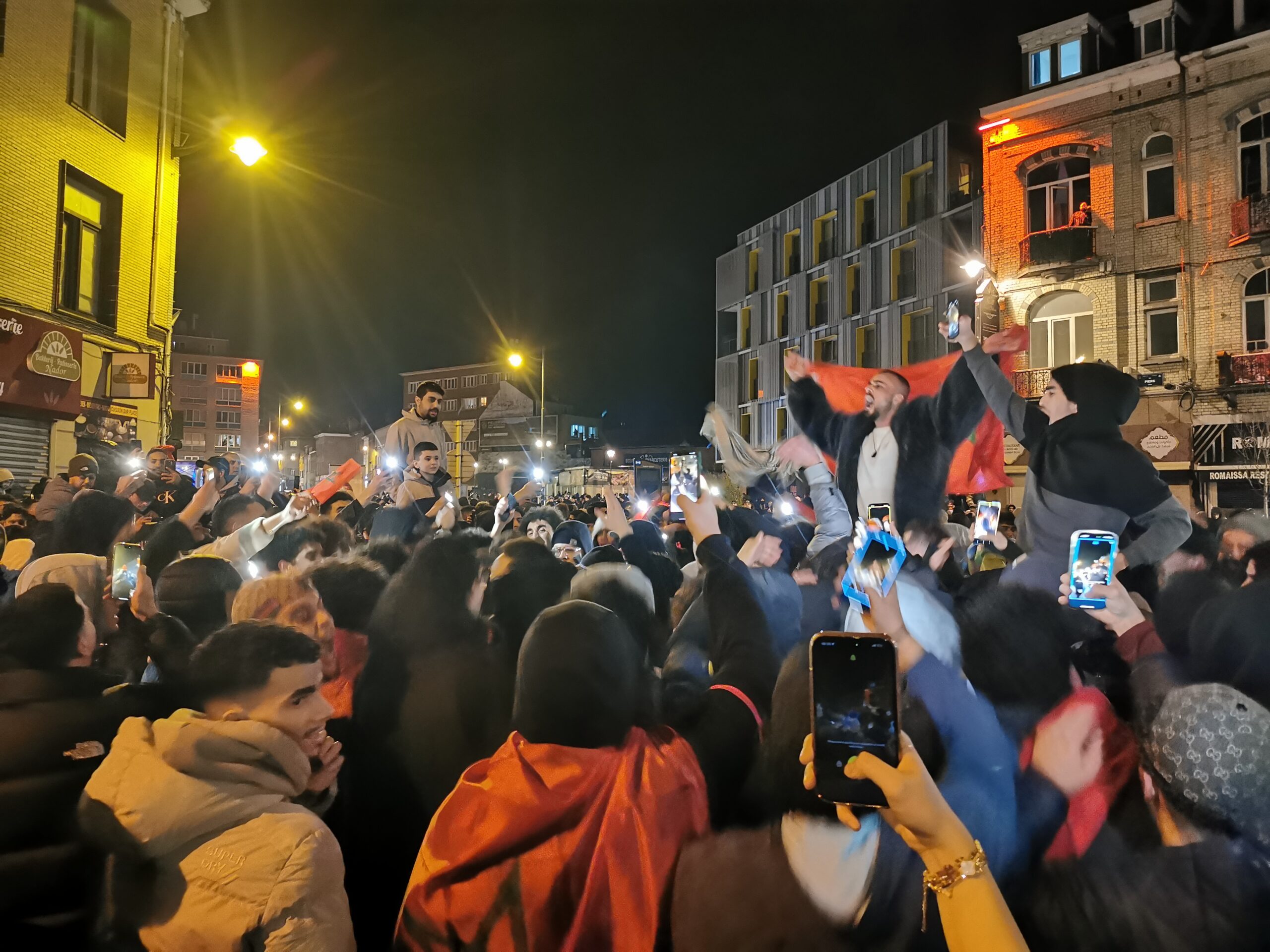
Moroccan fans celebrate in Molenbeek. Credit: Mateusz Kukulka/Belga
Addressing deeper issues
For Bohlahl, the contrast between Wednesday’s calm and the violence seen earlier in the tournament highlights deeper issues.
“When you see bus shelters destroyed, you can sense there is real distress among those young people,” he says, pointing to a mix of frustration and crowd dynamics.
He recalls speaking to a young man holding a metal pole during earlier unrest. “He had no bad intentions. When we talked to him calmly, he understood and apologised. That’s why prevention matters.”
The initiative will be repeated for the final game that will take place tonight, with the same objective: changing mentalities and reminding people that Étangs Noirs is first and foremost a residential neighbourhood. “There are families here, people who work the next day,” Bohlahl says. “They deserve respect.”
As Morocco’s historic run in the tournament continues — the team now ranks eighth in the FIFA standings — Wednesday night showed that celebration and calm do not have to be incompatible, when a community chooses dialogue over confrontation.
