
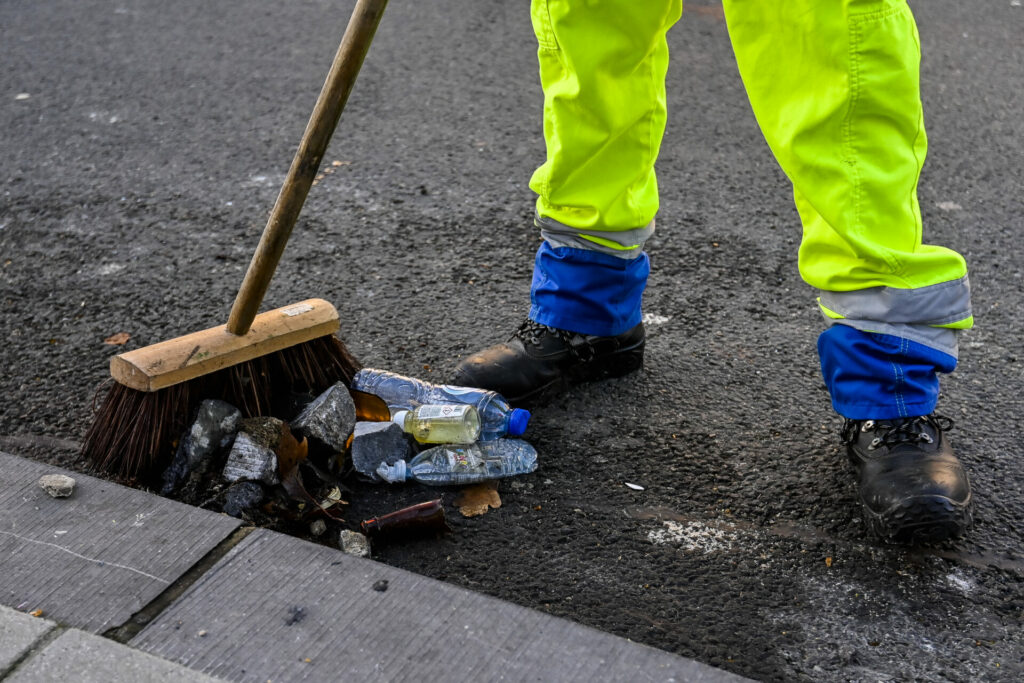
Last week, The Brussels Times invited readers to come up with solutions to the city’s longstanding problems with dirt and insalubrity.
The issue of waste collection has been at the forefront of people's minds of late as a result of refuse collectors going on strike. In some communes, stinking bags of rubbish lay uncollected for days, causing immense distress to many residents.
But the problem goes far deeper than that. In addition to rubbish bags lining the streets, Brussels has a littering problem and a serious dog fouling issue to boot. Many readers have also complained about the prevalence of public urination in the city.
The Brussels Times has been documenting these cleanliness issues for many years without seeing much in the way of improvement. Guest contributor Derek Blyth, who has been resident in Brussels for several decades, says it has been a problem as long as he has lived here.
So what can be done to restore people’s pride in the city and make Brussels worthy of its status as the capital of Europe? Here are some of the ideas put forward by our readers via email and social media.
More litter bins around the city
To address the litter problem, a number of readers suggested simply installing more litters bins in Brussels. Edit argues there are “too few small garbage bins on the streets – you have to walk a lot to find one. She thinks there should be "a lot more of them – even every 100 meters.”
Introducing a deposit return system
Domantas, meanwhile, highlighted an interesting solution for dealing with the bottles and cans littering the streets of Brussels. He suggests introducing a deposit return system “for all kind of bottles or cans”. Under this system, consumers would be incentivised to return containers with a small cash reward – typically 10 to 25 cents.
This system was supposed to have been introduced in Belgium in 2025, but has not yet been implemented.
Fines
Many readers are big advocates of fining people for bad behaviour. Yulia says “those who deliberately engage in antisocial behaviour and continue to litter the streets with trash or dog faeces should be mercilessly fined”.
Gert thinks we need to look east for inspiration: “Do like Singapore. Fine heavily, in case of non-payment – work, punishment and prison.”
For Caroline, scrupulously enforcing fines would act as a big deterrent to dog owners who refuse to pick up their pets’ rancid parcels. “Has anyone ever been fined for not picking up poo in Brussels?” she asks.
She suggests a novel solution: scooter patrols. “I remember years ago in Dublin there was a really vigilant park warden who went around on a scooter,” she writes. “I was out with my dog and ran out of bags. The warden would stand beside a pooing dog with his notebook in hand. I used a £20 note to pick up the dog poo as it was cheaper than the £50 fine at the time.”
Doggy DNA
Staying with dog fouling, Judy thinks a healthy dose of public shaming would do the world of good: “If doggy DNA was added to the DogID at the time of registration, random examples could be taken of street poo and the offending dog and owner could be identified. Name, shame and fine the owner. Once news gets out surely there would be fewer offenders.”
Judy also thinks that given the difficulty some dog owners might have in bending down to pick up poo, they should be offered “pooper scoopers with long handles” when registering their dogs.
Plastic bins and underground containers
Writing via email, Anders spoke for many of you when he called for the introduction of plastic bins for each household to replace the current rubbish bag system in place in several communes: “This seems to me like the very obvious first step to make the city cleaner and it's not rocket science either."
Amos believes we need to take inspiration from other cities in this domain. He says each household should “get their own trash can à la Madison, Wisconsin, or Liverpool, England”.
But some readers pointed out that in a city like Brussels, such a system would be difficult to implement, given that there is limited space on the streets for plastic containers and many older apartment buildings do not have communal spaces big enough to house several plastic bins.
Others, like Edit, believe in a more communal approach: “Why can't they put BIG garbage bins in different colours, at reasonable distances at the end of the streets, where people can put their garbage bags all week long, which can then be emptied by the garbage truck at any time?”
According to Amos, this is standard practice in many cities. “In Almaty, Kazakhstan and Valencia, Spain, each street has designated large containers for large and bulky garbage,” he writes.
Another popular solution for dealing with household waste is the use of underground waste disposal units. Domantas thinks the trash problem is “very easy to fix”. “Just copy other European cities: get rid of trash bag system and introduce underground bins for trash,” he says.
The Brussels government is allocating €4 million this year to create 100 new sorting sites – including underground waste containers.
Education, education, education
Many readers think that education is the key to greater cleanliness in the city. Rosine thinks it all starts with education in schools. “Children have to tell their parents, ‘mam, dad, you littering the streets is dirty behaviour’,” she writes.
Yulia agrees: "Change people’s mindsets through social campaigns, education, and role models, targeting first of all young and active groups."
Keep it simple, stupid
José thinks that the easier we make it for people to dispose of their waste, the better things will be. “The only way to improve this is making it extremely easy (and cheap) to get rid of trash properly,” he argues. “I don’t know how it’s in Brussels, but in Flanders I have the impression that it’s complicated to get rid of some kinds trash, especially if you don’t have a car.
"The use of container parks are linked to identity card, which a lot of the people doing this don’t have. Regarding every day trash, the bags being so expensive probably comes of as a ridiculous expense to people who are living day to day.”
Edit, meanwhile, implores the city authorities to simply start “thinking logically” on the issue: “Why do they have to schedule some kind of garbage collection almost every day (and many people mix up the days), so the streets are full of garbage bags almost every day of the week?”
The new Brussels Minister-President, Boris Dilliés (MR), has promised to take action on the issue of public cleanliness. He told The Brussels Times on Monday that penalties for fly-tipping will be strengthened, the waste collection system will be reviewed, and underground containers will be installed.
