
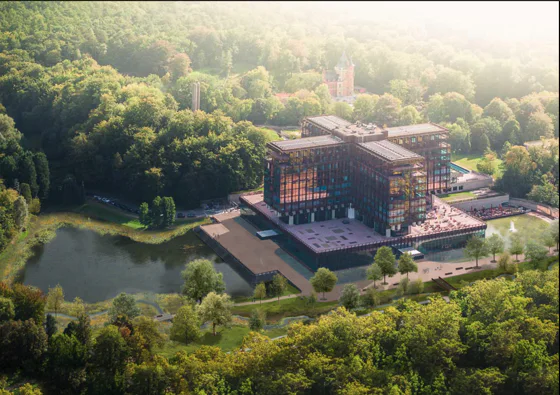
The Woluwe in Watermael-Boitsfort and the Ukkelbeek in Uccle are both being brought back into the open as part of a broader effort to restore waterways, boost biodiversity and better protect Brussels against flooding and heatwaves.
For much of the 20th century, many of Brussels' streams and rivers were channelled underground to make way for urban development. Today, that trend is being reversed.
In southern Brussels, two separate projects will see sections of the Woluwe and the Ukkelbeek return to daylight, reflecting a growing regional strategy to reconnect the city with its waterways and harness their environmental benefits.
In Watermael-Boitsfort, Brussels Environment plans to uncover a section of the Woluwe currently buried alongside Boulevard du Souverain, opposite the former Royale Belge headquarters. The project will restore between 500 and 650 metres of the river between Place Wiener and Hermann-Debroux.
The Woluwe, which rises in the Sonian Forest before flowing through several Brussels municipalities and eventually joining the Senne near Machelen, will regain a more natural and gently meandering course. A new pedestrian promenade will also be created along the riverbanks, allowing residents and visitors to reconnect with the water.
"Water is essential in the city, and awareness of this continues to grow," said Brussels Secretary of State for Environment and Climate Ans Persoons (Vooruit). "For a long time, water was hidden away; today, we are making it visible again."
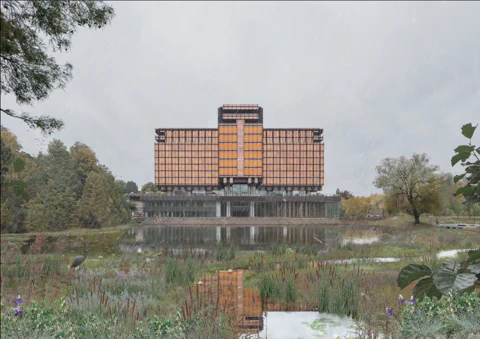
The Royale Belge building. Credit: Cabinet Ans Persoons
Ukkelbeek restoration underway
A few kilometres away in Uccle, works began on 1 June to restore part of the Ukkelbeek in the lower section of Wolvendael Park.
The project will reconnect the stream with the park's pond through an open-air channel, while the pond itself will be enlarged to function as a natural stormwater basin. During periods of heavy rainfall, it will temporarily store runoff water from the park and the nearby Chemin du Crabbegat.
Municipal authorities say the project will not only improve flood management but also enhance biodiversity. Connecting the stream and pond is expected to improve water oxygenation and quality, while invasive vegetation will be replaced by aquatic plants and native woodland species. No tree felling is planned as part of the works.
