
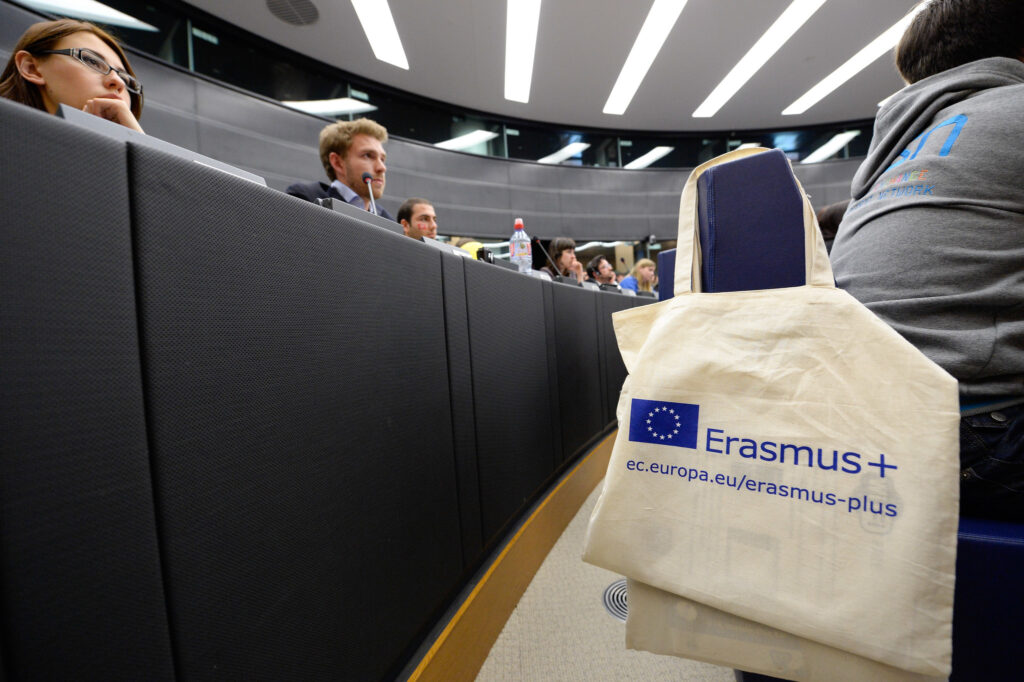
The British government confirmed on Tuesday that the UK will rejoin the EU’s Erasmus+ youth exchange programme for one year, starting 1 January, with applications for programme funding opening in November, followed by programmes starting from mid-2027.
The move follows an agreement reached at the EU-UK summit in May, as part of the Labour government’s wider effort to rebuild ties with the European Union after Brexit.
"This will enable tens of thousands of citizens to learn, study and train on the other side of the Channel and foster person-to-person ties," EU Commissioner Maroš Šefčovič said at the time.
News that UK organisations will be able to bid for programme funding was confirmed by the UK's Minister for European Relations Hamish Falconer this week. "I would like to inform the House that the UK will reassociate with Erasmus+ from 1 January 2027," Falconer told the UK's Parliament.
"Applications open this November, and they are not simply for undergraduates and other university students, but for educational institutions of all kinds."
Between November and February 2027, universities, vocational, and adult education providers, and others can bid for programme funding. Students can then apply to join successful programmes from June 2027, with most taking place in the 2027/28 academic year starting in September.
Alongside the UK, Switzerland will also associate with Erasmus+ for 2027, widening access to non-EU opportunities for young people and youth-linked programmes for EU citizens.
While the previous Erasmus scheme was focused on university mobility exchanges, Erasmus+ allows shorter exchanges of a few days.
The programme has also expanded to include work placements and project-based activities, bringing young people together to exchange ideas on shared European problems.
The opportunities aren't limited to students and young people; teachers and youth service providers can also apply for work shadowing and tailored projects.
Caillum Hedderman, President of the European Youth Forum, told The Brussels Times that welcoming the UK back makes Europe stronger.
"Erasmus+ supports volunteering, youth exchanges and non-formal learning, and this move restores UK youth organisations’ access to European funding, so they can reconnect with partners across Europe and create projects with and for young people," he added.
The UK government previously said the programme could benefit up to 100,000 people in the UK each year. Britain is expected to contribute about €648 million for its participation in the 2027-28 academic year. However, UK participation beyond 2027 is not guaranteed.
Jamie Arrowsmith, Director of Universities UK International, told The Brussels Times that long-term certainty is essential to ensure people can plan ahead.
“Looking beyond 2027, we would strongly welcome the UK’s continued participation in Erasmus+. Long-term certainty would allow students, staff and universities on both sides to plan ahead, deepen partnerships and create more opportunities for international study, training and collaboration," he said.
"One year is a start, not a guarantee," Hedderman stressed, "young people need to know these opportunities are here to stay, and the next EU budget must invest far more in Erasmus+."
