
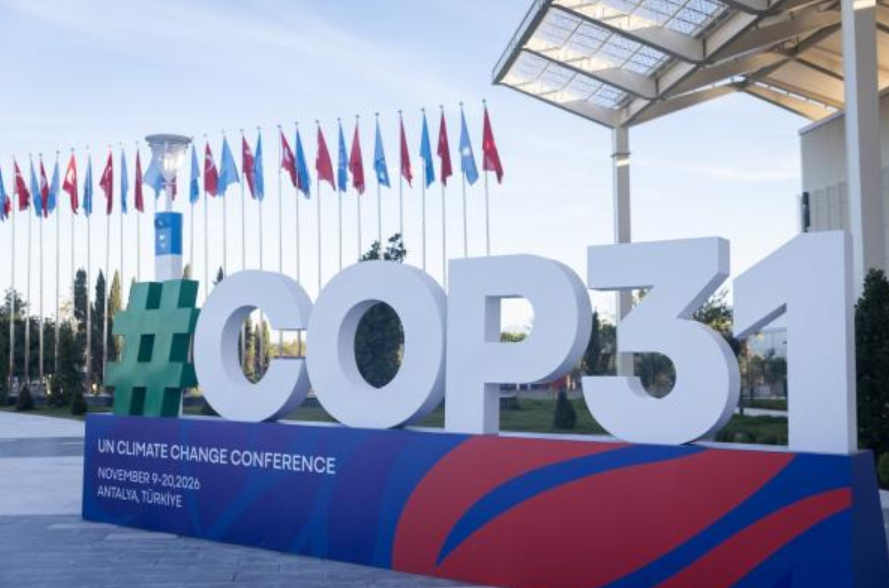
The Antalya climate summit ended without agreement on a final text after countries failed to bridge deep divisions over fossil fuels.
At the closing session, summit president Murat Kurum confirmed that the draft put forward by the Turkish and Australian presidencies had not won consensus and was therefore not adopted. He said talks would continue, although several delegations, including Belgium’s, had already left the summit.
“We recognise that there is no consensus on this document. As a result, these decisions have not been adopted,” said Kurum, Turkey’s environment minister, during a chaotic final meeting. Leaving the hall on Sunday afternoon, he said the presidency had “done everything we could.”
Related News
- 'I have HIV. Now what do I do?' A Brussels man on life after diagnosis
- 'Breathing space': Brussels to get large new park near Midi station
- Belgium's biggest mining disaster: The black thread connecting Fano and Marcinelle
Speaking for EU countries, Ireland’s climate minister Darragh O’Brien voiced “deep disappointment” with the draft. “We will not accept a final declaration in which fossil fuels are not even mentioned,” he said, accusing oil-producing states of “holding the climate conference hostage.” EU climate commissioner Wopke Hoekstra described the summit as a failure.
Small island states, which are among the hardest hit by climate change, also expressed deep disappointment. China and Saudi Arabia, by contrast, said they regretted the rejection of the text.
The dispute over fossil fuels proved impossible to resolve. Turkey and Australia, which were leading the summit, had hoped to secure approval on Sunday morning for a compromise text that made no explicit reference to oil, gas or coal, and instead referred only in general terms to an agreement reached three years ago on “transitioning away from fossil fuels.” Critics said that was unacceptable.
Climate summits frequently overrun, but this meeting has set a new record, running at least 46 hours beyond its scheduled end. The delay may increase further as delegations continue to respond to the outcome, or lack of one.
The previous record was 44 hours of extra negotiations at COP25 in Madrid in 2019.
It is the first time since the 2009 Copenhagen climate summit that participating countries have failed to agree on a final text.
