

Uncertainty about what will happen in the Middle East conflict continues to dominate the news from the region.
The situation is unbearable for those directly affected by the traumatic events since the 7th October 2023. It is also matter of deep concern for the EU. Despite its economic and political leverage, the EU has largely been sidelined in the talks about ending the senseless wars in the region.
Will the Strait of Hormuz be reopened and the talks between the US and Iran resumed after the failed Memorandum of Understanding (MoU) between them? The memorandum left the conditions for the opening unclear and did not mention the nuclear issue and other key issues. Will the fragile situation escalate to new mutual strikes and even full-scale war?
In Lebanon, will the trilateral agreement between the US, Lebanon and Israel on the disarmament of Hezbollah and the withdrawal of Israeli troops be implemented in good faith by both sides? Will the ceasefire continue to be violated, Lebanon fail to disarm Hezbollah and Israeli troops continue to occupy a security zone in southern Lebanon?
In the West Bank, the far-right Israeli government has lost control of the situation and does not reign in rampant settler violence against Palestinians. The army is carrying out military operations in refugee camps and does not interfere against violent settlers from illegal outposts and farms that have been expanding. The situation risks escalating to a new intifada.
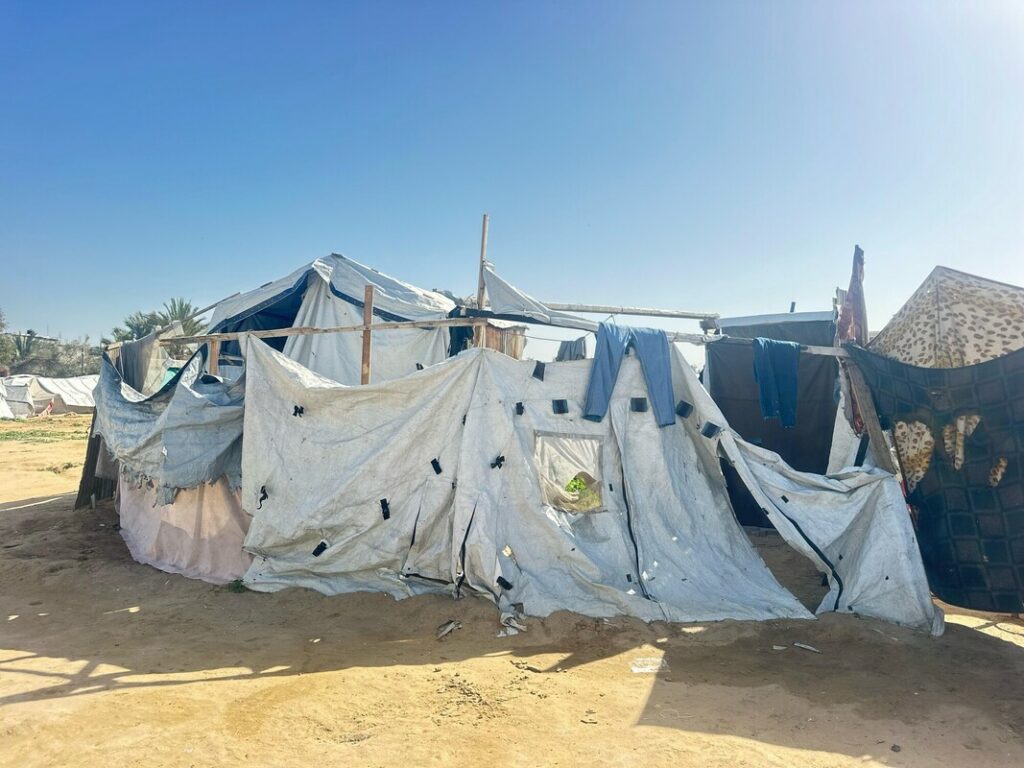
In Gaza, the humanitarian situation continues to be disastrous. The talks about the recent 15-points road map have stalled since the roadmap was launched by President Trump’s Board of Peace two weeks ago.
Path to political solution
The roadmap calls for the disarming of Hamas, the gradual withdrawing of Israeli troops, deploying an international stabilization force (ISF), allowing the entry of a Palestinian national committee for the administration of Gaza (NCAG), increasing the delivery of humanitarian aid, starting early recovery actions and facilitate a “credible political path that achieves self-determination and statehood”.
The intention was that the modalities of the implementation would be prepared within a 2-weeks period after all parties had approved the plan. That period expires this week but can be extended.
Hamas had no choice but to accept the roadmap and to engage within its framework after pressure from Turkey and Qatar who mediated between the them and the US. In the beginning, Israel declined to comment on the roadmap, claimed that it had not been consulted on it and raised reservations but now its government has rejected it out of hand.
"Israel does not accept the 15-point document,” Prime Minister Benjamin Netanyahu said after a government meeting this week. “The IDF will not carry out any withdrawal until Hamas is genuinely disarmed, and it will continue to thwart threats against our forces and citizens."
“And when I say the disarming of Hamas, it means heavy weaponry, lighter weaponry, all weaponry. And we are talking about genuine disarmament, not fictitious disarmament. So long as I am Prime Minister, a Palestinian state will not be established, neither in Gaza nor in Judea and Samaria (Westbank).”
Bulgarian diplomat Nickolay Mladenov, the High Representative of the Board of Peace, tried to convince him that the roadmap is in Israel’s best interest. He met him halfway as regards the gradual withdrawal of Israeli troops in response to a verified disarmament of Hamas and accepted Israel’s right to react to imminent threats against its troops.
What is not acceptable were Israel’s continued violations of the 20-point peace plan which it accepted last year. Since the first phase was implemented and the Board of Peace established, Israel has used the slightest violation of the peace plan by Hamas as a pretext to respond with strikes which killed more civilians than armed Hamas members.
Roadmap built on verification
The peace plan for Gaza stipulated that Hamas members would be granted amnesty if they laid down their weapons or be given safe passage to third countries but Israel has continued to hunt them down during the ceasefire as if the war towards ‘total victory’ continued. Hamas has resisted disarmament, and regrouped in the area still under its control but does not pose any real treat against Israel.
Well-known Israeli military correspondent Amos Harel writes in his new book, ‘Anatomy of a Failure’ that the Israeli intelligence bodies ignored all signs of any imminent Hamas attack on 7 October 2023. The army units in the area were outnumbered by Hamas. Organized military response was mobilized too late when in most cases the inhabitants had been massacred or taking hostages.
Those who have returned to the communities close to the border still feel threatened by Hamas and oppose any Israeli withdrawal. Netanyahu refuses to take any responsibility for what happened during his watch – ca 15 years of almost uninterrupted rule – and opposes any independent state commission of inquiry.
More importantly, he continues to be pressured by his ultra-nationalist and messianic coalition partners who are inciting to continuing the war, displacing the Palestinians from Gaza and establishing settlements there. Ahead of the parliamentary elections on 27 October, his overriding interest is not Israel’s long-term security but political survival.
But the roadmap must be given a chance. Mladenov stressed this week that its goal is to make sure that Gaza is never again a threat to Israel’s security and that what happened on 7 October will never happen again. There has never been any trust between the two sides, especially after 7 October but the roadmap is not built on trust, he added.
“I’m not building any of this on the basis of trust, and none of us are, and we’re very clear-eyed about the risks going forward. “We’re building it on verification, and this is pretty much the basic premise — which I would like both sides to really trust — that because of the verification process, we actually have a chance.”
Better use of EU’s toolbox
The EU welcomed the roadmap. In a statement on behalf of the EU, High Representative Kaja Kallas described it as a “crucial step to make sure that Hamas is disarmed and never again poses a threat to the security of Israel.” She called on all parties to approve and implement the agreement without delay.
The EU contributes to the implementation of the peace plan through the EU Border Assistance Mission at the Rafah Crossing Point (EUBAM) and the EU Police and Rule of Law Mission for the Palestinian Territories (EUPOL COPPS). It also finances humanitarian aid and supports the reform programme to the Palestinian Authority which offers the only alternative to Hamas.
But the two missions are poorly implemented or ignored. The Rafah border crossing has already been opened under the supervision of EUBAM but traffic in both directions continues to be limited.
Among those in Gaza who are trying to leave are students who have been granted scholarships for studies in EU Member States. However, the EU lacks any coordinated policy to facilitate their travel to Europe. Contrary to other Member States, Belgium does not accept on-line visa applications and refuses to use the established procedure for leaving Gaza via another crossing point.
Thousands or Palestinian police have reportedly been trained by EUPOL COPPS but have not been deployed in Gaza pending the transition to the second phase of the peace plan and the implementation of the roadmap.
The EU could make better use of its ‘toolbox’ of financial and political means, including targeted sanctions, economic incentives and support to common infrastructure projects in the region, and maximize its leverage. The lack of consensus or qualified majority for EU’s foreign affairs and security policy is an obstacle but also too often used as an excuse for inaction.
Need of EU election observers
EU actions are needed urgently to prevent escalation in any of the crisis areas and preserve the ceasefires. The EU and its Member states need to become more involved in contributing to the implementation of the peace plans and roadmaps in place.
The period ahead of the Israeli elections in October, followed by elections in November in the Palestinian territories, will be critical. To stay in power, the current Israeli government continues a militant policy which might derail the elections. The outcome of the elections might be questioned if the government is defeated.
According to the opinion polls in Israel, the government is lagging behind the combined opposition. For the opposition to achieve a majority, it must present a unified front and accept the support of the Arab parties. The risk of election manipulation and on-line interference has never been bigger and Israel’s president has warned against the threats to the integrity of the elections.
Israel is not a member of the EU and does not benefit of any EU safeguards if it makes a turn to authoritarianism which abolishes liberal democracy and distances itself from the values that were enshrined in its Declaration of Independence. It must rely on itself to take care of its democratic institutions, preserve the delicate system of checks and balances, and survive in a hostile environment.
The least the EU could do is to consider sending election observers or an election expert mission to monitor the elections on the ground and protect their integrity. If the Israeli and Palestinian authorities have nothing to hide and are open to external monitoring of the elections, they should not hesitate to invite EU observers.
