
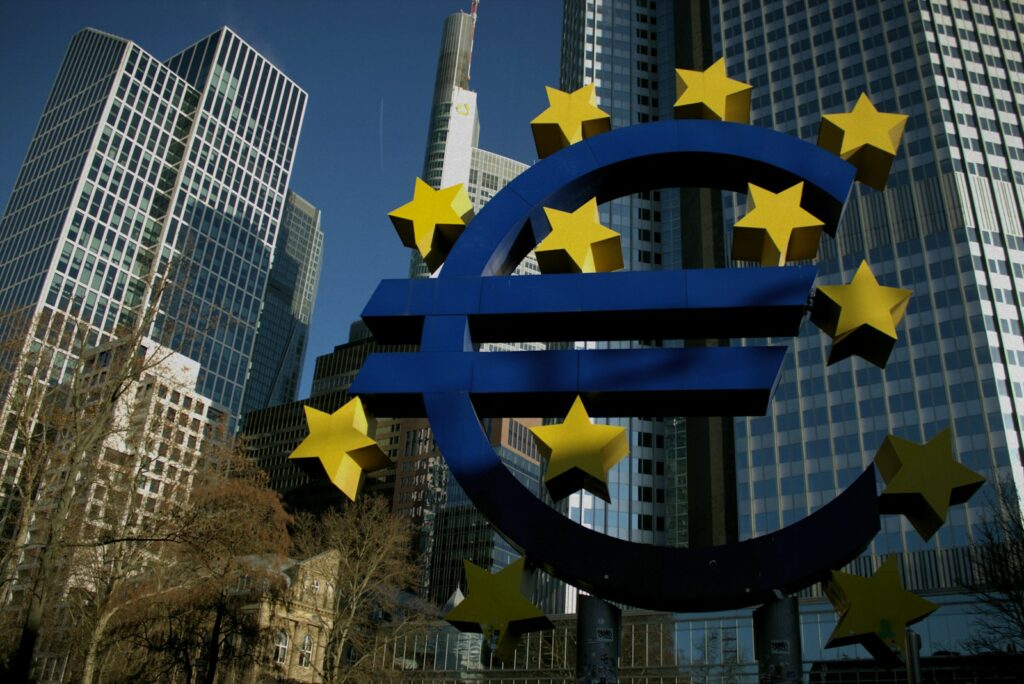
The European Central Bank (ECB) has refused to provide a backstop for a €140 billion 'reparations loan' to Ukraine funded by frozen Russian assets held in Belgium, the Financial Times reported on Tuesday.
At the onset of Russia’s full scale invasion of Ukraine in March 2022, the EU froze around €210 billion worth of Russian assets. Most of these assets (approximately €190 billion) are housed at Brussels-based financial clearing house Euroclear.
Until now, European authorities have only used the interest on frozen Russian assets to fund Ukraine, but the EU wants to go a step further and touch the assets themselves, using €140 billion of the funds currently held at Euroclear to keep Ukraine financially and militarily afloat for the next two years. Experts estimate Ukraine will need around €135 billion in financial support through 2026-2027.
Belgium has strongly protested the plan for fear of financial and legal repercussions. Belgian Prime Minister Bart De Wever has called on EU Member States to provide protection for Belgium with firm guarantees that they will share the risk.
According to a report in the Financial Times, European Commission officials hoped that the ECB would step up as a lender of last resort to Euroclear. However, the ECB said this is "not under consideration". The ECB manages the euro currency and conducts monetary policy for the 19 EU Member States that have adopted it.
According to the ECB's internal analysis, the proposal equates to providing direct funding to governments, violating the ECB mandate. This practice, which economists call "monetary financing", is banned in the EU Treaties because of evidence suggesting it results in high inflation and loss of central bank credibility.
Discussions ongoing
Commission President Ursula von der Leyen wrote on Monday on X that the Commission has made "good progress" on plans to unlock the frozen assets, and intends to table legal proposals this week.
Commission Chief Spokesperson Paula Pinho confirmed that discussions on alternative proposals to provide temporary liquidity to backstop the €140 billion loan have been ongoing. "We discuss with the ECB which solutions are feasible," Pinho said in the midday press briefing yesterday.
In late November, the Commission sent a letter suggesting that Member States should provide the Union with "legally binding, unconditional, and irrevocable" guarantees based on their national wealth.
On 27 November, the European Parliament also adopted a resolution calling for EU Member States to establish and implement a "legally and financially sound recovery funding scheme for Ukraine."
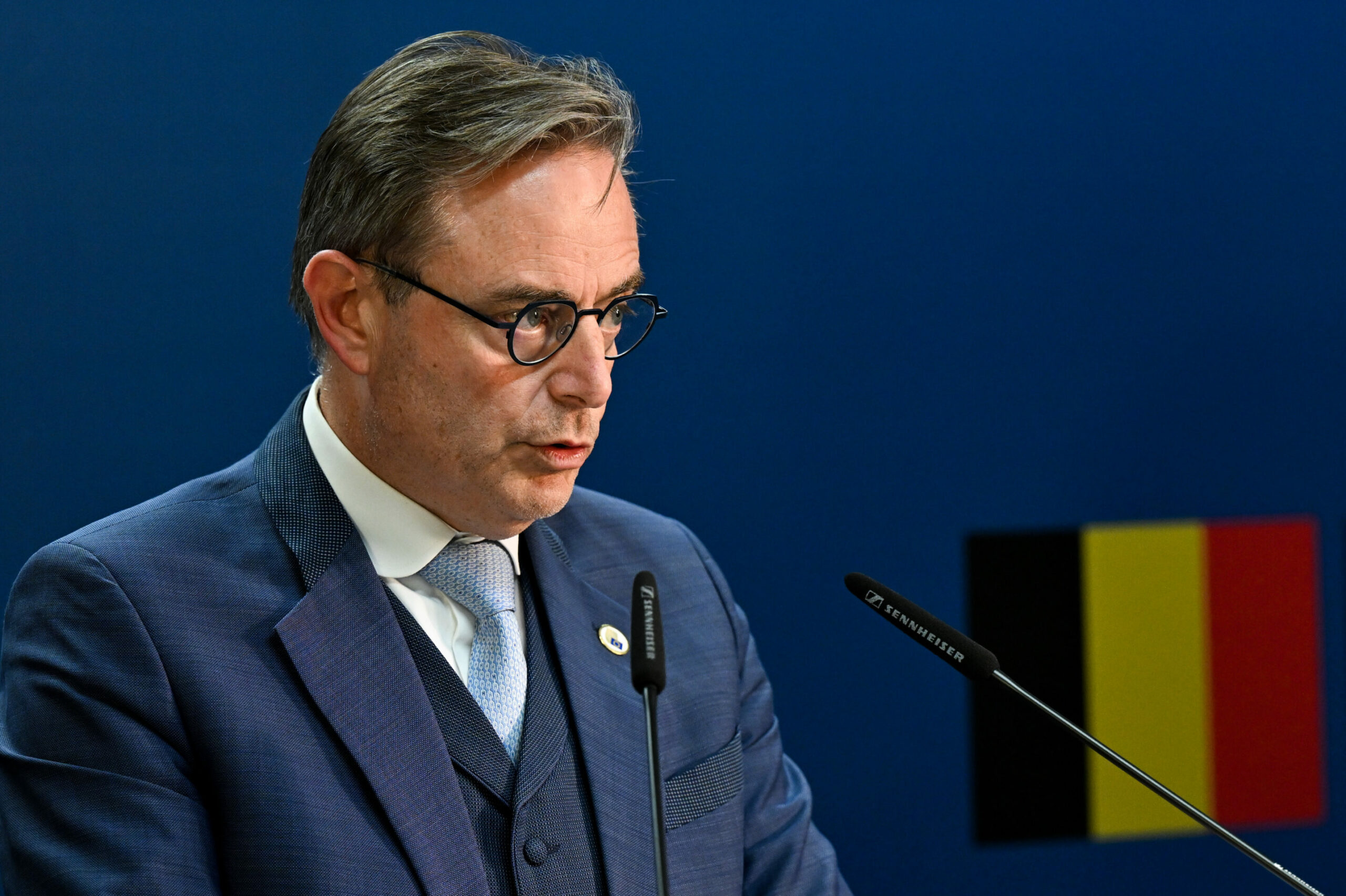
Belgian Prime Minister Bart De Wever (N-VA) speaks at the European Council in June 2025. Credit: EU
Belgium's position
Belgian Prime Minister Bart de Wever (N-VA) continues to oppose the EU initiative to use Russian assets to cover Ukraine's budgetary and military needs throughout 2026-2027.
As sanctions are extended every six months by unanimous vote, Belgium fears that a Moscow-friendly EU Member State, such as Hungary, could block the rollout, thereby unblocking the assets. This would require Belgium to return the funds immediately. The Commission will present a legislative proposal to solve this today (Wednesday).
Von der Leyen is preparing to lean on Article 122, which allows governments to decide “in the spirit of solidarity between Member States, upon measures appropriate to the economic situation,” meaning that in case of serious economic risks, a qualified majority would suffice to extend sanctions.
In a letter to von der Leyen sent in late November, De Wever called the plan "fundamentally flawed". To unblock the decision, the prime minister insists on clear and legally binding commitments from other EU Member States to share the financial liabilities in case Russia claims the assets back.
These guarantees, provided either through national budgets or the EU’s multi-annual budget, should also outlast the EU sanctions against Russia, according to De Wever.
The Belgian PM expects such commitments ahead of an EU leaders' meeting on 18 December, according to the Financial Times.
However, European governments are reluctant to sign up to what several diplomats described in comments to Politico as a “blank check”.
Euroclear and the National Bank of Belgium also sent separate letters to the EU, warning of the legal and financial risks of the decision. In an interview with Le Monde, Euroclear’s director, Valérie Urbain, said she could not rule out suing the EU.
Meanwhile, EU Member States are increasing pressure on Belgium ahead of the EU summit.
Sweden's Defence Minister, Pal Jonson, said Ukraine needs the funds to keep fighting, while the Netherlands' Defence Minister, Ruben Brekelmans, stressed that the move would show Russia that it cannot outlast European support. Germany also backed the EU plan, stressing that Ukraine must be able to expand its air defences and secure more ammunition.
EU High Representative for Foreign Affairs and Security Policy, Kaja Kallas, said Belgium must shift its position, stating that a “reparations loan” based on the immobilised Russian funds is the most realistic solution and would strengthen Europe’s position in negotiations.
The alternative solutions to using Russian assets include raising debt in the markets backed by the EU budget and bilateral agreements for individual borrowing at the national level, as outlined by von der Leyen.
Related News
- De Wever calls EU plan to use frozen Russian assets 'fundamentally flawed'
- MEPs vote for Ukraine reparations to be covered by Russia's frozen assets
- Belgium and other EU states to question Kallas over details using frozen Russian assets
- French Euroclear worker allegedly made dozens of 'suspect' trips to Russia
