
Forty years after five countries gathered in a small Luxembourgish village to dismantle Europe's internal borders, the Schengen dream might be unravelling.
Three public figures from the Meuse-Rhine cross-border region, which straddles Belgium, the Netherlands and Germany, have raised their concerns about the rise of border checks, which threaten the free movement of people and goods – a key EU principle.
Among the authors of the opinion column written in the leading French newspaper Le Monde are: the Honorary Consul of Luxembourg in Maastricht Fernand Jadoul, the Dutch municipal councillor in Sittard-Geleen Pepijn Pi Van de Venne, and the Vice-President of Limburg's Provincial Council Léon Vaessen.
They argue that exceptional border checks are now sliding into permanent measures, being particularly felt in countries like Belgium, Luxembourg and the Netherlands.
According to the trio, governments are increasingly reinstating internal border checks that disrupt the everyday reality of millions of Europeans who live, work or study across borders.
They point to the Netherlands, where more than 123,000 checks carried out over nine months resulted in just 470 refusals of entry, an effectiveness rate of 0.38 per cent, and to Belgium's expansion of so-called "entry checks" on international buses, trains and motorway rest areas.
For residents of places like Sittard-Geleen in the Netherlands, where crossing two or three borders is part of daily life, these controls are already creating delays and bottlenecks.
The three public actors say similar scenes are emerging across Europe, from Austria's border with Germany to the Luxembourg–Germany corridor and the Strasbourg–Kehl bridge.
They argue that the Covid-19 pandemic showed how quickly cross-border life can collapse when internal frontiers are tightened, and warn that re-erecting borders in deeply integrated regions is unworkable without real social and economic cost.

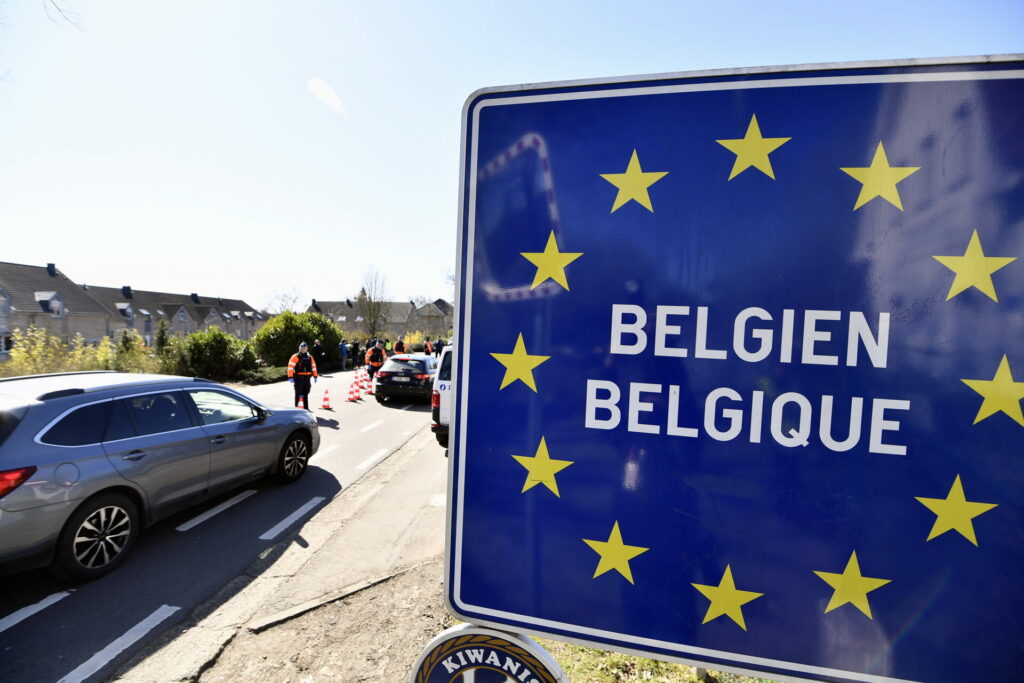
Police border control between Belgium and Germany in Kelmis - La Calamine during Covid-19 pandemic, Tuesday 24 March 2020. Credit: Belga / Eric Lalmand
In their view, political rhetoric framing internal checks as tools against organised crime is misguided; they contend that effective action depends instead on stronger judicial cooperation, intelligence sharing and better-resourced European police structures such as the Meuse-Rhine Euregio cooperation centre.
The three officials say Schengen's erosion undermines trust in European commitments and threatens decades of painstaking cross-border collaboration.
Except for Luxembourg, which relies heavily on its 240,000 daily cross-border workers, they accuse founding members of allowing the system to decay.
They call on the European Commission to intervene more forcefully, including through legal action if necessary, to protect a European achievement they see as increasingly at risk of becoming symbolic rather than real.
Related News
- European Commission hits X with €120 million fine for violating digital rules
- Euroclear boss warns EU over plan to use frozen Russian assets
- Belgian minesweeper returns to Zeebrugge after Baltic NATO mission
- A water leak is causing a risk of road collapse on a Brussels street
- Zelensky due in Brussels for talks with EU chiefs
- SpaceX plans to go public in 2026
