
Belgium will provide €500,000 to the UN Office on Drugs and Crime (UNODC) to support efforts to combat drug trafficking in Colombia and neighbouring countries.
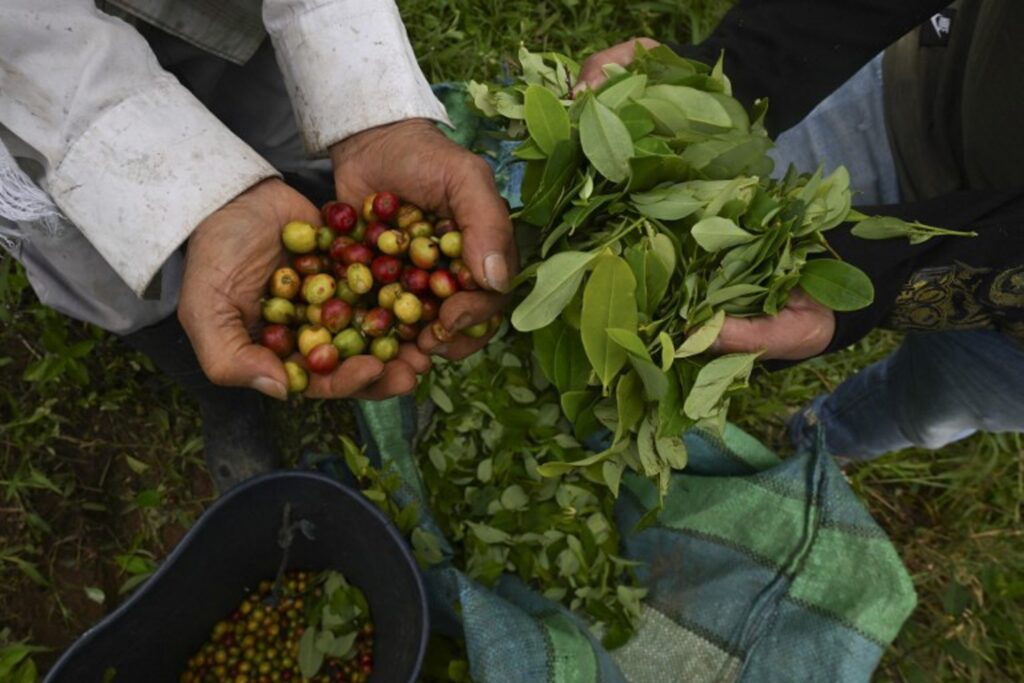
During a visit to Colombia, the Belgian Foreign Affairs Minister Maxime Prévot (Les Engagés) visited a family farm supported by the UNODC, where coca cultivation has been successfully replaced with coffee farming.
The farm, located on the edge of the Sierra Nevada mountain range overlooking Santa Marta Bay, belongs to Beatriz Nuñez and her team, who shifted to coffee farming several years ago after enduring violence from armed groups. Nuñez says the move has brought peace to their lives.
Her farm is part of a cooperative backed by the UNODC’s “alternative development” project, which encourages farmers to replace illegal coca crops with sustainable, legal crops such as coffee, cacao, avocados, and honey.
Prévot praised the initiative, calling it a “virtuous project” that merits strong support.
UNODC’s regional director, Amado Philip de Andrés, labelled the effort as "the most sustainable way to tackle the problem of cocaine trafficking." He highlighted that the Sierra Nevada region has completely eradicated coca cultivation, down from 1,300 hectares in 2005.
Nationally, however, the illegal drug trade remains rampant. Prévot visited the port of Santa Marta on Monday, where he denounced the traffickers’ “extraordinary ingenuity” in smuggling cocaine.
Colombia continues to be the world’s largest producer of cocaine, with around 70% reaching Europe, predominantly through the port of Antwerp.
At Santa Marta, port authorities annually intercept several tonnes of cocaine, often mixed with other substances. Since early 2025, ten tonnes have been seized, with 14 out of 22 shipments destined for Antwerp.
Despite scanning all shipments for contraband, illicit cargo is still being discovered downstream, including two tonnes of cocaine seized in Antwerp this year that originated from Santa Marta. Authorities suspect the drugs may be added after scanning, possibly during transport or at sea.
For two years, a liaison officer from the Belgian Federal Police has been stationed in Bogotá to enhance information-sharing with Colombian authorities, especially regarding port activity. Local officials alert Belgium daily about suspicious shipments.
Santa Marta is the first stop in a broader Latin American visit involving Prévot and four Belgian MPs: Els Van Hoof (CD&V), Michel De Maegd (MR), Kathleen Depoorter (N-VA), and Christophe Lacroix (PS).
The delegation is scheduled to fly to Mexico on Wednesday morning.
Related News
- Explosion in Antwerp: Three suspects arrested
- Major Antwerp drug baron arrested in Dubai
- Woman gets 24 months for smuggling drugs, boyfriend into prison
- Brussels becomes first region to link ANPR cameras to national police network
- Thirteen arrested in major anti-drug raids across Brussels' Matonge district
