
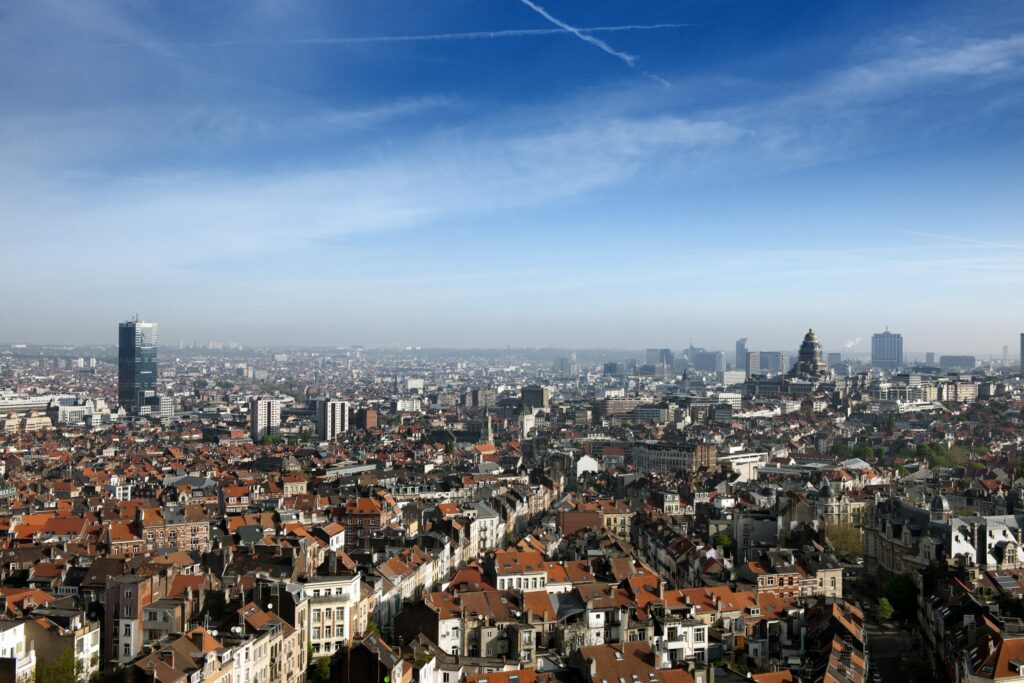
It has been 500 days since the regional elections on 9 June 2024 – and there is still no new Brussels Government after well over a year of failed talks.
The European capital's reputation for complex administration is certainly getting worse, but the political deadlock is really being felt on the ground.
Businesses declared a "state of emergency" after 15 months of negotiations led nowhere in early September. Now, many wonder how long Brussels' credit rating will remain the same, while charities and NGOs are (afraid of) losing funding.
Meanwhile, the everyday voters on the street are mostly fed up with how the formation process keeps dragging on.
"It's been over a year now, and we are not any closer to a Brussels Government than we were the day after the elections. Actually, we might even be farther away now," Margaux Simon, a 25-year-old social sciences student at VUB, told The Brussels Times.
"To be honest, it's quite embarrassing," she said. "I don't even know why I bothered voting."
Losing trust in politics
In the elections, the results in the Dutch- and French-speaking electoral colleges were unusual: while right-wing liberal party MR became the largest party on the French-speaking side, the progressive green Groen party won convincingly on the Flemish side.
The two are polar opposites, which has led to all sorts of difficulties in the formation process.
Since then, different solutions and possible coalitions have been proposed and subsequently blocked, but the key issue remains that several parties are refusing to speak to each other.
"We are used to this at the federal level, but it is quite new in Brussels," political scientist Thomas Legein (VUB) told The Brussels Times.
He believes the fragmentation of the party system is at the root of the issue. "Looking at the composition of the Parliament, it is quite hard to find a coalition while also respecting all the different parties' vetoes."
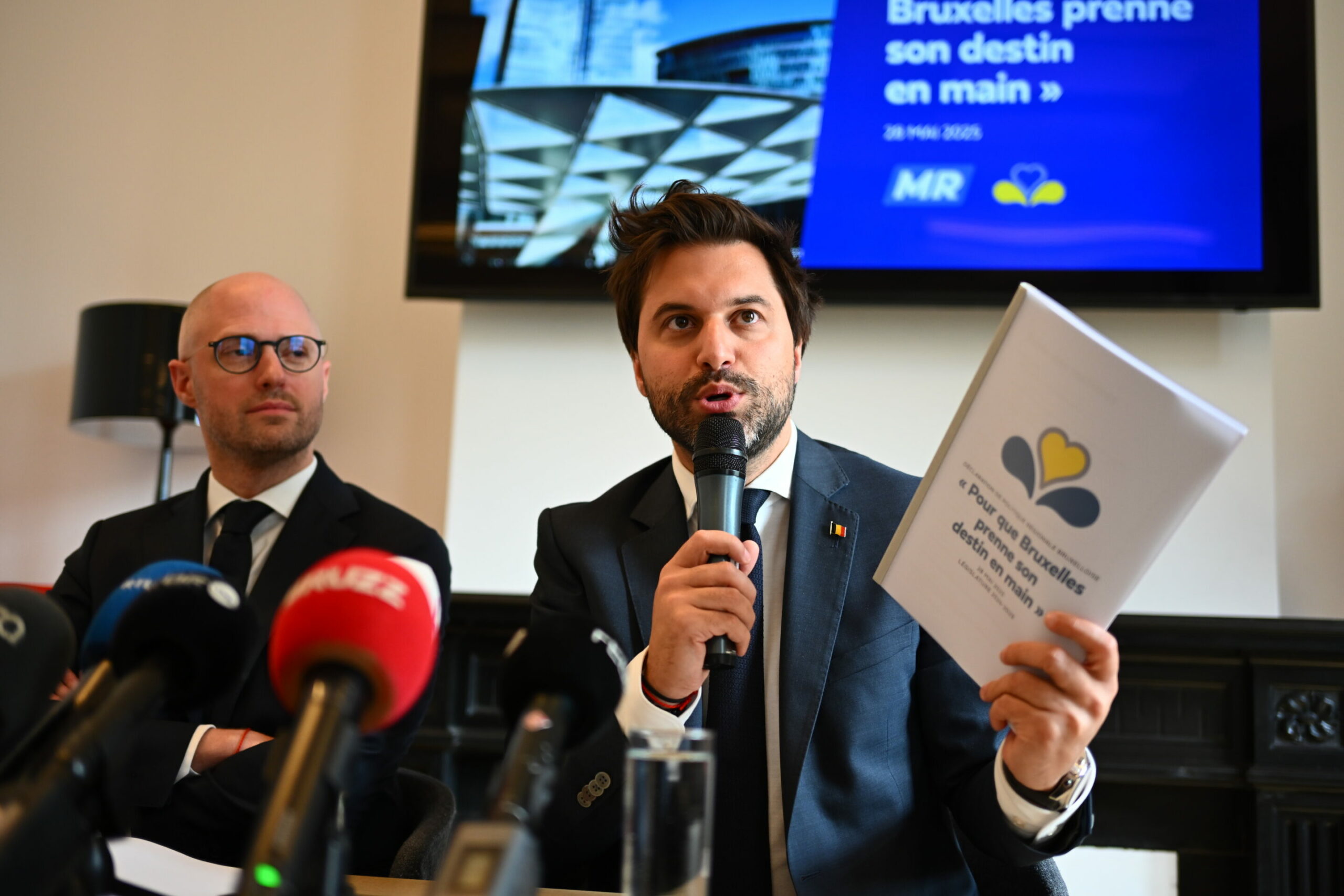
MR David Leisterh and MR leader Georges-Louis Bouchez present proposal to form a new Brussels Government, 28 May 2025. Credit: Belga/Eric Lalmand
On top of that, seeing that elected representatives cannot even sit around the table to politely discuss common projects does not help people's trust in politics either, said Legein.
"The Brussels Government is much more local than the federal one. It is nearer to the people, so they can see the consequences directly in their daily lives," he said. "Which, with a situation like this, does not help their trust in politicians and institutions."
When speaking to people on the street, this certainly seems to be the case. A Bruzz survey at the start of the year found that 75% of Brussels residents considered the political standstill as "problematic" or "very problematic." Now, ten months into 2025, that feeling has only intensified.
After 500 days, Renate Peeters, a 53-year-old bioengineer living in Evere, told The Brussels Times she feels like her vote was "useless".
"People are losing their jobs because there is no funding, but the only thing the politicians are concerned with is their own ego," she stressed.
'Very serious consequences'
Organisations such as Samusocial, an aid organisation providing support and shelter to homeless people in Brussels, are particularly feeling the impact of the lack of government, and therefore the lack of budget.
If they do not receive funding quickly, they are risking financial difficulties. "There are delays in the payment of various subsidy instalments," Director General Sarah de Liamchine told The Brussels Times.
"The Samusocial board of directors has warned the Brussels Government that we are still waiting for various amounts for activities that have already taken place," she said. "If we do not receive them on time, we risk being unable to pay the bills in December."
Specifically, the organisation is still waiting for €1.8 million under the 'Brussels Deal' (between the Brussels Region and the Federal Government for the reception of asylum seekers, among other things) for activities in 2024, as well as another similar amount of €1.8 million for the 2025 balance.
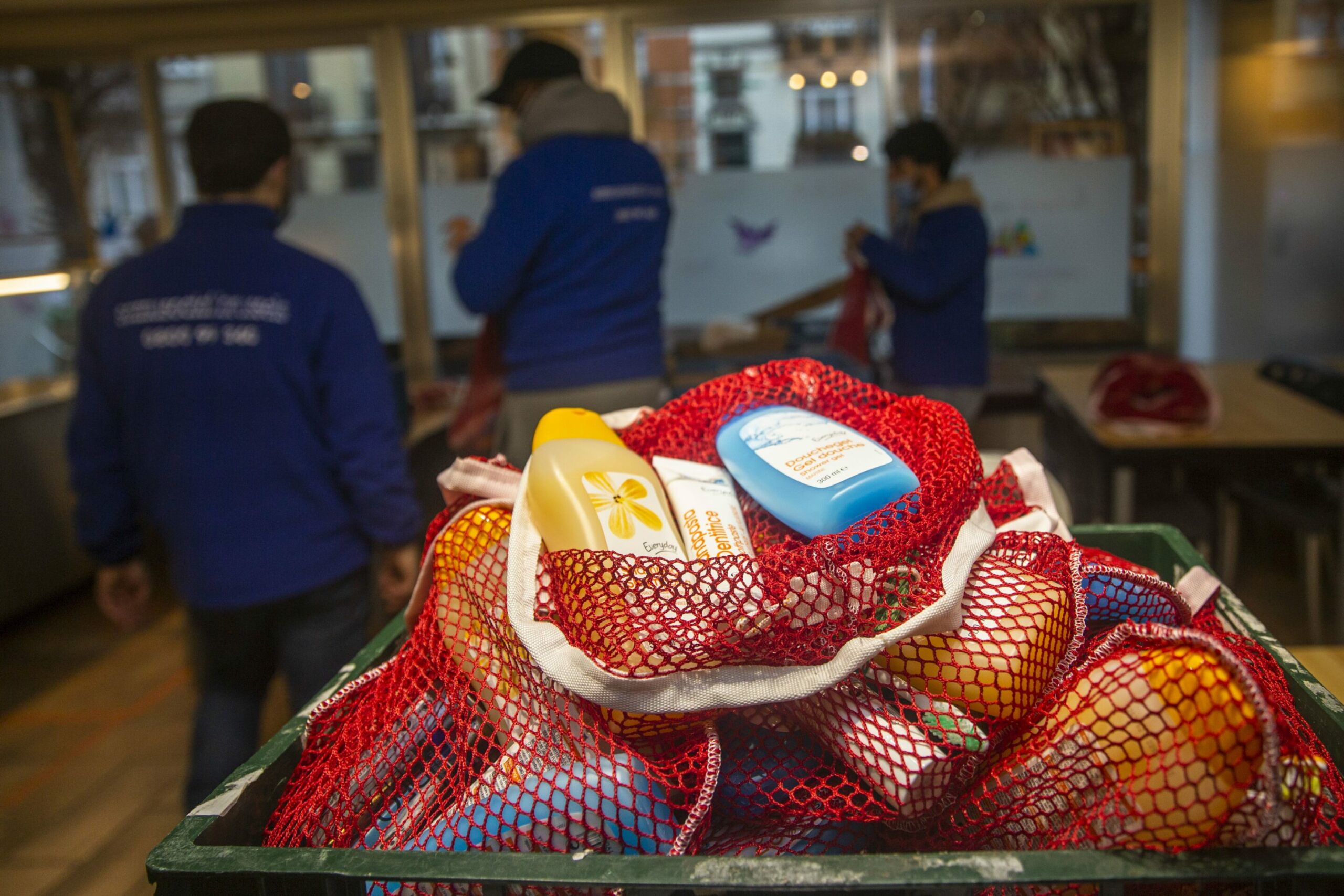
An emergency shelter for asylum seekers, organised by Brussels' humanitarian aid organisation Samusocial, in Molenbeek-Saint-Jean. Credit: Belga/Hatim Kaghat
With the current Brussels Government in 'caretaker mode', a different procedure is being followed to secure public funding. "This is not unusual in itself, but it does result in a more complicated application process and payment delays," said de Liamchine.
For an organisation as large as Samusocial, with 700 employees and 2,000 people in its 13 centres every day, any delay in payments can have "very serious consequences".
Staff would be the first to be affected if the expected support does not come through. "We would not have to close immediately, but we would not be able to pay the salaries of all 700 of our employees. They take the biggest bite out of our budget," de Liamchine explained.
She emphasised how vital Samusocial is to the Brussels-Capital Region. "We provide shelter to 2,000 people every day, including 500 children. But we still fail to help many single men, and sometimes even families. I can only imagine what would happen if an institution like ours goes bankrupt."
Machine is 'broken'
In recent months, Samusocial workers have also identified new needs – particularly related to mental health – but there is no money to set up new projects. "We are just trying to preserve what we have right now, and that is already hard enough. It is impossible to set up new projects," said de Liamchine.
Still, she does not feel as if politicians are against them or that they are not listening. "It is just that the machine is broken," she said. "There are blockages in so many places that everything takes two or three times as long."
And with the 30,000 long-term people who will lose their unemployment benefits in January, she fears that many more people will be in need of help or support: "But I do not see how we are going to be able to cope with that. It worries me a lot."
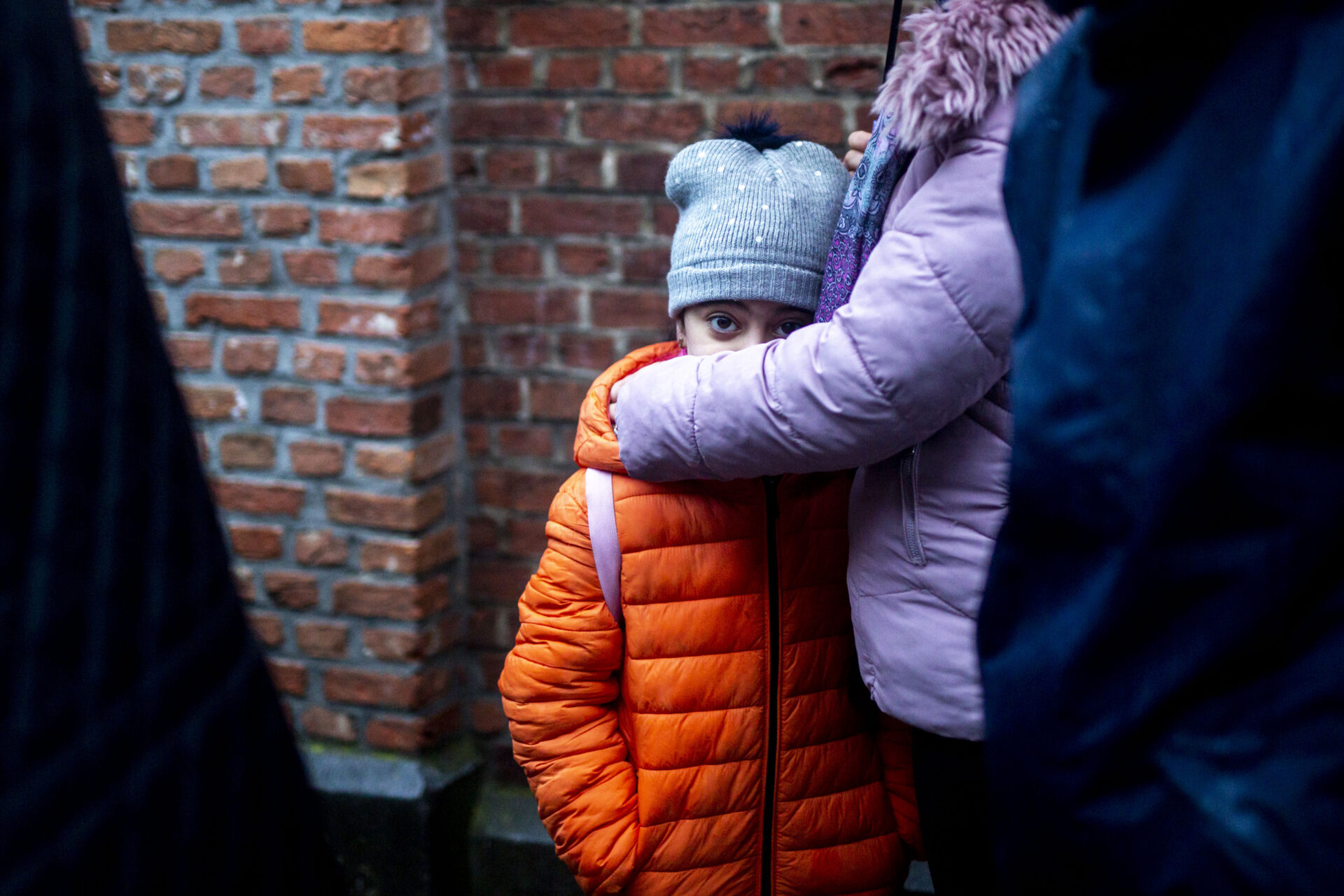
A young asylum seeker waiting at a Fedasil reception centre in Brussels. Credit: Belga
This perception is not good for businesses and investment in the capital either. In September, BECI (Brussels Enterprises, Commerce and Industry) and 16 other sector federations declared a state of emergency over the lack of leadership in the city.
However, BECI's CEO Thierry Geerts explained that the situation is more nuanced. "This is a disaster for Brussels, but outside Belgium, this is no news," he told The Brussels Times.
"If there were no mayor in the French city of Lille, nobody would lose any sleep over it. But in Belgium, due to the complicated state structure, we are not just speaking about a mayor, but about a full government. Yet, Brussels is essentially just a city of 1.2 million inhabitants."
The protracted government negotiations – and the lack of a sense of urgency from those holding the talks – are further compounding Brussels' bad image, Geerts stressed. "To the outside world, we look like we cannot get our act together. However, there is a Federal Government and the municipal councils are all in place, 90% of things are running like normal."
Is the Brussels Government even needed?
According to the CEO, the lack of leadership is "painful" for Brussels' political class – especially in a country where the status and importance of the Capital Region is continuously up for discussion.
"There is a lot you can do in this region, but you first have to convince everyone of Brussels' usefulness," he explained. "And because the politicians have now been arguing among themselves for 500 days, they are actually making themselves somewhat redundant."
Meanwhile, the different parties are working on laying the groundwork for Brussels' next budget. However, finding an agreement is proving to be very difficult, especially as the final coalition of parties that will make up the regional government that is supposed to implement this budget is not certain yet.
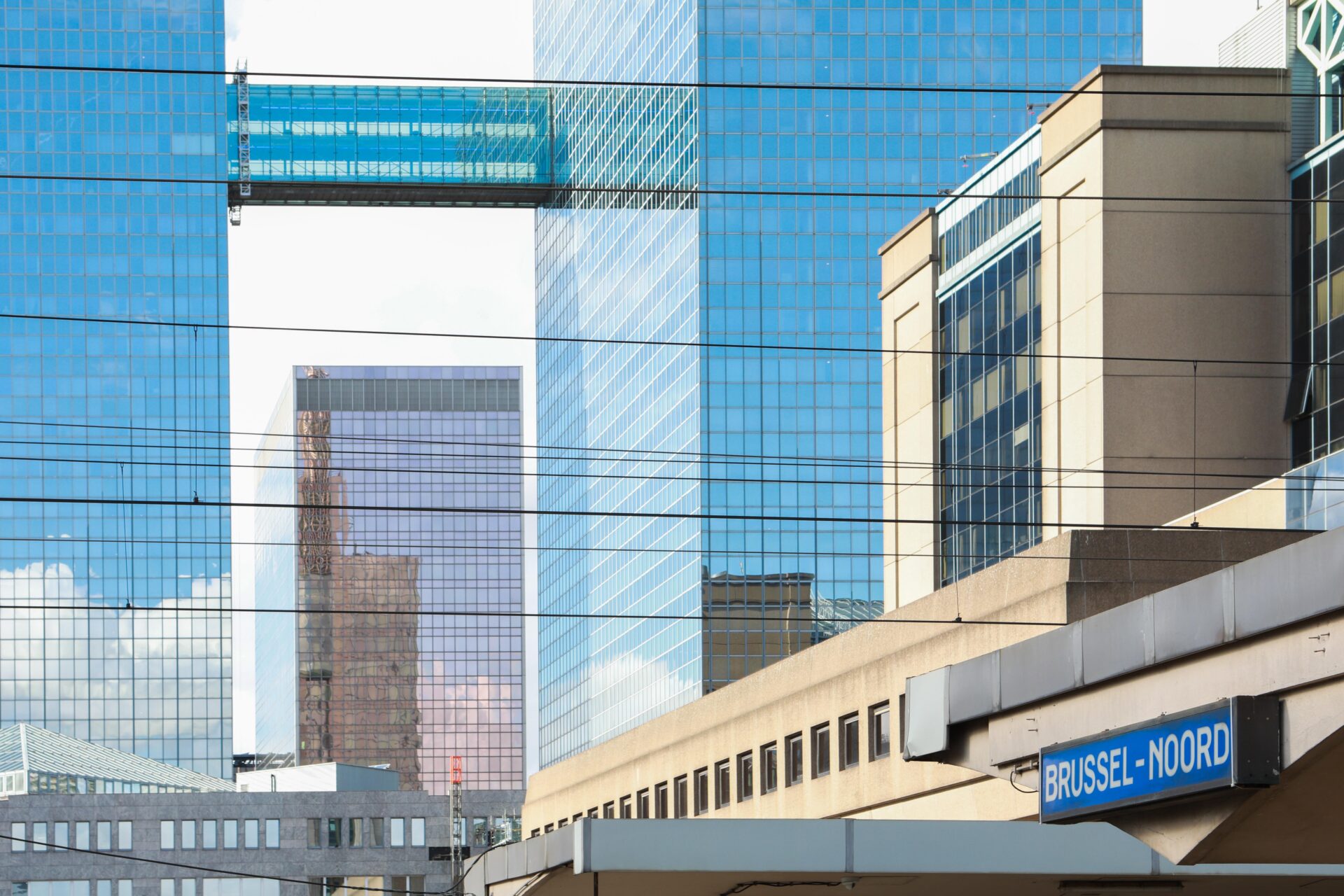
Brussels Northern Quarter, where many businesses are located, seen from Brussels North train station. Credit: Belga / Paul-Henri Verlooy
While the Brussels-Capital Region's credit rating remained unchanged at 'A with a negative outlook' in mid-October, the region continues to face serious fiscal challenges, with a budget deficit of €1.5 billion – the weakest balance sheet of all Belgian regions.
Additionally, the city's finances were also presented in an overly optimistic light in recent years, an investigation by De Tijd and The Brussels Times showed.
Yet according to Geerts, businesses continue to operate and even thrive, people find ways to keep going around the lack of framework, employees are coming to work, and the federal, Flemish and French-speaking governments are all doing their jobs.
"And so the politicians in Brussels are literally making complete fools of themselves. But everything continues to run, so what purpose does a Brussels Government serve?"
A crisis, a new world record?
While political scientist Thomas Legein (VUB) said that the situation is "concerning," he fears that the public perception in Belgium did not always fully appreciate how bad this government formation crisis has been.
"It took a long time for people to start posing the question of whether we should maybe start speaking about a 'crisis’," he said. "With our history of long government formations, it took a some time for people to see that. But now, after 500 days, it is very clear that this is indeed a crisis, with serious consequences.”
BECI's Geerts also underlined that businesses and entrepreneurs will find a way to carry on, but emphasised that it is "the citizens who voted for the elected representatives now ignoring their wishes" who have to suffer the consequences.
"500 days is bad enough, but the symbolic 541 days is coming as well: Belgium's world record for longest government formation," Geerts said. "Do we really want to break that record in Brussels?"
Related News
- Netherlands still awaiting final election results after delays and fire
- Belgium's long-lost coastal islands retraced
- Brussels creates 285 extra shelter places for homeless families amid worsening crisis
- 'Titanic heading towards the iceberg': Businesses urge Brussels to form government
- From new elections to 'the Trump of Brussels': What's the latest with the government formation?
- Foreign Minister warns of tense political climate, does not rule out Government collapse
- Report reveals Brussels generates wealth it does not get to keep
